Lift Chairs Cost: What Norwich Shoppers Really Pay


Lift chairs in 2026 typically run from about $300 for basic single-motor models to over $2,500 for premium multi-motor designs, with most shoppers landing in the $1,000 to $2,000 range. The chair itself is usually the dominant cost, even when Medicare helps with part of the lifting mechanism.
A Norwich shopper often arrives with a simple question: “How much will a lift chair cost?” The honest answer depends less on the word lift and more on the mechanism, upholstery, weight capacity, positioning, and extras built into the chair. A basic model can solve the standing problem without stretching the household budget, while a heavily featured chair can move into premium furniture territory quickly.
At a local showroom, the sensible approach is to test the chair before judging the price. The seat should fit the user's height and build, the lift should feel smooth, and the reclined position should support the way the chair will be used. Gorins' lift chair selection for seniors gives Norwich and Eastern Connecticut shoppers a starting point for comparing available styles and prices.
What You Can Expect to Pay for a Lift Chair
A realistic lift-chair budget starts at about $250 to $400 for basic models, rises to roughly $400 to $800 for mid-range chairs, and reaches $1,500 or more for premium designs, with the wider market exceeding $3,000 when features and weight capacity are added. These ranges are documented in neutral lift-chair market guidance. Other independent pricing summaries place the center of the market around $1,000 to $2,000, while listed configurations can range from $983 to $1,699 within one brand and from $1,075 to $3,465 across vendors and configurations, as outlined in this lift-chair cost guide.
That spread matters. The lifting function is only one part of the product. Dual motors, heavier frames, greater weight limits, heat, massage, premium upholstery, and advanced positioning account for much of the jump. A shopper moving from a basic single-motor chair to a dual-motor or heavy-duty model can see the price increase by roughly two to five times, according to the same market summary.
A practical Norwich buying sequence
- Set the user requirements first. Height, weight, transfer ability, room size, and daily use should determine the shortlist.
- Choose the mechanism second. A single motor may be enough for standing assistance, while independent back and footrest control suits people who spend long periods in the chair.
- Add comfort features selectively. Heat and massage can be worthwhile, but they shouldn't outrank correct fit or reliable lifting.
- Calculate the full payment. Medicare may help with the mechanism only, and financing may change the monthly burden without changing the total purchase price.
The main surprise for families is that the furniture portion remains the dominant expense. Medicare's contribution is tied to the approved seat-lift mechanism, not the complete chair, so a comfortable, well-fitted chair still needs its own budget.
The Three Main Price Tiers Explained
Price tiers help shoppers avoid paying for features that won't improve daily life. The ranges below reflect common retail positioning, while the broader market remains variable, from about $300 to more than $2,500, depending on configuration, supplier, and materials, as summarized by consumer lift-chair guidance.
| Tier | Price Range | Motors | Best For |
|---|---|---|---|
| Basic | About $300 to $900 | Single motor | Straightforward standing assistance and occasional reclining |
| Mid-range | About $1,000 to $1,800 | Usually dual motor | Daily use, independent positioning, and broader fit requirements |
| Premium | About $1,800 to $2,500 and beyond | Multi-motor | Extended daily use, advanced positioning, and specialized comfort needs |
Basic chairs
Basic lift chairs usually use a single-motor mechanism. The back and footrest move together, so the user gets a straightforward upright, lifted, or reclined position rather than fine control over each section. Standard fabrics and conventional seat dimensions keep the price accessible.
This tier suits a user who mainly needs assistance getting upright and doesn't expect to sleep, rest, or change positions frequently. It can also make sense for a temporary need, provided the chair fits properly and the supplier can support delivery and service.
Mid-range chairs
The mid-range tier is where many shoppers find the strongest balance of function and value. Dual motors allow the back and footrest to operate independently, which helps users find a more comfortable position for reading, resting, or easing pressure on specific areas.
This band also tends to offer more upholstery choices, stronger frames, higher weight capacities, and optional comfort packages. For a Norwich household buying a chair for daily use, this is often the first tier worth testing seriously. The higher price should buy a meaningful improvement in control or fit, not merely a longer feature list. Gorins' guide to best-rated power lift recliners can help shoppers identify which functions deserve attention before visiting the showroom.
Premium chairs
Premium models use more advanced positioning systems, including zero-gravity, Trendelenburg, and near-flat chaise configurations. They may also include upgraded frames, premium leather or performance fabrics, extended warranties, and more refined support throughout the seat.
This tier fits someone who spends much of the day in the chair, needs several positioning options, or has a clear reason to value advanced support. It isn't automatically the right choice for every buyer. If the user only needs a dependable lift and occasional recline, the premium features may add cost without adding practical value.
Features That Move the Price the Most
The motor count usually moves the price more than any other individual feature. A single-motor chair links the back and footrest together, which keeps the mechanism simpler. A dual-motor design gives separate control and commonly adds about $300 to $600, while multi-motor systems with advanced positions can add another $400 to $1,000. These figures are planning ranges for comparing configurations, not universal retail charges.
Mechanism and positioning
The right question isn't “How many motors does this chair have?” It's “Which movements will the user use?”
- Single motor: Best for basic lift assistance and straightforward reclining.
- Dual motor: Better for independent back and footrest adjustment.
- Multi-motor: Justified when zero-gravity, Trendelenburg, headrest, lumbar, or near-flat positioning will be used regularly.
A shopper looking for a clearer explanation of the lifting cycle can review how lift chairs work. The mechanism should operate smoothly and predictably. Extra motors matter only when they create a position the user can reach comfortably and repeat without help.
Frame, capacity, and upholstery
Heavy-duty frames cost more because they require stronger steel, reinforced springs, and wider seat geometries. A chair rated for a larger user needs more than a wider cushion. It must maintain stability through lifting and reclining, which affects the entire structure.
Upholstery creates another clear divide. Polyester and microfiber generally keep a chair at the accessible end. Bonded leather tends to sit in the middle, while top-grain leather and advanced performance fabrics move the chair toward premium pricing. Buyers should choose based on cleaning needs, heat retention, texture, and the room's existing furniture, not appearance alone.
Comfort extras
Heat, massage, powered lumbar, headrests, extended footrests, battery backup, and USB charging can add roughly $50 to $400, depending on how each feature is packaged. The most valuable upgrades are usually the ones tied to a specific daily need:
- Extended footrest: Useful for taller users whose heels hang off a standard chaise.
- Wall-hugger design: Helpful in a compact Norwich living room where clearance is limited.
- Battery backup: Worth considering where a power interruption could leave the user reclined.
- Heat or massage: Pleasant additions, but poor substitutes for correct lumbar and seat support.
Comparing UltraComfort and BarcaLounger at Gorins
Two names commonly discussed on the Gorins showroom floor are UltraComfort and BarcaLounger. UltraComfort occupies the premium positioning end, with independently engineered mechanisms and advanced options such as Zero-Gravity and Trendelenburg. Typical Norwich pricing is described at roughly $1,800 to $3,000, with mechanism and frame warranty coverage forming an important part of the long-term value.
BarcaLounger generally covers the value-focused range, around $900 to $1,800, with dependable dual-motor performance and a comfort-first recliner feel. Both lines can offer fabric and leather choices, but UltraComfort's heat and massage packages are more integrated into its premium positioning systems.
| Feature | UltraComfort | BarcaLounger |
|---|---|---|
| Typical Norwich price | About $1,800 to $3,000 | About $900 to $1,800 |
| Positioning | Advanced options, including Zero-Gravity and Trendelenburg | Strong dual-motor recline and lift performance |
| Best fit | Extended daily use or specialized positioning needs | Reliable lift assistance and everyday comfort |
| Warranty consideration | Mechanism and frame coverage is a major value factor | Suitable for shoppers prioritizing a lower entry point |
| Comfort upgrades | More integrated heat and massage packages | Fabric and leather upgrades available |
The choice is practical. A user recovering from surgery, spending most of the day seated, or requiring advanced positioning may have a genuine reason to consider UltraComfort. A user who mainly needs safe transfers, independent recline, and dependable support may get better value from BarcaLounger.
The showroom test should include standing, lifting, reclining, and returning upright. A chair that looks impressive on a specification sheet still needs to feel natural under the user's body.
How Medicare Changes the Real Out-of-Pocket Cost
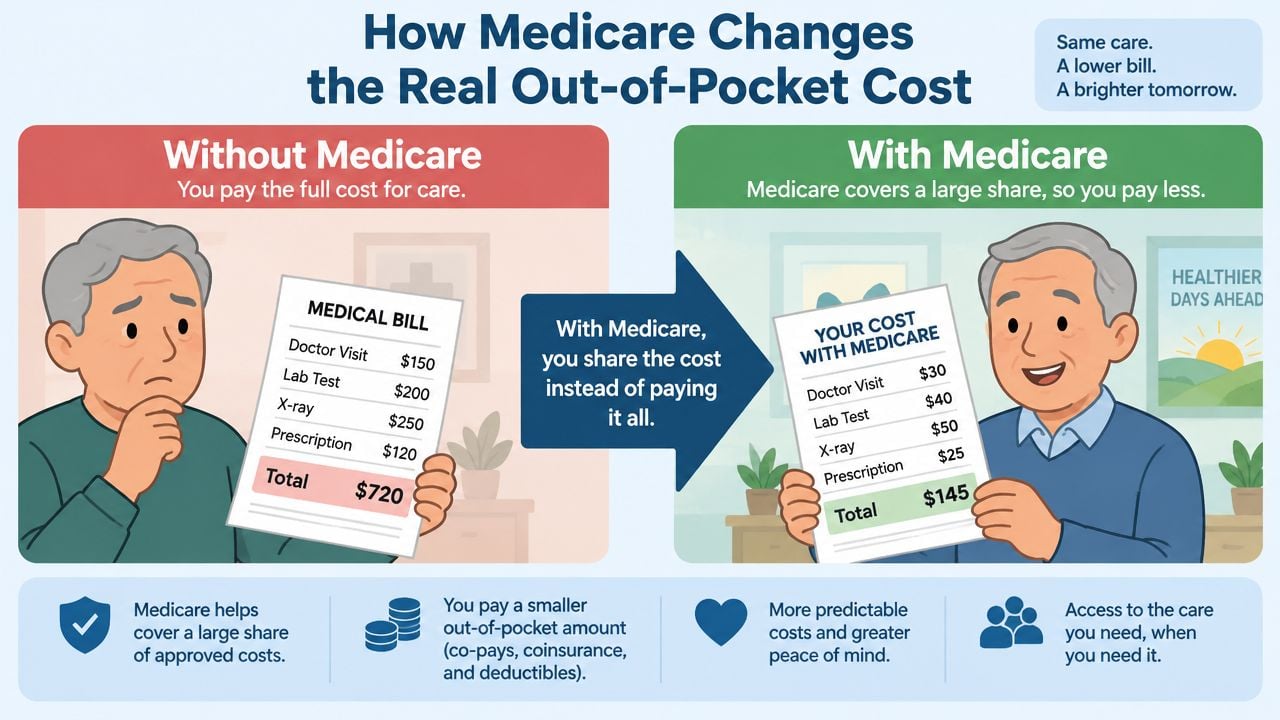
Medicare Part B generally covers only the motorized seat-lift mechanism, not the chair itself. Coverage applies to qualifying circumstances, including severe hip or knee arthritis or severe neuromuscular disease, and the mechanism must operate smoothly and be controllable by the beneficiary, according to the CMS coverage determination.
The approved mechanism reimbursement is commonly around $260 to $310. After the Part B deductible, Medicare generally pays 80% of the approved amount, leaving the beneficiary responsible for the remaining 20%, while the furniture portion stays outside the benefit. A separate coverage explanation confirms the same 80% Part B payment after the deductible structure in Medicare lift-chair guidance.
What qualification requires
The coverage rules are narrow. The chair or mechanism generally must be:
- Prescribed by a doctor: The prescription should document the medical need.
- Purchased from an enrolled supplier: Supplier status affects whether the mechanism can qualify.
- Used by someone unable to stand from a regular armchair at home: The person must still be able to ambulate once standing, according to eligibility guidance.
A chair priced at $700 to $1,400 can therefore leave most of its sticker price with the buyer, because Medicare assigns its approved amount to the lifting hardware rather than the upholstery, frame, reclining system, or comfort package. For a $1,800 chair, the reimbursement doesn't turn the purchase into a low-cost item. It reduces a defined medical-equipment component.
That distinction deserves careful budgeting. Families comparing coverage alongside broader plans for household security may also find it useful to learn how to protect your family's future. For the chair purchase itself, the prescription, supplier enrollment, and written confirmation should come before relying on an assumed discount.
Financing Options That Lower the Upfront Barrier
A quality lift chair can represent a substantial household purchase, especially when the buyer chooses stronger upholstery, advanced positioning, or a heavier frame. Promotional financing with equal monthly payments can make the timing easier, but the payment schedule must be treated as a commitment, not free money.
Gorins offers financing routes associated with the Nest credit card and TD Bank, subject to approval and the terms of the specific promotion. Qualifying purchases may receive promotional periods, including offers described as 12 to 24 months of no-interest financing when the balance is paid in full by the deadline. The important phrase is “paid in full.” Missing the promotional terms can change the cost.
Choosing the right structure
A basic or mid-range chair may suit a shorter promotional window if the household can divide the balance into equal monthly payments and clear it on time. Higher-end configurations may be easier to manage through an extended-term option, where the monthly payment falls but the repayment period lasts longer.
Before signing, the buyer should ask for:
- The full promotional deadline: The balance needs a clear payoff date.
- The required monthly amount: The payment should fit alongside prescriptions, care, utilities, and ordinary living costs.
- The consequences of an unpaid balance: Promotional terms differ, so the written agreement matters.
- The total repayment: A lower monthly figure isn't automatically the lower overall cost.
The Gorins financing information gives Norwich shoppers a place to review available promotional structures. Financing makes the most sense when the chair is needed now and the payment plan remains comfortable without relying on uncertain future income.
Matching a Lift Chair to Your Home and Health Needs
A useful showroom comparison starts with two realistic configurations: a two-position single-motor chair around $1,100 and a three-position dual-motor chair around $1,800. The first offers straightforward lifting and reclining. The second gives the user independent control over the back and footrest, plus a deeper resting position.
| Feature | Mid-Tier Single-Motor | Premium Dual-Motor |
|---|---|---|
| Approximate price | Around $1,100 | Around $1,800 |
| Movement | Back and footrest move together | Back and footrest operate independently |
| Reclining | Two-position use | Three-position use |
| Best for | Basic transfers and occasional rest | Daily sitting, tailored positioning, and longer rest |
| Room planning | Standard clearance requirements | Requires careful measurement and placement |
| Upgrade logic | Keeps the budget focused on lifting | Adds control where positioning has daily value |
The floor test
The buyer should bring the user's measurements or have the user sit in both chairs. Check:
- Seat fit: Feet should rest naturally, and the knees shouldn't sit too high.
- Lift path: The chair should bring the user forward steadily without feeling unstable.
- Doorway access: Measure the entry, hallway turns, and final room before ordering.
- Resting position: A user who sleeps or rests in the chair needs more than basic recline.
- Caregiver access: A caregiver may need room to walk around the chair and assist with transfers.
- Daily frequency: Frequent transfers justify prioritizing mechanism reliability and easy controls.
Heat may help someone who values soothing warmth, while massage is a comfort preference rather than a substitute for clinical care. A wall-hugger can protect floor space, and an extended footrest can solve a genuine fit problem for a taller user. Buyers researching improving mobility with arthritis should still treat the chair as a support tool and follow professional medical advice about safe movement.
Why Buying Local at Gorins Adds Long-Term Value
A lift chair is one of the least sensible furniture purchases to make from a photograph alone. The user needs to feel the lift motion, check the seat depth, test the controls, and see whether the reclined position supports the body properly. A staffed Norwich showroom makes those checks possible before delivery.
Gorins Furniture & Mattress offers in-home consultation for measurements and fabric coordination, along with 5-Star Delivery that brings furniture fully assembled and removes the packaging. Local service also gives buyers a practical route for warranty questions, replacement parts, and help coordinating the new chair with existing living room furniture. That level of support is one reason shoppers consider independent furniture retailers when the purchase involves fit, mobility, and daily use.
The wider Gorins offering also supports a complete room decision. Canadel Custom Dining and the F9 Custom Sofa series allow thousands of combinations, while the Sleep Gallery includes Tempur-Pedic, Serta, and Beautyrest for shoppers focused on comfort by feel and healthier sleep. Promotional financing with equal monthly payments can lower the barrier to larger purchases, and the clearance section can provide value-driven savings on available pieces.
Since 1936, Gorins Furniture & Mattress has helped Norwich and Eastern CT families create homes they love. From custom-designed Canadel dining sets to the latest in Tempur-Pedic sleep technology, we combine a massive selection with the personalized care only a local, family-owned business can provide. Visit us today to experience quality, value, and our 5-Star Delivery service.
Norwich shoppers can test lift positions, compare upholstery, and discuss Medicare documentation and promotional financing at Gorins Furniture & Mattress. Visit the Norwich showroom, take the online Style Quiz, or browse the Clearance section to find a lift chair that fits the user, the room, and the household budget.