Mattress Firmness Scale: A Local Expert’s Guide

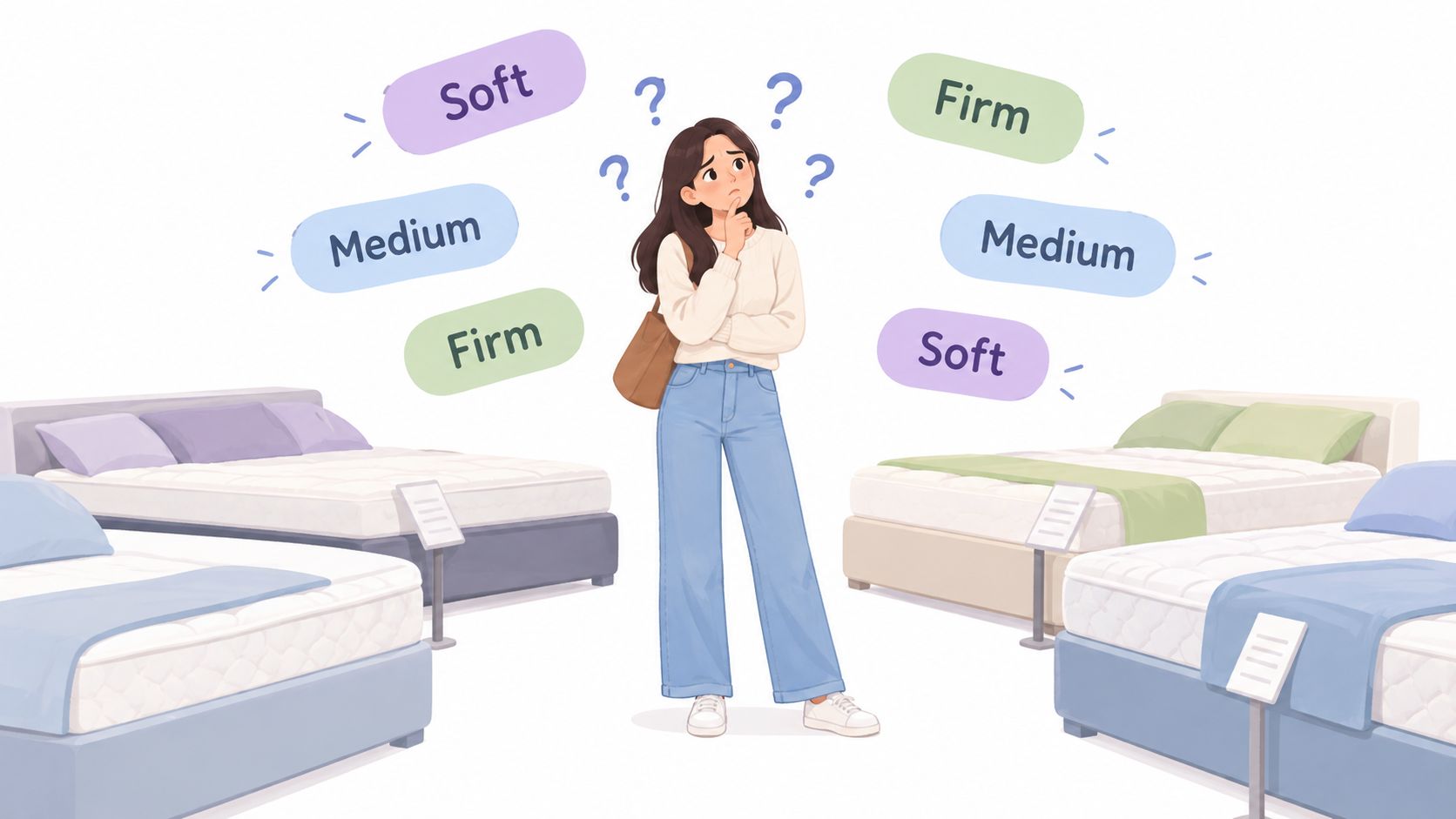
A shopper walks into a mattress showroom expecting a simple answer. Instead, every bed seems to offer a different version of soft, medium, or firm, and a number on the tag appears to promise certainty. After a few tests, the labels can feel less helpful than they did at the door.
The mattress firmness scale becomes easier to use once it's treated as a starting point rather than a verdict. The right feel depends on how a mattress responds to a particular body, sleep position, and pressure pattern. A personal showroom test can reveal more than a number alone.
Understanding the Confusion Behind Mattress Ratings
A shopper may test two mattresses labelled medium and notice that they feel nothing alike. Materials, layer arrangement, cover tension, testing method, and each manufacturer's internal calibration can all change the result. Body shape and sleep position add another variable: a side sleeper may feel pressure at the shoulder, while a back sleeper notices support beneath the hips.
The mattress firmness scale is a useful shorthand, but its ratings are not directly transferable between manufacturers. The same label can describe different construction choices and different sensations. A person's weight distribution, preferred position, and sensitivity to pressure also influence the experience, so the rating should guide a showroom conversation rather than settle the decision.
Why the number still helps
A rating gives shoppers a shared starting point. It can show whether a mattress sits toward the plush, middle, or firmer end of a collection, which helps narrow the first group to test. The number works like a rough map, while the mattress itself reveals the terrain.
Construction explains why the first touch can mislead. A softer comfort layer over a firmer support core may feel cushioned at first, then resist deeper compression. A bed with less surface padding can feel firm immediately, even when its underlying support responds differently.
Practical rule: Use the number to choose where to begin, then use your body's response to decide whether the mattress belongs in the final group.
At a Gorins showroom in Norwich, a guided test can connect the rating with your body type and sleep position. Notice whether your shoulders and hips receive enough cushioning, whether your spine feels supported, and whether you are sinking farther than feels comfortable. The goal is a mattress that balances conformity and support for you, not a rating that sounds right on a label.
That approach helps shoppers in Norwich, New London, Plainfield, Waterford, and surrounding Eastern Connecticut and Rhode Island communities make a personal choice. The label narrows the options. The test bed shows which one fits.
Decoding the 1 to 10 Firmness Scale
In the Norwich showroom, a 5 and a 6 can feel almost identical at first. Lie on each for longer, and the differences may appear through the cover, foam thickness, quilting, and coils. The rating gives you a starting point, while the construction determines how that number feels beneath your body.
The usual scale describes surface resistance and conformity:
- 1, extra-soft: A richly cushioned, enveloping feel with substantial sinkage.
- 2 to 3, soft: Noticeable contouring around the body, especially at the shoulders and hips.
- 4, medium-soft: Gentle cushioning with more resistance than a soft mattress.
- 5, medium: A balanced blend of surface comfort and pushback.
- 6, medium-firm: More resistance, moderate conformity, and less sinkage.
- 7 to 8, firm: A stable surface that keeps the body closer to the top.
- 9 to 10, extra-firm: Very strong resistance, with little surface compression.
These ranges help narrow the first mattresses to test, but they do not predict comfort for every sleeper. A side sleeper may need more cushioning at the shoulders, while a back or stomach sleeper may prefer stronger resistance beneath the midsection. Body type changes the result too, because a larger or more concentrated load compresses the same materials farther.
Firmness is not a foam specification
Shoppers may see IFD or ILD, measurements describing the force needed to compress a foam sample to a stated depth. A higher force generally indicates firmer foam, but that figure applies to one component, not the finished mattress. Results can change with the sample's dimensions, temperature, conditioning, indenter shape, time under compression, and test depth.
The complete sleep system adds more variables. Cover tension, quilting, foam thickness and density, zoning, coils, and the transition into deeper support all shape the final feel. Two mattresses with similar foam measurements can therefore respond differently when you lie on them.
For a clearer look at how construction types differ, this memory foam, hybrid, and innerspring mattress guide provides useful context. Component figures help with like-for-like comparisons. The test bed remains the better guide to pressure relief and support.
Why technical scales vary
Firmness testing can use different methods, units, loading areas, and directions. Some systems express hardness as indentation force, while others translate results into a 1 to 10 rating. One scale may assign 0 to maximum firmness and 10 to minimum firmness, reversing the convention many American shoppers expect.
That variation explains why a label should never make the decision alone. At Gorins, a mattress in the Norwich showroom can be assessed with your normal sleep position, body shape, and preferred feel in mind. Notice whether your shoulders and hips settle comfortably, whether your spine stays supported, and whether the surface pushes back where you need it.
Use the scale to choose where to begin. Let your own pressure response decide the match.
How Body Type and Sleep Position Change the Feel
A mattress can feel different from one sleeper to another. Its rating comes from a controlled test load, while your experience depends on body weight, shape, contact area, and movement. The same bed may feel softer to a heavier sleeper and firmer to a lighter sleeper, a pattern also discussed in this clinical trial on mattress firmness and low-back pain.
The same mattress under different bodies
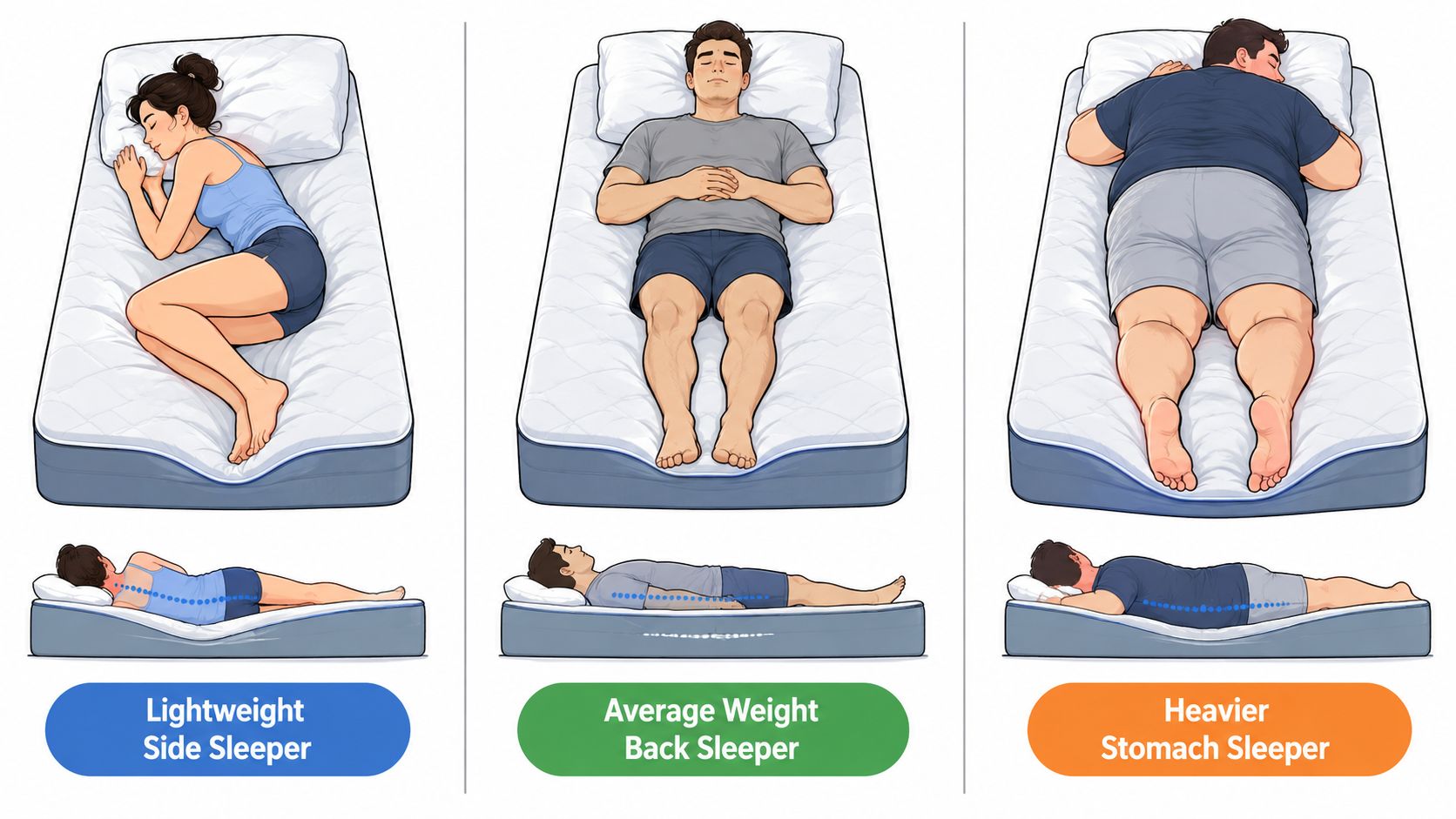
Body weight changes how far you travel into the comfort layers. A lighter sleeper may stay closer to the surface and sense more resistance. A heavier sleeper may settle farther into the mattress and notice more contouring. The label stays the same, but the interaction changes.
Body shape adds another variable. Broad shoulders can create pressure at the shoulder and hip during side sleeping. More weight around the midsection can require stronger resistance beneath the pelvis to limit dipping. These differences are why a firmness number works best as a starting point, not a final answer.
Position changes pressure points
Side sleeping concentrates pressure at the shoulder and hip. A surface that feels too firm may not conform enough around them. One that feels too soft may let the shoulder and hip sink at different depths, curving or rotating the spine.
Use a 30-second alignment check in the showroom. Lie on your side and ask a partner to see whether your spine forms a straight line from neck to tailbone. Your shoulders and hips should feel cushioned, while your waist should not hang unsupported.
Back sleeping needs a different balance. The surface should fill the natural lower-back curve, while the support beneath it keeps the pelvis from dropping too far below the torso. Slide a hand under your lower back. Slight resistance suggests useful lumbar fill, while a large gap or strong pressure signals a poorer match.
Stomach sleeping places more demand on resistance beneath the pelvis and midsection. If the pelvis sinks farther than the chest, the lower back may arch. A firmer feel can reduce that movement, although body shape and personal comfort still guide the choice.
A useful comparison
| Sleeper factor | What the mattress needs to manage |
|---|---|
| Lighter body | Surface conformity without an overly firm feel |
| Heavier body | Deep support that limits excessive compression |
| Side position | Shoulder and hip relief without spinal rotation |
| Back position | Lumbar cushioning with stable pelvic support |
| Stomach position | Resistance beneath the pelvis and midsection |
| Mixed positions | Contouring balanced with easy movement |
There is no automatic answer for any position. A heavier side sleeper may prefer a different feel from a lighter side sleeper, and two back sleepers may need different support if their bodies interact with the mattress differently.
This mattress guide for different body types can help narrow the starting point before visiting the Norwich showroom. At Gorins, test the position you use at home and check whether your shoulders and hips settle comfortably while your torso remains supported.
The Health Benefits of Finding Your Sweet Spot
You wake with a sore shoulder after sinking into a soft mattress, or with a stiff lower back after sleeping on a hard one. These reactions show why firmness is not a health rating by itself. Comfort and support must work together, with the right balance shaped by body type, sleep position, and how your body settles into the mattress.
A plush surface may feel welcoming yet let the pelvis sink too far. A firm surface may feel steady while concentrating pressure at the shoulders, hips, or sacral area. Recent orthopedic reviews favor a medium-firm approach for pressure distribution, sleep quality, morning stiffness, and low-back-pain intensity, while recognizing that body size, age, body shape, sleep position, and thermal comfort affect the final choice.
Why medium-firm is a starting point
Medium-firm is a useful starting range for adults, not a universal prescription. It often provides enough cushioning for pressure points while keeping the torso and pelvis from sinking excessively. The scale works more like a pair of shoes than a ruler. The same labeled firmness can feel different depending on the sleeper standing, or rather lying, on it.
A randomized trial involving adults with chronic nonspecific low-back pain found that medium-firm mattresses produced better pain and disability outcomes than firm mattresses. That finding challenges the assumption that the hardest surface automatically gives the best back support. A medium-firm starting point still needs adjustment for a lighter side sleeper, a heavier back sleeper, or someone who changes position during the night.
What the body can reveal
Morning symptoms can offer useful clues, although persistent pain deserves professional medical attention. Shoulder or hip pressure may show that the surface is not conforming enough. A hammock-like feeling or lower-back stiffness may suggest that the hips are sinking too much.
Use these checks to judge health-related comfort:
- Shoulders and hips: They should settle without sharp pressure.
- Pelvis: The midsection should not dip noticeably below the rest of the body.
- Spine: Your body should feel supported rather than twisted or sharply curved.
- Movement: Changing positions should not feel like pushing through deep sinkage.
The goal is a mattress that distributes contact without losing structure. At a local Norwich showroom, Gorins can help compare nearby firmness levels while considering your build and usual sleeping position, rather than treating the 1 to 10 scale as an absolute answer.
A guide to better rest naturally offers complementary advice beyond mattress selection. Consistent routines and appropriate professional care also support healthier rest. Shoppers experiencing discomfort can review how the right mattress may help with back pain before discussing suitable options with the Gorins team.
Testing and Selecting Your Perfect Match in Norwich
A showroom test works best when it recreates normal sleep rather than a quick sit on the edge. Clothing, pillows, position, and the amount of time spent lying down can all change the impression. A mattress that feels pleasant for a moment may reveal pressure or alignment problems once the body settles.
A more useful showroom routine
- Start with a likely range. Use sleep position and body build to select a few adjacent feels, rather than testing every mattress in the room.
- Use the normal sleep position. Side sleepers should lie on their side, back sleepers on their back, and stomach sleepers in their usual position.
- Allow enough time. Spend 10 to 15 minutes on each mattress to let the comfort layers respond, following the practical showroom approach outlined in the Gorins mattress selection guide.
- Check the pressure points. Notice the shoulders, hips, knees, and lower back instead of judging the surface only by its first impression.
- Change positions naturally. A mattress that traps the body may feel comfortable in one position but difficult when movement becomes necessary.
- Invite a partner. Couples should test together, paying attention to shared comfort and how movement affects the other sleeper.

Questions to ask during the test
A local showroom consultation can turn vague reactions into useful information. Instead of saying only “this feels nice,” shoppers can describe where the mattress supports, where it presses, and whether the body feels suspended or firmly held.
The Sleep Gallery at Gorins provides a setting for comparing comfort by feel across established sleep brands, including Tempur-Pedic, Serta, and Beautyrest. A trained associate can help interpret whether a soft first impression comes from the comfort layer, whether deeper support arrives later, and whether a different construction might provide a better balance.
Showroom test: The right mattress should feel supportive in the sleeper's usual position without creating a concentrated pressure point that demands attention.
A partner's preference can complicate the decision. One person may want more contouring while the other prefers stronger pushback. In that situation, a middle feel may offer a workable compromise, but neither sleeper should ignore persistent pressure or poor alignment just to match a label.
The Norwich showroom experience also gives shoppers a chance to compare finished mattresses rather than relying only on foam specifications. That distinction matters because a component firmness value can't fully predict how the complete sleep system will respond under the body.
Customizing Your Sleep Experience with Gorins
The firmness puzzle becomes more manageable when a shopper can compare real mattresses with guidance matched to personal comfort. Gorins Furniture & Mattress has served Norwich since 1936 as a locally owned, family-operated business, with a focus on helpful service, value, and investment-grade quality.
Its Sleep Gallery includes Tempur-Pedic, Serta, and Beautyrest, giving shoppers opportunities to compare comfort by feel and consider healthier sleep through different constructions. Promotional Financing, including equal monthly payment options subject to approval, can make an investment in a mattress easier to plan.
That personalized approach extends beyond the bedroom. The Canadel Custom Dining partnership and the F9 Custom Sofa series offer thousands of combinations for creating a home around individual needs. Details about beginning a custom project are available through Gorins custom-order guidance.
Since 1936, Gorins Furniture & Mattress has helped Norwich and Eastern CT families create homes they love. From custom-designed Canadel dining sets to the latest in Tempur-Pedic sleep technology, we combine a massive selection with the personalized care only a local, family-owned business can provide. Visit us today to experience quality, value, and our 5-Star Delivery service.
Gorins Furniture & Mattress offers a Sleep Gallery where shoppers can compare Tempur-Pedic, Serta, and Beautyrest mattresses by feel, with knowledgeable guidance on body type, sleep position, and support. Visit Gorins Furniture & Mattress in Norwich to test the mattress firmness scale in person, discuss Promotional Financing with equal monthly payments, and find a sleep solution suited to the household.