Best Mattress No Box Spring: A Norwich Buyer’s Guide


You're standing in a Norwich bedroom with a mattress decision ahead of you, but the more important question is already under the bed. Maybe it's a metal frame, an older wooden slat base, a low platform, or an adjustable foundation. The mattress can be excellent and still feel wrong if that support system doesn't suit its construction.
The search for the best mattress no box spring should start with the frame, not the showroom label. Modern mattress designs have made traditional box springs much less central to American bedroom setups over the past two decades, as platform beds, slatted bases, and easier-to-ship mattress formats became more common. A widely cited industry explanation of the shift away from traditional box springs describes them as largely obsolete for many modern arrangements.
| Foundation type | Strongest mattress match | Main caution |
|---|---|---|
| Solid platform | Foam, latex, many hybrids | Confirm airflow and manufacturer requirements |
| Closely slatted frame | Foam, latex, hybrids, selected innersprings | Measure the gaps before buying |
| Adjustable base | Compatible foam, latex, and many hybrids | Traditional innersprings may not flex correctly |
| Bunkie board | Low-profile foam, latex, and selected hybrids | Adds little height and must sit on a sound frame |
Why Your Frame Decides the Mattress
A customer arrives at a furniture showroom asking for a soft mattress. The bedroom, however, contains an older frame with widely spaced wooden slats and no center support. That shopper doesn't have a mattress problem yet. They have a foundation problem waiting to show up as uneven support, an awkward mattress height, or a warranty dispute.
The frame controls three practical issues: load distribution, airflow, and finished bed height. A steel platform carries weight differently from a slatted wood bed. A bunkie board bridges gaps but adds almost no elevation. An adjustable base needs a mattress that can bend with it. A thick hybrid placed on a low frame may feel comfortable but look oversized and make entry and exit less convenient.
Practical rule: The bedroom frame is the constraint. Match the mattress to it, not the other way around.
Norwich homes contain plenty of mixed setups, from antique iron frames to modern platform furniture. Someone replacing a worn mattress on an existing metal bed frame should measure the support surface before considering comfort layers or firmness. A frame with a solid deck may suit an all-foam mattress, while a frame with open slats may need closer spacing or an added support board.
The frame changes the shopping question
A solid base gives a mattress a consistent surface, but it can limit airflow if the design leaves no ventilation beneath the mattress. A slatted base can improve air circulation, yet gaps that are too wide can allow foam or coil systems to dip between the slats. The issue isn't whether the frame looks sturdy from above. The issue is how it supports the mattress across the entire sleeping surface.
Height matters just as much. A low-profile platform paired with a tall pillow-top can create a bed that feels difficult to climb into, while a thin mattress on a low bunkie board can leave an older sleeper reaching too far down. Comfort by feel matters, but so does the complete sleep system.
That is why the strongest answer to “which mattress doesn't need a box spring?” is incomplete without a second question: what exactly is supporting it now?
Foundation Options That Replace a Box Spring
A traditional box spring isn't the only way to support a mattress. Four alternatives cover most modern bedroom arrangements, but they aren't interchangeable. Each foundation handles weight, movement, ventilation, and height in its own way.
Platform beds
A platform bed uses a solid deck or closely spaced slats, so the mattress sits directly on a stable support surface. It usually works well with foam, latex, and hybrid mattresses. A solid deck needs particular attention to ventilation, especially beneath dense foam, because limited airflow can allow humidity to remain against the mattress.
Platform beds also change the visual balance of a room. Their lower profile suits contemporary bedrooms, but a shopper who prefers a taller bed may need a thicker mattress or a taller platform design.
Slatted frames
Slats are practical, but spacing determines whether they are mattress-safe. Independent guidance recommends gaps no wider than three inches, while some manufacturers use a narrower limit, so the frame's measurements and the mattress warranty must agree. Wider openings can allow foam or hybrid materials to sag into the gaps and lose even support, as explained in this guidance on mattress-in-a-box frame support.
A center rail and adequate center legs matter on larger frames. A frame can have plenty of slats and still flex in the middle if the central structure is weak.
Adjustable bases
An adjustable base replaces a box spring with a powered surface that raises the head or legs. It suits compatible foam, latex, and many hybrid designs because those constructions can flex with the base. Traditional innerspring mattresses may resist that movement or fail to bend evenly.
Customers considering an adjustable bed base should confirm compatibility for the exact mattress, not assume that every hybrid or foam model will work.
Bunkie boards
A bunkie board is a thin support layer placed over a frame. It can bridge modest gaps beneath a low-profile mattress and preserve a low headboard relationship, but it doesn't add the height of a conventional foundation. The board must remain flat and strong, and it cannot repair a damaged frame underneath.
| Foundation type | Best mattress match | Slat spacing rule | Height added |
|---|---|---|---|
| Solid platform | Foam, latex, many hybrids | No slat rule if the deck is solid, check airflow | Low to moderate |
| Slatted frame | Foam, latex, hybrids, selected innersprings | Keep gaps within the mattress warranty limit, often no wider than three inches | Low |
| Adjustable base | Compatible foam, latex, many hybrids | Follow the base design and mattress requirements | Adjustable |
| Bunkie board | Low-profile foam, latex, selected hybrids | The board bridges the frame gaps, but the underlying frame must remain sound | Minimal |
Mattress Types That Work Without a Box Spring
The mattress construction determines how much it depends on the foundation beneath it. Foam, latex, hybrid, and innerspring models don't respond to support in the same way.
An all-foam mattress usually performs on a firm, flat base because its support comes from layered foam rather than a separate coil unit. A platform or suitable slatted frame can work well, provided the mattress has adequate ventilation and the slats meet the manufacturer's rules. A flexible traditional box spring may change the feel and reduce support consistency.
Latex is the most forgiving option for shoppers working with several foundation styles. It holds its shape well on a properly built slatted frame, breathes more readily than dense foam, and generally adapts comfortably to an approved adjustable base. Its weight still demands a frame that won't bow or shift.
Hybrids combine foam comfort layers with coils. That makes them responsive and supportive, but the coil unit still needs consistent support below. A hybrid can work without a box spring on a platform, closely spaced slats, or a compatible adjustable base. The frame shouldn't leave large openings beneath the coil system.
Traditional innersprings need the closest inspection. Some are built to pair with a rigid foundation or closely spaced slats, while older open-coil designs can behave poorly on a platform with broad gaps.
| Construction | Platform bed | Slatted frame | Adjustable base | Notes |
|---|---|---|---|---|
| All-foam | Strong match | Strong match with approved spacing | Strong match if approved | Needs stable support and reasonable airflow |
| Latex | Strong match | Strong match with approved spacing | Strong match if approved | Dense construction requires a sturdy frame |
| Hybrid | Strong match | Good match when gaps are controlled | Often compatible, verify the model | Coils need consistent support |
| Traditional innerspring | Depends on the model | Requires close support | Often a poor match | Check the required foundation before purchase |
Shoppers comparing mattress designs can use Gorins' hybrid mattress guide to understand how foam and coils share the work. The practical decision remains simple: choose the construction first, then confirm the frame can carry it properly.
When Skipping a Box Spring Is Still the Wrong Move
The advice that every modern mattress can skip a box spring is too broad. Most foam, latex, and many hybrid mattresses can work without one, but a traditional innerspring may still require a particular foundation. The manufacturer decides that requirement, not a general shopping slogan.
A Bonnell or continuous-coil mattress can depend on a firm, stable surface to keep the coil system aligned. Placing that mattress over widely spaced slats may create uneven support. A low platform can also be the wrong choice for a tall pillow-top or euro-top mattress, especially when the sleeper wants a traditional sitting height.
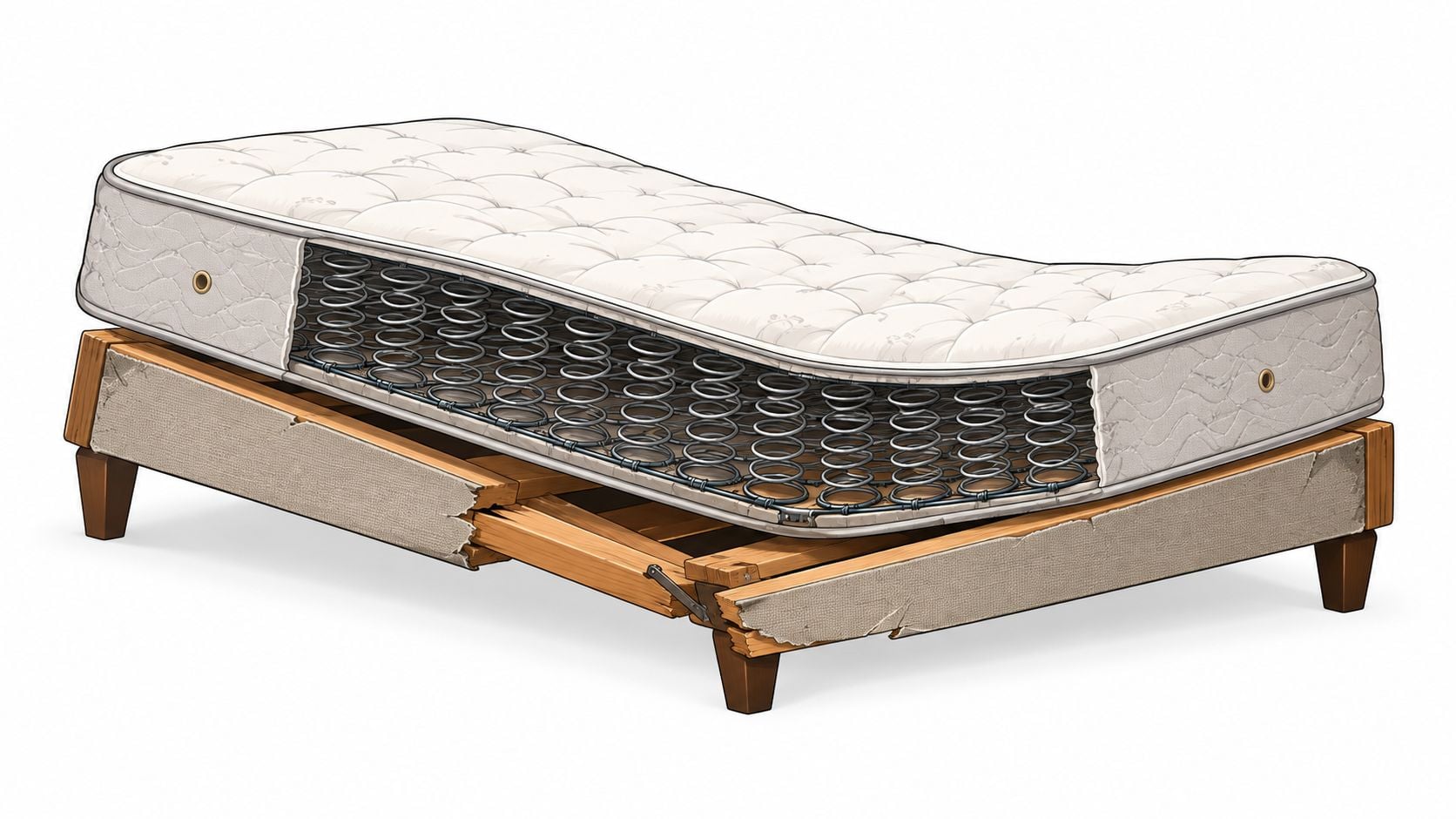
Three warning signs
- Traditional coil construction: The mattress documentation may call for a foundation or a closely supported frame.
- A height-sensitive bedroom: An antique iron frame, a low headboard, or a window beneath the headboard can make excessive stacking impractical.
- An adjustable-base plan: The mattress must flex with the mechanism. A rigid foundation or incompatible innerspring can defeat the purpose of the base.
Warranty language makes this more than a comfort preference. Neutral foundation guidance from a sleep research and education resource notes that some innerspring mattresses may still need a box spring, while modern foam and many hybrid designs generally don't. The manufacturer may also require approved support types or specific slat spacing.
A shopper who ignores those conditions can end up with a mattress that feels uneven and a claim that the warranty won't cover. The right no-box-spring setup is a supported decision, not a shortcut.
For shoppers unsure whether their existing system qualifies, Gorins has published a direct explanation of when a box spring may still be necessary. The sensible answer is to bring the mattress model, frame details, and warranty language together before delivery.
Checking Slat Spacing and Warranty Before You Buy
A tape measure solves more problems here than another hour of online mattress browsing. The shopper needs the distance between slats, the condition of each slat, and the strength of the center support.
Measure the open gap, not the width of the slat itself. Independent guidance commonly sets the upper limit at three inches, and some support systems use tighter limits, so the mattress warranty remains the final authority. A bunkie board can bridge a gap, but it doesn't excuse a bowed frame or a missing center rail.
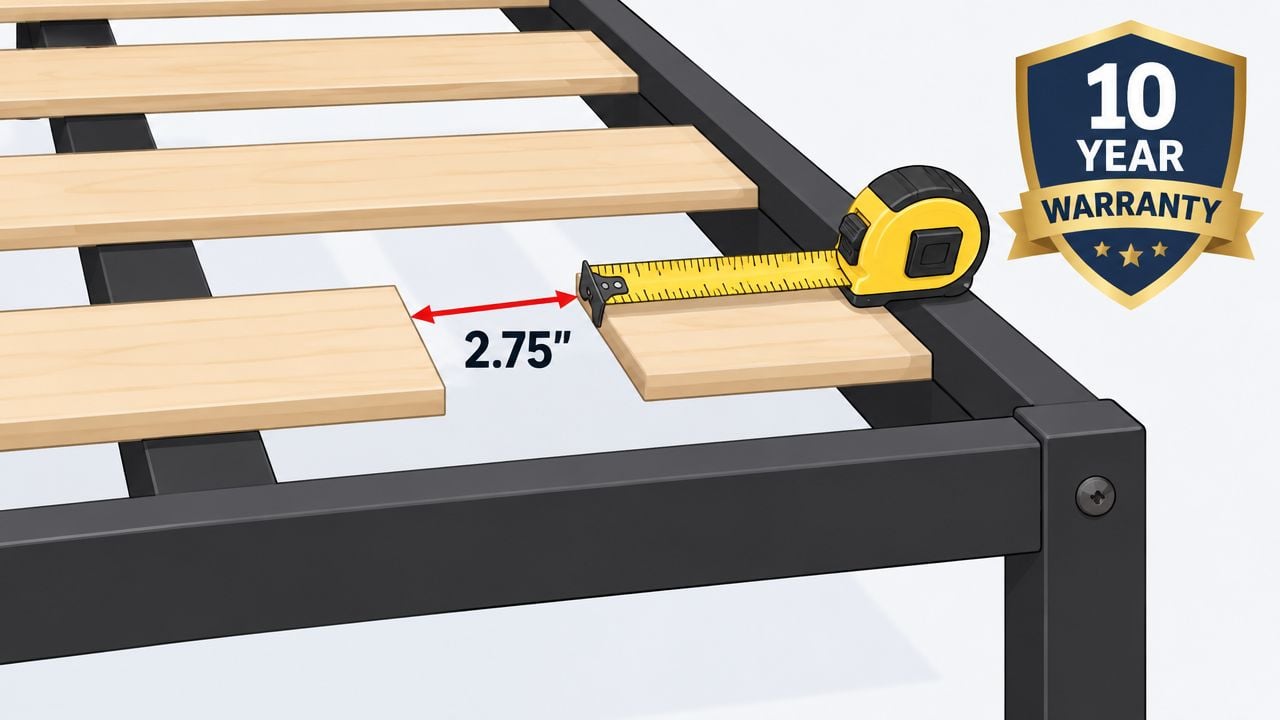
A useful pre-purchase check
- Measure every gap. Check several points along the frame because older slats may not sit evenly.
- Inspect the support rail. Look for a center beam, secure connections, and legs that reach the floor.
- Test the slats. Cracked, bowed, or loose slats should be replaced before a new mattress arrives.
- Photograph the setup. A clear image of the frame, rails, and slat layout helps a sleep specialist identify problems quickly.
- Read the warranty requirements. Confirm approved foundations and spacing for the specific mattress construction.
- Bring the measurements to the showroom. The frame information should guide the mattress selection.
A mattress warranty protects the purchase only when the support system follows the manufacturer's rules.
Warranty requirements vary by construction and model. Some manufacturers specify approved foundations, some restrict unsupported gaps, and others distinguish between foam, hybrid, and innerspring designs. Gorins' warranty information gives shoppers a place to review the service side before they commit, but the exact mattress warranty still deserves attention.
The safest Norwich showroom visit includes a photo of the current bed, the measured gaps, the frame's approximate height, and the intended sleeper's mobility needs. That information turns a vague search for the best mattress no box spring into a compatibility decision that can be checked before delivery.
Sleep Gallery Picks for Norwich Shoppers
A useful mattress recommendation starts with the household, then moves to the frame, then lands on construction. Gorins Furniture & Mattress offers a Sleep Gallery with Tempur-Pedic, Serta, Beautyrest, and King Koil, among other sleep brands, so shoppers can compare comfort by feel while keeping foundation compatibility in view.
Match the construction to the room
Tempur-Pedic suits the shopper who wants deep pressure relief and strong motion isolation, particularly on a platform, bunkie board, or compatible adjustable base. The frame still needs to remain flat and supportive, and the mattress documentation should confirm the foundation requirements.
Serta hybrid models make sense for couples who want coil responsiveness with foam contouring. They belong on a platform or properly spaced slats, not on a frame with large unsupported gaps.
Beautyrest innerspring models fit the customer who specifically wants a familiar traditional feel. That shopper shouldn't force the mattress onto an unsuitable slatted frame. A rigid foundation or the approved support recommended for the exact model is the better route.
King Koil can be a practical value-focused choice for a guest room, children's room, or bunk setup with a solid plywood deck. A solid deck removes the slat-spacing question, although the mattress height and weight limits still need checking.
| Scenario | Frame type | Recommended construction | Sleep Gallery pick |
|---|---|---|---|
| Side sleeper in a Norwich cape | Platform or closely slatted frame | Pressure-relieving foam or responsive latex | Tempur-Pedic or a suitable latex design |
| Couple planning an adjustable base | Compatible adjustable foundation | Flexible foam or hybrid | Tempur-Pedic or Serta |
| Guest-room host | Solid deck or sound platform | Durable, value-focused foam or hybrid | King Koil |
| Traditional-feel sleeper | Approved rigid foundation | Innerspring | Beautyrest |
The showroom conversation should include firmness, sleeping position, motion transfer, entry height, and the foundation already owned. A mattress that feels excellent on a showroom base may feel different on an old frame with flex or wide openings. The Sleep Gallery's value comes from testing the feel while checking the complete support plan.
Bringing Your Decision Home to Gorins
The best purchase is the one that works from the first night in the actual bedroom. Norwich and Eastern Connecticut shoppers can bring a frame photo, slat measurements, mattress height preference, and any manufacturer support language to the Route 32 showroom. That gives the sleep specialist enough information to compare platform-friendly foam, latex, hybrid, and innerspring options without treating the mattress as an isolated product.
The showroom experience should answer four questions before the order is placed:
- Will the mattress work on the existing frame?
- Does the foundation preserve warranty eligibility?
- Will the finished bed height suit the sleeper?
- Does the construction feel right for the sleeping position and household?
A proper fitting includes lying on the mattress rather than judging it by label alone. Couples should test movement and edge support together. A sleeper with mobility concerns should assess how easily the body can sit and stand. Someone planning an adjustable base should confirm that the mattress and base are a compatible pair, not two separate purchases that happen to fit the same room.
Gorins also connects the mattress decision to delivery and service. The Sleep Gallery materials describe a 90-night comfort exchange window, and the store offers in-home delivery and mattress removal as part of the replacement process. Promotional financing uses equal monthly payments and “No Interest if Paid in Full” plans, subject to credit approval, which can make an investment-grade sleep setup easier to plan without reducing the decision to a cheap price.
That local support matters when a foundation question appears after delivery or a warranty issue needs documentation. Gorins has served Norwich and surrounding communities since 1936 as a locally owned, family-operated business, with service areas including New London, Plainfield, Waterford, and surrounding Eastern Connecticut and Rhode Island communities. Its wider home offering also includes Canadel Custom Dining and the F9 Custom Sofa series, with thousands of combinations available for fitted spaces.
Bring the frame photograph and slat measurements to the Norwich showroom. The visit should end with a mattress matched to the existing support, a clear foundation plan, and a delivery date, not another unanswered question about whether a box spring is required.
Gorins Furniture & Mattress helps Norwich and Eastern CT households match name-brand mattresses to compatible frames, foundations, and adjustable bases through its Sleep Gallery and local service. Visit Gorins Furniture & Mattress with a photo and measurements of the current bed, or take the online Style Quiz before visiting the Norwich showroom.