Accent Cabinet with Storage: Your Home Design Guide

A lot of Eastern CT homes have the same problem. The front entry collects shoes, mail, dog leashes, and backpacks. The dining room needs a place for serving pieces that don't fit in the kitchen. The living room needs storage, but another bulky piece would make the space feel crowded.
That's where an accent cabinet with storage earns its keep. It doesn't just hide clutter. It gives a room shape, creates a focal point, and adds a hard-working surface for lamps, trays, or seasonal décor. For families in Norwich, New London, Plainfield, Waterford, and nearby communities, that mix of style and function matters more than ever because rooms often need to do more than one job.
Since 1936, local families have turned to a family-owned showroom for help sorting out choices like these. The value of that kind of guidance is simple. A cabinet can look great online and still fail in real life if the doors can't open, the shelves don't adjust, or the finish fights everything else in the room.
Table of Contents
- Your Guide to the Perfect Accent Cabinet
- What Is an Accent Cabinet and Why You Need One
- Choosing Investment Grade Quality Materials and Construction
- Measure Twice Buy Once Sizing Your Cabinet for Any Room
- From Clutter to Style Storage Configurations and Styling Ideas
- Your Local Partner in Home Furnishing The Gorins Advantage
Your Guide to the Perfect Accent Cabinet
One common local scenario goes like this. A family starts by wanting “something small” for the wall near the front door. A bench won't hide the clutter. A bookcase looks too open. A large sideboard feels too formal.
An accent cabinet with storage solves all three problems at once. It keeps the room from feeling messy, gives the eye something attractive to land on, and adds a surface that can be used. That's why it works in so many homes, from tighter colonials to open newer layouts.
The smart move is to shop for this piece the way a designer would. Start with the job it needs to do. Then look at the scale, the storage layout, and the finish. Style matters, but utility matters just as much, especially in busy family homes.
Practical rule: If a cabinet only looks good from across the room but doesn't hold what the family needs every day, it's the wrong cabinet.
For most homes, the right piece does one of these jobs well:
- Entryway control: It hides seasonal grab-and-go clutter and keeps the first view of the home calmer.
- Dining room backup: It stores linens, serving pieces, candles, and extra dishes without taking over the room.
- Living room support: It acts like a compact media or multipurpose storage piece while still feeling decorative.
- Hallway function: It turns an awkward wall into useful storage and display space.
A good accent cabinet doesn't have to be oversized to feel important. It has to be intentional. That's the difference between furniture that fills a gap and furniture that improves the whole room.
What Is an Accent Cabinet and Why You Need One
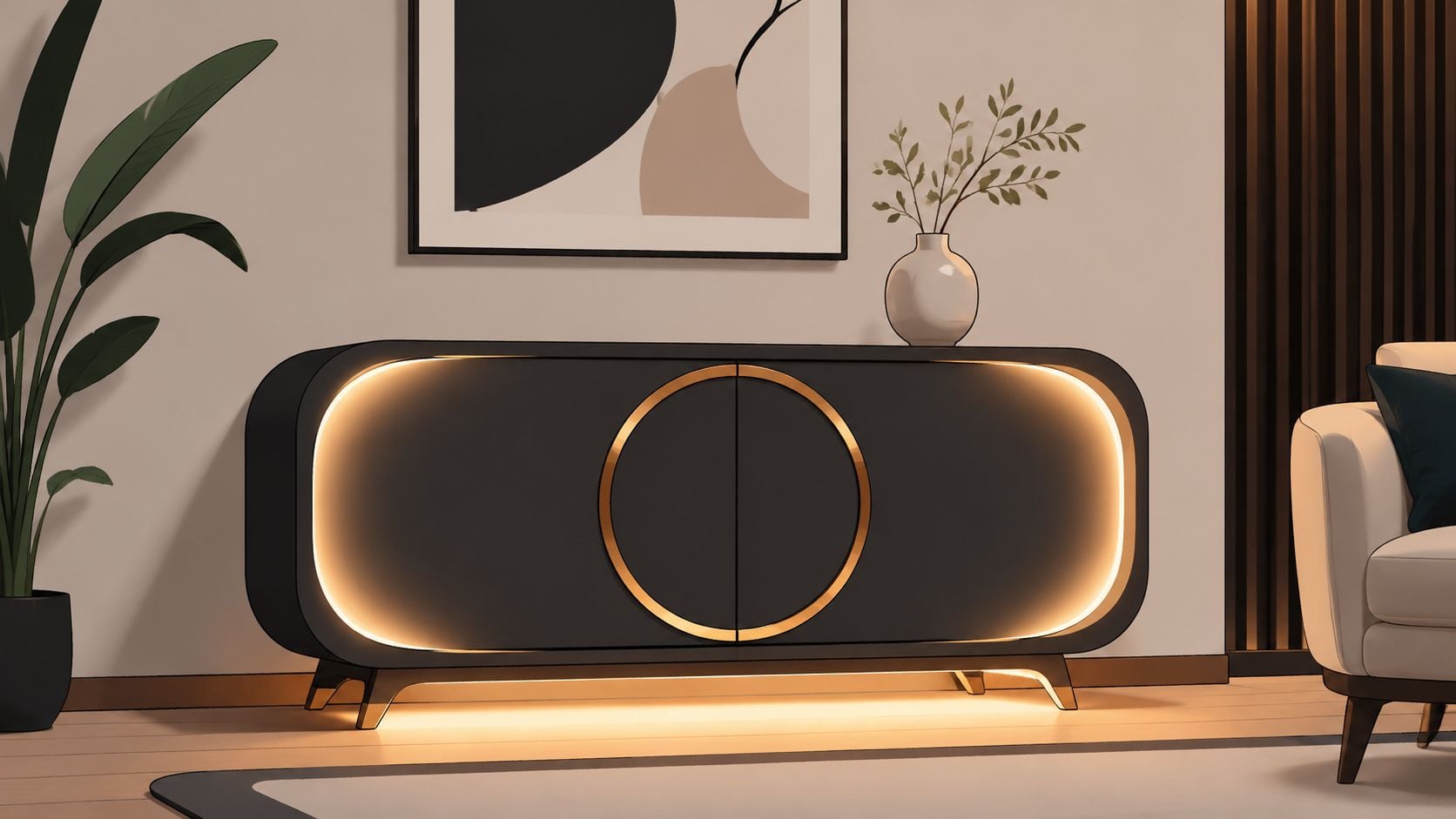
An accent cabinet with storage isn't just a smaller version of a basic storage unit. It's meant to be seen. According to Jordan's accent chest overview, accent cabinets are defined as pieces meant to stand out rather than disappear, and retail assortments commonly include compact formats and finishes such as blue, black, and white.
A statement piece, not a filler piece
That distinction matters. A utilitarian cabinet is there to hold things. An accent cabinet is there to hold things and sharpen the room's personality. It can bring in contrast, texture, symmetry, or a stronger color note without requiring a full room makeover.
That's why this category has become so useful in homes with multifunctional spaces. A dining room might also be homework central. A living room might need to hide games, chargers, and remotes. An entry hall might need to feel polished even when daily life is anything but polished.
For anyone collecting ideas, design-forward furnishings can be a useful visual reference because they show how storage pieces can still carry strong decorative presence.
Where it works hardest
The strongest reason to buy one is flexibility. An accent cabinet can act as:
- A visual anchor: It gives an empty wall purpose.
- A clutter shield: It hides the items that make a room feel busy.
- A serving surface: It creates a practical top for lighting, trays, or décor.
- A transition piece: It helps connect styles between adjoining spaces.
A compact cabinet in a dark finish can ground a pale room. A lighter painted finish can brighten a narrow hallway. A patterned front can add movement where everything else feels flat.
One useful example is an Aquitaine accent cabinet, which shows the kind of piece shoppers often consider when they want decorative presence and hidden storage in the same footprint.
The right accent cabinet should do one practical job well and one visual job even better.
A lot of families wait too long to add one because they think of it as optional décor. That's backwards. In a hardworking home, this piece often fixes storage and style faster than a larger, more expensive room update.
Choosing Investment Grade Quality Materials and Construction
Cheap furniture usually gives itself away in the first year. Doors start to sag. Drawers don't open smoothly. Shelves lock the owner into one awkward setup. The cabinet still takes up space, but it stops being helpful.
Investment-grade quality looks better over time because it's built for repeated use, not just showroom appeal.
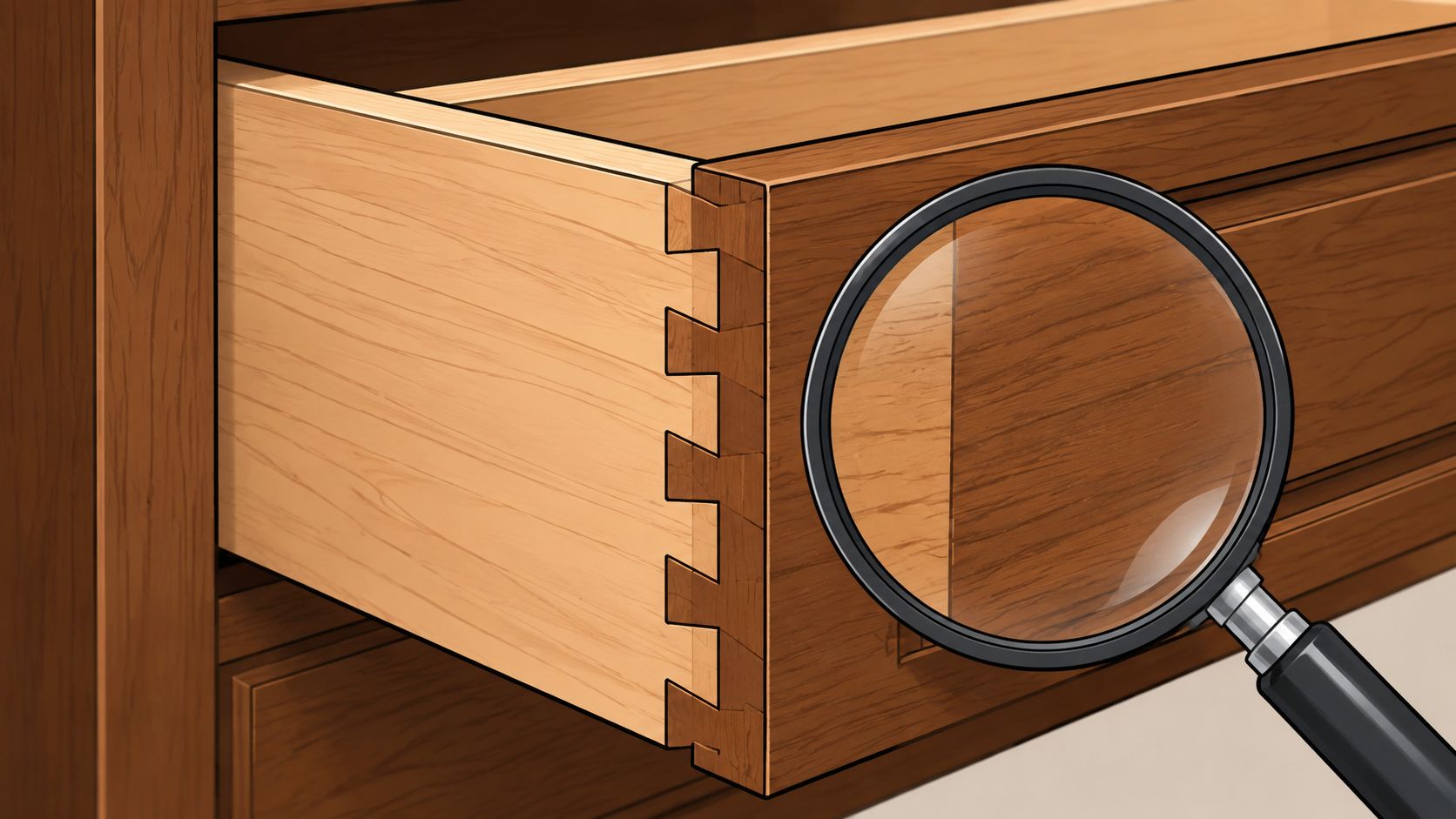
What quality looks like up close
The most useful performance details are pretty clear. According to Belfurniture's accent cabinet feature guide, the key specifications to look for are adjustable shelving, soft-close hinges, full-extension drawers, and cord cutouts.
Those details aren't minor. They directly affect whether the cabinet stays useful.
- Adjustable shelving: This matters when the cabinet needs to hold dinnerware one year and games or office supplies the next.
- Soft-close hinges: These reduce impact on the doors and hardware, which helps the cabinet age better in busy households.
- Full-extension drawers: These make the back of the drawer reachable instead of wasted.
- Cord cutouts: These make a cabinet far more usable for media gear or lamp charging stations.
A practical buying checklist helps:
- Open every door: It should move smoothly and sit evenly.
- Pull each drawer fully: If the back portion is hard to access, the storage is less useful than it looks.
- Check shelf flexibility: Fixed interiors limit the cabinet fast.
- Look at the back panel and hardware: Flimsy construction usually shows up there first.
For a more detailed shopping checklist, this guide to buying chests, dressers, and cabinets gives a helpful framework.
Materials that make sense for family life
Solid wood has long-term appeal and can wear beautifully. Veneers can also be a smart choice when they're well applied over stable construction. MDF can work in the right application, but buyers should pay close attention to hardware quality, finish durability, and overall sturdiness.
The mistake isn't choosing one category automatically. The mistake is ignoring construction. A well-built cabinet with strong hardware and a practical layout will outperform a prettier piece that skimps on the parts people use every day.
Brands such as Flexsteel and Aspen Home are worth noticing because shoppers often look to established casegoods makers when they want stronger craftsmanship and more dependable fit and finish.
Buy the cabinet that still feels solid after years of opening, closing, loading, and moving things around inside it.
A cabinet is touched constantly. That's why the feel of the hinges, drawers, and shelves matters more than trendy ornament on the front.
Measure Twice Buy Once Sizing Your Cabinet for Any Room
Most cabinet mistakes aren't style mistakes. They're measurement mistakes. The cabinet is too deep for the walkway, too tall for the wall, or too wide to leave breathing room around nearby furniture.
That problem is easy to avoid if the room gets measured like a working space instead of a blank rectangle.
The dimensions that matter most
According to Loomlan's accent cabinet sizing guide, accent cabinets with storage typically fall in a 30-72 inch width range, with common retail sizes around 48-60 inches wide, 30-36 inches high, and 16-20 inches deep. The same guide notes that a 36-inch minimum clearance is commonly recommended so doors can open fully in normal circulation spaces.
Those numbers give shoppers a reliable baseline, but they don't replace room-specific measuring. A cabinet that works beautifully in one dining room can feel oversized in another that has tighter chair movement or nearby door swing.
Accent Cabinet Measurement Checklist
Before shopping, record the actual conditions around the cabinet location.
| Measurement | Your Space (Inches) |
|---|---|
| Wall width available | |
| Maximum cabinet width preferred | |
| Maximum cabinet height preferred | |
| Maximum cabinet depth preferred | |
| Clearance in front of cabinet | |
| Door swing clearance | |
| Distance to nearby dining table or sofa | |
| Distance to nearest doorway | |
| Baseboard depth | |
| Outlet or vent location |
A simple process works best:
- Measure wall width first. Then subtract visual breathing room so the cabinet doesn't look wedged in.
- Check the pathway in front. Families need enough space to walk by even when doors are open.
- Measure depth carefully. In narrow rooms, depth is often the deal-breaker.
- Look for obstacles. Baseboards, floor vents, outlets, and light switches all matter.
- Think about the top surface. A lamp, art, or serving tray needs room too.
A cabinet can fit on paper and still fail in the room if the doors open into daily traffic.
For anyone unsure about how to account for passages, corners, and nearby furniture, this furniture measuring guide is a practical place to start.
The smartest buyers also mark the footprint on the floor with painter's tape before ordering. That quick step shows whether the cabinet helps the room or blocks it. It also makes scale feel real in a way numbers alone never do.
From Clutter to Style Storage Configurations and Styling Ideas

A beautiful front doesn't guarantee useful storage. That's the trap. Many shoppers focus on finish, hardware, or door pattern and barely inspect the layout inside.
According to this cabinetry discussion on usable storage and layout, real storage efficiency depends on internal access and configuration, and awkward shapes or blind areas can waste substantial space. That point applies directly to accent cabinets. A cabinet that looks generous from the outside may store less than expected if shelves are fixed badly or openings are hard to use.
Choose the inside before judging the outside
The best configuration depends on what the cabinet has to hold.
- Drawers work best for smaller loose items. Think placemats, candles, cords, remotes, or office supplies.
- Solid doors work best for visual calm. They hide the messiest categories and make the room feel cleaner.
- Glass doors work best for edited display. They're useful for pretty dishware or books, but they demand tidier styling.
- Open shelving looks airy, but it asks for discipline. In most family homes, too much open storage turns into visible clutter.
For households trying to declutter thoughtfully, Practical storage for homeowners offers useful inspiration on making everyday storage look more intentional.
A quick matching guide helps:
| Storage need | Best cabinet feature |
|---|---|
| Dinnerware and serving pieces | Adjustable shelves behind doors |
| Board games and puzzles | Wide shelves with easy door access |
| Table linens and candles | Drawers plus closed-door storage |
| Media accessories | Cord access and enclosed compartments |
| Home office overflow | Mixed drawers and shelves |
One more opinion that saves frustration. Wider and simpler often beats fussy and divided. A straightforward cabinet with accessible shelves usually stores more useful items than a highly decorative piece with awkward compartments.
Room by room ideas that actually work
In an entryway, the cabinet should act like a landing zone without looking like a dumping ground. A lamp, bowl, and small tray on top are enough. Inside, baskets or shelf dividers can hold daily grab-and-go items.
In a dining room, the cabinet can become a compact server. Use the top for a pair of candlesticks or a low centerpiece. Inside, group by task, not by category. Put all entertaining items together so hosts aren't hunting across the room.
In a living room, this piece often works best when it hides what people don't want to see every day. Games, charging cords, extra throws, and media accessories all belong behind doors. If the cabinet has a cleaner internal layout, it earns its floor space.
For families thinking beyond stock choices, Canadel Custom Dining can be especially relevant because customization helps align finish, scale, and everyday function in a more personalized way. This guide to dining room storage furniture is helpful for sorting through those options in a more practical way.
Good styling starts with good storage. If the inside doesn't work, the top becomes a distraction instead of a finishing touch.
The best-styled accent cabinet with storage never looks overworked. It looks settled. That usually means fewer decorative objects, better internal organization, and a clear reason for being in the room.
Your Local Partner in Home Furnishing The Gorins Advantage
A cabinet can look right online and still fail the minute it lands in your house. The finish reads too orange against your floors. The shelves are too shallow for serving pieces. The scale is off, and now the whole wall feels cramped.
That problem gets solved faster in a local showroom, where you can open the doors, check the shelf depth, and see the finish in real light. For families in Norwich and across Eastern CT, that kind of hands-on help saves time and prevents expensive mistakes.
Why local guidance still matters
Accent cabinets now do more than fill an empty wall. Many are built to hide cords, support media use, or handle storage in hardworking rooms like entryways, dining rooms, and family spaces, as described in this accent cabinet guide.
More options sound helpful. They also make it easier to choose badly.
A good local store helps you filter quickly. You can compare wood tones in person, judge whether the cabinet has enough usable storage, and get honest feedback on scale before you buy. That matters in older Eastern CT homes, where room sizes, traffic paths, and existing finishes rarely match a standard online template.
Since 1936, Gorins Furniture & Mattress has helped local households buy with more confidence and less second-guessing. The advantage is simple. You get real conversation, practical guidance, and the chance to see construction and finish quality up close instead of relying on cropped photos.
Customization, value, and a simpler buying process
Customization matters because many homes need a piece that works with what is already there. A custom dining program can help match an existing table, wall color, or wood tone. A custom sofa series can also help nearby seating feel connected, so the cabinet looks like part of the room instead of a one-off purchase.
Payment options matter too. Promotional financing with equal monthly payments can make a better-built piece easier to bring home without dropping down to lower quality just to meet a short-term budget.
The bigger benefit is clarity. Shoppers can ask the questions that decide whether a cabinet works:
- Will this finish work with my floor and trim?
- Will these shelves hold platters, baskets, or board games?
- Does this size fit the wall without crowding the room?
- Should I buy a stock piece or place a custom order?
For families considering made-to-order furniture, this guide to getting started with a custom order explains the process clearly.
Big websites give you more scrolling. A good local furniture store gives you better judgment. That is the Gorins advantage for Eastern CT families who want an accent cabinet with storage that looks right, works hard, and still feels right years from now.