Pillow Top Mattress Pros and Cons: A Complete Guide

A shopper in Norwich may walk into a showroom planning to buy a supportive mattress and leave focused on the bed that feels softest. After a few minutes on a plush pillow top, the shoulders relax, the hips settle, and the surface feels almost cloud-like. That reaction is real, but it only answers one question: how comfortable does the mattress feel right now?
The more important question is whether that comfort will remain consistent after years of nightly use. This guide to pillow top mattress pros and cons separates first-night softness from long-term structural support, so value-conscious households can choose a mattress as an investment rather than as a short-lived indulgence.
Why Pillow Top Mattresses Catch Your Eye in the Showroom
A plush mattress makes an immediate impression because the body notices pressure relief before it notices durability. A side sleeper may feel the shoulder and hip settle into the surface instead of pressing against a firm upper panel. A couple may appreciate how the padding softens the transition when one person changes position. That first response can be persuasive, especially after testing a succession of firmer beds.
The showroom experience matters because comfort is personal. A mattress that feels inviting to one shopper may feel unstable or too soft to another. The problem starts when the first few minutes become the entire buying decision. A pillow top changes the surface feel dramatically, but the support core underneath still determines how the body is held through the night.
Softness is only one part of the decision
A useful showroom test has two stages. First, the sleeper should lie in the position used most often and notice whether the shoulders, hips, and other pressure points feel cushioned. Then the sleeper should stay still long enough to assess whether the lower back feels supported, whether movement remains easy, and whether the edges feel stable.
That approach turns a dramatic first impression into a more useful evaluation. A pillow top may be the right choice for a side sleeper who needs extra cushioning, but it may frustrate someone who prefers a lifted, stable feel or who wants the comfort layer to remain easily replaceable.
Showroom rule: A mattress should feel comfortable immediately, but it also needs to leave the sleeper feeling supported rather than swallowed.
Gorins' bedroom accessorizing guide reinforces a broader point about bedroom planning. The mattress is part of a complete sleep environment, and its height, feel, foundation, and bedding all affect how practical the final setup becomes. Shoppers comparing Mattresses Norwich CT options should judge the bed as a long-term part of the room, not just as the softest surface in the showroom.
What a Pillow Top Mattress Actually Is
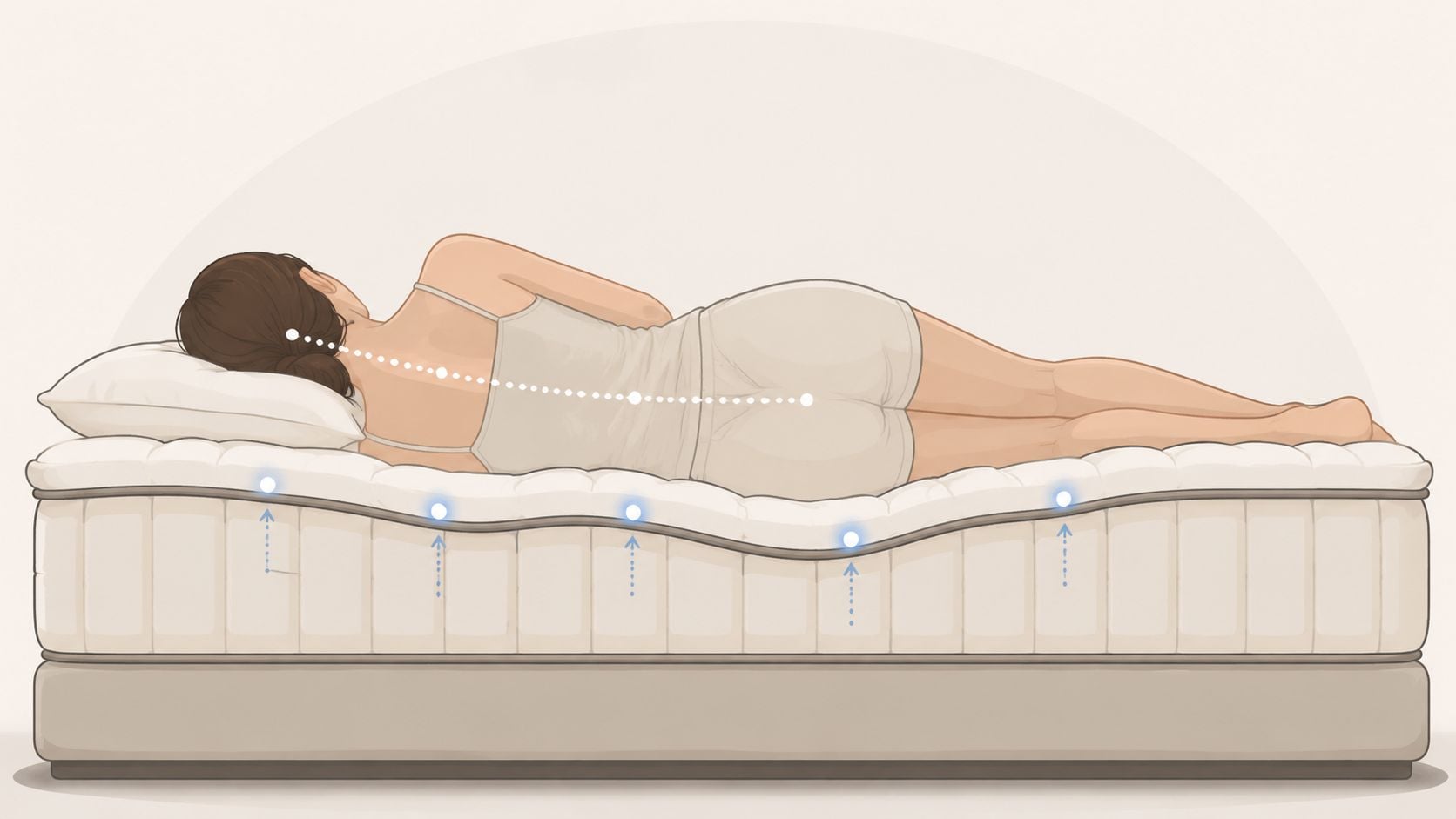
A pillow top mattress has an extra cushioning layer sewn onto its surface. The upper section is separated from the main mattress by a visible seam or gusset, making it look like a padded layer placed on top of the bed. In practical terms, it resembles a mattress topper that has been permanently attached to an innerspring or hybrid core.
That construction makes a pillow top a comfort layer, not a mattress type by itself. The support system may use coils, foam, or a combination of materials. The pillow top changes how the sleeper meets the mattress, while the underlying core carries much of the responsibility for alignment, stability, and weight distribution.
Pillow top, Euro-top, and separate topper
The visible construction helps distinguish three common options:
- Pillow top: The cushioning sits above the main mattress profile, with a visible seam or gusset. It creates a softer, more layered appearance.
- Euro-top: The upper comfort layer is sewn flush with the mattress edges. This produces a more squared-off look and can provide a more integrated edge feel.
- Standalone topper: The cushioning layer remains separate from the mattress. It can be removed, replaced, or changed without replacing the support core.
That last difference drives much of the durability discussion. A separate topper gives the owner more control because the comfort layer can be replaced independently. A sewn-in pillow top offers a finished design and consistent placement, but the owner can't remove only the worn section.
A pillow top also shouldn't be confused with memory foam itself. Memory foam describes a material and response, while a pillow top describes where an additional comfort layer sits in the construction. Readers who want a clearer material overview can review what a memory foam mattress is before comparing surface feel with deeper support.
The key buying question is: does the core support the sleeper appropriately, and does the attached upper layer provide the desired pressure relief without excessive sinking? If the answer to either part is no, the mattress won't become a better long-term choice because its surface feels luxurious.
The Comfort Benefits That Make Pillow Tops Popular
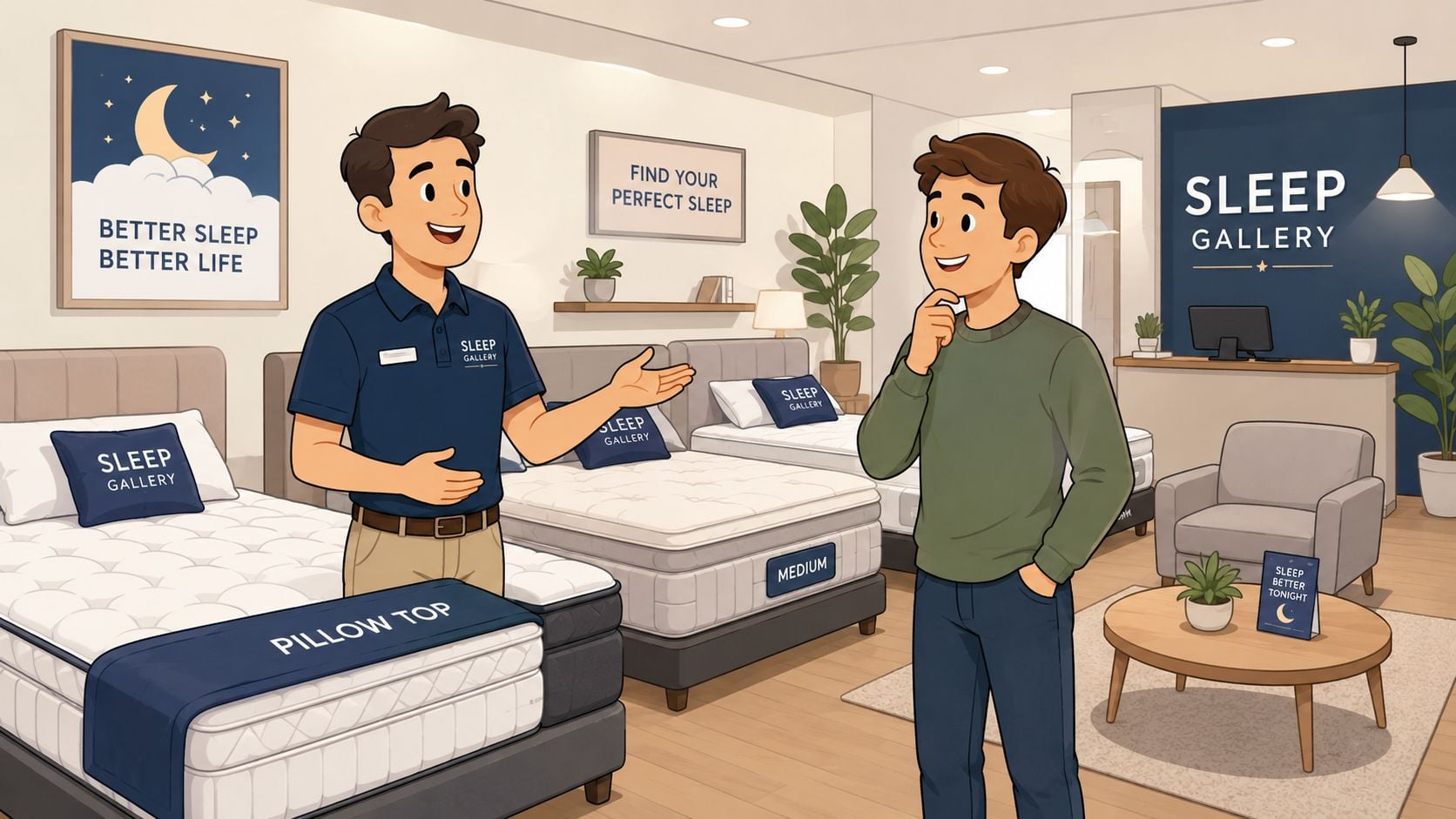
The strongest argument for a pillow top is pressure distribution. A softer upper layer allows the body to settle gradually, which can reduce the sharp pressure created when shoulders, hips, heels, or the back of the head meet a firmer surface. That benefit is especially relevant for side sleepers, whose shoulders and hips often create prominent contact points.
Biomechanical guidance recommends considering softer topper or pillow-layer adjustments when more than three contact points exceed 60 mmHg, as described in this biomechanical review of mattress pressure and support. The same source discusses a clinical mattress study in which adding a topper reduced peak pressure and improved comfort, with heel and head pressure falling by more than 30% in a healthy volunteer cohort. Those findings explain why a plush layer can feel meaningfully better, rather than merely more luxurious.
Who benefits most
Side sleepers are the clearest match. The extra cushioning can reduce concentrated pressure beneath the shoulder and hip while allowing the body to settle into the surface. A side sleeper should still check spinal alignment, because excessive softness can let the midsection sink farther than the shoulders and legs.
Combination sleepers may also appreciate the contouring. The upper layer can soften repositioning without creating the rigid feel of a very firm mattress. However, the sleeper should test whether movement remains easy. A surface that feels comfortable while still can become inconvenient if it makes turning or rising difficult.
People moving from an overly firm mattress often notice the greatest immediate change. If the existing bed creates sore spots at the shoulders or hips, added cushioning may address the surface problem without requiring the sleeper to choose an extremely soft support core.
A pillow top can also suit sleepers who prefer a more enveloping feel. That preference is legitimate, but it shouldn't override support. The most comfortable surface in the showroom isn't automatically the best match for every body shape, sleep position, or long-term expectation.
Pressure relief is the main technical advantage. The pillow top earns its place when it solves a specific comfort problem, not simply because it looks plush.
The Durability Trade-Offs You Need to Know
The central drawback is straightforward. The cushioning layer often wears before the support core beneath it, so the mattress can lose its original comfort and consistency while the deeper structure still has usable life. The upper section may flatten, compress, or develop an uneven sleep surface, particularly in lower-density constructions.
Industry guidance commonly places the average mattress lifespan at 7 to 10 years, while pillow-top-specific guidance says the comfort layer may begin compressing in as little as 2 to 5 years, depending on its fill material. Sleep Foundation's pillow-top mattress guidance also cites consumer-reported data indicating that at least 30% of pillow-top owners notice significant sagging or compression within 3 years.
Those figures don't mean every pillow top fails early. Material quality matters. One independent durability report recorded only about 1.144% height loss after hard-use testing and cited roughly 1% height loss after 10 years for that particular design, as discussed in the comparison of pillow tops and Euro-tops. That example shows why construction quality matters, but it shouldn't be treated as a promise for every model.
The attached-layer problem
A separate topper can be exchanged when it loses resilience. A sewn-in pillow top can't. Once the attached comfort layer breaks down, the owner can't restore the original feel by replacing only that portion. The whole mattress may become functionally worn out even when the support core remains serviceable.
Independent expert commentary places the typical period before noticeable compression or sagging at about 2 to 5 years for fixed pillow-top layers, depending on construction and materials, as explained in this pillow-top mattress durability discussion. Many separate toppers also last only 3 to 5 years on average, which reflects the broader pattern that plush comfort layers tend to have shorter usable lives than the core below them.
For households tracking total cost of ownership, the question is not whether a pillow top feels good today. It is whether the comfort benefit justifies the possibility of earlier replacement or an added topper expense. Shoppers who prioritize consistent support over a cushioned surface should consider a flatter construction before committing.
Gorins' mattress lifespan guide can help shoppers frame the purchase around expected use, construction, and maintenance rather than the showroom honeymoon alone.
How Pillow Tops Compare to Other Mattress Constructions
Pillow tops make the most sense when pressure relief is the leading priority. Other constructions may provide a better balance for shoppers who care more about edge stability, replaceable comfort layers, or a consistent feel across many years. The right comparison isn't “soft versus firm.” It is surface comfort versus how the entire system behaves over time.
| Feature | Pillow Top | Euro Top | Memory Foam | Hybrid, No Pillow Layer |
|---|---|---|---|---|
| Initial comfort | Plush, cushioned, and immediately soft | Plush with a more integrated surface | Contouring with a close, body-hugging feel | Often more responsive and less padded |
| Long-term durability | Comfort layer may compress before the core | Often more cohesive at the edges and generally more durable than a pillow top | Depends heavily on foam construction and density | Can provide more consistent support through the surface |
| Edge support | Can feel softer near the perimeter | Usually more integrated around the edge | May feel less mobile at the edge | Often firm and stable, depending on the core |
| Motion isolation | Cushioning can absorb movement | Good isolation with a contained upper profile | Strong surface motion absorption | Varies with the materials and coil design |
| Replacement flexibility | Attached layer can't be swapped independently | Attached layer can't be swapped independently | The comfort system is integrated | The comfort system is integrated |
| Best fit | Side sleepers seeking pressure relief | Shoppers wanting plushness with a cleaner edge | Sleepers wanting deep contouring | Buyers prioritizing responsive, consistent support |
Reading the alternatives honestly
A Euro-top is the closest alternative for shoppers who want a plush surface without the same pronounced pillow-top profile. Its flush construction can create a more finished edge and may offer somewhat better durability, although material quality still determines performance.
Memory foam can provide contouring without a sewn pillow-top seam. It may suit sleepers who want the surface to conform closely, but the response can feel slower and less buoyant than a coil-based bed. The shopper should test movement rather than relying on material labels.
A hybrid without a pillow layer usually makes a stronger case for consistent support and responsiveness. It may sacrifice some initial softness, but that trade can appeal to back sleepers, combination sleepers, or anyone concerned about a plush layer flattening ahead of the core.
For a deeper construction comparison, shoppers can review hybrid mattresses versus innerspring mattresses. The practical decision is clear: choose the pillow top when its pressure-relief benefit solves a real sleep problem, and choose an alternative when longevity, mobility, or edge support carries more weight.
Care and Maintenance Tips to Extend Mattress Life
Maintenance won't turn a lower-quality comfort layer into an investment-grade construction, but it can help distribute wear and protect the materials. Pillow tops generally can't be flipped because the cushioned side is designed for sleeping, so rotation becomes the main way to reduce repeated loading in the same areas.
A supportive foundation matters just as much. If the base flexes, bows, or lacks appropriate support, the mattress may develop an uneven feel regardless of its surface construction. A proper base gives the support core a stable platform and helps the upper cushioning perform as designed.
A practical care routine
- Rotate regularly: Turn the mattress according to the manufacturer's care instructions so the same sleep positions don't receive all the nightly pressure.
- Use a supportive base: Check the foundation or platform for visible wear, movement, or inadequate support before blaming the mattress for dips.
- Add a mattress protector: Protect the comfort materials from moisture, spills, skin oils, and allergens that can affect cleanliness and material condition.
- Distribute use thoughtfully: Avoid sitting repeatedly on the same edge or corner, especially if that area already feels softer than the rest of the mattress.
- Check the surface periodically: Notice whether the body now settles into a different place, whether the surface feels uneven, or whether pressure relief has changed.
Common maintenance guidance recommends regular rotation and a supportive base because pillow-top cushioning can compress faster than firmer constructions, as outlined in this pillow-top mattress care guidance. The recommendation is practical, not cosmetic. Even wear gives the comfort layer a better chance to retain a consistent feel.
A mattress deserves reassessment when the sleeper wakes with new pressure points, notices a visible or felt depression, or needs to change position repeatedly to find support. The mattress maintenance and cleaning guide offers additional care considerations. Once the comfort layer has broken down, maintenance can slow further wear, but it can't replace lost resilience.
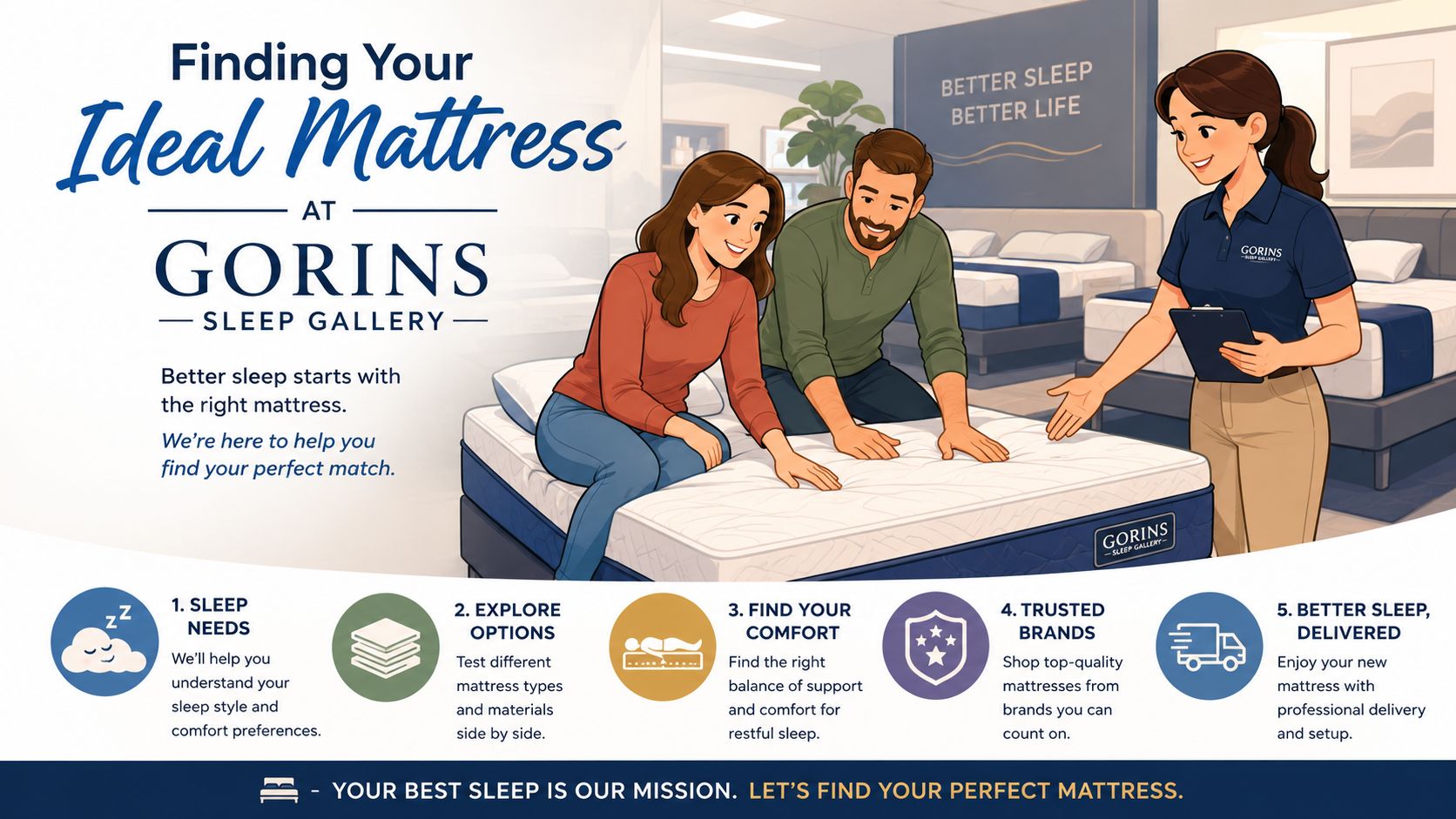
Finding Your Ideal Mattress at Gorins Sleep Gallery
The best pillow-top decision happens after a real test, not after choosing the softest description online. A shopper should lie in the usual sleep position, test the shoulder and hip comfort, assess lower-back support, and try changing positions. Couples should test movement while the other person remains still.
The Sleep Gallery at Gorins Furniture & Mattress gives Norwich-area shoppers a place to compare constructions by feel. Available sleep brands include Tempur-Pedic, Serta, Beautyrest, Stearns & Foster, Sealy, and King Koil, allowing shoppers to evaluate different comfort systems rather than assuming every plush mattress behaves alike.
A better showroom conversation
A knowledgeable associate can help narrow the choice by asking practical questions:
- Sleep position: Does the shopper spend most of the night on the side, back, or stomach?
- Pressure points: Do the shoulders, hips, heels, or other areas feel sore on the current mattress?
- Movement: Does the sleeper want a responsive surface or a more enveloping one?
- Long-term priority: Is the priority immediate softness, consistent support, edge stability, or replaceable comfort?
- Room and base: Will the mattress height work with the existing frame, sheets, and bedroom layout?
That conversation supports “comfort by feel” while keeping healthier sleep and long-term value in view. Promotional Financing with equal monthly payments, subject to approval and program terms, can also lower the barrier to an investment in a higher-quality sleep system without shifting the decision toward the cheapest surface.
Gorins has served the community since 1936 as a locally owned, family-operated business. The showroom also supports broader home decisions, from Canadel Custom Dining with thousands of combinations to the F9 Custom Sofa series, where shoppers can tailor details to their lifestyle. Those programs matter because a home purchase often involves more than one room, and the same local guidance can support bedroom, dining, and living room planning.
A pillow top is a sound choice when pressure relief and a plush surface clearly improve sleep. It isn't the automatic winner for shoppers focused on maximum durability or the ability to replace the comfort layer separately. Customers in Norwich, New London, Plainfield, Waterford, and surrounding Eastern Connecticut and Rhode Island communities can compare the options in person, use the online Style Quiz, or look through Clearance for value-driven savings.
Since 1936, Gorins Furniture & Mattress has offered comfort by feel, trusted sleep brands, custom home furnishings, promotional financing with equal monthly payments, and local guidance for households weighing pillow top mattress pros and cons. Visit Gorins Furniture & Mattress in Norwich to test the Sleep Gallery mattresses, take the online Style Quiz, or browse Clearance for investment-minded value.