Mattress Size Comparison Chart Guide for Every Bedroom

A Norwich homeowner stands in a spare bedroom with a tape measure in one hand, trying to picture a new bed between an old dresser, a doorway, and the wall. The mattress may look like the simple part of the purchase, but its width and length determine the frame, foundation, fitted sheets, walking space, and even whether delivery can reach the room.
This mattress size comparison chart brings those decisions together. It covers standard dimensions in inches and centimeters, minimum room footprints, sleeper-height guidance, specialty choices such as Twin XL and Split King, compatibility issues with frames and bedding, and a practical checklist for shopping in Norwich, New London, Plainfield, Waterford, and surrounding Eastern Connecticut and Rhode Island communities. For a broader look at choosing a bed for a particular room, Gorins also offers this guide to choosing the best bed mattress size for a home.
Finding the Right Mattress Size for Your Home
Start with the room, not the mattress display. Measure the clear floor area, then mark the door swing, closet access, windows, radiators, and the place where a dresser or nightstand must sit. A mattress that technically fits can still make a bedroom awkward if the frame blocks a drawer or leaves no comfortable route around the bed.
The standard U.S. chart includes Twin, Twin XL, Full, Queen, King, and California King sizes. Those dimensions are widely used by mattress retailers and sleep guidance organizations, which makes them a reliable starting point for comparing products and accessories. The standardized mattress dimensions chart is useful for confirming the basic measurements before a shopper starts comparing construction or comfort.
Practical rule: The right size is the largest sleep surface that leaves the room functional, not simply the largest mattress that can be pushed through the doorway.
Next, match the length to the tallest sleeper. A 75-inch mattress can suit many children and shorter adults, while an 80-inch or 84-inch option gives taller sleepers more useful legroom. Couples should also consider whether each person needs room to turn, whether children or pets join the bed, and whether side access is important.
Finally, treat the purchase as a complete sleep system. The mattress, frame, foundation, protector, sheets, and delivery route must agree. A clear size match at the start prevents the common mistake of choosing a comfortable mattress that later requires a replacement frame or incorrectly fitted bedding.
Standard Mattress Sizes Explained
The six core U.S. sizes run from compact single-sleeper options to spacious beds for couples. The standard dimensions are Twin, 38 by 75 inches, Twin XL, 38 by 80, Full, 54 by 75, Queen, 60 by 80, King, 76 by 80, and California King, 72 by 84, as documented in this mattress size reference.
Twin and Twin XL
A Twin is the sensible choice for a child, teenager, bunk bed, daybed, or compact guest room. Its 38-inch width keeps floor space available for play, storage, or a desk. At 75 inches long, it suits many shorter sleepers, but taller teenagers should look at the Twin XL before committing.
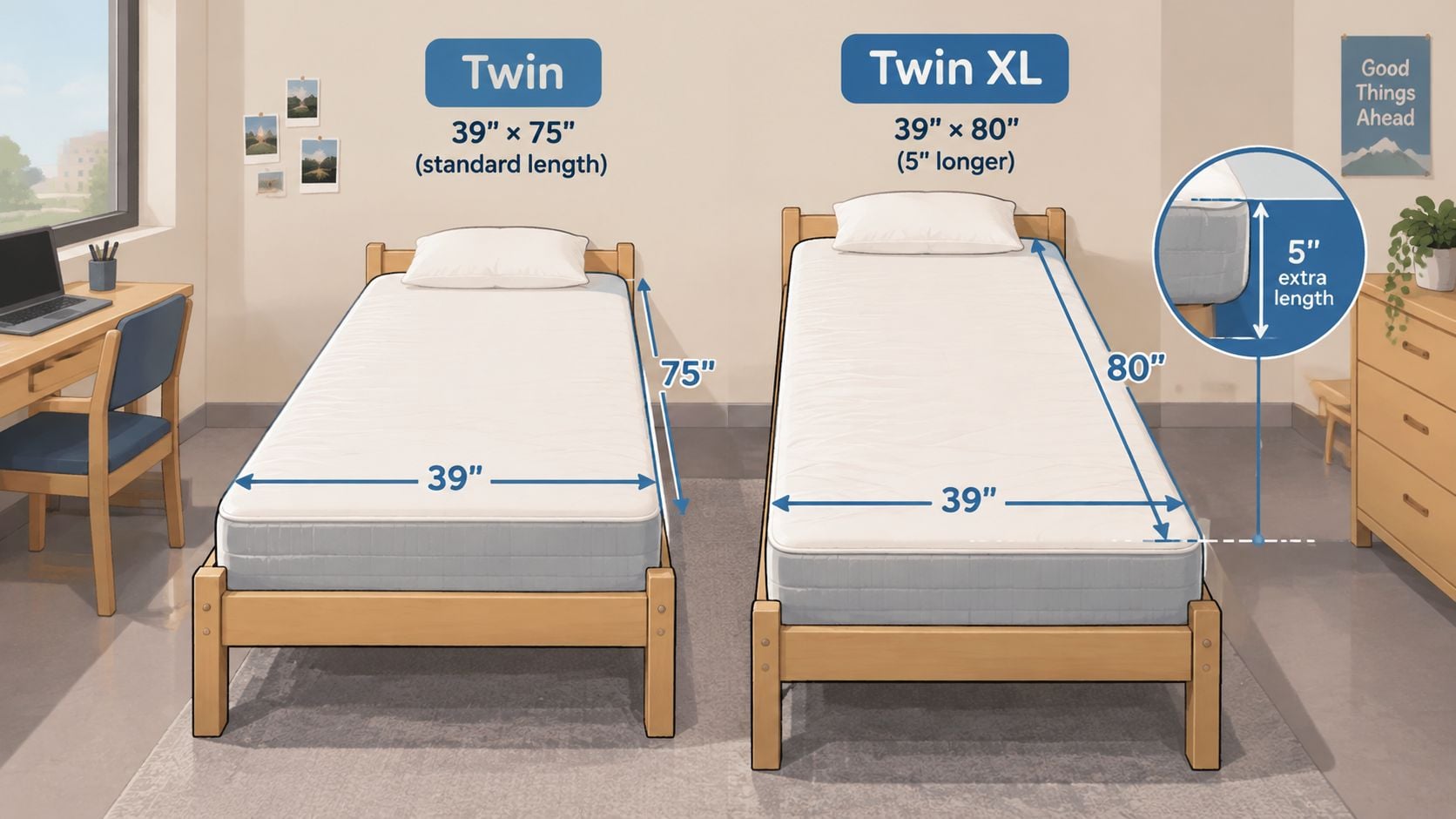
The Twin XL keeps the Twin's narrow footprint and adds length, making it useful for taller singles, dorm rooms, and growing teenagers. It also forms the basis of a Split King arrangement, where two Twin XL mattresses sit side by side.
Full and Queen
A Full, also called a Double, provides substantially more width for one sleeper while keeping the 75-inch length. It works well for solo adults, teenagers, studio apartments, and guest rooms where a Queen would crowd the furniture.
A Queen measures 60 by 80 inches and is the practical default for many couples. It gives two sleepers a longer surface than a Twin or Full without taking as much width as a King. For readers comparing larger options, Gorins explains the dimensions and practical differences in its guide to what size a King mattress is.
King and California King
A King measures 76 by 80 inches. It adds width rather than length, so it's the stronger choice for couples who spread out, share the bed with children, or want generous personal space.
A California King measures 72 by 84 inches. It's four inches narrower than a King but four inches longer, making it the better fit for taller sleepers or rooms that are longer than they are wide. The tradeoff matters. A California King needs its own frame and bedding, rather than standard King accessories.
The Complete Mattress Size Comparison Chart
Use the chart to compare the full sleep system, not only the mattress surface. The centimetre figures are rounded for planning. Inches remain the practical reference when matching frames, foundations, and fitted sheets.
| Size | Width (in) | Length (in) | Width (cm) | Length (cm) | Best For |
|---|---|---|---|---|---|
| Twin | 38 | 75 | 97 | 191 | Children, teens, compact rooms, single sleepers |
| Twin XL | 38 | 80 | 97 | 203 | Taller singles, dorm rooms, Split King setups |
| Full / Double | 54 | 75 | 137 | 191 | Solo adults, teenagers, guest rooms |
| Queen | 60 | 80 | 152 | 203 | Couples, spacious solo sleeping, versatile bedrooms |
| King | 76 | 80 | 193 | 203 | Couples wanting maximum width, family sharing |
| California King | 72 | 84 | 183 | 213 | Taller couples and length-oriented rooms |
Check the room before choosing the size. A Twin suits compact rooms and shorter sleepers, while a Twin XL gives taller singles the same narrow width with five more inches of length. Full and Queen mattresses need compatible foundations and bedding, with Queen offering a practical couple's setup. King adds width, while California King adds length and requires its own frame and sheets.
The chart also shows the arithmetic clearly. Twin measures 38 by 75 inches, or 2,850 square inches of surface. Queen measures 60 by 80 inches, or 4,800 square inches. That is 1,950 square inches more sleeping area. For a broader visual reference, use this master mattress size comparison.
At Gorins Sleep Gallery, confirm mattress height, foundation fit, and bedding availability together. That prevents a correctly sized mattress from ending up with the wrong base or sheets.
Converting Mattress Dimensions Between Inches and Centimeters
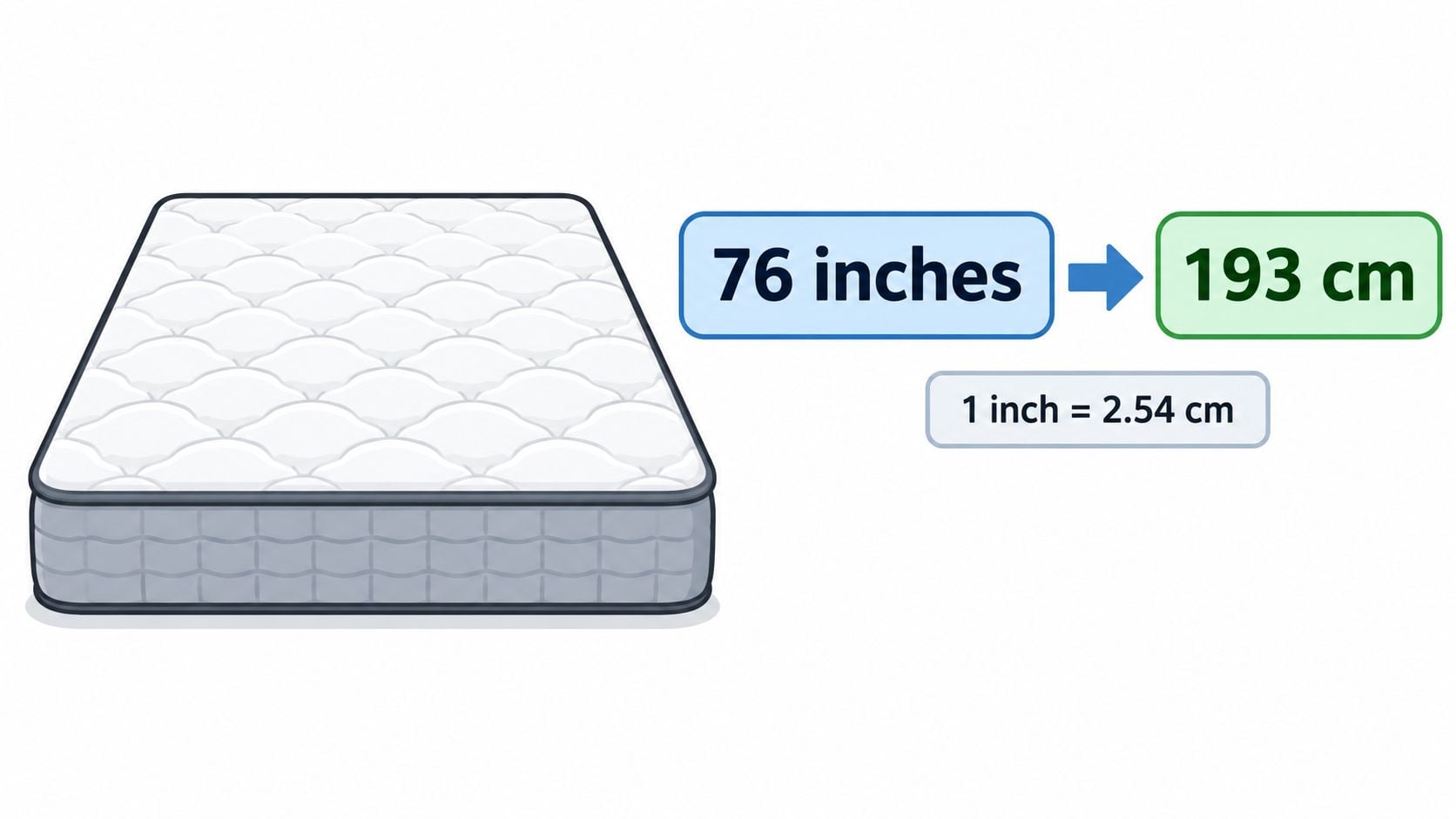
Most U.S. mattress labels use inches, but imported frames, European-style bedding, and online specifications may use centimeters. The conversion is straightforward: one inch equals 2.54 centimeters. Multiply each dimension separately, then round the result for ordinary room planning.
A few examples make the process easier:
- Twin: 38 by 75 inches converts to about 97 by 190 centimeters.
- Queen: 60 by 80 inches converts to about 152 by 203 centimeters.
- California King: 72 by 84 inches converts to about 183 by 213 centimeters.
The rounded values in a mattress size comparison chart are convenient, but they aren't a substitute for a manufacturer's specification sheet. A frame may have an interior opening that differs slightly from its advertised mattress label, and a fitted sheet must account for mattress height as well as width and length.
A quick mental estimate
For a fast estimate, double the inch measurement and add roughly five percent. That shortcut gets close enough for visualizing a bed against a wall, but exact conversions matter when ordering a frame or specialty bedding.
Imported products may use nominal dimensions that don't perfectly match U.S. labels. A sheet marked Queen can vary slightly in actual fit, so shoppers should compare the mattress width, length, and depth with the sheet's stated range before ordering.
Matching Mattress Size to Bedroom Dimensions
A mattress occupies only part of a bedroom. The rest of the floor must handle walking, nightstands, dressers, doors, and access to closets. That's why room-fit guidance is more useful than mattress dimensions alone. A newer room-size mattress guide also emphasizes that clearance and furniture placement determine whether a size works in practice.
| Mattress Size | Mattress Dimensions (in) | Mattress Dimensions (cm) | Minimum Room Size | Best For |
|---|---|---|---|---|
| Twin | 38 × 75 | 97 × 191 | 7 × 10 ft | Kids' rooms, guest nooks, compact bedrooms |
| Twin XL | 38 × 80 | 97 × 203 | About 8 × 10 ft | Tall single sleepers and dorm-style rooms |
| Full | 54 × 75 | 137 × 191 | At least 9 × 10 ft | Solo adults and teenagers |
| Queen | 60 × 80 | 152 × 203 | About 10 × 10 ft | Couples and flexible guest rooms |
| King | 76 × 80 | 193 × 203 | About 12 × 12 ft | Couples needing broad side access |
| California King | 72 × 84 | 183 × 213 | About 12 × 12 ft | Taller couples and longer rooms |
A Twin can leave room for a dresser and play area in a 7 by 10-foot room. A Full needs more breathing room because its extra width can close off furniture access. Queen is the sensible limit for many standard bedrooms, while King and California King should generally be reserved for rooms around 12 by 12 feet or larger.
Before ordering, measure more than the room. Confirm the front door width, hallway turns, stair landing, elevator, and bedroom doorway. In older Norwich homes, a mattress may need to tilt around a colonial stair turn or pass through a narrow landing. A loft conversion also needs a ceiling-height check, particularly if a tall headboard or high foundation is planned. Gorins provides a practical guide to measuring a room for furniture before delivery planning begins.
Specialty Mattress Sizes Worth Considering
Standard sizes solve most bedroom projects, but specialty dimensions can solve a specific problem more cleanly. The first choice is Twin XL, which preserves the Twin width while providing the longer 80-inch length. It suits tall teens, dorm rooms, and single sleepers who don't want the extra width of a Full or Queen.
A Full XL adds length to the Full format. It gives a solo sleeper more room to stretch without moving to a Queen, although shoppers should confirm availability for the exact mattress and frame combination.
Split arrangements
A Split King uses two Twin XL mattresses on one overall bed setup. This arrangement works well for couples who prefer different firmness levels or use an adjustable base, because each side can move independently. The two pieces also make stair and doorway handling easier than one wide mattress, though the foundation must be designed for the split configuration.
A Split California King gives partners individualized support while preserving the longer California King format. It's a more specialized order, so the frame, foundations, sheets, and mattress must be confirmed as a complete package.
Less common formats
An Olympic Queen provides more width than a standard Queen and requires matching accessories. RV and short Queen mattresses address rooms with non-standard walls, compact trailers, or limited length. Antique frames may also need custom dimensions because their interior openings don't always match modern U.S. standards.
Availability varies by model and size. Gorins Sleep Gallery can clarify which specialty formats are stocked and which require special order, so shoppers can plan the bedroom refresh around the actual lead time rather than assuming every size is on the floor.
Frame, Foundation, and Bedding Compatibility
A mattress size label is only useful when the surrounding pieces match it. Standard U.S. formats from Twin through California King are built around consistent industry dimensions, but frame construction, mattress thickness, and foundation height still vary. A labeled Queen frame may accept a Queen mattress, yet a thick mattress can alter the finished bed height and fitted-sheet requirements.
| Mattress Size | Frame Type | Foundation | Sheet Pocket Depth |
|---|---|---|---|
| Twin | Twin platform, rail frame, or adjustable frame | Twin foundation or compatible platform | Match the mattress height |
| Twin XL | Twin XL frame or Split King base | Twin XL foundation, one per side for Split King | Match the mattress height |
| Full | Full platform or rail frame | Full foundation or compatible platform | Match the mattress height |
| Queen | Queen platform, rail frame, or adjustable base | Queen foundation or compatible platform | Match the mattress height |
| King | King frame or divided platform | King foundation or compatible platform | Match the mattress height |
| California King | California King frame only | California King foundation or compatible platform | Match the mattress height |
The most common mistake is confusing Twin with Twin XL. The width is the same, but the length differs, so a standard Twin frame or fitted sheet won't solve a Twin XL purchase. Split King shoppers need two Twin XL foundations, and California King bedding is longer and narrower than standard King bedding.
Gorins Sleep Gallery offers foundation choices that can include low-profile traditional box springs, adjustable bases for compatible foam designs, and platform systems for heavier hybrid constructions. Before relying on any platform, the shopper should verify the manufacturer's slat-spacing requirements. Gaps wider than three inches can cause problems for some innerspring designs, as noted in the box spring guidance.
Before delivery: Measure the frame's interior width and length, not just the outside rails. That measurement catches mismatches while the order can still be corrected.
Thicker mattresses also need deeper fitted sheets. Mattresses over 14 inches tall commonly require deep-pocket sheets, including many Tempur-Pedic, Serta iComfort, and Beautyrest Black models available through the Norwich Sleep Gallery. The exact pocket depth should always be checked against the selected mattress, protector, and topper.
Choosing a Mattress Type by Sleeper Profile
Size determines how much room a sleeper has, while construction determines how that room feels. A broad King mattress won't fix pressure points caused by the wrong comfort material, and a perfectly supportive Queen won't feel spacious if two restless sleepers keep colliding.
Construction and feel
Traditional innerspring mattresses provide familiar bounce and airflow. A model such as Serta Perfect Sleeper can suit sleepers who prefer easier movement and a conventional surface. Hybrid designs combine coils with cushioning foam, making a line such as Beautyrest Hybrid a sensible direction for combination sleepers who change positions.
All-foam construction contours closely and can reduce the sensation of a partner's movement crossing the bed. Tempur-Pedic TEMPUR material is often considered by side sleepers who need pressure relief around shoulders and hips. Latex offers a more responsive lift and can suit hot sleepers who dislike a sinking sensation. Dual-sided designs provide a reversible approach for shoppers who want two usable surfaces.
Match the bed to the people
Sleep position matters. Side sleepers generally need cushioning at pressure points, while back and stomach sleepers often prefer steadier support and less sink. Couples should test edge support, motion isolation, and the way each person's movement travels across the surface. A Queen can work well when both sleepers stay fairly centered, but a King gives more usable width when one or both partners sprawl.
Body weight also changes how a mattress feels. Heavier sleepers usually need a thicker hybrid with reinforced coils, while lightweight side sleepers often prefer contouring foam. The precise model specification matters more than a size label, so the showroom test should include sitting on the edge, lying in the usual sleep position, and changing sides.
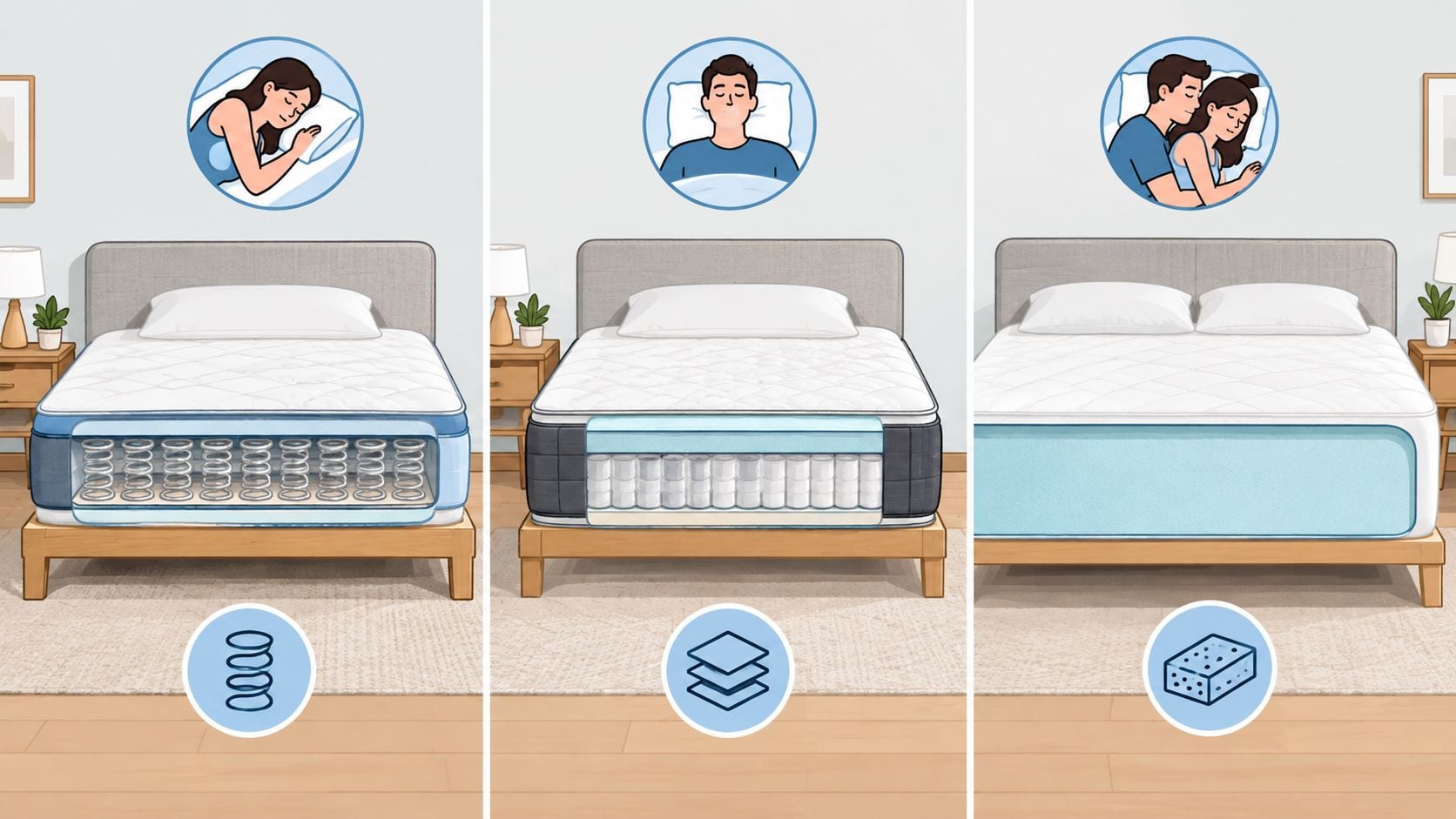
The Sleep Gallery at Gorins Furniture & Mattress carries options from Tempur-Pedic, Serta, and Beautyrest, among other sleep brands, so shoppers can compare comfort by feel rather than relying only on descriptions. Gorins has served Norwich as a locally owned, family-operated business since 1936, and its wider home offering includes Canadel Custom Dining and the F9 Custom Sofa series, with thousands of combinations for custom furniture projects. For shoppers planning a complete room, promotional financing with equal monthly payments can help spread the cost of an investment-grade sleep system, subject to approval and program terms.
For more help matching feel to position, the retailer's guide to choosing a mattress for a sleeping style provides another starting point.
Quick Reference Checklist for Mattress Shopping
A confident purchase follows a fixed order. Measuring after choosing a mattress usually creates avoidable compromises, especially in older Eastern Connecticut homes with tight staircases or irregular bedroom walls.
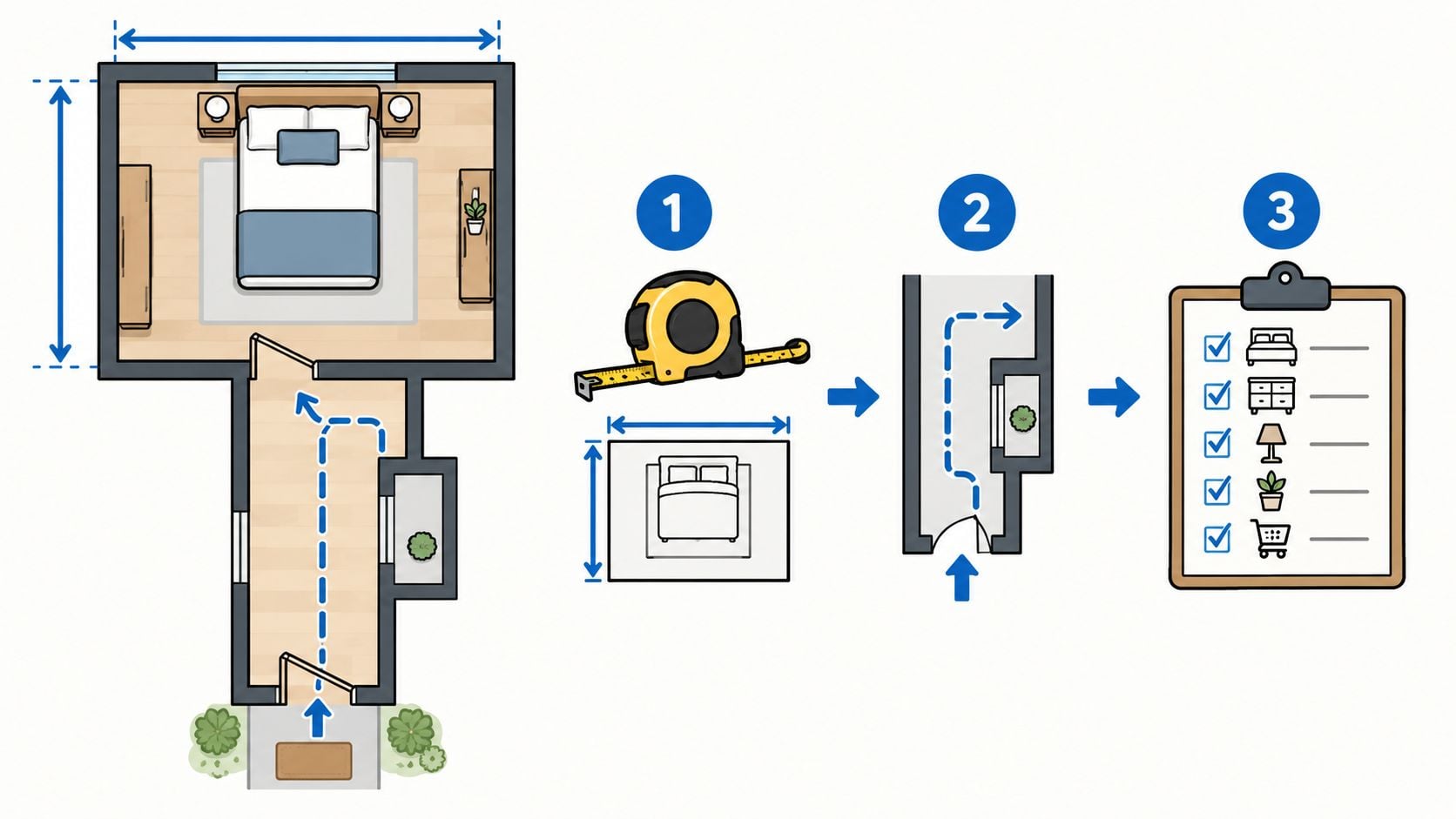
- Measure the room: Record clear width and length, then mark doors, closets, windows, radiators, and furniture that must stay.
- Map delivery access: Check the front door, hallways, stair turns, elevator, bedroom doorway, and ceiling height for the frame and headboard.
- List the sleepers: Note the number of people, tallest sleeper, preferred sleeping positions, and whether children or pets share the bed.
- Shortlist sizes: Use the chart to narrow the choice to two or three sizes that fit both the sleepers and the room.
- Check the complete system: Confirm the frame, foundation, protector, fitted-sheet depth, and any adjustable-base requirements.
- Test the feel: Visit the Gorins Sleep Gallery and spend enough time on each candidate to compare pressure relief, edge support, and motion transfer.
- Set the full budget: Include the mattress, frame, foundation, protector, quality sheets, delivery, and any removal service rather than judging the mattress alone.
- Confirm the order: Ask about availability, special-order timing, delivery access, exchange terms, and the comfort-trial conditions for the chosen model.
A showroom test is particularly useful when the final choice sits between Queen and King, or between King and California King. The floor model makes width, edge access, and sleeping position easier to judge than a dimension list alone.
Mattress Size Questions Norwich Shoppers Ask Most
Do U.S. measurements work with imported frames?
Not always. U.S. mattresses use familiar inch-based standards, while imported frames and bedding may follow different metric dimensions. The frame's interior opening should be measured directly, and a specialty mattress may be necessary if the opening doesn't match a standard size.
Does a 76 by 80-inch mattress count as a standard size?
Yes. 76 by 80 inches is the standard King dimension. A California King is longer and narrower, so its frame and bedding aren't interchangeable with standard King pieces.
How are deliveries handled in older Norwich homes?
The delivery team should receive the access details before the appointment. Narrow colonial doorways, stair turns, low ceilings, and tight landings can determine whether a mattress, foundation, or headboard must be carried vertically, separated into pieces, or selected in a split format.
What happens with a specialty Split King?
A Split King typically uses two Twin XL mattresses and two matching foundation sections. The exact setup depends on the adjustable base and mattress collection, so the full package should be confirmed before ordering.
Can an old foundation be reused?
Only after checking its dimensions, condition, support design, and compatibility with the new mattress. A foundation that fits the room may still fail to support a modern foam or hybrid construction.
How should sheet depth be selected?
Match the fitted sheet to the mattress label and total height, including a protector or topper. Tall mattresses need deeper pockets, and California King sheets must match California King length and width.
Norwich-area shoppers can avoid guesswork by visiting the Sleep Gallery, checking exact dimensions on the floor, and discussing delivery access before committing. That approach protects the room layout, the sleep comfort, and the rest of the investment.
Since 1936, Gorins Furniture & Mattress has helped Norwich and Eastern CT families create homes they love, with a Sleep Gallery featuring Tempur-Pedic, Serta, and Beautyrest, personalized guidance, custom furniture options, promotional financing with equal monthly payments, and 5-Star Delivery service. Visit the Norwich showroom to test the right mattress size and feel, take the online Style Quiz, or browse the Clearance section for value-driven savings.