Mattress Protector Waterproof

A Norwich morning can turn a comfortable bed into a cleanup project quickly. Coffee tips onto the duvet, a child in potty training has an accident, or a dog returns from the garden and treats the mattress like a lake. The mattress protector waterproof layer is invisible during ordinary nights, yet it becomes the most valuable part of the bed when moisture reaches the sheets.
A good protector also protects the feel and useful life of the mattress underneath. Stains, sweat, spills, and household allergens can settle into a mattress, while many mattress warranties exclude damage caused by staining. The right cover creates a practical barrier without making a premium sleep surface hot, noisy, or stiff.
For households dealing with incontinence, a dedicated guide to incontinence mattress protectors Australia offers useful context on protecting bedding during leakage and recovery. Norwich families can also find related advice in this mattress protector guide, especially when comparing everyday protection with more specialised coverage.
Why a Waterproof Mattress Protector Earns Its Place
The mattress is one of the most expensive and least convenient things to clean in a bedroom. A duvet can go into the wash, and sheets can be changed quickly. A mattress can't be treated like ordinary laundry, so liquid protection needs to sit directly above it.
The threats are ordinary, not dramatic
A child working through potty training may have an accident before anyone wakes. A pet can bring moisture and dirt onto the bed, while a late-night drink or spilled coffee can spread through bedding before the sleeper notices. Adults also leave behind sweat, dead skin, and natural body oils, all of which make regular cleaning and barrier protection worthwhile.
Dust mites create another reason to take the cover seriously. Allergy sufferers often need a close-fitting barrier that limits contact with the mattress surface, but a sealed cover that traps heat can make sleep less comfortable. The useful solution isn't just “the most waterproof” product. It's a protector that balances liquid resistance, allergen control, quietness, and airflow.
Practical rule: A protector should preserve the mattress without making the sleeper feel as though the bed has a plastic sheet underneath it.
The history of the category reflects that practical need. Waterproof mattress protectors became a commercial product line by the early 1980s, following the development of the South African-origin Snugfit protector after a bedwetting incident prompted research into textile lamination and impermeable membranes. The business later says its waterproof protector became the world's No. 1 seller and expanded through partners, distributors, and resellers in 48 countries. It began trading as Snugfit with the Protect-A-Bed brand in 2000, a milestone that marked the move from specialised protective textile to mainstream bedding accessory. Sleepcorp's history of the category documents that progression.
Who benefits most
A waterproof protector earns its place on almost every bed, but it matters most for:
- Families with children: Potty training and nighttime accidents become easier to manage.
- Pet owners: A barrier protects against wet paws, drool, and unexpected accidents.
- People managing incontinence: The cover helps stop liquid reaching the mattress.
- Allergy sufferers: A properly fitted cover can reduce direct exposure to mattress contents.
- Hot sleepers: Breathable construction matters more than a cheap plastic backing.
- Shared bedrooms: Couples and family members gain protection without needing to replace the whole mattress after one spill.
The following choices matter just as much as the word “waterproof” on the packaging. Material, hydrostatic performance, seam construction, fit, and care determine whether the protector feels comfortable on a premium bed or becomes an irritating layer that gets removed after a few nights.
How the Waterproof Layer Works
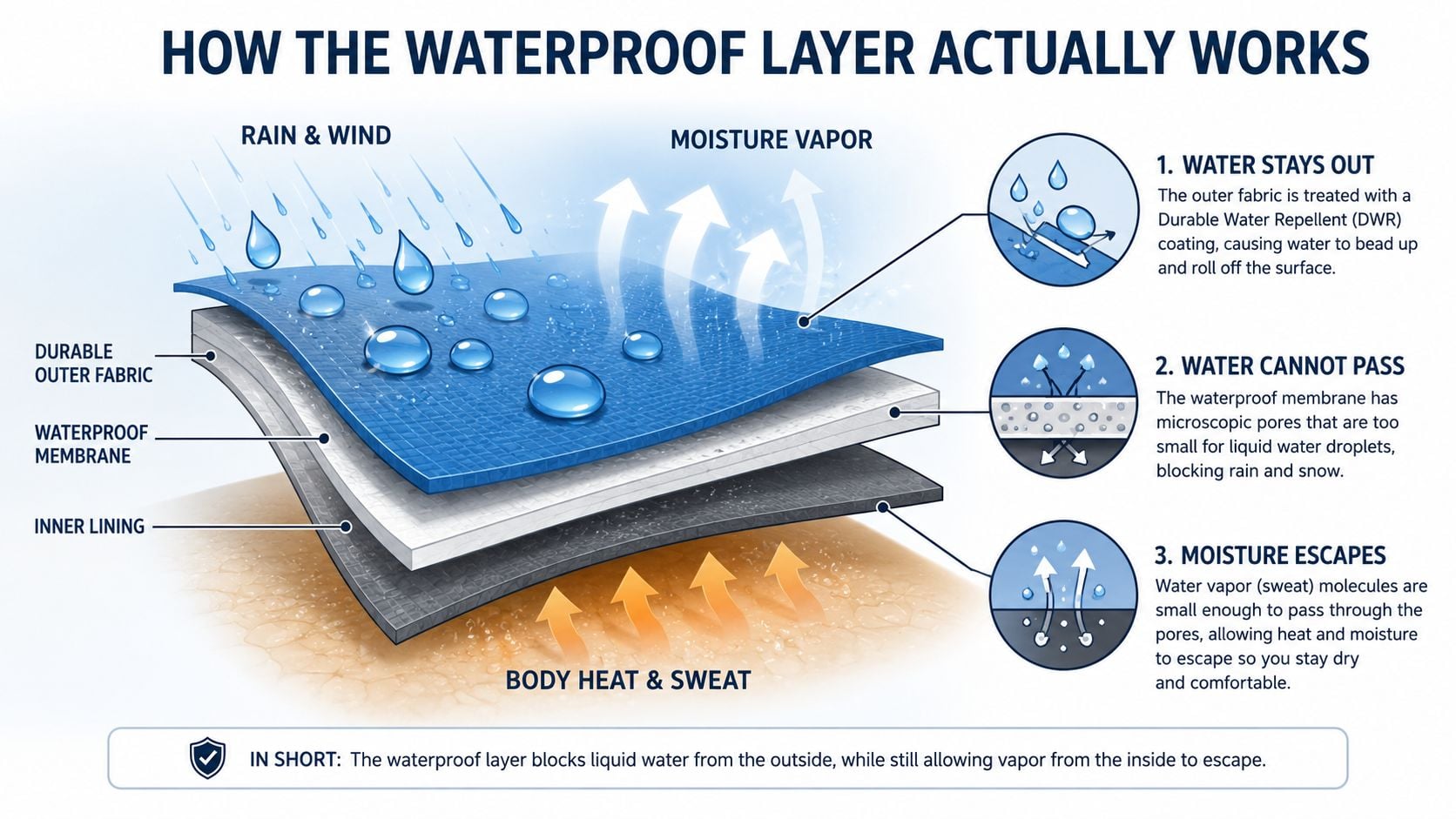
A waterproof protector succeeds through several layers working together. The fabric against the sleeper manages comfort, the central membrane blocks liquid, and the underside keeps the protector in place. A weakness in any layer can reduce protection or make the bed uncomfortable.
The three-layer construction
The sleeping surface is usually cotton, polyester, terry, or a blend. Choose a fabric that feels soft beneath the fitted sheet and moves moisture away from the body, rather than leaving a damp sensation. That difference matters on premium mattresses, where a noisy or clammy protector can undermine the comfort you bought the mattress to provide.
Beneath the fabric sits a thin polyurethane or thermoplastic polyurethane, TPU, membrane. The film is laminated to the textile, forming a barrier that blocks liquid while allowing some water vapour to pass through. Technical information on TPU membrane construction reports hydrostatic-head results in the 5,000 to 10,000+ mm range for quality designs, while higher-breathability versions often report moisture vapour transmission above 9,000 to 12,000 g/m²/24 hr. These benchmarks appear in technical information about TPU membrane performance.
The underside may use a soft backing, grip fabric, or elasticised skirt. Its job is simple: keep the protector flat as the sleeper turns. If the protector shifts, an exposed corner can let liquid reach the mattress.
Reading the hydrostatic-head rating
Hydrostatic head measures the water pressure a membrane can withstand before liquid passes through. A taller water column indicates greater resistance, making this rating more useful than vague packaging language such as “water resistant.”
A major mattress brand describes 5,000 mm as a commonly used industry threshold for waterproof performance and reports testing above 8,000 mm for its protector. Its guidance also says the product is designed to resist leaks under standard sleeping conditions for at least two years with proper care. Its waterproof protector explanation provides those benchmarks.
What matters in practice: A high hydrostatic-head rating helps under pressure, but it cannot compensate for weak seams, an exposed corner, or shrinkage after washing.
The details that keep the barrier sealed
Inspect the edges as carefully as the centre panel. Bound seams reduce exposed fabric around the perimeter, while strong elastic keeps the skirt tucked beneath the mattress. Zippered encasements need a covered or protected zip, especially when controlling allergens or pests. For more guidance, see this mattress allergy guide.
California guidance recommends a commercially available mattress cover at least 0.8 mm thick with a zipper after bed-bug treatment. Michigan guidance says an encasement should cover the entire mattress and box spring. Its manual explains that enclosing both can trap bed bugs inside and create a smooth surface for inspection and cleaning. Those construction details matter for families, while hot sleepers should still favour a quiet, breathable membrane over a thick plastic barrier.
Comparing Protector Materials Side by Side
The material choice determines how the protector feels at midnight. Two products can both stop liquid, yet one may rustle with every turn while the other disappears beneath the sheet.
Vinyl, TPU, and cotton-terry options
Vinyl is the blunt instrument. It offers a strong liquid barrier and can suit a spare bed, temporary use, or a very tight budget, but it often feels plasticky, creates noise, and holds warmth. Hot sleepers usually regret choosing it, especially if the bedroom already runs warm.
A TPU-laminate protector is the more sensible everyday choice. The thin membrane sits beneath a fabric surface, so it can feel quiet and flexible while resisting spills. It won't reproduce every characteristic of the uncovered mattress, but a well-made version usually interferes less with pressure relief than thick plastic-backed bedding.
Cotton-terry and terry-faced designs add a familiar, slightly towel-like surface. That texture can help manage small amounts of moisture and feel cooler than bare plastic, although extra loft may soften the response of memory foam. For a responsive mattress, a thin terry face is preferable to a heavily quilted pad.
| Material | Hand Feel | Breathability | Noise | Best For |
|---|---|---|---|---|
| Vinyl | Smooth and plastic-like | Low | Noticeable rustle | Temporary protection and spare beds |
| TPU laminate | Soft textile surface | Moderate to high, depending on membrane design | Quiet | Everyday family and couple use |
| Cotton-terry laminate | Soft, textured, towel-like | Moderate to high | Usually quiet | Moisture management and cooler-feeling sleep |
Matching material to the sleeper
- Parents with young children should choose a quiet TPU or terry-faced protector that washes easily and stays secure.
- Couples need a flexible cover that doesn't amplify movement or heat on either side of the bed.
- Hot sleepers should avoid vinyl and prioritise a breathable membrane with a light fabric surface.
- Allergy households should consider a full encasement when mattress coverage matters more than quick removal.
- Guest rooms can use a simpler fitted protector, but vinyl is still a poor choice if guests may sleep warm or move frequently.
The complete bedding and mattress protector guide can help households think about the protector as part of the complete sleep setup rather than an isolated accessory.
Price should be considered, but not in isolation. Replacing a comfortable mattress because liquid reached the core is a far worse value decision than choosing a fabric-faced protector that costs more initially and remains pleasant to sleep on.
Breathability and Heat Considerations for Real Sleepers
A warm bedroom exposes the weakness of a fully sealed plastic barrier quickly. Liquid stays out, but restricted air movement can hold heat and perspiration against the sleeper. For a waterproof mattress protector, comfort depends on how well the barrier manages vapour as well as spills.
What MVTR means
Moisture vapour transmission rate, or MVTR, measures how much water vapour can pass through a material across a set area and time. A higher MVTR generally gives perspiration vapour more opportunity to escape while the membrane continues blocking liquid water.
Higher-breathability TPU designs can report MVTR above 9,000 to 12,000 g/m²/24 hr, with hydrostatic-head performance in the 5,000 to 10,000+ mm range. Those figures do not guarantee a cool sleep. The surface fabric, mattress construction, bedding, room temperature, and individual comfort all affect the result. They do explain why a thin laminated membrane can feel more practical than old-style plastic for everyday use.
| Material | MVTR (g/m²/24h) | Heat Retention | Best For |
|---|---|---|---|
| Vinyl or plastic-backed cover | Near zero in practical terms | High | Short-term or utility use |
| Breathable TPU laminate | Often above 9,000 to 12,000 in higher-breathability designs | Lower than vinyl | Hot sleepers and year-round use |
| Cotton-terry with membrane | Depends on the laminate and textile | Moderate to low | Moisture-prone sleepers wanting a softer surface |
Three real sleeper profiles
Hot sleepers should prioritise airflow rather than choosing the strongest waterproof rating. Vinyl and plastic-backed covers can make the bed feel warmer, while breathable constructions reduce that compromise. Our mattress-protector guide for hot sleepers explains what to check before pairing a protector with a premium mattress from the Gorins Sleep Gallery. Independent coverage of waterproof protector comfort and allergy questions also reinforces the practical point: “waterproof” alone is not a sufficient buying decision.
Couples share body heat and moisture, so quietness matters alongside breathability. A stiff, crinkly cover can disturb both sleepers, even when only one person notices the warmth. A soft TPU laminate is usually the more balanced choice.
Allergy-focused households should separate liquid protection from full mattress coverage. A fitted protector covers the sleeping surface, while a zippered encasement gives broader coverage when dust-mite or pest concerns take priority.
For warm bedrooms: Breathability is a comfort specification, not a luxury feature. A membrane that blocks spills while allowing more vapour movement can support cooler, quieter sleep than a fully sealed plastic cover.
Getting the Right Size and Fit for Your Bed
A protector that doesn't fit is a failed protector. The most common mistake is measuring only the mattress width and length while ignoring the depth of the side panel.
Measure the mattress, including the depth
Measure the mattress from side to side and head to foot. Then measure from the base to the highest point, including a pillow top, tufting, or thick comfort layer. The protector's pocket depth should exceed that measurement enough to tuck securely beneath the mattress, but excessive fabric can bunch and create pressure points.
Modern pillow-top and hybrid mattresses can be substantially deeper than older standard designs, so the pocket measurement deserves particular attention. Elastic that loses tension after washing can also expose the corners, even when the original size looked correct.
Choose the format
- Fitted-sheet style: The most practical choice for most households. It goes on and off quickly and works well with ordinary washing.
- Zippered encasement: The stronger option for allergy-focused households and bed-bug control. It surrounds the mattress rather than covering only the sleeping surface.
- Anchor-band style: Usually the simplest and least expensive format, but it offers a weaker seal and can shift more easily.
| Bed Size | Mattress Dimensions | Fitted Protector Size | Recommended Pocket Depth |
|---|---|---|---|
| Single | Measure the mattress before ordering | Match the measured Single dimensions | Mattress depth plus secure tuck allowance |
| Double | Measure the mattress before ordering | Match the measured Double dimensions | Mattress depth plus secure tuck allowance |
| King | Measure the mattress before ordering | Match the measured King dimensions | Mattress depth plus secure tuck allowance |
| Super King | Measure the mattress before ordering | Match the measured Super King dimensions | Mattress depth plus secure tuck allowance |
The table deliberately prioritises measurement over assumed dimensions. Manufacturers can vary, and a shopper should use the mattress label or a tape measure rather than rely on a generic size name.
A simple fitting check
Put the cover on before adding sheets. The corners should remain anchored when the mattress is pushed gently from side to side, and the surface should lie smooth without a tight pull across the top. If the pocket pops off, choose a deeper fit. If fabric gathers beneath the sleeper, choose a closer size or a protector designed for that mattress profile.
Care and Cleaning That Protects the Membrane
A waterproof protector can lose its barrier if it receives harsh treatment. The safest routine is simple: wash gently, keep chemicals mild, and avoid excessive heat.
A membrane-friendly wash routine
- Remove the protector promptly after a spill. Allowing moisture and soil to remain on the surface makes cleaning harder and can leave odours behind.
- Wash it separately. Other garments with zips, hooks, or rough edges can snag the textile and stress the laminate.
- Use a gentle or delicate cycle with cool water. Care guidance for waterproof mattress protectors recommends gentle handling and warns against high heat.
- Choose mild liquid detergent. Use a restrained amount rather than a heavy dose.
- Skip bleach and fabric softener. Both can damage the membrane or coating over time, as explained in waterproof mattress cover care guidance.
- Dry on low heat or hang dry. High dryer temperatures can damage or delaminate the waterproof layer.
- Never iron or dry clean the protector. Direct heat and aggressive solvents are poor matches for polyurethane and TPU films.
The precise care label takes priority if it specifies a cooler wash or air drying. A crowded drum also creates unnecessary folding and friction, so the protector should have room to move freely.
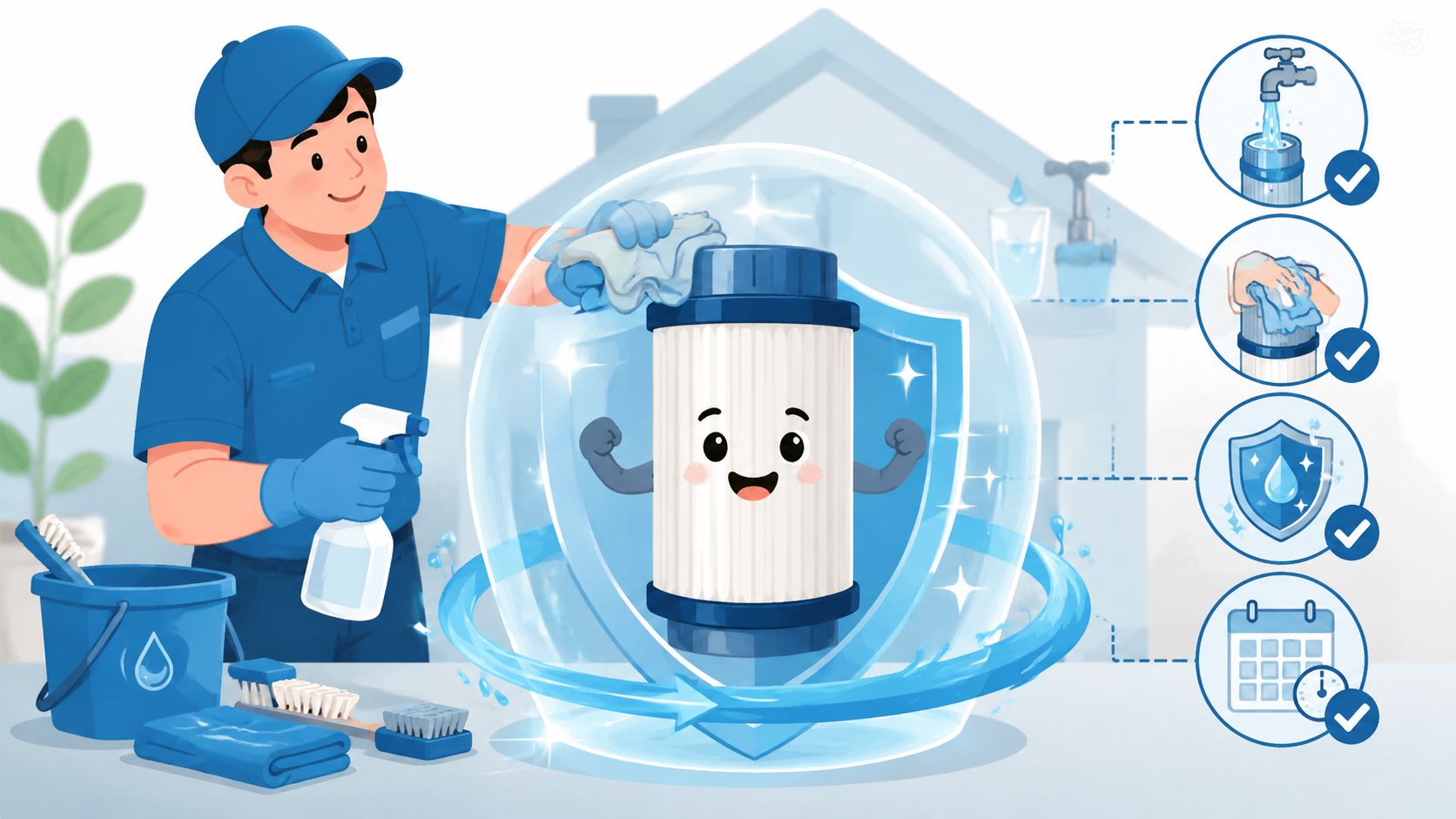
For broader mattress care, the mattress maintenance and cleaning guide offers practical advice on keeping the sleep surface fresh without abusing the materials.
Check for failure instead of guessing
A protector needs replacement when the barrier no longer works. Warning signs include:
- Moisture reaching a tissue beneath the protector: A controlled tissue test can reveal seepage.
- Visible peeling or separation: Pay close attention to corners and seams.
- New crinkling or stiffness: A changed sound or hand feel can indicate material breakdown.
- Loose elastic: Exposed corners create an easy route for spills.
A failing protector shouldn't be washed repeatedly in the hope that it recovers. Once the membrane has separated or liquid passes through, replacement is the sensible decision.
Choosing a Protector Worth Pairing With Your Mattress
A mattress protector should complement the mattress, not flatten its feel. A thick, stiff cover can mute the contouring of memory foam, reduce the responsiveness of a hybrid, and make a carefully chosen comfort level feel unfamiliar.
Start with the sleeper, then the mattress
Hot sleepers should look for a thin TPU-backed cotton-terry protector with a soft surface and credible breathability. Families with young children may prefer a fitted waterproof design for quick laundering, while households focused on allergies or pest control should investigate a full zippered encasement.
The Gorins Sleep Gallery carries Tempur-Pedic, Serta, and Beautyrest mattresses, alongside other established sleep brands. A protector selected with the mattress can preserve the intended feel and support a healthier sleep environment. Gorins Furniture & Mattress also offers mattress protectors within its sleep-accessory selection, allowing shoppers to discuss the cover while testing the mattress rather than guessing from an online product description.
A premium mattress deserves a protector that protects its feel as carefully as it protects the fabric.
The technical priorities are straightforward:
- Liquid performance: Look for a tested barrier, not just a broad waterproof claim.
- Breathability: Choose a textile surface and membrane suited to the sleeper's temperature.
- Fit: Confirm pocket depth before purchase, especially with pillow-top and hybrid designs.
- Care compatibility: Make sure the protector can be washed using the household's normal routine.
- Surface feel: Test whether the cover changes pressure relief or movement response.
A practical match-up
| Mattress Brand | Recommended Protector Style | Fit Type | Best For |
|---|---|---|---|
| Tempur-Pedic | Thin, quiet TPU laminate | Deep fitted or suitable encasement | Preserving contouring and reducing surface noise |
| Serta | Breathable fabric-faced waterproof protector | Fitted, matched to mattress depth | Family bedrooms and everyday spills |
| Beautyrest | Flexible membrane protector with a soft top | Fitted or full encasement by household need | Couples, hybrids, and mixed comfort preferences |
These are style recommendations, not universal product specifications. The final choice should follow the individual mattress dimensions, the sleeper's temperature preference, and the level of liquid or allergen protection required.
Gorins began in 1936 and remains a locally owned, family-operated business serving Norwich, New London, Plainfield, Waterford, and surrounding Eastern Connecticut and Rhode Island communities. Its showroom also supports Canadel Custom Dining and the F9 Custom Sofa series, where thousands of combinations help households tailor furniture to their lifestyles. Promotional Financing with equal monthly payments can make an investment-grade mattress and protector combination easier to plan for, subject to approval and programme terms.
Since 1936, Gorins Furniture & Mattress has helped Norwich and Eastern CT families create homes they love, with a Sleep Gallery featuring Tempur-Pedic, Serta, and Beautyrest alongside practical mattress protectors. Visit the Norwich showroom to test a protector with a shortlisted mattress, ask about Promotional Financing with equal monthly payments, or take the online Style Quiz before choosing the right fit for the bedroom.