Best Pillow Top Mattress: A Norwich Shopper’s Guide


A Norwich shopper often arrives at the mattress showroom with a simple request: something soft, comfortable, and supportive enough to stop the morning stiffness. Then the questions start. Will a plush surface sleep too warm? Will it flatten under the hips? Is the softest mattress the right choice for a side sleeper, a back sleeper, or a couple with different preferences?
The best pillow top mattress isn't automatically the thickest or softest model on the floor. The better decision comes from matching the fill material, support core, sleeping position, climate, and realistic service life. Pillow tops can deliver excellent pressure relief, but the same cushioning that feels luxurious on the first night can compress or retain heat later if the construction isn't right.
Pillow tops first appeared as manufacturers moved beyond the long dominance of firm innerspring beds. Historical mattress coverage places their emergence in the 1970s, with broader popularity by the mid-1990s as shoppers pursued more luxurious sleep surfaces, according to independent mattress-history coverage. That history still explains the design today. A pillow top usually changes the comfort profile while leaving the support core underneath to do the structural work.
Why a Pillow Top Might Be Right for Your Sleep Style
A weekend contractor from Norwich may arrive with lower-back tightness after a day of lifting and bending. A teacher dealing with temperature swings may want a soft, welcoming surface but worry about waking hot. A couple may have the familiar disagreement, one person wants cushioning around the shoulders and hips, while the other wants a flatter, steadier plane.
A pillow top can serve one of those sleepers very well. It isn't a universal upgrade.
The signature feel comes from a separate cushion sewn onto the mattress surface. That cushion fills the space beneath a side sleeper's shoulder and hip, reducing the hard pressure that often makes a firm innerspring feel unforgiving. Softer comfort layers can reduce peak pressure at areas such as the shoulders, hips, and heels. One cited volunteer study reported reductions of more than 30% in heel and head pressure after a topper was added, as described in clinical and biomechanical pillow-top guidance.
The showroom feeling can be persuasive
The first few minutes on a plush mattress often feel convincing because the body notices pressure relief immediately. That response matters, but it doesn't answer the longer-term questions. A thick cushion may retain more warmth, develop impressions sooner, or allow the pelvis to sink too far if the transition layer underneath lacks resistance.
Shoppers should judge three things together:
- Body fit: The surface should cushion the shoulders and hips without allowing the waist or pelvis to collapse.
- Climate fit: A hot sleeper needs breathable materials and an airflow-friendly core, not just a cooling label.
- Ownership fit: A mattress intended for long service needs a fill that resists flattening, even if it feels slightly less cloud-like at first.
A useful starting point for position, pressure, and support needs is this guide to choosing a mattress for a sleeping style. The recommendation stays straightforward: side sleepers often benefit most from a pillow top, while stomach sleepers and people who dislike sink should approach thick, loose cushioning cautiously.
How Pillow Top Construction Actually Works
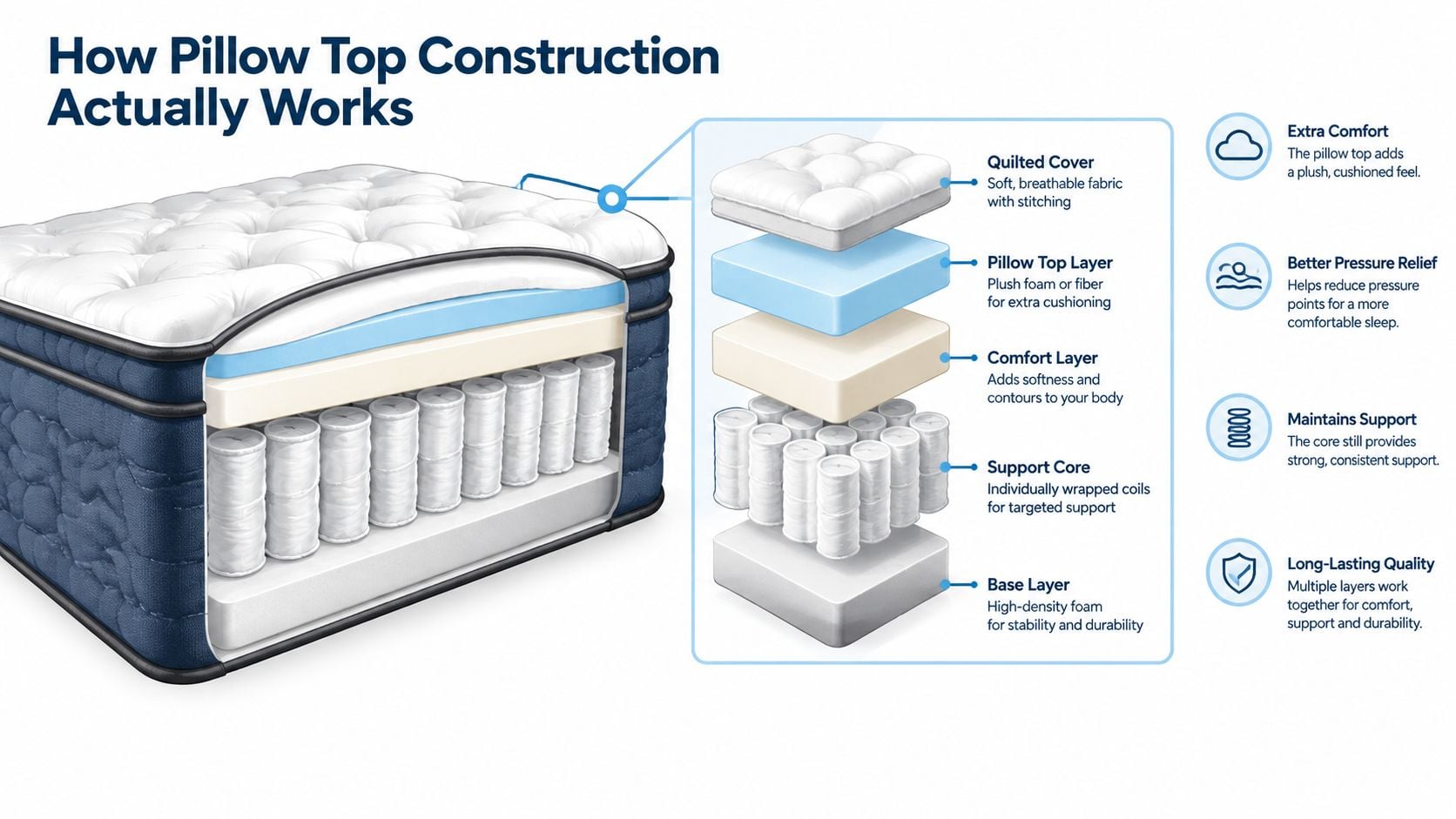
A pillow top is an extra cushioning layer sewn onto the top surface of a mattress. Independent mattress descriptions place that added layer at roughly 2 to 4 inches above the main mattress body and identify common materials including polyfoam, memory foam, latex, wool, cotton, and fiberfill, as detailed in this pillow-top construction overview.
The raised section usually has a visible seam or gusset. That seam separates the comfort cushion from the mattress body, which makes a pillow top easy to identify by sight and touch.
The layers beneath the surface matter more than the label
A typical construction can be read from top to bottom:
- Cover ticking: The quilted fabric and padding that create the initial hand feel.
- Pillow-top cushion: The raised, sewn-on comfort layer that supplies softness and contouring.
- Transition material: Foam or latex that spreads pressure and keeps the body from dropping directly onto the support core.
- Support core: Pocketed coils or a structured foam system that suspends the sleeper.
- Base foam: The stabilizing foundation beneath the core.
A Euro top uses a similar idea but is sewn flush beneath the mattress cover. The edges look squared-off rather than visibly raised, and the surface generally feels a little more stable. A traditional tight-top has no separate raised cushion. Any comfort padding sits beneath the ticking, so the mattress presents one continuous surface.
The gusseted seam on a pillow top affects more than appearance. It can make the edge feel less integrated, especially when a sleeper sits near the perimeter. Euro tops generally offer a more uniform edge because the comfort layer is incorporated into the outer cover. Shoppers comparing these designs can find more practical guidance in this pillow-top pros and cons guide.
A simple showroom test
Press a thumb into the seam, then press the center of the cushion. The seam should feel secure rather than loose or hollow. The cushion should recover without leaving a slow, deep depression. A soft surface is expected, but a mattress shouldn't feel as if the upper layer is detached from the support underneath.
Comparing Fill Materials Inside the Pillow Top
A pillow top can feel excellent on the showroom floor and still lose its character after years of nightly use. The fill controls that change. Judge each material by how well it resists flattening and heat retention over five to ten years, not by first-year plushness. At the Gorins Sleep Gallery, test the surface, then ask what remains underneath when the loft drops.
Polyfoam delivers familiar softness at a manageable price, but lower-density versions compress sooner. Memory foam contours closely and eases pressure, though its slower response and warmer feel can frustrate sleepers who turn often or sleep hot. Latex feels buoyant and responsive. Wool and fiber fillings offer softer, more breathable cushioning without the dense cradle of foam.
Pillow Top Fill Materials Compared
| Fill Material | Feel | Best For | Long-Term Consideration | Heat Retention | Price Tier |
|---|---|---|---|---|---|
| Polyfoam | Soft and familiar | Value-focused shoppers wanting immediate cushioning | Lower-density fill is more likely to flatten early | Moderate to high, depending on density and the mattress design | Value |
| Memory foam | Deeply contouring and slow to respond | Sleepers seeking close pressure relief | Higher-density versions usually retain their shape longer than low-density foam | Moderate to high | Mid to premium |
| Latex | Buoyant, springy, and responsive | Buyers prioritizing resilience and long-term value | Holds its feel well and resists the stuck-in-bed sensation | Generally lower than dense foam | Premium |
| Wool | Soft, resilient, and breathable | Warm sleepers wanting natural-fiber cushioning | Can compact with use while still managing moisture well | Low to moderate | Mid to premium |
| Fiber or down-alternative fill | Fluffy and immediately plush | Shoppers focused on a soft first impression | Flattens more quickly and supplies the least structural support | Usually low, although the comfort layer can still feel warm | Value |
What shoppers should feel, not just read
Polyfoam and fiber commonly appear in lower-cost pillow tops. That does not make them poor choices, but the surface will usually change sooner. For independent guidance on how construction affects durability, see this independent durability guidance. Latex costs more, yet its resilience helps preserve pressure relief without allowing the sleeper to sink slowly into the material.
Memory foam suits sleepers who want a moulded, close-fitting feel. Test it for several minutes at Gorins rather than judging it with a quick hand press. The foam should let the shoulders and hips settle without making movement awkward. If you regularly overheat, choose a construction with better ventilation and avoid an excessively thick foam cushion.
Wool deserves attention in warm bedrooms. It will not produce memory foam's deep cradle, but it provides gentle softness and manages moisture without the enveloping sensation of dense foam. Fiber or down-alternative fill feels plush immediately, yet it is the weakest choice when resisting flattening matters.
For a clearer explanation of this comfort material, read this guide to memory foam mattresses. In the Gorins Sleep Gallery, lie in your normal sleeping position, roll over, and check whether the fill releases you easily. Ask what supplies the loft, how dense it is, and how the mattress will feel after that material loses some of its original height.
Matching Firmness and Support to Your Sleep Position
A pillow top can relieve pressure, but it can't replace a supportive core. The surface allows the shoulder or hip to sink. The transition layer and support system must then keep the spine from bending out of alignment.
Side sleepers usually need the most cushioning. A medium to medium-soft pillow top over pocketed coils or a supportive foam core can let the shoulder and hip settle while the waist still receives resistance. The surface shouldn't feel hard at the shoulder, but it also shouldn't let the torso roll forward.
Back sleepers often do better with a medium pillow top and a firmer transition layer. The pelvis needs enough support to stay level rather than dropping into the soft fill. Stomach sleepers should be particularly cautious with high loft. A lower-profile comfort layer over a firm core is usually the safer direction because excessive sink can encourage lower-back extension.
Pillow-Top Firmness by Sleep Position
| Sleep Position | Pillow-Top Loft | Core Firmness | Watch Out For |
|---|---|---|---|
| Side | Medium to higher | Medium or medium-firm | Shoulder pressure and unsupported waist |
| Back | Low to medium | Medium-firm | Pelvis sinking below the rib cage |
| Stomach | Low | Firm | Excessive hip sink and lower-back strain |
| Combination | Low to medium | Responsive medium-firm | Slow foam that makes turning difficult |
| Hot sleeper in any position | Moderate, not excessive | Coil-friendly and breathable | Dense layers that hold warmth |
Combination sleepers should favor responsive latex or pocketed coils. Those materials make it easier to turn without fighting through a deep impression. Hot sleepers should evaluate the entire mattress stack, including the core, cover, protector, and bedding, rather than choosing based on the top layer alone.
Sleep posture also extends beyond the mattress. Someone dealing with jaw tension or morning stiffness may find a resource such as this guide to a pillow for clicking jaw and stiffness useful when evaluating the complete sleep setup. The mattress still needs to provide stable alignment, and this mattress-firmness guide can help shoppers translate personal preference into a more useful firmness starting point.
Alignment check: A comfortable pillow top should cushion the pressure points without allowing the heaviest part of the body to sink out of line with the shoulders and legs.
Durability, Heat, and the Hidden Trade-Offs
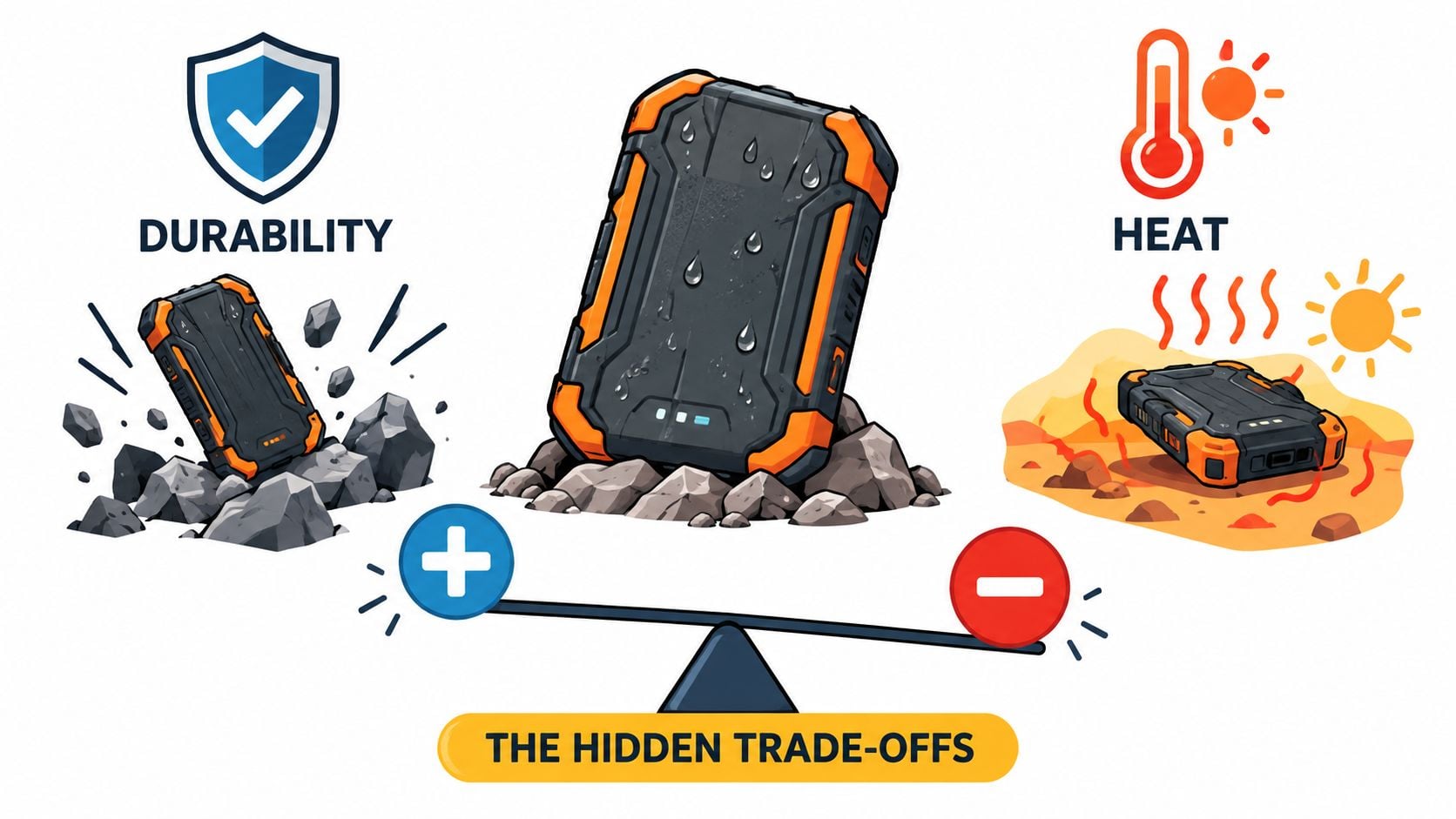
A thick pillow top can feel impressive on day one and disappoint much sooner than expected. Extra loft may give more material room to compress. Judge the mattress by density, resilience, airflow, and the support core, then test those qualities in the Gorins Sleep Gallery rather than choosing by height alone.
Some plush comfort layers show visible compression within a few years, depending on the fill. Better-built pillow tops can remain serviceable for roughly 7 to 10 years, while low-density polyfoam usually flattens sooner than latex or wool-based materials, according to pillow-top durability guidance. The practical question is not which surface feels plushest in year one. Ask which fill is most likely to resist flattening and heat retention over five to ten years.
Pillow-top designs also carry a greater risk of durability, off-gassing, and heat-retention complaints than simpler non-pillow-top builds, as summarized in this body-impression review. That does not make every pillow top a poor choice. It means plushness is not evidence of lasting quality.
Heat depends on the whole mattress
Dense memory foam can retain warmth even when the showroom cover feels cool. Wool and loose fiber generally feel more breathable, though they can compress sooner. Latex offers a springier, more ventilated response, particularly when the support core also allows air movement.
Coil-based systems usually give hot sleepers more ventilation than all-foam builds. A separate cooling layer can help as well. A 2026 University of Loughborough study found that a cooling mattress topper improved thermal comfort and reduced awake time, according to Sleep Like the Dead's cooling and pillow-top coverage. Test the complete sleep setup at Gorins, including the protector and bedding. A moderately padded pillow top with breathable accessories may suit a warm sleeper better than the thickest surface available.
What an impression tells a shopper
A visible 1.5-inch impression can indicate how the fill responds to repeated pressure, but its appearance alone cannot identify the cause. Rotate a one-sided pillow top head-to-foot every few months to spread wear, and use a suitable foundation so the support core remains evenly supported. Flipping is not the maintenance option for this construction.
Use this mattress lifespan guide when planning for replacement. Brand reputation matters, but fill quality and construction decide whether the surface still feels balanced years after delivery. Test several options in the Gorins Sleep Gallery, and choose the one that stays supportive without trapping excessive heat.
Testing Pillow Top Mattresses the Right Way in Store
A quick sit on the edge tells a shopper almost nothing about overnight comfort. The showroom test should recreate the way the mattress will be used at home, with enough time to expose pressure, heat, and movement issues.
A practical lie-down routine
- Start in the normal sleep position. Lie down with the usual pillow and let the body settle. Initial softness can feel impressive, but the important question is whether the shoulder, hip, waist, and pelvis feel evenly supported.
- Stay still for several minutes. A proper trial should last long enough for the comfort layers to respond. A shopper who leaves immediately may choose a mattress that feels soft at first but becomes restrictive or unsupportive after settling.
- Roll into secondary positions. Combination sleepers should check whether turning feels easy. Back sleepers can test whether the pelvis sinks lower than the chest. Stomach sleepers should look for excessive pressure around the hips.
- Test with the sleep partner. Both people should lie down together. One partner can turn while the other evaluates movement, and both can check whether the usable center feels wide enough.
- Compare without visual bias. A salesperson can switch the order of the final two choices so the shopper performs a blind lie-down. Initial appearance and brand familiarity can distort judgment.
Bring a regular pillow if possible. Pillow height changes the neck angle and can make a mattress feel firmer or softer than it really is. If a partner can't visit, the shopper should still explain the partner's position, temperature preference, and movement habits before selecting a construction.
The biggest testing mistake: Deciding from the edge or from a two-minute bounce test instead of lying in the normal sleep position long enough for the body to settle.
The Sleep Gallery at Gorins offers a setting where shoppers can compare comfort by feel across Tempur-Pedic, Serta, and Beautyrest mattresses. The useful goal isn't to find the softest bed in the room. It's to identify the one that still feels aligned after the initial welcome.
Warranty, Lifespan, and Financing Considerations
Warranty language deserves the same attention as the comfort rating. Many shoppers focus on the number of coverage years and miss the conditions that determine whether a claim will be accepted.
Independent guidance describes pillow-top durability as highly dependent on fill quality, with some lower-performing materials compressing within 2 to 4 years and higher-quality constructions serving for roughly 7 to 10 years. A warranty may also distinguish between a defect and a normal comfort change. Body impressions, sagging, stains, and foundation problems can affect coverage.
Read the warranty in plain language
A shopper should ask:
- What counts as a covered impression? The manufacturer may specify a minimum visible depth before replacement applies.
- Is coverage non-prorated or prorated? Non-prorated coverage generally provides stronger protection during its covered period. Prorated coverage can require the owner to contribute more as the mattress ages.
- What foundation is required? An unsuitable base can void protection even when the mattress itself appears defective.
- Is a protector required? Stains on an unprotected mattress can prevent a claim.
- Does the warranty cover residential use only? Commercial or hospitality use may fall outside a residential policy.
Warranty Structures Compared
| Warranty Type | Year 5 Replacement Cost | Year 8 Replacement Cost | Year 10 Replacement Cost |
|---|---|---|---|
| Non-prorated | Usually the strongest coverage if the claim qualifies | Depends on the stated coverage period | Often outside coverage if the term has ended |
| Prorated | Owner may owe a stated share | Owner typically owes a larger share | May provide limited remaining value or no coverage |
| Limited defect coverage | Covers only listed manufacturing defects | Depends on exclusions and the stated term | Often ends when the limited term ends |
Exact replacement costs can't be calculated without the mattress price and warranty language, so the table describes the structure rather than inventing dollar amounts.
Gorins' financial options include Promotional Financing with equal monthly payments, subject to credit approval. Shoppers should ask the Sleep Gallery desk about the current application process and the specific terms attached to the selected mattress. Financing can make an investment-grade sleep system easier to plan for, but the total obligation and payment schedule should be understood before signing.
Choosing Your Best Pillow Top Mattress at Gorins
The best choice depends on what the sleeper values after the first night, not just what feels softest in the showroom.
For the budget-conscious side sleeper
A polyfoam pillow top over a medium-firm pocketed-coil core can provide the shoulder and hip cushioning side sleepers want while keeping the support structure straightforward. This option makes sense when immediate pressure relief matters and the buyer accepts that lower-density comfort material may change sooner.
For the hot sleeper
A ventilated latex or wool-blend pillow top over an innerspring unit is the stronger direction. The goal is airflow and temperature neutrality, not maximum loft. A breathable protector and carefully chosen bedding can support that strategy without forcing the shopper to abandon a plush surface.
For the long-term value buyer
A Talalay latex or high-density memory foam pillow top paired with a reinforced coil system deserves closer inspection. The buyer should prioritize resilient comfort material, edge stability, and a 10-year non-prorated warranty when that coverage is available for the chosen construction. This sleeper may prefer a Euro top if a more integrated surface and longer service expectations matter more than the loose, cloud-like feel of a traditional pillow top.
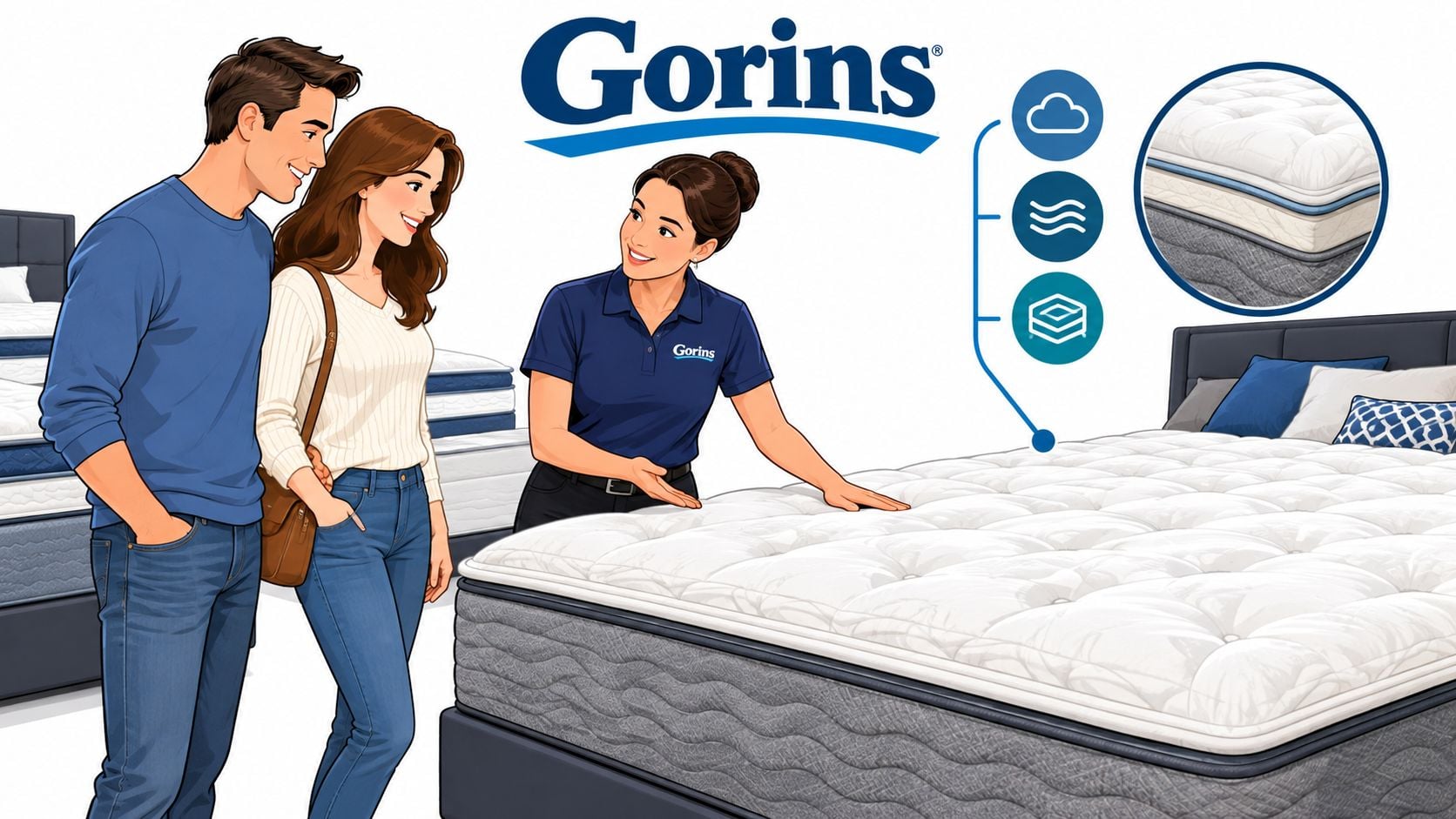
Gorins Furniture & Mattress began in 1936 under Samuel and Martha Gorin and has operated from its current building at 49 New London Turnpike since 1972, according to the store's local history and business profile. That local continuity gives Norwich shoppers a practical place to test mattresses by feel rather than make the decision from specifications alone.
The store also serves broader home needs. Its Canadel Custom Dining partnership offers thousands of combinations, while the F9 Custom Sofa series lets households tailor living-room details to their space and lifestyle. For sleep shoppers, the Sleep Gallery brings together named mattress options and comfort guidance, with Promotional Financing available to help plan a larger purchase.
Visit Gorins Furniture & Mattress in Norwich for a structured pillow-top lie-down, compare the available comfort materials, and ask the Sleep Gallery team about Promotional Financing and equal monthly payments. Shoppers can also take the online Style Quiz or browse the Clearance section for value-driven savings before choosing a mattress built for both immediate comfort and lasting support.