Tempur Pedic vs Memory Foam: A Norwich Shopper’s Guide


A Norwich shopper standing in the Sleep Gallery can face a frustrating choice: one Tempur-Pedic mattress promising deep pressure relief, and one conventional memory foam bed offering a familiar contour at a lower investment. Both may feel comfortable during a quick sit, but the important test starts after the body stops moving. The mattress that feels right after several quiet minutes, in the shopper's normal sleep position, is usually the better match.
The decision matters because memory foam isn't one uniform material. Density, recovery speed, temperature response, and motion isolation can make two foam mattresses feel completely different. Tempur-Pedic's premium is justified for certain sleepers, especially side sleepers with pressure points and couples disturbed by movement. For others, a well-built standard memory foam mattress, or a cooler hybrid design, is the more sensible value.
Why the Tempur Pedic vs Memory Foam Question Matters in 2026
A shopper may begin on the Gorins Sleep Gallery floor with a simple question: which bed feels better? After testing both, the more useful question becomes, what does the body need the mattress to solve?
Someone with aching shoulders may prefer the slower, deeper cradle of TEMPUR material. A partner who wakes whenever the other person rolls over may value stronger motion isolation above every other feature. A hot sleeper who changes positions often may dislike the same enveloping feel that makes Tempur-Pedic appealing to a side sleeper.
The choice has become more complicated because modern standard memory foam offers more variation than the old, basic sink-in designs. Some models feel responsive, some remain highly contouring, and some add ventilation or cooling components. Tempur-Pedic has also expanded beyond one classic sensation, with different firmnesses and constructions that make the brand less predictable from a showroom label alone.
Practical rule: The first thirty seconds reveal surface comfort. The next several minutes reveal whether the mattress actually supports the body.
A premium mattress is a substantial household investment. A poor match can leave a sleeper dealing with pressure, heat, difficult movement, or partner disturbance night after night. That makes the in-store comparison more important than brand recognition or online ratings.
The decision that matters most
The deciding factor isn't whether Tempur-Pedic is famous or whether standard memory foam costs less. It's whether the mattress's response matches the sleeper's body, position, and tolerance for contouring.
Independent testing found the TEMPUR-Adapt to be the strongest memory foam mattress tested by RTINGS for motion dissipation, with a 9.4 out of 10 motion-dissipation score, while cooling was only moderate for its premium price, as summarized by independent Tempur-Pedic testing. That combination captures the central tradeoff: remarkable motion control and pressure relief, but not automatic superiority for every sleeper.
What Memory Foam Actually Is and Where Tempur-Pedic Came From
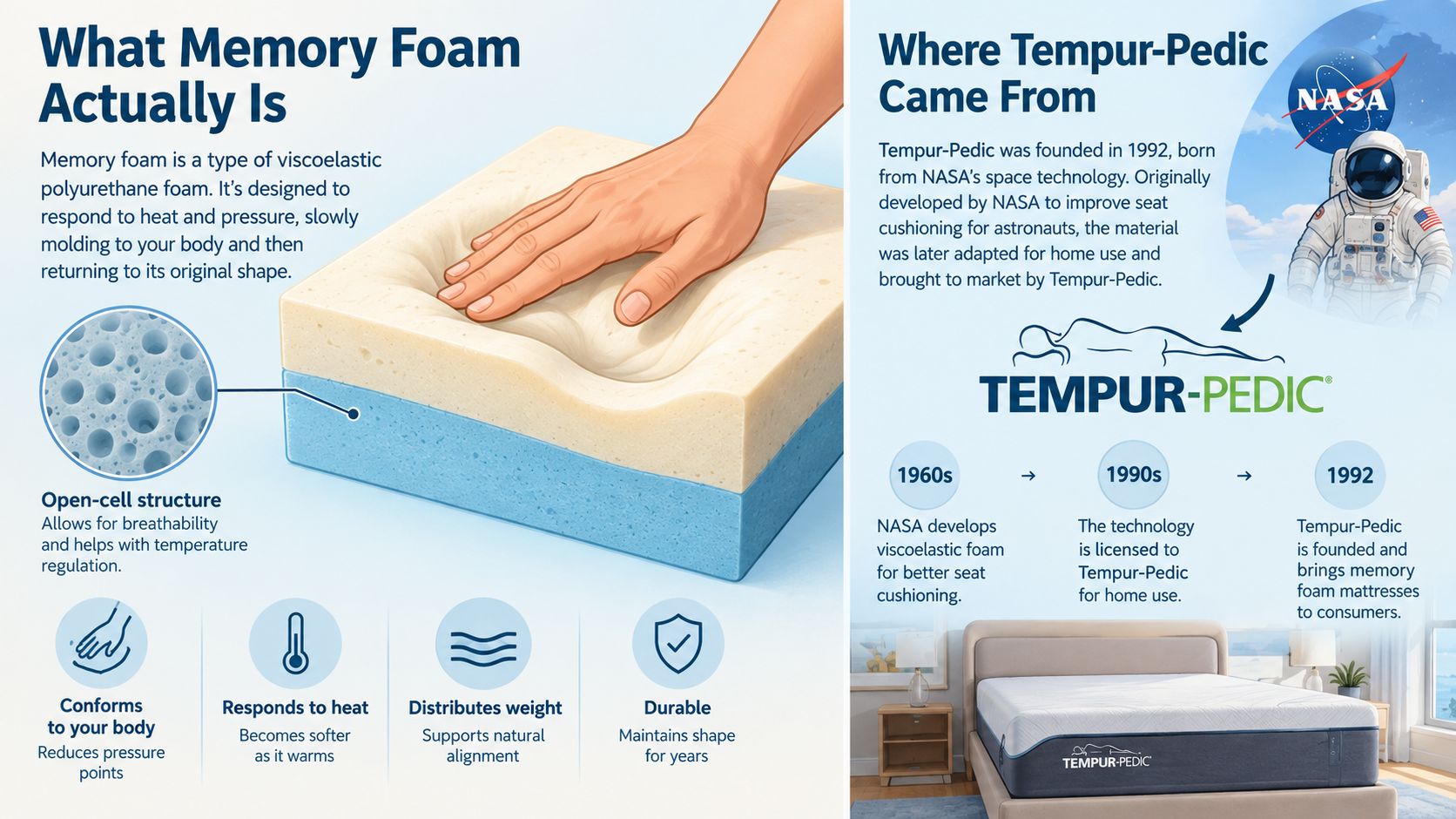
Memory foam is a viscoelastic polyurethane foam. It responds to pressure and heat, then slowly returns toward its original shape. That behavior lets the material spread weight across a broader area instead of concentrating it at the shoulders, hips, or other pressure points.
The material's history began outside the bedroom. NASA developed viscoelastic foam in the 1960s for crash protection and seat comfort in spacecraft, according to this history of Tempur-Pedic and viscoelastic foam. The pressure-sensitive material later moved into consumer products, where manufacturers adapted it for bedding.
The American Chemical Society identifies the Tempur-Pedic Swedish Mattress, introduced in the early 1990s, as the first commercial mattress made from memory foam in its history of foam mattresses. Tempur-Pedic entered the U.S. consumer mattress market in 1992, and Tempur Sealy International later became the company behind the flagship brand. Tempur-Pedic's own account traces TEMPUR-Material back to NASA-funded research in the late 1960s, says the material reached the public in the 1980s, and dates the first Tempur mattress and pillow to 1991, as described in the brand's material history.
Two specifications worth understanding
Density describes how much foam occupies a cubic foot. Higher-density comfort foam generally feels more substantial, recovers more slowly, and provides a deeper cradle. Indentation load deflection, or ILD, describes how much force it takes to compress foam. A higher ILD usually feels firmer, but ILD doesn't tell the whole story because layer thickness, foam density, and the mattress's support core also change the experience.
A plain-language guide to the material is available in what a memory foam mattress is. The key takeaway is simple: “memory foam” names a family of materials, not one standardized feel.
How TEMPUR Material Differs From Standard Memory Foam
At a Sleep Gallery floor, the difference becomes clear before the price does. TEMPUR material settles around the body with a controlled, deliberate cradle. Standard memory foam covers a wider range, from lightly conforming to sinking, depending on its formulation and construction.
Tempur-Pedic describes TEMPUR material as proprietary viscoelastic, temperature-sensitive, open-cell foam developed for sleep, with an emphasis on adaptive support and pressure relief, as explained in how TEMPUR material differs from memory foam.
Independent descriptions place premium TEMPUR variants around 5.0 to 5.3 pounds per cubic foot, compared with roughly 3 to 4 pounds per cubic foot for typical direct-to-consumer memory foam, according to an independent explanation of TEMPUR material. Those figures do not define every model, but they help explain the denser, slower feel.
| Specification | TEMPUR Material | Standard Memory Foam |
|---|---|---|
| Density profile | Generally higher density in premium comfort layers, commonly around 5.0 to 5.3 lb/ft³ in independent descriptions | Often lower density, commonly around 3 to 4 lb/ft³ in typical direct-to-consumer products |
| Recovery | Slow spring-back and deeper contouring | Can range from slow to more responsive |
| Motion isolation | Particularly strong because the material absorbs movement locally | Usually strong, though performance varies by construction |
| Body feel | Deeper hug, less bounce, slower position changes | Broader range, from lightly conforming to deeply sinking |
Testing gives that slow response practical meaning. One independent review measured roughly 0.8 seconds for TEMPUR material to become mostly recovered and about 1.2 seconds for full recovery. Another expert description places return time around 5 to 10 seconds, depending on the material and test conditions, in independent Tempur-Pedic mattress testing. The shorter times reflect surface recovery, while the longer range reflects fuller body-impression recovery under load.
That slower rebound suits couples when one sleeper moves. It can frustrate a combination sleeper who rolls often and wants the mattress to clear quickly. A secure cradle comes with less bounce and a greater chance of feeling stuck.
What the shopper feels
Standard foam may make position changes easier and feel less restrictive. TEMPUR material molds more deliberately, with less bounce and a stronger sense that it is holding the body in place.
For shoppers researching executive sleep solutions new mattress, the useful distinction is movement, pressure distribution, and partner disturbance during ordinary sleep, not the origin story alone.
Review the Tempur-Pedic mattress selection at Gorins before visiting. Then lie on both materials in the same positions you use at home. Density explains the construction, but the in-store test reveals whether the slower cradle feels supportive or restrictive, a worthwhile check before committing to a $2,000-plus purchase.
Feel, Cooling, Motion Isolation, and Durability Compared
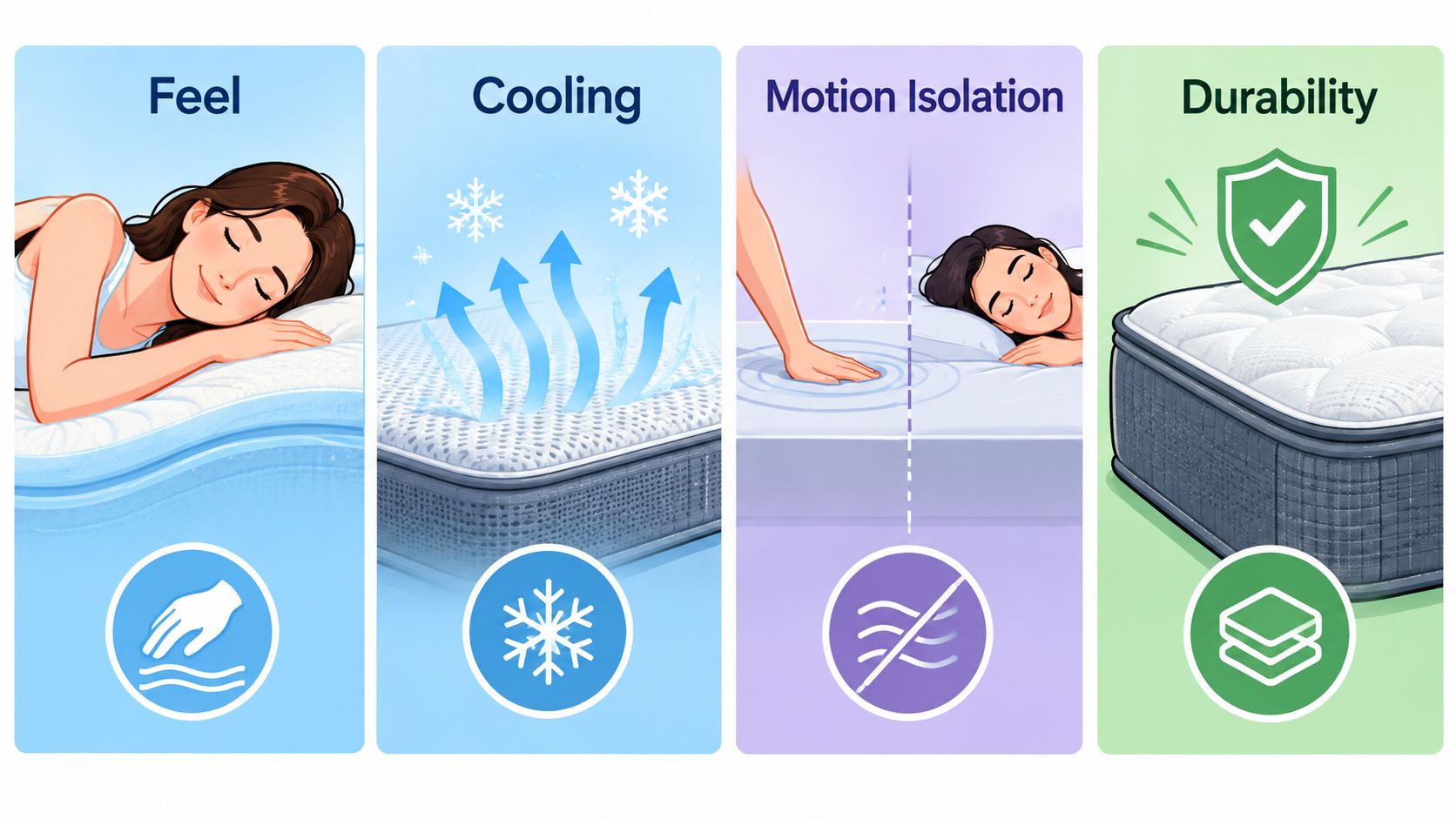
A shopper choosing between TEMPUR and standard memory foam should judge four separate traits: pressure relief, cooling, motion isolation, and durability. No single material wins every category. A side sleeper may value contouring, while a hot sleeper or restless couple may prioritize airflow and easier movement.
Cooling
All-foam mattresses can hold warmth because foam surrounds the body rather than leaving the open air channels found in a coil-based support system. Selected Tempur-Pedic models address that issue with cooling covers, ventilation, and temperature-management layers. Standard memory foam may use open-cell designs or cooling infusions, but thick foam still provides insulation.
Your preferred feel matters. A pronounced contour can feel warmer because more of the body sits inside the comfort layers. If you need strong pressure relief, that trade-off may be acceptable. If you sleep hot, start with a less enveloping feel or consider a hybrid.
Use this cooling mattress guidance from Gorins to narrow the choices before your in-store test.
Pressure relief
TEMPUR's high-density material spreads pressure across the body and creates the pronounced contour many side sleepers want. Shoulders and hips settle into the surface while the support system resists excessive collapse beneath the torso.
Standard memory foam can perform just as well when its comfort layer and support core are properly matched. The main difference is consistency from one model to another. Lower-density foam may feel comfortable at first, then provide less stable support for a heavier sleeper or someone who stays in one position for much of the night.
Motion isolation
Both materials can reduce movement more effectively than a traditional connected-coil design. TEMPUR's slower recovery and dense construction damp movement near the point of impact, which helps when a partner changes position or leaves the bed.
Tempur-Pedic states that some TEMPUR products provide motion isolation up to 10 times better than conventional memory foam, with less than 2% motion transfer. That remains a company claim, not a result shoppers should apply to every model. In practice, dense all-foam construction usually favors couples who want less disturbance, while standard foam can offer easier repositioning.
Durability
Higher density can support longer functional performance, but density alone does not determine whether a mattress suits you. Foundation support, body weight, usage, temperature, and the full construction all affect wear. A well-built standard memory foam mattress may deliver better value when its feel matches the sleeper and its lower cost leaves room for a future replacement.
Couples should test motion isolation with one person turning while the other lies still. Combination sleepers should roll, sit up, and change positions repeatedly. Those simple checks reveal whether the slower cradle feels secure or restrictive before a $2,000-plus purchase.
Price, Warranty, and Lifespan Side by Side
A Norwich shopper comparing a $2,000-plus Tempur-Pedic with a standard memory foam bed should compare the ownership terms, not only the showroom feel. Tempur-Pedic entered the U.S. consumer market in 1992. Its premium market position has been documented in coverage of the brand's market position, but historical positioning does not determine whether the extra cost suits your sleep needs.
Exact model prices change with construction, size, retailer, promotions, and adjustable-base packages. Use these categories as a practical starting point, then confirm the current queen-size price in writing before paying.
| Metric | Tempur-Pedic TEMPUR-Adapt | Quality Standard Memory Foam | Budget Standard Memory Foam |
|---|---|---|---|
| Queen-size price | Premium category, often $2,000-plus | Mid-range category, commonly below premium pricing | Lowest-cost category, with fewer materials or features |
| Warranty | Manufacturer's written limited warranty; verify coverage and exclusions | Manufacturer's written limited warranty; terms vary by brand | Manufacturer's written limited warranty; exclusions deserve close review |
| Sleep trial | Confirm the current retailer policy | Confirm the current retailer policy | Confirm the current retailer policy |
| Expected lifespan | Longer use may be possible when construction, support, and care are strong | Depends heavily on foam density, support, and rotation or care | Replacement may come sooner when lower-cost materials soften or lose support |
The premium makes sense when the TEMPUR feel solves a clear problem, such as pressure at the shoulder or hip, partner movement, or a need for a slower, more contained cradle. It is poor value when you prefer easy repositioning, sleep hot on dense foam, or can get the right support from a less expensive bed.
Read the fine print before buying
A warranty covers defined manufacturing defects. It does not promise permanent comfort or replace a mattress because your preference changes. Check the required foundation, body-impression wording, exclusions, transportation responsibilities, and whether coverage changes over time.
Trial terms deserve equal attention. Recent comparison coverage lists a 90-night Tempur-Pedic trial, while some alternatives offer longer periods, as discussed in the Tempur-Pedic comparison overview. Confirm whether the policy requires a minimum break-in period, permits an exchange, charges return fees, or limits refunds.
Calculate cost per year of comfortable use using the actual purchase price, financing terms, warranty coverage, and realistic comfort expectations. Guidance on how long a mattress should last provides useful context, but your support needs and nightly use still decide the result. At the Sleep Gallery, ask staff to show the written terms before delivery, then test the feel long enough to judge whether the premium earns its place in your budget.
Which Sleeper Type Should Choose Which Bed
The best recommendation changes with the sleeper. Tempur-Pedic is not automatically the right answer, and standard memory foam isn't automatically the budget compromise. Each material wins for a different reason.
Side sleepers with shoulder or hip pressure
Choose Tempur-Pedic when pressure relief is the dominant need. The deeper cradle can let the shoulder and hip settle without forcing the body to brace against a hard surface. A softer or medium TEMPUR model deserves the most attention, but the sleeper should verify that the waist remains supported rather than collapsing into the mattress.
A useful resource on relief for back pain can complement mattress testing, but persistent pain deserves appropriate medical attention. A mattress can improve comfort and alignment, but it isn't a substitute for diagnosis or treatment.
Couples with restless partners
Tempur-Pedic gets the edge. Its slow recovery and dense foam are especially effective when one person rolls, rises, or settles back into bed. Quality standard memory foam still performs well and costs less, so couples with a moderate motion concern may not need the premium.
Hot sleepers
Choose a cooling-focused Tempur-Pedic model if deep foam contouring is essential. Choose a hybrid if airflow and easier movement matter more. Pure memory foam of any formulation remains a risky choice for a sleeper who strongly dislikes an enclosed, warmer feel.
Heavier sleepers and stomach sleepers
A heavier sleeper should favor a support system that resists excessive compression. Denser TEMPUR construction can be the safer all-foam direction, while a lower-density generic model may feel unstable sooner.
A heavier stomach sleeper should skip soft foam. A firmer TEMPUR model or a supportive hybrid generally provides a better chance of maintaining lumbar alignment because the hips are less likely to sink excessively.
Guest rooms and family budgets
Standard memory foam is the clear recommendation for a guest room, child's room, or secondary bed where the household needs sensible value. A quality mid-density model can provide contouring and motion control without directing the entire mattress budget toward premium material.
For readers matching their needs by body shape and sleep position, the mattress guide for different body types offers a useful starting point. The final decision should still come from lying on the actual mattress.
How to Test Both at the Gorins Sleep Gallery
A showroom test matters only when the shopper treats the mattress as a sleep surface, not furniture. Sitting on the edge shows edge compression. Bouncing tells you almost nothing about overnight support.
Five steps that reveal the true feel
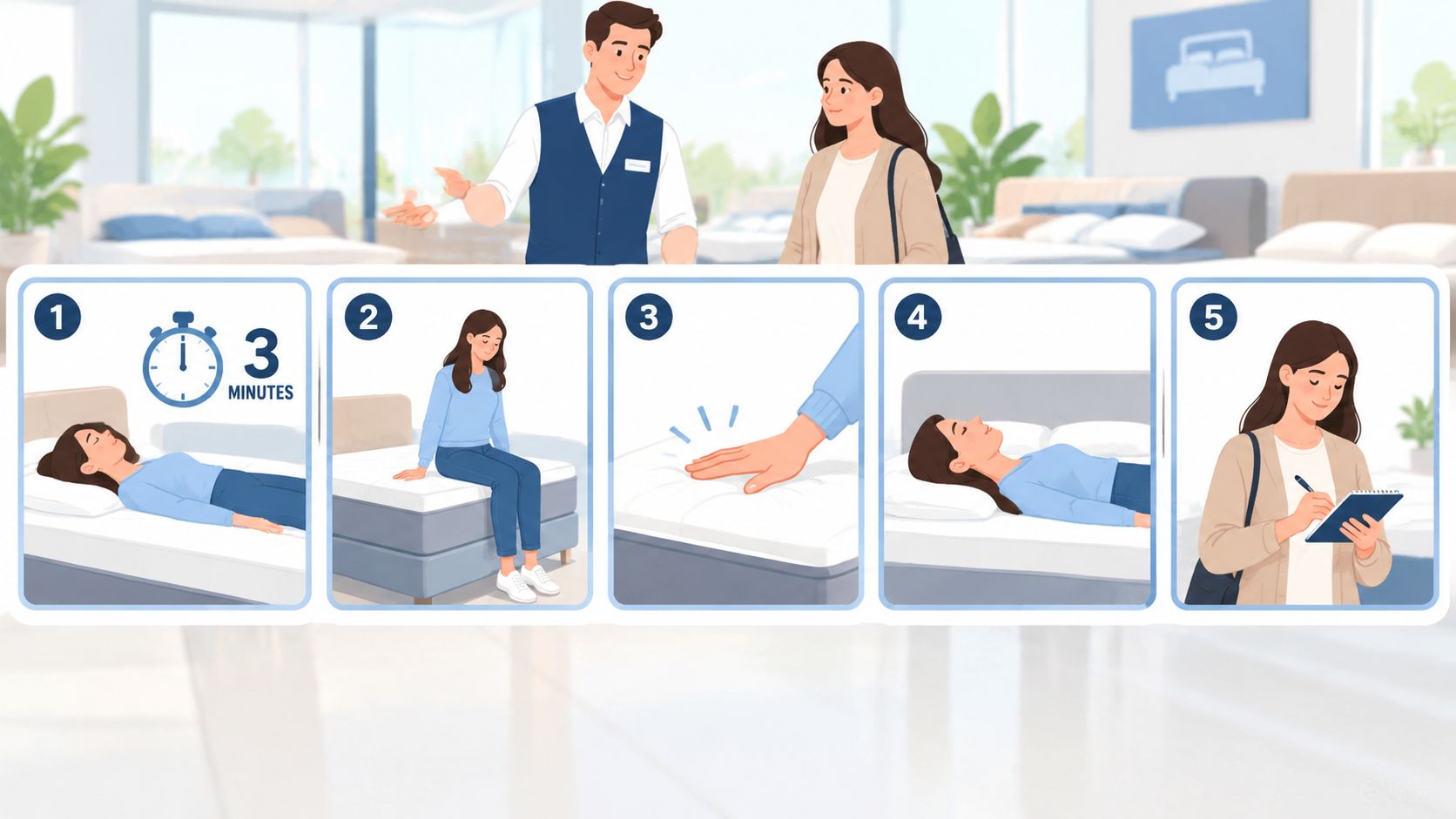
Lie in your normal sleep position. Stay still for at least three minutes. Foam warms and contours gradually, so the first impression may mislead you.
Roll onto your side. Check whether your shoulder and hip feel supported or compressed. Your body should not feel pushed upward, and you should not sink so much that changing position becomes difficult.
Test partner movement. Have a partner sit on one edge while you remain still on the opposite side. Notice whether the movement travels across the surface or stops near the seated partner.
Check the lumbar gap. While lying on your side, place a hand beneath your lower back. A large gap suggests too little contouring. Excessive sink suggests the mattress is failing to hold your midsection properly.
Ask specific product questions. The associate should identify the TEMPUR formulation in the display model, explain the cover's cooling features, and outline the comfort-exchange policy.
Test at the time you normally shop for sleep, especially if you can visit when you are already tired. Fatigue can expose whether the mattress feels naturally comfortable or merely impressive during a quick daytime trial.
Remove your shoes, silence your phone, and move slowly between beds. The slower TEMPUR feel needs time to emerge, while standard memory foam may feel familiar sooner. Couples should test together. A mattress that feels excellent alone can create a poor shared-bed experience if movement, heat, or edge use becomes troublesome. This in-store comparison is the practical checkpoint before committing to a premium mattress purchase.
Buying Locally and Making the Investment Work
A showroom comparison solves the biggest uncertainty, but the purchase also includes delivery, setup, exchange terms, and payment structure. Norwich shoppers should ask about those details before choosing between a premium foam mattress and a lower-cost alternative.
A style quiz can narrow the field for shoppers who don't know whether pressure relief, cooling, firmness, or motion isolation should lead the decision. It shouldn't replace the floor test, but it can prevent an unfocused visit and help an associate begin with the right comfort category.
Local service also matters because mattresses are difficult to transport and install. Gorins Furniture & Mattress serves Norwich, New London, Plainfield, Waterford, and surrounding Eastern Connecticut and Rhode Island communities, with Sleep Gallery access to Tempur-Pedic, Serta, and Beautyrest. Shoppers should confirm current delivery coverage, setup, old-mattress removal, comfort-exchange terms, and warranty handling before placing an order.
Make the payment fit the household
Promotional Financing with equal monthly payments can lower the immediate barrier to an investment-grade mattress, subject to credit approval and the specific offer's terms. Buyers should compare the total repayment obligation, promotional deadline, and payment required to avoid unexpected interest, rather than focusing only on the monthly figure.
Gorins also has a clearance section for value-driven savings, where available inventory may make premium sleep technology more accessible. That route can suit a guest room or a shopper who wants the Tempur-Pedic feel without selecting the newest floor assortment.
Gorins Furniture & Mattress was founded in 1936 and remains a locally owned, family-operated business. Its broader home furnishing services include Canadel Custom Dining and the F9 Custom Sofa series, with thousands of combinations for shoppers building a home around a personalized lifestyle. That same local design guidance extends naturally to the Sleep Gallery, where comfort by feel and healthier sleep remain more useful than brand slogans.
Since 1936, Gorins Furniture & Mattress has helped Norwich and Eastern CT families create homes they love, with personalized mattress guidance, Tempur-Pedic, Serta, and Beautyrest selections, custom Canadel dining, F9 seating, Promotional Financing, and 5-Star Delivery service. Visit Gorins Furniture & Mattress to test Tempur-Pedic against standard memory foam, take the online Style Quiz, or browse the Clearance section for value-driven savings.