Best Mattress for Stomach Sleepers: Norwich Guide 2026


A lot of stomach sleepers in Norwich start in the same place. They wake up with a tight lower back, shift around for a minute, and wonder whether the problem is age, stress, or “just sleeping wrong.”
Sometimes it is the mattress.
For stomach sleepers, a mattress isn't just a comfort purchase. It's part of a healthier sleep setup. If the surface lets the middle of the body dip too far, the night can feel fine at first and still leave the back sore by morning. That's why this topic deserves clear, practical advice instead of vague “buy something firm” recommendations.
Since 1936, local families have turned to a family-owned showroom for help making smart, lasting home decisions. That kind of guidance matters with sleep products because comfort is personal, but support follows patterns. Stomach sleepers usually need a mattress that works more like a stable foundation than a soft cushion.
Many readers looking into mattress comfort are also trying to improve sleep quality more broadly. For those dealing with hormonal sleep disruption, Lila's perimenopause sleep advice is a useful companion read. For a more mattress-focused starting point, Gorins also shares tips on ways to improve sleep quality.
The good news is that the best mattress for stomach sleepers usually becomes easier to identify once a shopper knows what to look for in person. A showroom test drive can reveal more in a few minutes than a long list of online specs.
Table of Contents
- Finding Relief for a Better Night's Rest
- The Stomach Sleeper's Dilemma Why Your Sleep Position Matters
- Comparing Mattress Types for Stomach Sleepers
- Our Expert Picks from the Gorins Sleep Gallery
- How to Test a Mattress in Our Norwich Showroom
- Your Stomach Sleeper Buying Checklist
- Complete Your Sleep System for a Healthier Night
Finding Relief for a Better Night's Rest
A common local scenario goes like this. A shopper replaces old pillows, tries sleeping “more carefully,” and even changes bedtime habits, but the same lower-back ache keeps showing up after nights spent on the stomach.
That pattern makes sense. Stomach sleeping places the body in a position where support matters more than softness. If the bed feels plush and cozy at first contact but slowly lets the hips settle too low, the back can absorb that strain for hours. The mattress may still feel comfortable in a showroom sit test and still be wrong for overnight alignment.
A quick comparison of what stomach sleepers usually need
| Mattress factor | Usually works better for stomach sleepers | Usually causes problems |
|---|---|---|
| Overall feel | Medium-firm to firm | Very plush or deeply cushioned |
| Support pattern | Lift through the hips and abdomen | Midsection sinkage |
| Comfort layers | Controlled contouring | Thick, soft cradle |
| Surface response | Stable and easier to reposition on | Slow, deep hug |
| Best use case | Keeping the spine level | Prioritizing softness above support |
Some confusion comes from the word firm. Many shoppers hear that word and picture a hard, uncomfortable bed. In practice, the better goal is support with enough surface comfort so the chest and shoulders don't feel jammed while the midsection stays lifted.
Practical rule: For stomach sleepers, the mattress should feel supportive underneath the body before it feels plush on top of it.
That's why sleep shopping should be treated as a long-term wellness decision. A mattress affects posture for hours at a time, night after night. Choosing the right one can mean less morning stiffness, easier movement, and a more settled sleep routine.
In Norwich and across Eastern CT, many households are also balancing comfort goals with budget realities. That's where Promotional Financing with equal monthly payments can help make an investment-grade mattress more manageable without pushing shoppers toward a lower-quality option that won't hold up.
The Stomach Sleeper's Dilemma Why Your Sleep Position Matters
Stomach sleeping asks more from a mattress than many people realize. The body's weight tends to concentrate through the torso and hips, so a mattress has to hold that area up without making the upper body feel pinned down.
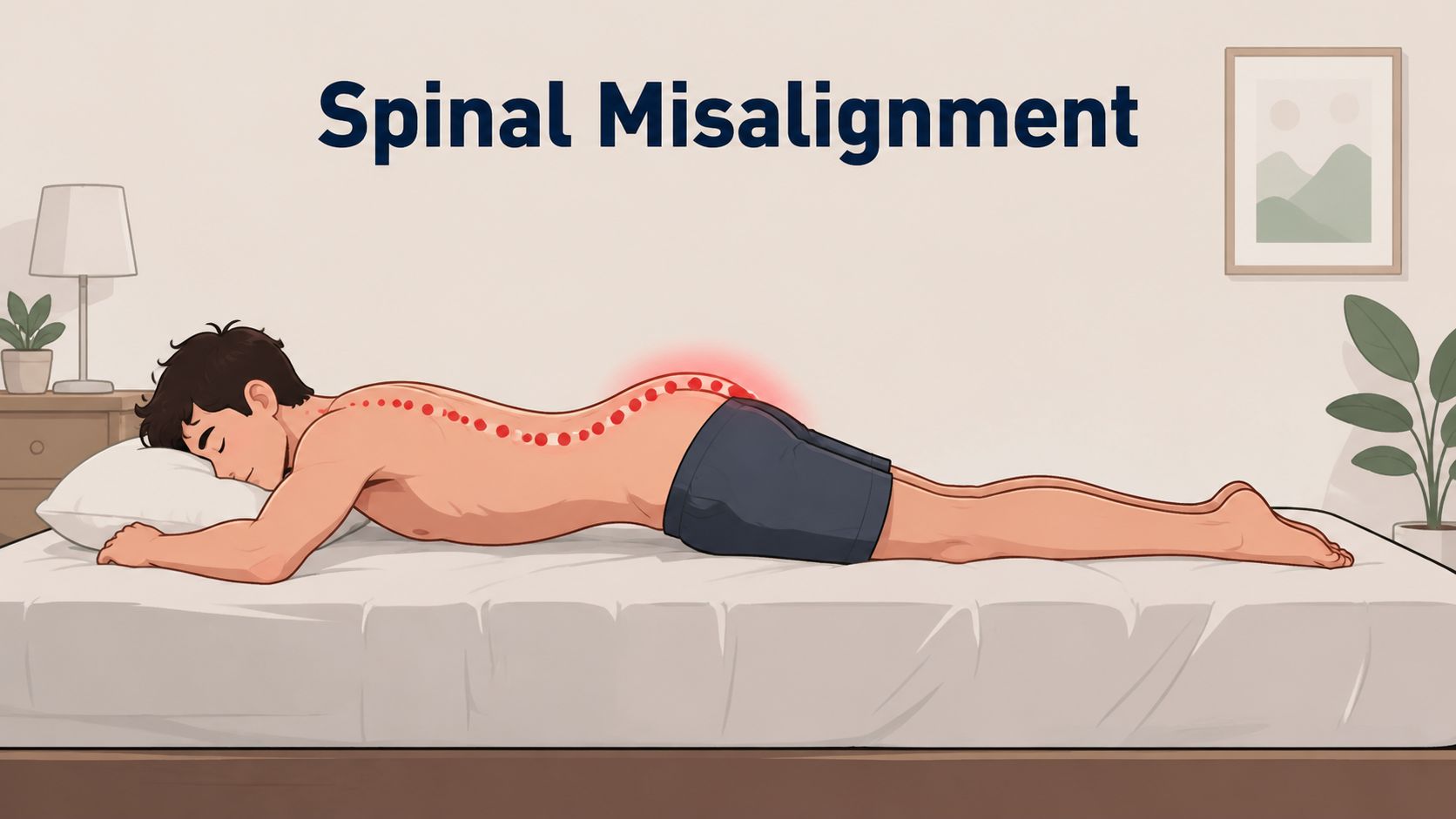
Because only about 7% of Americans sleep on their stomach, guidance can be harder to find, but expert advice is fairly consistent. Saatva notes that stomach sleeping is uncommon and says many specialists point stomach sleepers toward a medium-firm to firm feel, while AARP places the ideal firmness range at 6.5 to 9 out of 10 to help keep the hips from sinking and the spine neutral, as summarized in this stomach sleeper mattress guidance.
Why stomach sleeping creates a different pressure pattern
Think of the body like a bridge. If the center drops lower than the ends, strain shows up fast. For a stomach sleeper, the abdomen and hips are often the heaviest area pressing into the bed. If the mattress is too soft there, the lower back bends into an awkward curve.
That's why spinal alignment matters so much. In plain language, it means the body stays in a more natural line instead of bowing downward through the middle. Good alignment doesn't mean a flat, rigid feeling. It means the mattress supports the body evenly enough that the back isn't doing extra work all night.
The two terms that confuse shoppers
Many mattress shoppers hear two phrases over and over.
- Spinal alignment means the mattress keeps the body from dipping out of position, especially through the pelvis.
- Pressure relief means the surface has enough give that the ribs, chest, and shoulders don't feel harshly pressed.
Stomach sleepers need both, but in a specific order. Support comes first. Pressure relief comes second.
A mattress that feels soft at the surface can still be wrong if the pelvis sinks lower than the shoulders.
That's also why body type matters. A mattress that feels supportive to a lighter sleeper can feel too soft to someone with more weight through the midsection. Gorins offers a helpful guide on which mattress is right for your body type, and that body-type lens is especially useful for stomach sleepers who can't rely on a one-size-fits-all feel.
Comparing Mattress Types for Stomach Sleepers
A mattress type is a bit like the suspension system in a car. Two vehicles can both feel firm at first, but one keeps you level through a turn and the other lets you drop into it. Stomach sleepers notice that same difference quickly on a mattress, especially through the hips and midsection.
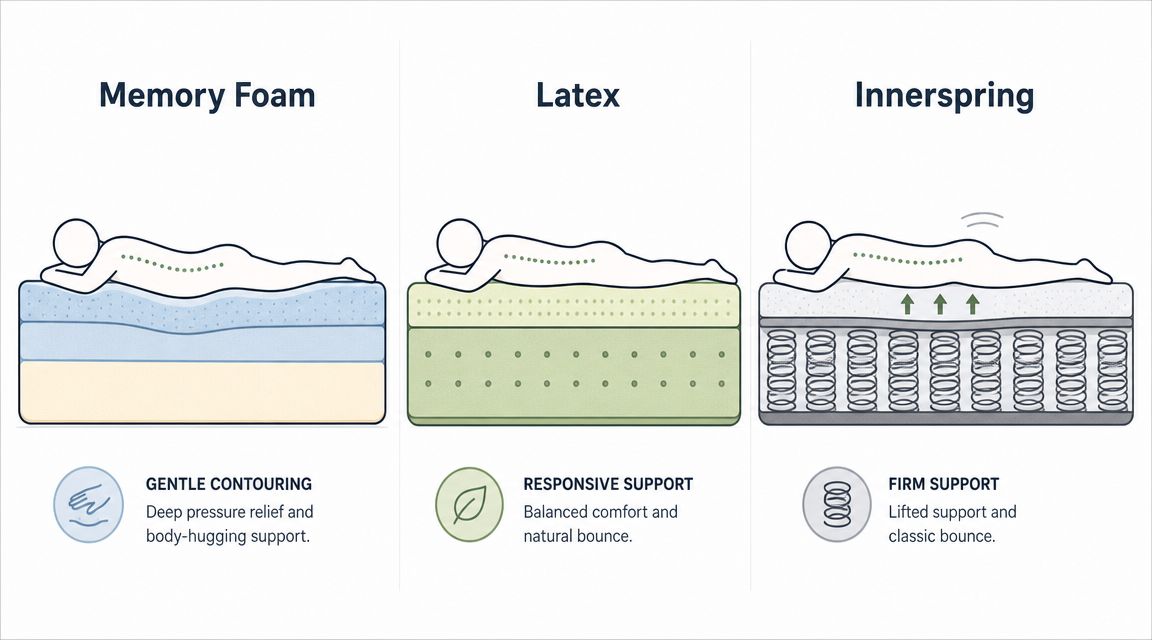
That is why mattress shopping online only gets you part of the way. In our Norwich showroom, stomach sleepers often narrow the field much faster once they lie still for several minutes and feel where their body settles. A bed that sounds supportive on paper can still let the pelvis dip too far once real weight is on it.
For shoppers who want a basic materials refresher before comparing feels in person, this guide to understanding mattress types can help clarify the differences in simple terms.
How the main mattress types compare
| Mattress type | What it often feels like for stomach sleepers | Main advantage | Main caution |
|---|---|---|---|
| Innerspring | Flat, lifted, steady support | Strong pushback and good airflow | Can feel too hard if the top is thin |
| Hybrid | Support underneath with a bit of cushioning on top | Good mix of lift and comfort | Some models feel softer than expected after a few minutes |
| Latex | Buoyant and responsive, with less sink | Easy movement and even support | The springy feel surprises some shoppers |
| All-foam | Ranges from stable to deeply contouring | Quiet, even surface feel | Softer foams may let the midsection settle too low |
What each type means in real showroom testing
Innerspring usually appeals to the stomach sleeper who says, "I need the mattress to hold me up." It tends to feel straightforward and level. During a test drive, this category often gives a clear answer fast. You either appreciate the stable surface, or you notice right away that it feels too stiff across the chest and ribs.
Hybrid is often the easiest place to start because it blends coil support with comfort layers. For many Norwich shoppers, this is the category that makes the most sense after five or ten minutes on the bed, not just the first touch. If you want to sort out the category before you visit, our guide to what a hybrid mattress is explains how the layers work together.
Latex works well for some stomach sleepers who want support without the slow, sinking feel that some foams create. It has more bounce, so changing position feels easier. That can be helpful if you spend part of the night on your stomach but do not stay there the whole time.
All-foam takes more careful testing. Some firmer foam beds can keep a stomach sleeper on a fairly even plane. Others feel supportive for the first minute, then allow more settling as the foam warms and compresses. In the showroom, that is why we encourage shoppers not to do a quick sit and bounce. Lie flat, relax your legs, and give the mattress enough time to show its true shape under your body.
One more point often gets missed. Temperature can change your comfort even if the support feels right. Stomach sleepers have more of the front of the body in contact with the bed, so warmer surfaces stand out more. Innerspring and hybrid models often feel airier, while some foam beds hold more warmth. That is another reason an in-store test drive helps. You are not just judging firmness. You are checking how the whole mattress behaves once you settle in.
Our Expert Picks from the Gorins Sleep Gallery
Stomach sleepers usually shop more successfully when mattresses are grouped by feel and function instead of by marketing language. The question isn't just “Which brand is best?” It's “Which construction gives this body the right lift?”
The strongest pattern in expert reviews is that hybrid mattresses often perform very well for stomach sleepers because they combine a supportive coil core with comfort layers for pressure relief. Leesa also highlights that top-rated hybrids tend to balance support, cooling, and motion transfer while reducing abdominal collapse and limiting chest or shoulder pressure in this overview of hybrid support for stomach sleepers.
For shoppers who want sturdy support first
A firmer Beautyrest or similarly supportive coil-based model can be a good fit for the shopper who knows soft beds lead to back discomfort. These mattresses usually create a more stable surface and can feel reassuring from the first minute of testing.
This category often suits:
- Dedicated stomach sleepers who rarely switch positions
- Shoppers who dislike deep contouring
- People who want stronger edge support for sitting or getting in and out of bed
A firm Serta option can also make sense here, especially if the shopper wants a cleaner, more controlled feel through the midsection without giving up all cushioning at the top.
For shoppers who want balance instead of hardness
Some stomach sleepers avoid firm mattresses because they assume “firm” means pressure on the chest or ribs. A better match may be a firmer hybrid with comfort layers that cushion the surface but stop short of a plush cradle.
That's where support and feel work together. A mattress can be comfortable without being pillowy. Many shoppers do best with a surface that feels gently padded on top and structurally steady underneath.
A firm Tempur-Pedic can also appeal to stomach sleepers who want a more pressure-relieving surface but still need careful alignment. The deciding factor is whether the material holds the pelvis level instead of letting it drift downward after a few minutes.
Only one place in the article needs to name the showroom directly. In the Gorins Furniture & Mattress Sleep Gallery, shoppers can compare these feels side by side among brands such as Tempur-Pedic, Serta, Beautyrest, Stearns & Foster, Sealy, and King Koil, which is far more useful than trying to guess from online descriptions alone.
Comfort by feel matters most when two mattresses sound similar on paper but support the body differently in practice.
For shoppers furnishing beyond the bedroom, that same made-for-you mindset also appears elsewhere in the showroom. Custom programs such as Canadel dining and the F9 Custom Sofa series offer thousands of combinations suited to a household's lifestyle. The mattress floor follows the same logic. Match the product to the person, not the other way around.
How to Test a Mattress in Our Norwich Showroom
The most useful advice for stomach sleepers is simple. Don't rely on a quick sit test.
NapLab's guidance points out that many mattress guides give one broad firmness recommendation, but the right feel depends on body weight and shape. A key test is whether the pelvis stays level with the shoulders and whether the stomach sinks too much, which can bow the lower back, as explained in this stomach sleeper testing guide.
The showroom test drive that matters most
A productive mattress test usually looks like this:
Start in the actual sleep position
The shopper should lie fully on the stomach, not just sit on the side or lean on one elbow. A mattress can feel firm while seated and still allow too much midsection sink when the full body weight is distributed across it.Stay there for a few minutes
The first impression can be misleading. Some surfaces feel supportive at first contact, then soften slightly as the body settles in.Notice the middle of the body first
The best mattress for stomach sleepers usually keeps the pelvis from dipping lower than the shoulders. If the lower back starts to feel compressed or “hinged,” the mattress is likely too soft for that body.Check the upper body second
The chest, ribs, and shoulders shouldn't feel jammed into a hard surface. Support should be present, but not punishing.
A helpful companion read for this part of the process is Gorins' guide on how to pick mattress firmness. It gives shoppers a better language for describing what feels supportive versus what feels hard.
What lighter and heavier stomach sleepers should notice
A lighter stomach sleeper may need enough firmness to stay level, but not such a rigid surface that the front of the body feels unsupported at contact points.
A heavier stomach sleeper, or someone who carries more weight through the hips and midsection, often needs a mattress with stronger pushback under the torso. That's why identical firmness labels can produce different results for different people.
Use this quick in-store checklist:
- Pelvis position: Does the middle stay level, or does it dip?
- Back feedback: After a few minutes, does the lower back feel neutral or strained?
- Breathing comfort: Does the chest feel cushioned enough to relax?
- Ease of movement: Is it easy to shift and reposition?
If the mattress feels great for one minute but the lower back starts talking by minute three, that's useful information.
For couples, the test should include both sleepers, even if only one sleeps on the stomach. Motion transfer, edge feel, and temperature preferences can still affect the final choice.
Your Stomach Sleeper Buying Checklist
A mattress decision gets easier when the shopper knows what must be true before saying yes.
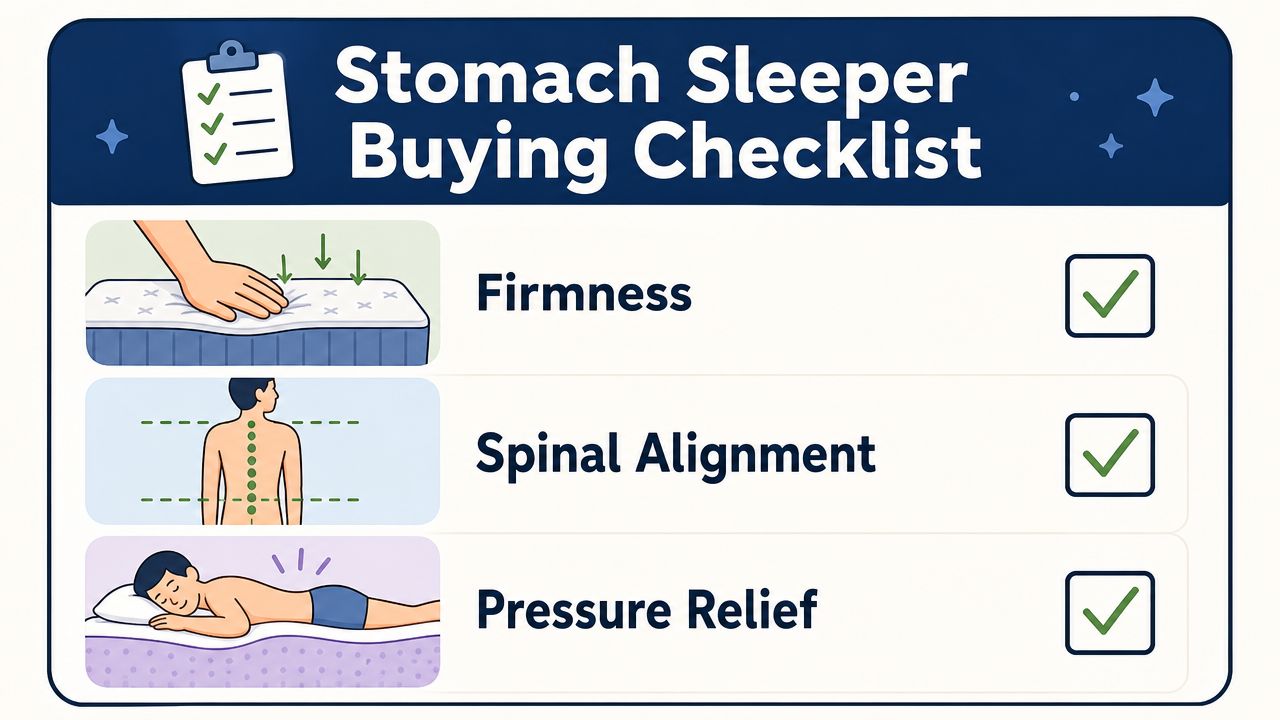
Save this list for the showroom
- Target the right feel: Look for a mattress that feels medium-firm to firm, with support showing up before plushness.
- Favor support-first construction: Pay closest attention to hybrids, firmer innersprings, latex, and firmer foam models that resist midsection sink.
- Test in the actual sleep position: Lie on the stomach long enough to see whether the pelvis stays level with the shoulders.
- Watch for false firmness: Some mattresses feel firm when sitting but soften too much once the whole body settles in.
- Check chest and shoulder comfort: The surface should cushion without letting the torso drop.
- Think about temperature: A stable mattress that sleeps too warm may still be the wrong fit over a full night.
- Evaluate edge support: This matters for couples, smaller rooms, and anyone who uses the full width of the bed.
- Bring body type into the decision: The same model can feel very different depending on weight and shape.
- Review accessories too: A very thick pillow can undo the benefits of a supportive mattress.
- Ask about Promotional Financing: Equal monthly payment options can help make a healthier sleep investment easier to manage.
A shopper can save this list on a phone before visiting Norwich, or keep it handy while comparing mattress feels side by side in the showroom.
Complete Your Sleep System for a Healthier Night
A lot of stomach sleepers reach the right mattress feel in our Norwich showroom, then undo that support at home with the wrong pillow or heavy, heat-trapping bedding.
That is why the final step of the in-store test drive matters.
If you are shopping at Gorins, ask to test your mattress choice with a thin pillow, not just your head on the mattress surface. For stomach sleepers, pillow height works like wheel alignment on a car. If it is off, even a well-built foundation can feel wrong. A pillow that is too tall can tip the neck upward and create morning stiffness, while a lower-profile pillow often keeps the head in a calmer, more neutral position.
Some shoppers also want to try a thin support under the hips or pelvis while they are on the mattress. That small adjustment can show whether your lower back relaxes more easily. It is a simple showroom check, and it helps translate online advice into something you can feel before you buy.
Bedding deserves the same hands-on approach. The protector, sheets, and comforter all change how a mattress feels over a full night, especially for stomach sleepers who are sensitive to heat buildup and surface tension. Our guide to bedding, mattress protectors, and comforters walks through what to pair with your mattress so the whole setup works together, not against it.
Sleep habits still matter outside the bed itself. If you want a few practical ideas for wind-down routines, room setup, and consistency, these science-backed sleep habits are a useful companion to the mattress-fitting process.
Since 1936, Gorins has helped Norwich and Eastern CT families make thoughtful home purchases with personal guidance and time to compare options side by side. For stomach sleepers, that showroom experience is often the difference between a mattress that feels fine for two minutes and a sleep system that supports healthier rest night after night.