Style Quiz Free: 7 Tools for Better Furniture Choices


Shoppers standing in a half-empty living room often know a space doesn't feel right, yet they can't name what should change. Dozens of silhouettes, fabrics, wood tones, and finishes compete for attention, and buying one piece at a time can make the room feel less settled, not more. A style quiz free of charge offers a calmer first step, turning vague reactions into useful words such as transitional, coastal, warm, or made to fit.
The strongest result isn't a rigid identity. It's a vocabulary that helps neighbors in Norwich compare options, explain preferences, and decide what deserves a closer look in person. That matters because furniture discovery has moved online. The 2025 HomeByMe survey conducted with IPEA, Prodege, and Catalyse Research examined 9,000 U.S. consumers and found that 63% obtain design inspiration primarily from the web, while 43% make more than half of their furniture purchases online. The same research reported that 31% rank personalization among their top purchase criteria, and 27% said personalization through 3D solutions directly triggered a purchase decision.
Seven resources follow, each organized around a different decision. Together they cover whole-room direction, visual inspiration, proportion, personal color, function, paint coordination, and preferences revealed over time. The free online Style Quiz from Gorins Furniture & Mattress then acts as the local bridge, connecting digital direction with showroom testing at a locally owned, family-operated furniture store in Norwich, CT, founded in 1936.
1. Havenly Style Quiz
Havenly works best for shoppers who need a whole-room direction before they choose individual pieces. Questions cover favorite colors, materials, room layouts, and spaces that already feel appealing. Answers are sorted into profiles such as modern, transitional, bohemian, or coastal, giving renters and homeowners a concrete starting point rather than another pile of unrelated screenshots.
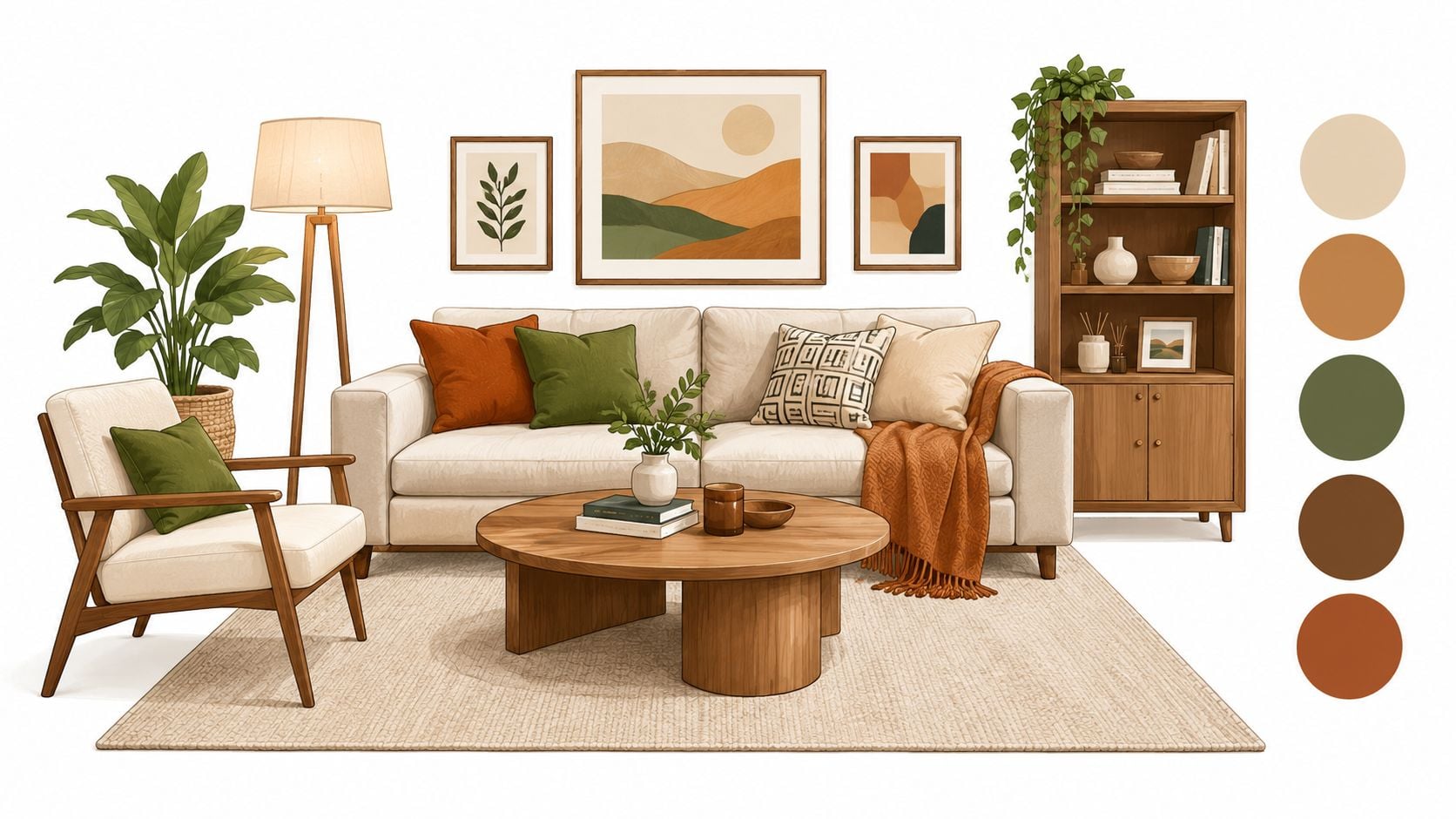
A homeowner identified as transitional can pair classic Flexsteel or Craftmaster silhouettes with simple, neutral textiles for a timeless living room. A renter identified as coastal can use the same type of result to select lighter wood tones and softer fabrics that suit a small apartment without repainting every wall. Readers refining a sleeping space can also compare the result with bedroom style guidance for different personalities before narrowing furniture choices.
How to Use the Result Well
- Bring the profile name: Screenshots help a Norwich associate translate a broad label into fabrics, finishes, and room layouts.
- Note the exceptions: A shopper may like transitional sofas but prefer modern lighting, and that tension is useful information.
- Test the label in person: Seat depth, cushion feel, and scale can't be judged from a result page.
Preferences also change. The 2025 Consumer Insights Now survey reported by Lighting News Now found that 58% of respondents like to update their home décor often, 56% want to keep up to date on style, and 52% said they are always shopping for décor. A quiz result should therefore guide the next purchase, not lock a household into one look forever. Shoppers who want another way to discover your interior design style can compare results and look for overlap.
2. Houzz Style Finder Quiz
Some people can't describe their taste, but they recognize it instantly in a photograph. Houzz leans into that strength by presenting room images and asking users to choose favorites. Selections point toward farmhouse, contemporary, traditional, industrial, or related directions, which makes the process feel visual rather than verbal.
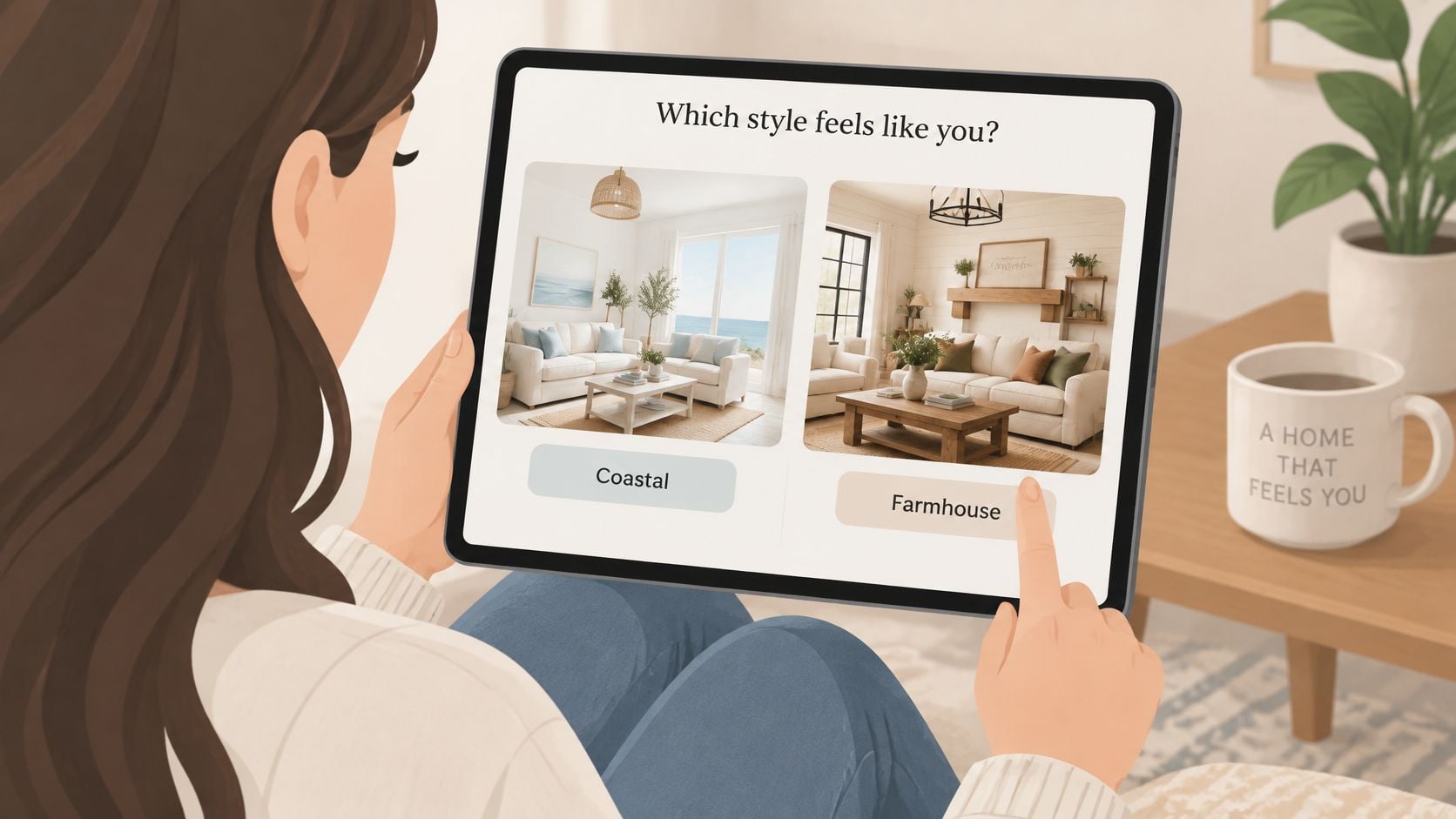
A family that repeatedly selects warm, layered rooms may discover a traditional or transitional leaning, then look for a Best Home Furnishings dining set with a similar sense of comfort. A couple refreshing a bedroom might save several calm rooms, notice repeated upholstered headboards and pale woods, and bring those images to Gorins. The visual pattern often communicates more than a style name alone, especially for readers following practical guidance on where home design should begin.
Reading the Photographs Critically
Attractive photographs prove appeal, not fit. Room dimensions, traffic paths, maintenance, and seat comfort still require direct testing.
Visualization deserves the same caution. Research on home-improvement shoppers reported that 46% had used room-visualizing tools and 43% had used 360-degree furniture views, figures included in analysis of refreshed home spending and visualization habits. Those tools can build confidence, but they don't validate whether a sofa fits through a doorway or whether a dining chair supports a long family meal.
Houzz is most useful when saved rooms are sorted by repeated color, texture, and silhouette. Quick, instinctive answers usually reveal taste more clearly than carefully staged choices. A short board of favorites then gives showroom associates a practical map for suggesting in-stock alternatives matched to a shopper's lifestyle.
3. Kibbe Body Type Quiz
The Kibbe framework approaches style through line, scale, and proportion rather than room photographs. Developed by style consultant David Kibbe, it sorts bone structure, proportions, and visual presence into families such as Dramatic, Soft Dramatic, Romantic, Natural, Gamine, and Classic. Although the system began with personal presentation, its attention to shape can sharpen furniture decisions.
A person drawn to the Romantic family may favor rounded sofa arms, curved dining chairs, and softer upholstery lines. A person drawn to Natural qualities may prefer relaxed, sturdy frames and textured fabrics that don't look overly formal. Neither result dictates a purchase. Both can explain why one chair feels visually right while another, similar chair feels too sharp, too delicate, or too large.
Proportion Checks That Matter
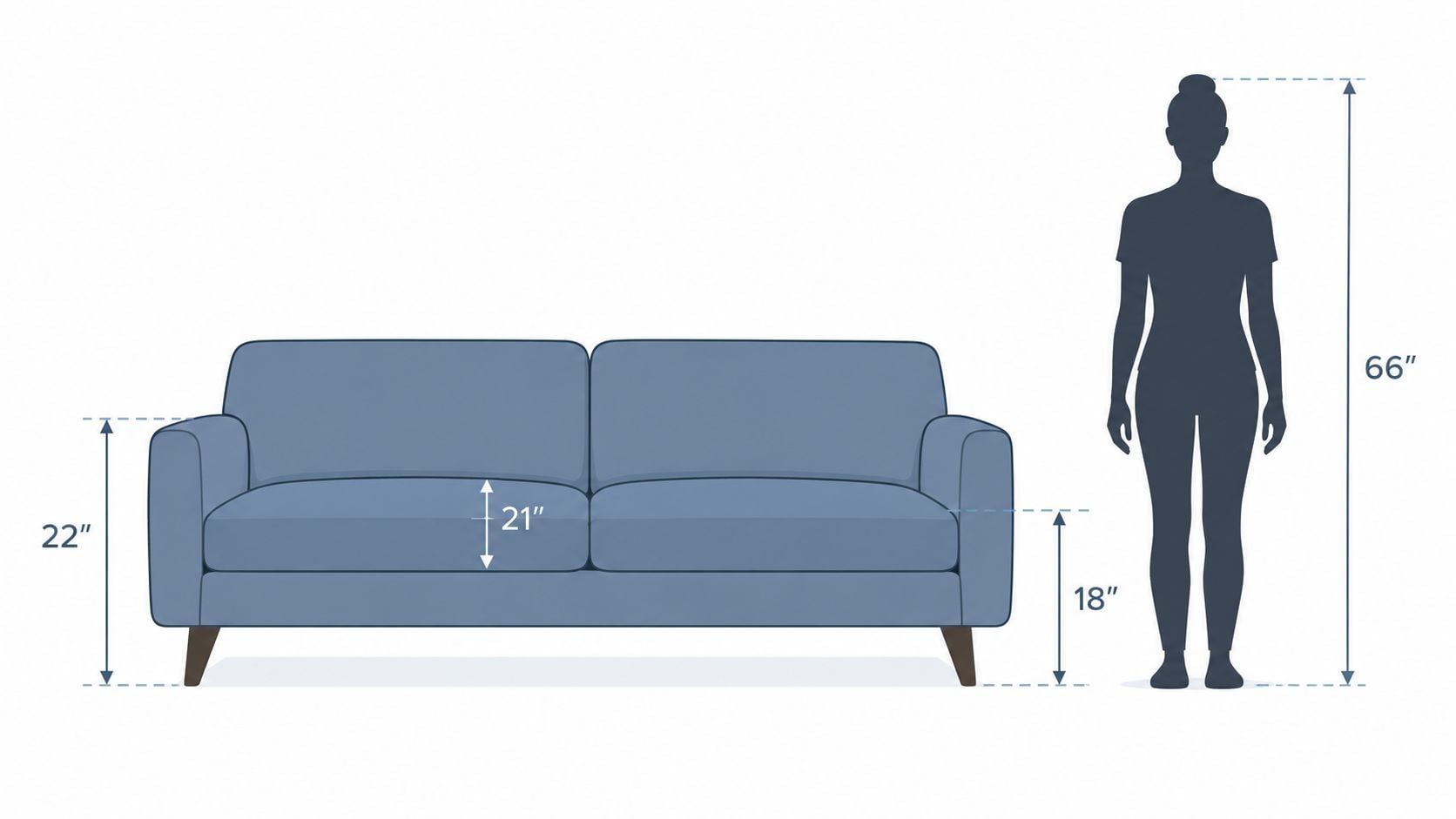
- Seat depth: Feet should rest comfortably without the sitter feeling pushed too far forward.
- Arm height: Arms should support reading, conversation, and standing up without strain.
- Table scale: A dining table needs enough clearance for chairs, serving pieces, and movement around the room.
- Visual weight: Heavy frames can ground a large room but overwhelm a compact apartment.
Shorter quizzes also respect attention. Benchmark summaries report that quizzes exceeding eight questions can fall below 50% completion, while shorter experiences commonly achieve completion rates above 70%, according to benchmark discussion of personality quiz length and completion. For proportion, a brief result is only an invitation to sit, measure, and compare. The showroom test remains decisive.
4. Seasonal Color Analysis Quizzes
Seasonal color quizzes group personal coloring into Spring, Summer, Autumn, and Winter palettes based on skin, hair, and eye undertones. Carole Jackson popularized the approach in the 1980s through Color Me Beautiful. Free versions now use photographs, swatches, and contrast questions to estimate which color families appear most harmonious.
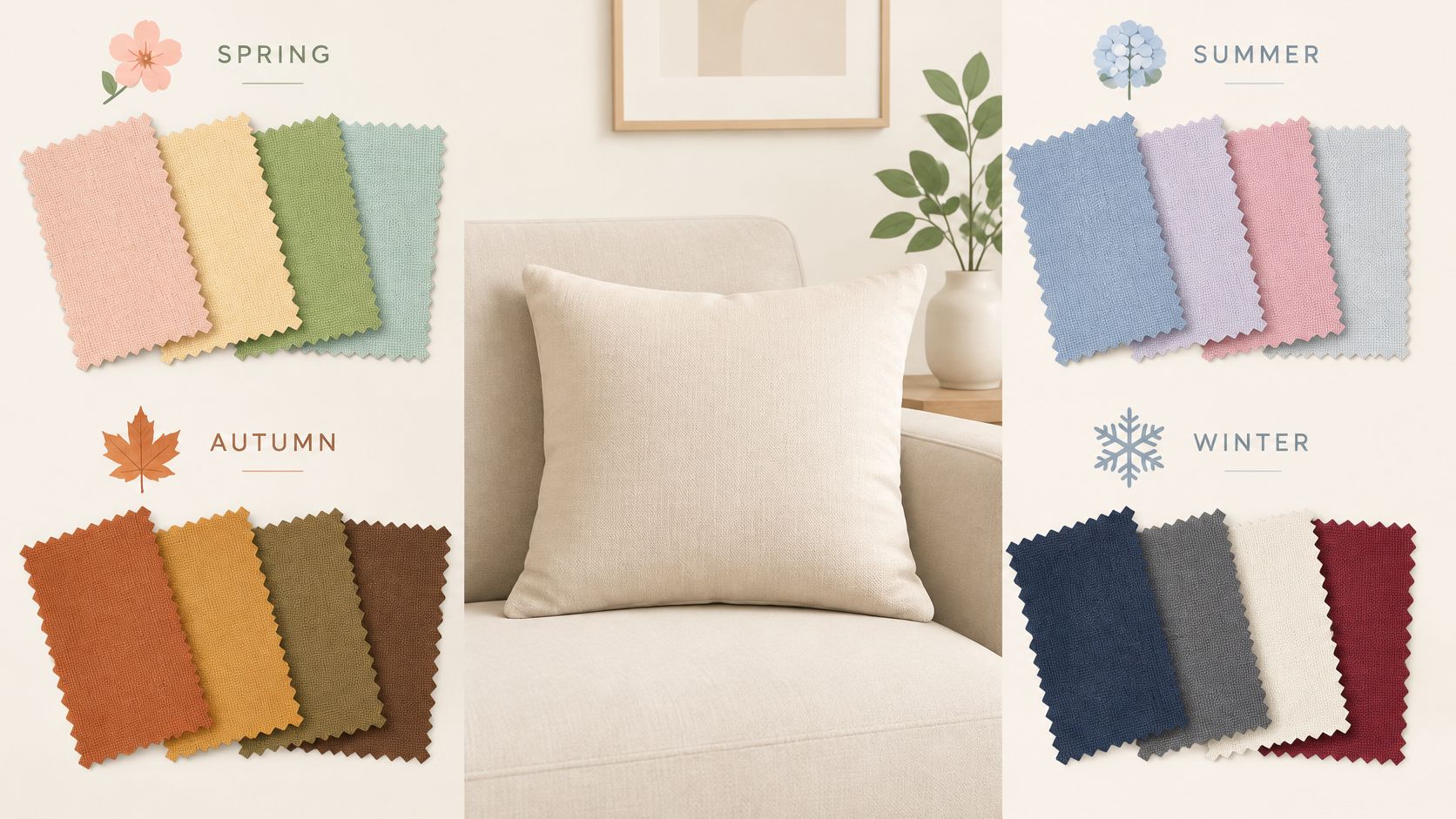
That personal palette can inform rooms where people spend unhurried time. A Soft Autumn result may lead toward warm taupe or olive upholstery, while a Cool Winter result may suit crisp navy or charcoal bedding. The connection is especially relevant for upholstery, rugs, and bedroom textiles, where color sits close to faces and shapes the mood daily. Readers building a broader scheme can use expert guidance for creating a balanced color palette alongside swatches.
Lighting can distort online answers, so daylight comparisons matter. Shoppers should place fabric beside existing flooring, cabinets, and heirloom pieces rather than judging color on a bright phone screen. Separate guidance on choosing interior palettes for Auckland homes offers another reminder that regional light and architecture change how familiar colors behave.
A Practical Color Test
Swatch rule: One dominant palette color, supported by quieter neutrals and one accent, usually feels calmer than matching every surface exactly.
Seasonal labels shouldn't overrule affection for a color or the fixed tones already in a home. They're most helpful when they explain why certain fabrics repeatedly feel flattering and restful. Bringing palette notes to Gorins allows direct comparison across custom upholstery, bedding, and Canadel Furniture Connecticut finish options.
5. Decorilla Design Style Quiz
Decorilla focuses on the relationship between appearance and use. Its free quiz asks about preferred colors, materials, room function, and furnishings already in place. That combination suits shoppers planning a refresh, because a beautiful room that blocks homework, conversation, storage, or movie nights hasn't solved the problem.
Consider a Norwich household updating a dining room for weeknight meals and larger holiday gatherings. Quiz answers may point toward warm modern finishes, but the functional details determine table length, chair count, and whether leaves or benches make sense. A small-space renter faces the opposite task, favoring multifunctional pieces, narrower profiles, and storage that keeps a compact layout usable.
Questions to Answer Before Shopping
- Primary use: Daily activity matters more than the room's formal name.
- Existing anchors: Flooring, fireplaces, windows, and treasured furniture narrow realistic choices.
- Measurements: Wall lengths, doorway widths, and ceiling height prevent expensive surprises.
- Timing and budget: Stock pieces and custom orders follow different schedules.
Well-designed quizzes connect every answer to a recommendation. Benchmark data compiled across 2,120 quiz-funnel campaigns reports 44.2% engagement among viewers and a 5.2% purchase conversion rate for active ecommerce quizzes, according to compiled ecommerce personalization and quiz benchmark data. Those vendor-reported figures shouldn't be treated as guarantees. They do show why relevant questions outperform generic personality prompts when shoppers need a short, credible shortlist.
Gorins applies the same practical idea locally through its free living room style quiz for guided furniture planning. Separate quizzes for bedrooms, dining rooms, and home offices help Eastern CT shoppers begin with the room and function they're trying to improve.
6. Sherwin-Williams ColorSnap and Color Quizzes
Paint often looks like a separate decision, yet wall color changes how upholstery, wood, bedding, and metal finishes read. Sherwin-Williams ColorSnap and related color quizzes ask users to explore hues, moods, and room types. The guided process narrows a large paint library into palettes that can be coordinated with furniture before anyone commits to gallons or custom fabric.
A homeowner seeking a calm bedroom might select a soft neutral wall, then coordinate bedding around a Tempur-Pedic or Serta mattress in the Sleep Gallery. A family choosing a warm living room scheme might compare the paint result with Flexsteel upholstery and existing wood floors. Readers can pair those experiments with guidance for picking a paint color that works throughout the home.
Paint and Fabric Belong Together
Samples should be viewed in morning light, evening lamplight, and the artificial lighting used most often. A gray that looks crisp beside white trim may turn muddy next to warm oak. A navy that feels restful on a screen may become nearly black in a north-facing bedroom.
Paint chips and fabric swatches should travel together. Separate decisions create colors that almost match, which often looks less intentional than gentle contrast.
Sleep choices need the same personalized testing. A 2025 repeated-measures study found average sleep latency of 7.71 minutes on a medium mattress versus 12.42 minutes on a soft mattress, a difference reported in research on mattress firmness and sleep architecture. The finding supports comfort by feel, not a universal firmness rule. Mattresses in Norwich, CT should be compared for alignment, pressure relief, temperature, and personal response before color becomes the finishing decision.
7. Pinterest Style Discovery Tools
A Norwich shopper may arrive with a folder of room photos but no clear name for the look they like. A visual bookmarking platform can help reveal that direction over time. Repeated saves show patterns in color, texture, layout, and furniture shape, often more clearly than a single round of quiz answers.
For example, someone who saves warm, layered living rooms may prefer a transitional look, even if quizzes suggest different labels. A couple planning a bedroom refresh could collect ideas for pale wood, washable bedding, blackout curtains, and restful spaces. Add a note to each image: the feature that caught your eye might be the tall ceiling rather than the sofa. That distinction helps Gorins associates suggest furniture with a similar feel that fits the room.
Turning Boards Into Evidence
- Separate boards by room: Keep living room, bedroom, dining, and entry ideas distinct.
- Name the attraction: Note whether color, shape, texture, storage, or layout drew you in.
- Remove outliers: One striking detail can skew the overall direction.
- Review saves over time: Repeated preferences can matter more than a short-lived trend.
A preference may also change as household needs change. Furniture choices often reflect life stage, affordability, and individuality, so a collection of saved rooms is a record of taste, not a permanent design rule. Treat it like a trail of clues: recurring choices deserve attention, while an occasional unusual image may appeal for one detail.
Use those clues to make practical showroom decisions. Bring a short set of favorites to Gorins in Norwich, then compare furniture scale, upholstery, storage, and comfort in person. A saved photo can guide the conversation, but room measurements and trying a sofa or chair help confirm what works. For a separate bathroom project, the SouthRay bathroom design tool offers another way to explore ideas. Gorins' free online style quiz can connect digital inspiration to an in-person Norwich consultation, helping turn broad preferences into a clearer furniture-shopping direction.
7 Free Style Quiz Resources Compared
| Style Tool | How It Works | Best For | Key Strength | Main Limitation | How It Can Help at Gorins |
|---|---|---|---|---|---|
| Havenly Style Quiz | Answers about colors, materials, and room preferences produce a style profile | Defining a whole-room direction | Quick results provide useful style vocabulary | Broad categories may miss eclectic tastes | Share results with associates to explore matching furniture and custom sofas |
| Houzz Style Finder Quiz | Selects preferred room photos to identify a style | Visual inspiration and room planning | Real-room images are intuitive and easy to save | Recommendations may not fit budget or local availability | Bring saved photos to find comparable in-stock pieces |
| Kibbe Body Type Quiz | Uses proportions and visual presence to suggest shape and scale preferences | Considering furniture proportions and comfort | Encourages attention to scale, shape, and fit | Fashion-focused framework; results can vary | Try sofas and chairs in person to compare seat depth and arm height |
| Seasonal Color Analysis Quizzes | Uses undertones and color swatches to suggest a seasonal palette | Choosing upholstery, rugs, and bedding colors | Helps narrow color choices | Screen colors and lighting can distort results | Compare palette notes with Canadel finishes and fabric samples |
| Decorilla Design Style Quiz | Matches room function, colors, and materials to a suggested style | Planning a room refresh or multi-room project | Considers how a room will be used | May promote paid design services; budget fit can vary | Bring measurements and results for a one-on-one showroom consultation |
| Sherwin-Williams ColorSnap and Color Quizzes | Guides users through paint colors, moods, and palettes | Coordinating wall paint with furnishings | Useful for building a coordinated color scheme | Focuses on paint, not complete room style | Bring saved colors to compare with upholstery and bedroom options |
| Pinterest Style Discovery Tools | Saves and organizes inspiration images into boards | Developing ideas over time for a room or home | Boards reveal recurring preferences | Too many options; images may omit practical details | Share boards with associates to find matching pieces or custom options |
Turn Quiz Results into a Better Shopping Plan
A useful plan begins with one sentence for each result. Shoppers can record a style name, color family, preferred silhouette, room function, or recurring visual theme, then discard labels that don't change a real decision. Measurements, a list of essential pieces, and fixed materials come next. That short brief prevents a free quiz from becoming a purchase order and gives Gorins associates something concrete to work with during a consultation.
The showroom visit should test what screens can't prove. Sofas and recliners need sitting time, fabrics need comparison under varied light, and dining chairs need to be pulled up to an actual table. Shoppers can compare Flexsteel, Best Home Furnishings, Craftmaster, Aspen Home, and Vaughan-Bassett pieces for living room furniture in Eastern CT, then decide whether stock selections meet the brief. Privacy also deserves attention. A responsible quiz should make photo uploads optional, minimize personal data, provide text descriptions for visual choices, support keyboard and screen-reader use, and allow a not sure answer instead of forcing a false preference.
Customization becomes practical once direction and dimensions are clear. The Canadel Custom Dining partnership and F9 Custom Sofa series offer thousands of combinations across sizes, finishes, fabrics, arm styles, back types, and cushion firmness, creating investment-grade quality suited to a household's lifestyle. Promotional Financing with equal monthly payments, subject to credit approval, can make an affordable luxury purchase easier to schedule without reducing the decision to the lowest price.
Sleep deserves separate, evidence-aware attention. A 2021 systematic review concluded that medium-firm mattresses generally promote comfort, sleep quality, and spinal alignment, while individual characteristics still matter, according to the systematic review of mattresses and back-pain outcomes. In the Sleep Gallery, shoppers can compare Tempur-Pedic, Serta, and Beautyrest by comfort by feel and healthier sleep priorities rather than by a rigid soft or firm slogan.
Since 1936, Gorins Furniture & Mattress has helped Norwich and Eastern CT families create homes they love. From custom-designed Canadel dining sets to current Tempur-Pedic sleep technology, the family-operated business combines broad selection with personalized local care and 5-Star Delivery service. Neighbors from Norwich, New London, Plainfield, Waterford, and surrounding Eastern CT and Rhode Island communities can start with the free online Style Quiz, visit the Norwich showroom to confirm scale and comfort, or browse Clearance for value-driven savings.
Take the free online Style Quiz to clarify a room direction, then visit Gorins Furniture & Mattress to test comfort, compare custom fabrics and finishes, and speak with a local associate in Norwich. Shoppers can also browse Clearance for value-driven savings while planning furniture, custom dining, or a new mattress with knowledgeable, low-pressure guidance.