Dining Room Tables for Small Spaces: Compact Style

A lot of Norwich homes have the same challenge. There's room for a dining table, but only if that table earns its place. One wrong choice and the walkway tightens, chairs scrape the wall, and the whole room feels smaller than it is.
That's why shopping for dining room tables for small spaces can't start with style alone. It has to start with fit, traffic flow, and how the table will be used on a Tuesday night, not just on a holiday. Since 1936, a locally owned, family-operated business like Gorins has helped Eastern CT families make those decisions with a practical eye toward quality, value, and pieces that are suited to your lifestyle.
Table of Contents
- Finding the Perfect Dining Table for Your Norwich Home
- Planning Your Layout The 36-Inch Clearance Rule
- Finding the Perfect Fit Table Shapes for Small Rooms
- Smart Designs Space-Saving Table Styles
- Your Ultimate Solution Custom Canadel Dining at Gorins
- Bring Your Vision Home with Expert Guidance
Finding the Perfect Dining Table for Your Norwich Home
The most important rule in a small dining area isn't color, shape, or finish. It's clearance. A table can look perfectly scaled in a showroom and still fail the moment chairs need to move and people need to pass behind them.
Interior design guidance for compact dining areas calls for 30 to 36 inches between the table edge and nearby walls or furniture, because that's the zone that lets someone pull out a chair while another person can still move behind them, according to small-space dining clearance guidance. In plain terms, that distance is the room's personal-space buffer. Without it, every meal starts with shuffling, bumping, and awkward angles.
A better process starts with three simple checks:
- Measure the room first: Record the usable width and length, not just wall-to-wall dimensions. Include radiators, trim, door swings, and any furniture that won't move.
- Mark the chair zone: Chairs don't stay tucked in forever. The space around the table has to work when someone sits down and stands up.
- Trace the path people use: In many Norwich homes, the dining spot also sits near a kitchen pass-through, hallway, or living-room route.
Practical rule: If the room feels tight before the table arrives, a larger table won't solve the problem. A better-shaped table often will.
Investment-grade quality is paramount. Small rooms are less forgiving than large ones, so proportions, base design, and chair fit have to be right. Cheap temporary fixes often look acceptable online but feel clumsy in daily use, especially when the dining area has to multitask.
For neighbors who want a sizing starting point before stepping into a showroom, this dining table size guide is a useful way to match room dimensions to realistic table options. A clear plan on paper saves time, prevents costly guesswork, and makes every later decision easier.
Planning Your Layout The 36-Inch Clearance Rule
Why clearance matters more than table size
Most small-room mistakes happen before anyone talks about wood species or upholstery. The table is chosen by eye, then pushed into a room that doesn't have enough operating space around it. The result is familiar. Chairs can't open comfortably, people turn sideways to get through, and the room loses its easy rhythm.
For small dining spaces, the working standard is 30 to 36 inches from the table edge to a wall or another piece of furniture, because that's the threshold that allows chair pull-out and a person walking behind a seated diner, as outlined in this furniture measuring resource. That number isn't decorative advice. It's functional math.
There's another layer many generic guides skip. A static wall and an active walkway aren't the same thing. If a side of the table sits on a route people use regularly, circulation needs more respect than a tucked-away breakfast corner does.
A room can hold a table and still not function as a dining space. Fit isn't only about whether the tabletop physically goes in.
For homeowners trying to visualize the room before moving furniture around, Stage AI staging a dining table can help show how placement decisions change the feel of a space.
How each shape changes movement
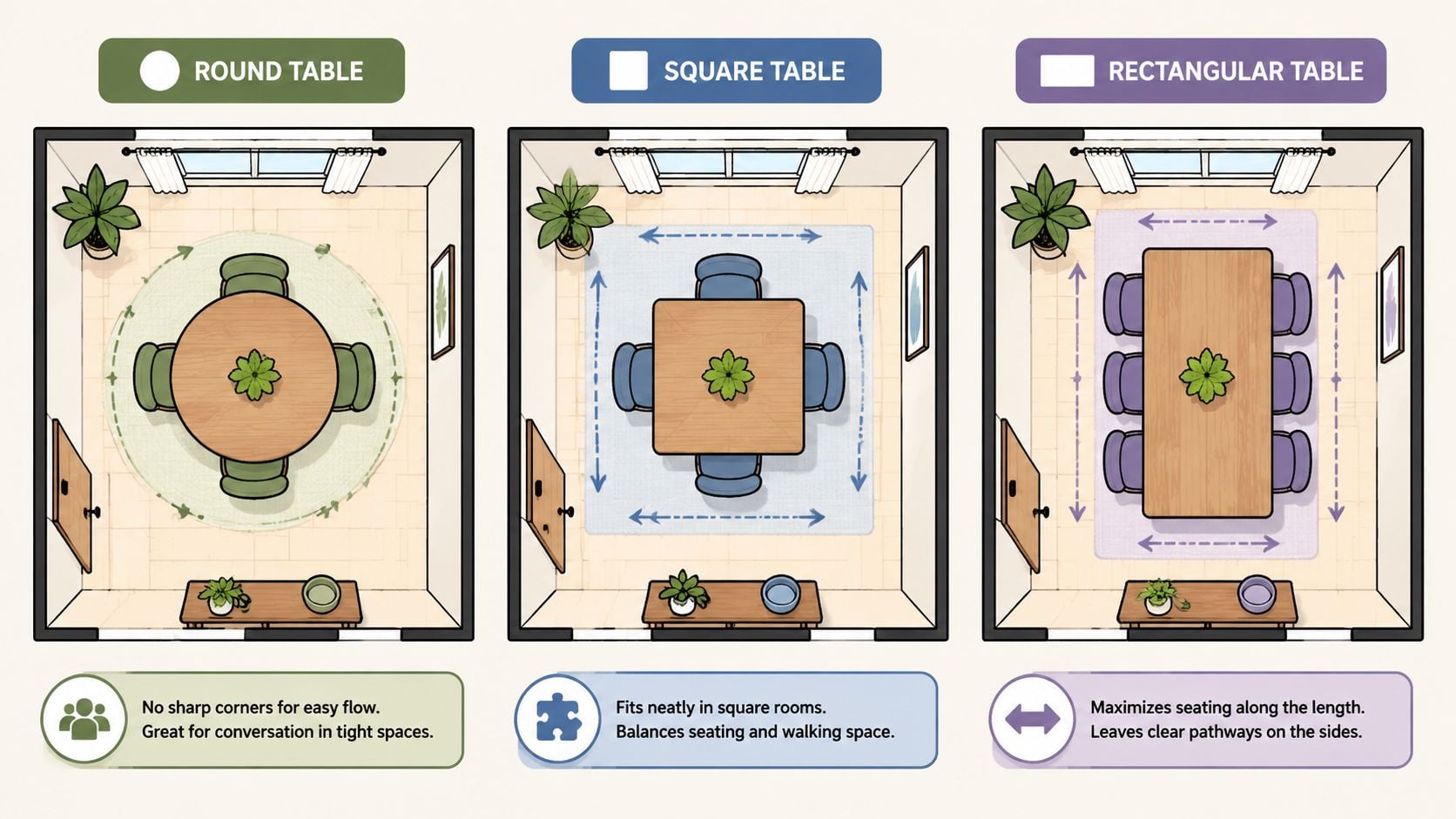
Different shapes create different traffic patterns. That matters in compact homes where a dining area often shares space with a kitchen, family room, or entry path.
| Shape | Usually works best in | Main advantage | Main trade-off |
|---|---|---|---|
| Round | Square nooks and open corners | Softer movement around edges | Can interrupt flow in a long, narrow room |
| Square | Nearly square rooms with balanced spacing | Symmetry and compact footprint | Corners still take up visual and physical space |
| Rectangular | Narrow or galley-like spaces | Follows the room's length | Can crowd pathways if too long |
A round table tends to ease movement because there aren't sharp corners to dodge. A square table can look tidy, but in a compact room its corners still claim territory. A rectangular table often performs better in a longer room because it respects the room's shape instead of fighting it.
The right question isn't which shape is most popular. It's which one preserves comfortable movement in the room neighbors in Norwich already live in.
Finding the Perfect Fit Table Shapes for Small Rooms
Round tables in real life
A small square dining nook often feels friendlier with a round table than with a boxy one. Movement around it is smoother, the room reads as less crowded, and chairs can shift without colliding into a hard corner.
That's one reason round and oval tables with a pedestal base are often the strongest performers in compact areas. According to this small dining table guide, the lack of corner legs can increase legroom by approximately 30%, can allow one additional person to sit in the same footprint, and reduces sharp-corner collision risks. In day-to-day use, that means fewer awkward knee knocks and less chair jockeying.
A typical example is the couple in a Norwich condo who use a round pedestal table in a breakfast alcove. On ordinary nights, it feels open and easy. When friends stop by for coffee or dessert, the seating stays flexible because nobody is straddling a table leg at the corner.
Square and rectangular tables with a purpose
A square table can still be the right call when the room is close to square and the household wants a clean, centered look. It tends to suit homes where two people dine most often and the table sits away from major pass-through areas. The weakness shows up when every inch counts. Corners and four legs can make the room feel busier than it is.
A narrow rectangular table works differently. It fits the architecture of a long room, especially when the dining zone runs parallel to cabinets, windows, or a hallway edge. In many older homes across Eastern CT, that shape is more practical than a round one because it leaves a more predictable path from one end of the room to the other.
A few shape decisions usually make the answer clearer:
- Choose round when: the room is compact, more square than narrow, and movement around the perimeter matters.
- Choose square when: the room is balanced and the table is mainly for everyday meals with a smaller household.
- Choose rectangular when: the room is longer than it is wide and the table needs to follow that line.
Designer's note: Round isn't automatically right. In a long room, a narrow rectangle often protects flow better.
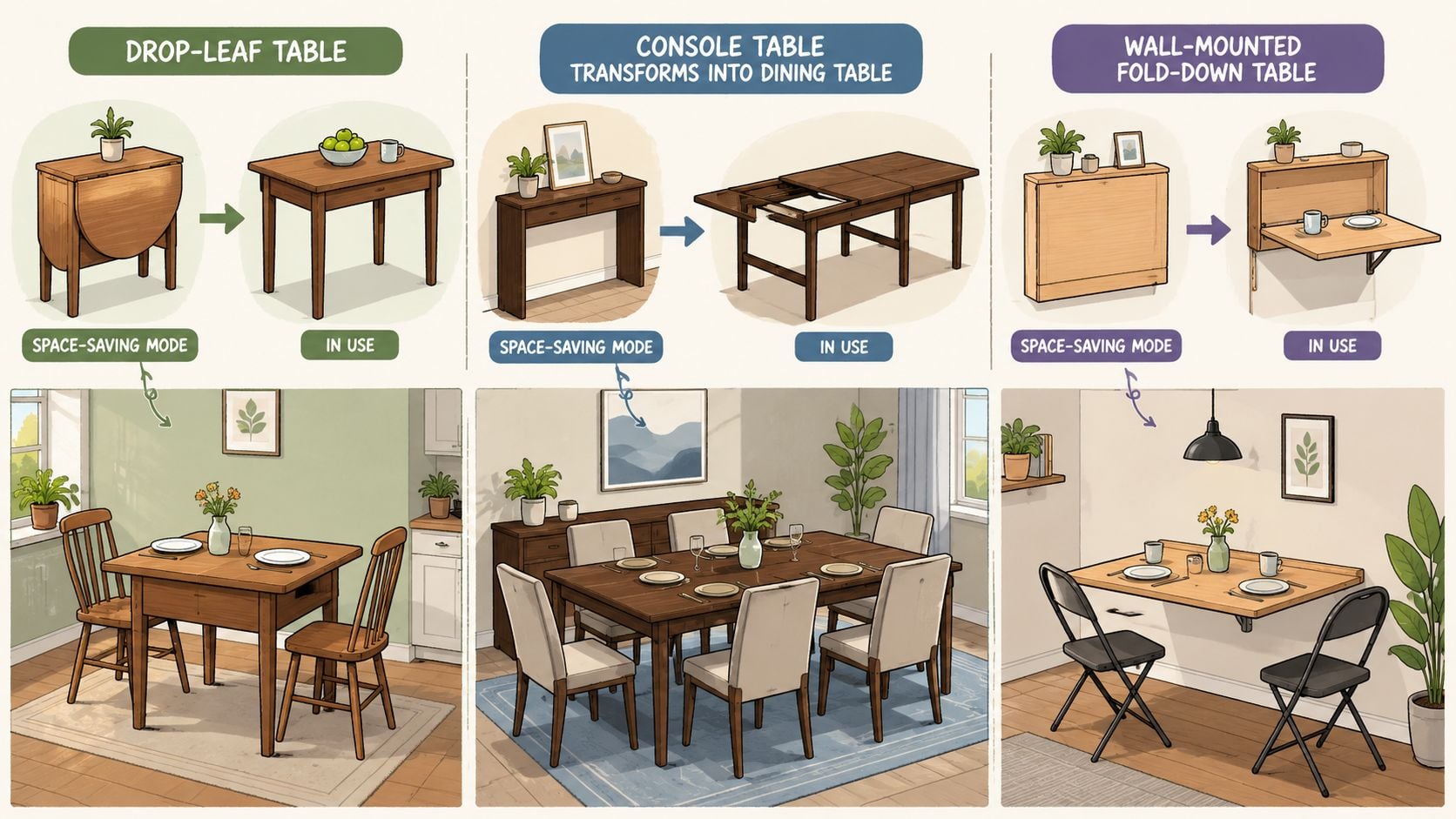
There are also hybrid solutions. A drop-leaf table suits a household that wants the room to stay open most of the time and expand only when needed. A console-to-dining design can work in an apartment where the same zone serves as entry, work surface, and meal space. More ideas on matching shape to seating can be found in this guide to table shapes and seating arrangements.
Smart Designs Space-Saving Table Styles
Styles that adapt to daily life
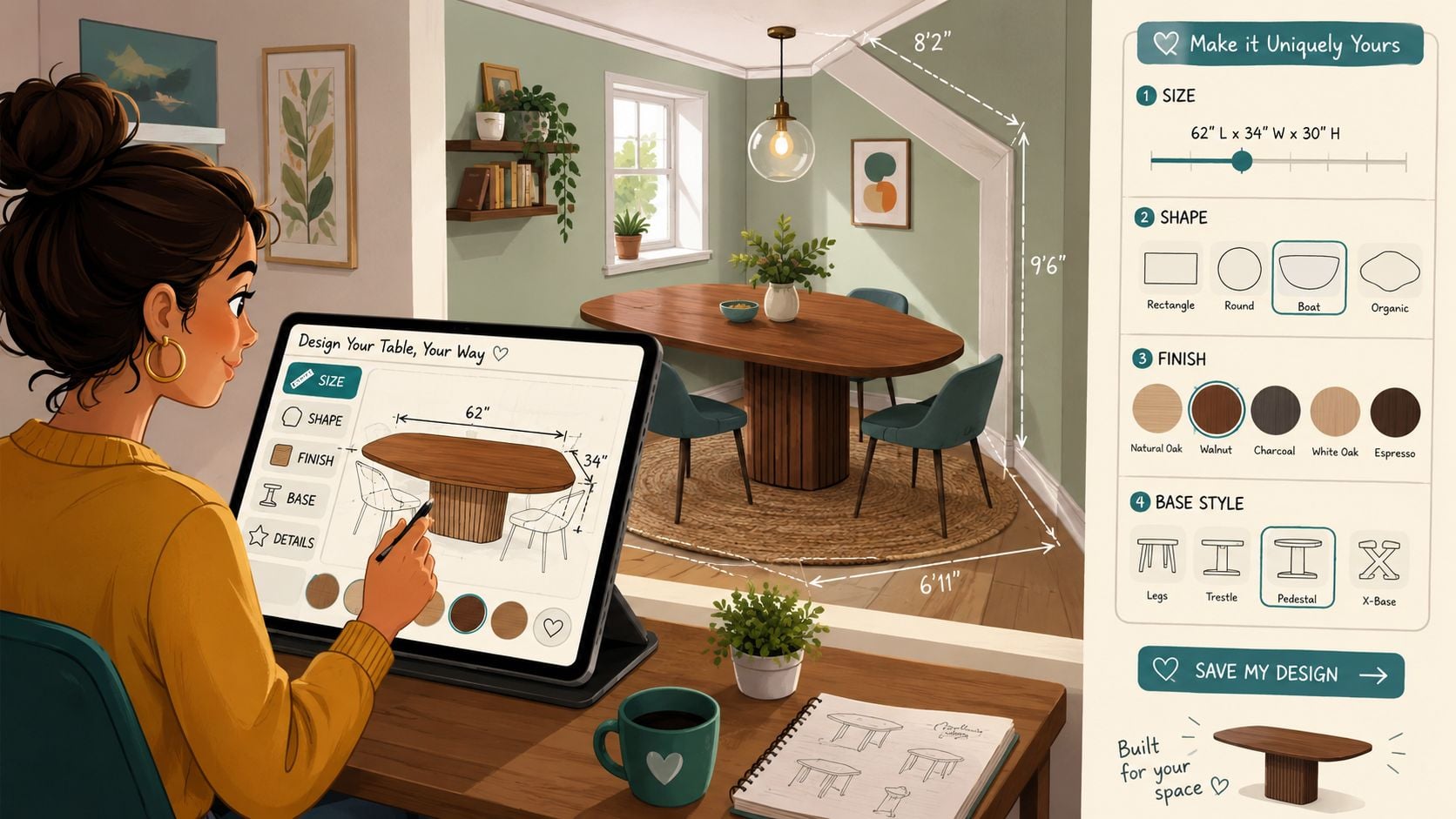
In many Norwich homes, the dining table has to do more than serve dinner. It may double as a homework spot, a laptop station, or the place where extra guests land on a Sunday. In a small room, the right style is the one that gives you that flexibility without making the space feel permanently crowded.
That is why adaptable tables usually outperform fixed designs in compact homes.
A drop-leaf table suits households that want the room open most of the week and extra surface only when needed. An extendable table makes more sense when the table stays set up every day but has to handle visitors now and then. Counter-height tables can work in open kitchen-dining areas, though they are not always my first recommendation in tighter rooms because the added height can make a small space feel busier at eye level.
Benchmark dimensions still help narrow the field. Earlier sizing guidance for small dining tables points to round tops around 30 inches for two people, 36 inches for up to four, rectangular tables that often work best around 48 inches long in tighter layouts, standard dining heights in the 28 to 30 inch range, and lighter-looking materials such as glass or acrylic for reducing visual heaviness.
Base design matters just as much as top size. In a compact room, any wobble is noticeable, especially on older floors that are a little uneven. For readers who want to see how engineered support can improve day-to-day use, StableTable's patented bases show why a well-designed base can make a table feel steadier and easier to live with.
Material and visual weight
A table can fit the tape measure and still feel too large in the room. I see that often with heavy pedestal forms, thick aprons, or chunky legs that eat up visual space under the top.
For a lighter look, choose slimmer profiles, cleaner leg lines, and finishes that do not absorb all the light in the room. That does not mean buying something flimsy. The better answer is a solid, well-built table with a restrained silhouette. In practice, that gives small homes what they need most. Durability, comfortable circulation, and a piece that still looks right after the novelty wears off.
A good filter for dining room tables for small spaces is simple:
- Choose drop-leaf or extension features if your seating needs change week to week.
- Choose a stable base and strong joinery if the table will be used every day.
- Choose visually lighter materials and profiles if the room already feels full.
- Choose investment-grade construction over clever mechanisms that feel loose after a year or two.
For more practical examples, this guide to small kitchen table ideas for compact homes helps connect these style choices to real room layouts. At Gorins, that usually leads to a more precise answer than buying the closest standard size and hoping it works.
Your Ultimate Solution Custom Canadel Dining at Gorins
Why custom solves small-room problems
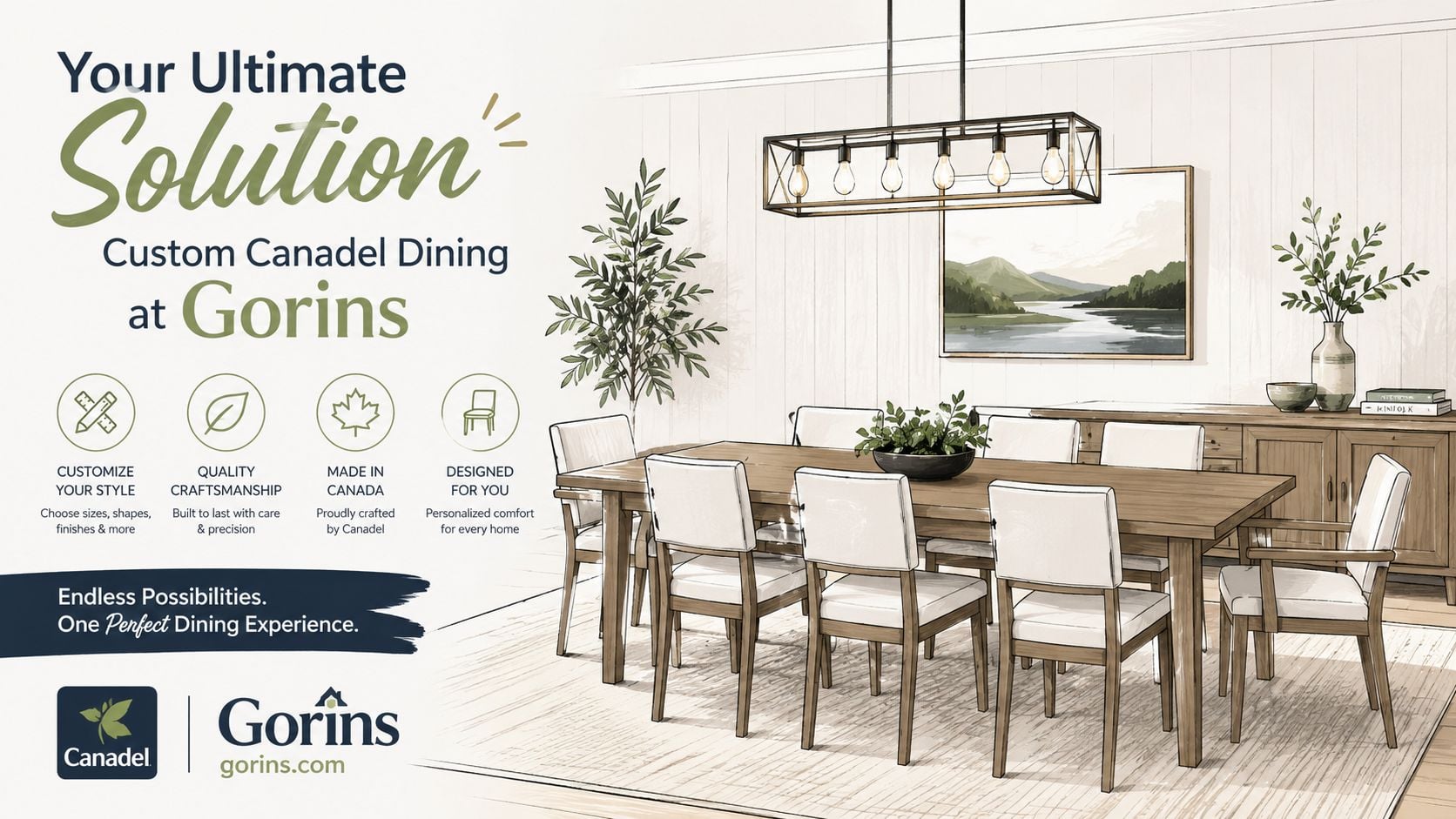
Small rooms expose every compromise. A stock table may be close to right, but close isn't always enough when a doorway, radiator, or tight corner is part of the layout. That's why custom dining matters more in compact spaces than in large ones.
Canadel Custom Dining is especially relevant here because the line offers thousands of possible combinations across sizes, shapes, finishes, and fabrics, including adjustable table widths and modular bench seating, according to Canadel's Custom High Dining Collection. Custom, in this context, doesn't mean decorative excess. It means solving a measurable problem with a piece built to fit the room and the household's habits.
That approach is useful for neighbors in Norwich and New London who need one of the following:
- A tighter footprint: when standard dimensions are just a bit too large.
- A smarter seating plan: when a bench against the wall frees movement on the open side.
- A better finish choice: when the dining area is visible from the kitchen or living room and the table has to coordinate with the whole home.
A custom table earns its cost when it removes the daily friction a near-fit table creates.
For households considering whether made-to-order furniture is worth it, this article on explore custom dining table benefits offers a thoughtful perspective on why people invest in dining pieces built around real life.
What tailored dining really means
Custom dining should be understood as a practical design tool. The value is in choosing the dimensions, base style, seating mix, and finish that make a small room work without settling for a temporary solution that will need replacing.
One local option for that process is custom-made dining table planning, where homeowners can explore made-to-order dining solutions with clearer guidance around fit and layout. A family-owned Norwich business with roots going back to 1936 can bring useful perspective here because small New England homes often need measured, room-specific answers rather than generic catalog picks.
There's also a quality argument. Investment-grade pieces tend to age better, feel steadier, and stay relevant longer than quick-fix furniture. In a small home, every visible item carries more design weight, so the table should contribute both function and permanence.
Bring Your Vision Home with Expert Guidance
A smart plan beats a rushed purchase
The best small-space dining rooms don't happen because someone guessed well in a showroom. They work because the room was measured accurately, the shape matched the architecture, and the table style matched the household's routines.
That last part matters more than many shoppers expect. Some households need a true dining table every day. Others are better served by a flexible piece that supports meals, work, or hobbies without dedicating too much floor space to one purpose. The right answer isn't always the largest table the room can technically hold.
There's also one planning detail that generic advice often misses. As noted in this article on dining table shape and aisle width, many guides discuss 30 to 36 inches of clearance as if every surrounding edge were static, but active walkways may require 42 inches to prevent collisions. That's why expert layout help can save a homeowner from choosing a table that looks right on paper and feels wrong every day.
The table should fit the room in motion, not just the room at rest.
Local help makes the investment easier
For families in Norwich, Plainfield, Waterford, and nearby Eastern CT and Rhode Island communities, the strongest outcome usually comes from combining careful planning with durable construction and flexible buying options. Promotional Financing with equal monthly payments can make a higher-quality dining purchase more manageable, which is often smarter than replacing a cheaper table after a short run of use.
That same practical mindset applies across the home. When neighbors shop for dining, living, or bedroom furniture, they're often trying to create a home that feels cohesive and built to last. And when sleep enters the conversation, The Sleep Gallery offers respected brands such as Tempur-Pedic, Serta, and Beautyrest, where comfort is judged by feel and the goal is healthier sleep, not guesswork.
Since 1936, Gorins Furniture & Mattress has helped Norwich and Eastern CT families create homes they love. From custom-designed Canadel dining sets to the latest in Tempur-Pedic sleep technology, they combine a massive selection with the personalized care only a local, family-owned business can provide. Visit today to experience quality, value, and their 5-Star Delivery service.
For neighbors ready to stop guessing and start planning, Gorins Furniture & Mattress is a practical next step. Visit the Norwich showroom to see specialized dining options in person, take the online Style Quiz to narrow the look that fits your lifestyle, or browse the Clearance section for value-driven savings on quality furniture built for everyday living.