Glass Top Dining Table: The Complete Buyer’s Guide


You're standing in a showroom, or maybe your dining room, and the same question keeps coming up. A glass top dining table looks light, modern, and easy to live with, but the practical worries show up fast, fingerprints, breakage, delivery, noise, and whether the table will fit the way your family uses the room.
The honest answer is simple. A glass table is a smart buy for the right home, and a poor buy for the wrong one. The trick is not chasing a style trend, it's judging glass thickness, safety construction, base stability, delivery handling, and daily use with a clear eye.
Why Glass Top Dining Tables Deserve a Second Look
A lot of folks in Eastern CT dismiss glass too quickly. They remember the cold chrome-and-glass look from years ago, or they picture a surface that shows every fingerprint and scratch the second supper ends. That's not the whole story, and it's not how a glass top dining table should be judged today.
The better way to look at it is this, glass earns its keep where light matters, floor space is tight, and the room needs visual breathing room. In smaller dining areas, open layouts, and rooms that already carry a lot of furniture mass, glass can make the space feel less crowded without shrinking the actual table footprint. That's why the modern version still has a place, especially when the base brings warmth through wood or structure through metal.
Practical rule: if a room feels heavy before any chairs are pulled out, glass deserves a serious look.
Style also matters, but not in the old showroom sense. The better designs use wood bases, mixed materials, and tinted or textured glass so the table feels intentional instead of stark. For a good visual starting point, Gorins has a helpful guide to 7 dining room styles that fit every home, and that kind of style matching is exactly where glass can surprise people in a good way.
A glass top dining table is not the right pick for every household. It is a strong pick for rooms that need openness, light flow, and a table that does not visually overpower the rest of the furniture.
Understanding Glass Types and Thickness Standards
Not all glass belongs on a dining table. The first filter is simple, the tabletop needs to be safety glass, not ordinary annealed glass, because a load-bearing surface should be built to fail safely if it ever fails at all. For shoppers, that means the conversation starts with glass type, not just appearance.
What to ask for
A buyer should separate three questions right away. Is the glass tempered or laminated. Is the edge finished cleanly. Is the top meant to sit alone as the surface, or is it a protective layer over another material. Those questions matter more than a loose promise that the table is “durable.”
Tempered glass is the standard people want for a freestanding dining table because it is heat-treated and chemically strengthened, and it's designed to break into small, dull fragments rather than dangerous shards. Industry guidance for table glass also treats tempered glass as the baseline for load-bearing use, while annealed glass is generally only suitable as a protective layer over an existing solid surface. For a deeper look at the common thickness ranges used in tabletop work, the glass tabletop thickness guide is useful background.
A glass table should be specified like furniture, not like decor. If the glass is doing the structural work, tempered construction belongs on the order.
Thickness still matters, but only in context. A larger tabletop needs more body, especially when the glass is the primary surface and the base has open support. The practical point is that a thinner sheet can work in the right application, but the wrong thickness paired with a weak base is where shoppers get into trouble.
For a dining room, the key question is whether the full table, glass plus base, is designed for daily use. That's the right lens, and it keeps the buyer from overpaying for thickness that doesn't solve the actual problem.
Safety Standards and What They Mean for Your Family
A glass dining table needs more than a polished look. It needs proof that the glass can handle daily use without turning into a risk when plates slide, elbows land, or a child climbs too close to the edge. For glass tables sold in major markets, the standard set usually centers on ASTM F2813 and ANSI Z97.1 performance criteria, and that guidance excludes monolithic annealed glass for these horizontal tabletop applications ASTM F2813 guidance on glass furniture. That is the right starting point for any family that expects a dining table to work as furniture, not as a display piece.
What the standard is checking
The standard evaluates the glass as furniture material, not just as a sheet. Panels 9 square feet or larger must meet Class A performance, while smaller panels need at least Class B performance under the published criteria. Buyers do not need to memorize the code, but they do need to ask for a table that is labeled and documented as safety tempered or laminated.
The testing logic behind tables goes beyond the glass itself. Recognized tabletop standards evaluate static load, durability, and impact, and published test data for tables with glass elements show vertical static load tests commonly reaching 1,250 N on the main surface, with impact tests using 180 mm drop heights for safety glass and 240 mm in some other glass-surface configurations ISO 19682:2023 table test methods. That does not mean every table is built the same way, it means the whole design must stand up to real use, not showroom conditions.
Families should use that standard as a filter. Ask how the glass is made, what standard it meets, and whether the table is meant for load-bearing dining use. If a seller cannot answer those questions plainly, keep shopping.
A table that is only described as safe is not enough. A table that states the glass type, the standard, and the intended use gives you something real to judge before it comes through the door.
Choosing the Right Base Material and Style
The base is half the table's success. Glass gets all the attention, but the base controls wobble, legroom, weight balance, and whether the whole piece feels calm or awkward in the room. That's why base choice should come before color swatches and accessory shopping.
Wood, metal, stone, and mixed builds
Wood bases bring warmth and usually feel easiest in everyday dining rooms. They soften the look of clear glass and work well in homes that already lean traditional or transitional. A wood base also makes the table feel less fragile, which helps in rooms where the table will be used hard rather than staged lightly.
Metal bases read cleaner and more architectural. They suit smaller rooms where you want the structure to disappear a bit, or dining spaces that already use darker chairs and simpler lines. Stone pedestals create a heavier visual anchor and can turn the table into a focal point, but they need a room that can carry that visual weight without feeling crowded.
| Base Material | Best Fit | Main Trade-Off |
|---|---|---|
| Wood | Warm everyday dining | Can look bulky if the room is small |
| Metal | Sleek, open layouts | Can feel cold if the room lacks texture |
| Stone | Statement dining spaces | Heavy visual presence, less forgiving in tight rooms |
| Mixed materials | Balanced custom look | Needs careful matching so it doesn't feel busy |
For people who want to study commercial-grade support ideas, commercial table base options is a useful reference point for how base structure changes the whole table's behavior. The same logic applies at home, the base needs to support the glass cleanly and keep the table steady when chairs shift or guests lean in.
Gorins' own wood furniture guide is also worth a look for anyone trying to match a glass top to a warmer base finish. The best combinations usually look simple from across the room and feel solid when somebody pulls out a chair.
Sizing Your Space and Planning the Layout
A lot of bad table purchases start with one mistake, the room was measured loosely instead of carefully. A glass top dining table can make a space feel larger, but it still needs real clearance, real chair movement, and a real path for delivery. Looks do not fix a bad fit.
Start with the floor plan, not the product photo
Leave at least 3 feet of clearance around the table so chairs can move and people can pass comfortably, glass table room planning guide. That rule matters even more with glass because the open look can make buyers underestimate how much room the table needs.
Households that host often usually do better with a rectangular table that is at least 72 inches long if they need to seat 6+ people comfortably. Round and oval shapes can work well in narrower rooms, but the base still has to let chairs tuck in without bumping the legs.
Before you order, measure the delivery path with the same care you use for the room itself.
- Doorways and turns: Check the widest piece of the tabletop and the tightest turn in the route.
- Stairwells and landings: Confirm the table can move through without forcing the glass to tilt awkwardly.
- Chair pull-back space: Test how far the chairs extend when someone gets up.
- Base footprint: Make sure the base does not crowd the walkway once the top is in place.
For a room-by-room sizing reference, Gorins' dining table size guide is a practical place to compare shapes and proportions before money changes hands.
The right fit gives the room comfort, not just a number on a spec sheet. If the table forces side-stepping every day, it is too big. If chairs hit the walls, it is too small.
Is a Glass Table Practical for Your Household
Buyers need to be blunt with themselves. A glass table can be excellent, but it is not the easiest choice for every family rhythm. The right answer depends on how the room is used, not just how it looks on delivery day.
Good fit, bad fit, or both
Glass works best when a home values light, openness, and a lighter visual footprint. It also shines when the base is worth seeing, because the top lets the design breathe instead of hiding it. For renters, smaller homes, and dining areas that share space with living rooms, that openness can be a real advantage.
Glass is less forgiving in homes that eat every meal at the table and treat the dining room like a work zone. Fingerprints show. School supplies spread out. So do mail piles, art projects, and the occasional spill. None of that makes glass a mistake, but it does mean the household needs a cleaner routine and a realistic tolerance for upkeep.
If the dining table doubles as a homework desk and command center, the buyer should value function first and shine second.
Recent buying guidance also points to a shift in what people want from tabletop materials. Design trends are moving toward layered materials, tinted or frosted finishes, and textured looks, which tells the truth about current taste, clear glass is no longer the automatic answer even for shoppers who like the look. That's why the smartest question is not “Is glass good or bad?” It's “Does this household want to see everything on the surface, all the time?”
Families with young children can absolutely live with glass, but they should choose it because they like the openness, not because they hope it will behave like a wood table. Households that prize quick concealment of clutter should be honest and look elsewhere. That's not indecision, it's good buying.
Care Routines and Styling Techniques That Work
Glass stays beautiful when the care routine is simple and consistent. Complicated cleaning systems usually fail because nobody keeps them going. A better routine is short, repeatable, and designed to prevent scratches before they happen.
Keep the maintenance routine light
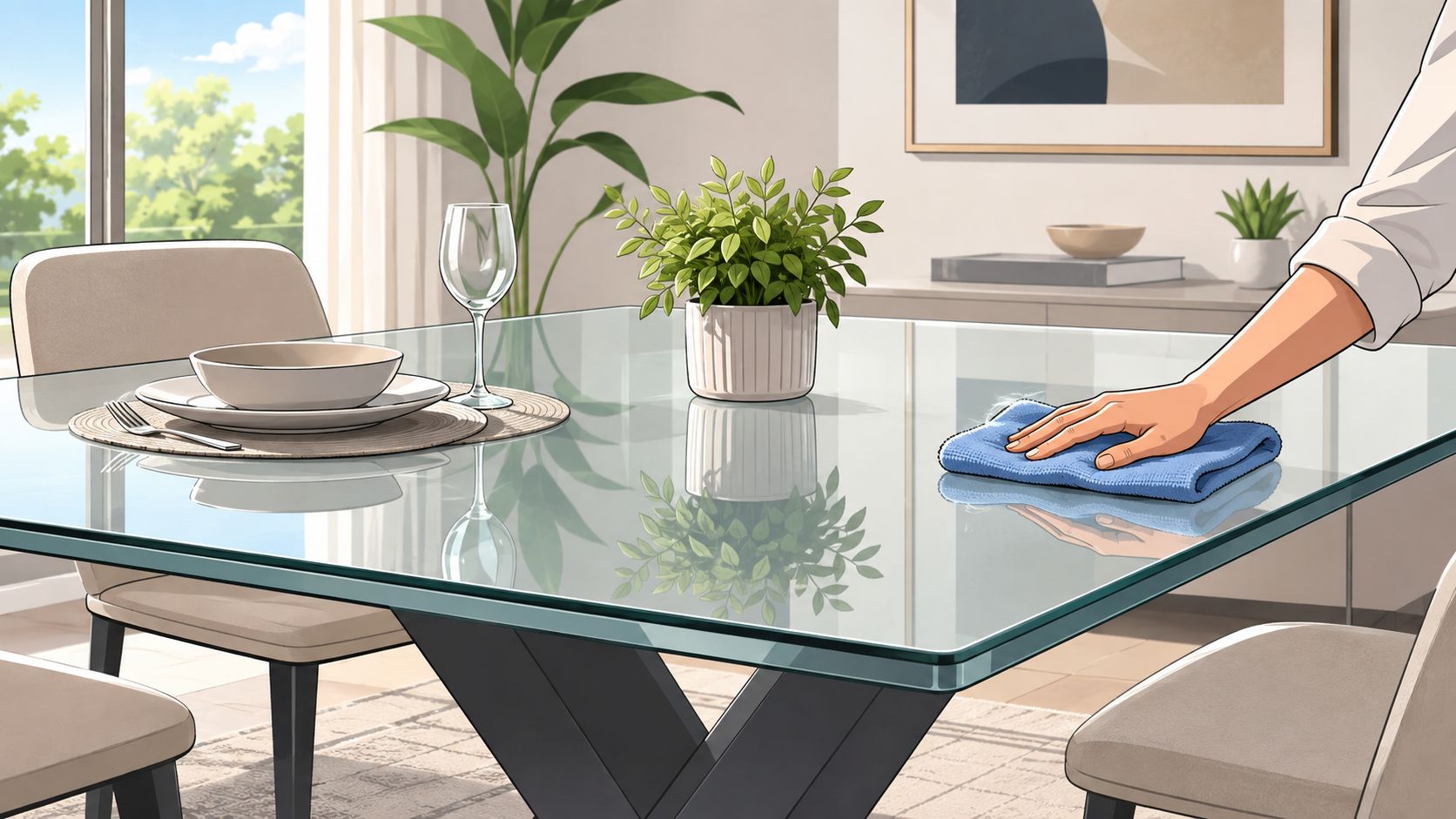
Daily care should stay basic. A soft microfiber cloth handles dust and fingerprints without grinding grit into the surface, and that's the first line of defense against haze. For spots and water marks, use a cleaner made for glass and wipe dry right away so mineral residue doesn't sit on the surface.
Hard water buildup needs a little more patience. For stubborn staining, homeowners can use a dedicated guide like Phoenix glass stain solutions as a reference for residue removal methods that don't rely on scrubbing the finish raw. The point is to remove deposits gently, not chase them with abrasive pads.
A few habits protect the table long term.
- Use coasters and placemats: They cut down on rings, scratches, and heat exposure.
- Lift, don't drag: Plates, candle holders, and décor should be lifted across the surface.
- Protect the base and floor: Felt pads reduce scuffing and help the table stay level.
- Keep abrasive tools away: Scrub pads can leave micro-marks that collect more dirt later.
For styling, transparency works best with restraint. A low centerpiece, a textured runner, or a simple linen setting adds interest without blocking the open look. Gorins' dining room accessories guide is a useful reminder that the best dining rooms use layers, not clutter.
A glass table rewards discipline. That's the trade. The payoff is a table that looks clean, bright, and intentional far longer than one might expect.
Customization Options and Local Expertise at Gorins
A standard dining table solves only standard rooms. Many homes around Norwich, New London, Plainfield, Waterford, and the rest of Eastern CT need different proportions, different base clearance, and a finish that works with the rest of the house. That's where custom work earns its keep.
Gorins' custom made dining table option lets shoppers shape a piece around the room instead of settling for a near miss. For a glass top, that matters because the fit, the edge, the base, and the support all need to work together. Custom dining also pairs naturally with Gorins' long-running family-owned approach, which has been part of Norwich since 1936, and that local continuity still matters when the table needs to be ordered, delivered, and set up with care.
For buyers who want a glass table without taking a guess, the practical next step is simple, visit the Norwich showroom, compare finishes in person, and ask how the base, top, and delivery plan all line up. Promotional financing with equal monthly payments can also make a larger custom piece easier to manage without cutting corners on the build.
A fragile tabletop is not the place to gamble on guesswork. A showroom visit gives a buyer something online photos never do, scale, material feel, and real conversation with someone who has seen what holds up in actual homes.
If a glass top dining table fits the way a home really lives, not just the way it photographs, Gorins Furniture & Mattress can help narrow the options and handle the details with local care. Visit Gorins Furniture & Mattress to see dining tables, compare custom possibilities, and get a setup that works for your room and your routine.