
How to Choose Pillow: A Simple 2026 Guide


You're standing in a bedroom or showroom, staring at a row of pillows that all promise “support,” and none of them explain why your neck still aches by Tuesday. That's the problem with most pillow advice. It starts with the label, the color, or the price tag, then acts surprised when the pillow doesn't match the way a real body sleeps.
How to choose pillow starts with a better question, how does the pillow keep the head, neck, and spine in neutral alignment while someone moves through the night? The most evidence-based answer is to match the pillow to sleep position first, then check height, firmness, fill, and temperature control. A systematic review found moderate evidence that certain pillow features improve sleep comfort and spinal alignment, especially latex, a contoured design with higher edges for side sleepers and a lower center for back sleepers, a central height of 7–11 cm, and a cooling surface (systematic review).
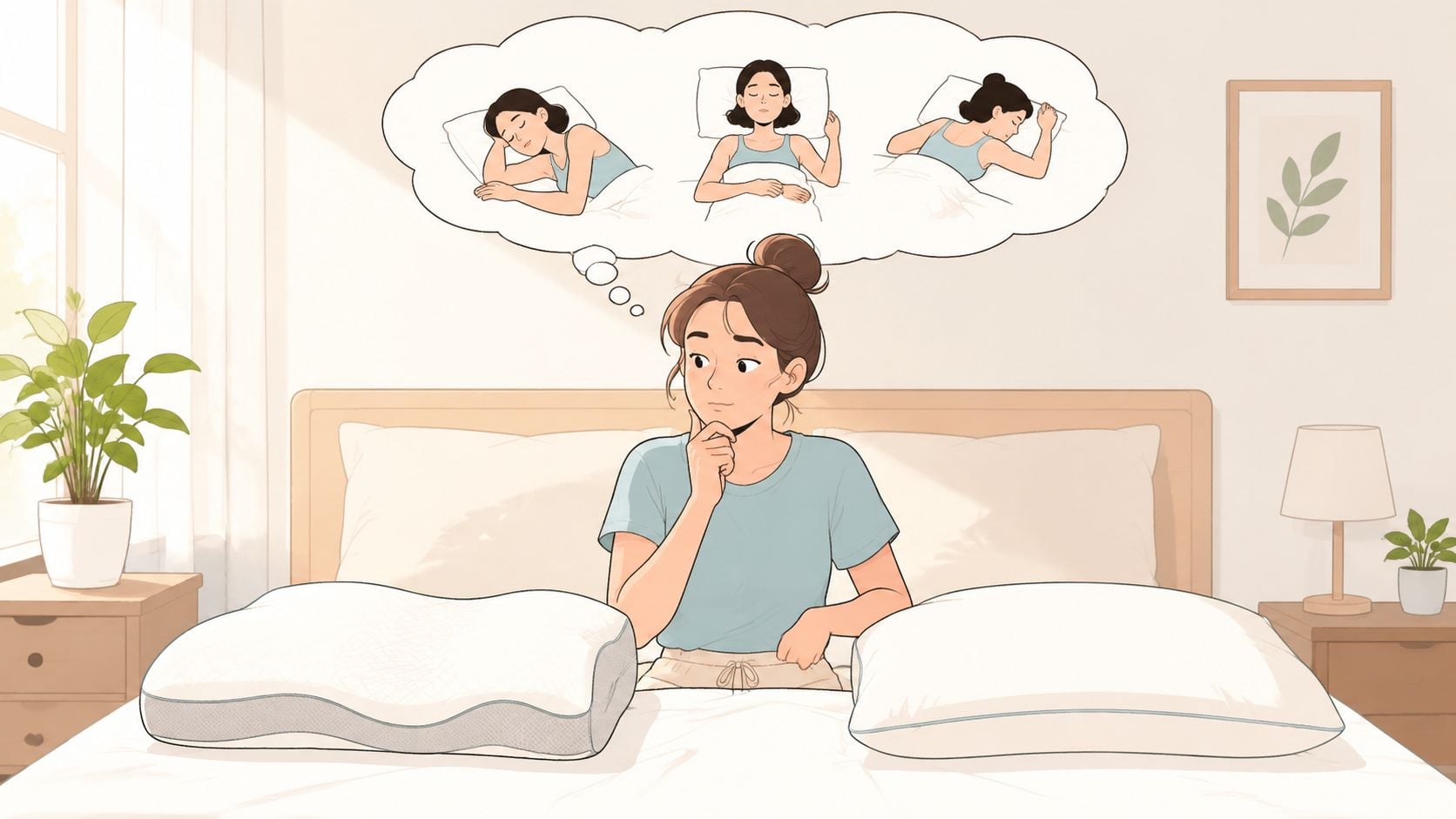
A useful way to shop is simple. First, name the sleep position that starts the night. Second, measure whether the pillow keeps the head level instead of tipped up or dropped down. Third, choose the fill that matches heat, bounce, and support needs. Fourth, test it long enough to see whether it still works after the first few nights.
Most pillow regret comes from skipping that order. A pillow can feel lovely for a minute and still be wrong for the body over a full night. That's why the key job is not “find a soft one,” it's find a pillow that behaves like sleep equipment.
Start With Your Sleep Position Before Anything Else
A tired shopper often grabs the plushest pillow on the display wall, then brings home something that feels wrong by the second night. That mistake usually starts with picking by softness instead of by body position. The starting point is sleep position, because the pillow's job is to keep the head and neck lined up with the spine while the body settles and shifts through the night.
The four-step filter that cuts through the noise
Use a simple filter. Position comes first, measurement comes second, fill comes third, and test comes last. That order matters because a pillow can look perfect in a showroom and still be too tall, too flat, too warm, or too soft once someone sleeps on it for hours.
Practical rule: if the pillow cannot keep the ear, shoulder, and spine in a neutral line while the sleeper moves, it is the wrong pillow, no matter what the tag says.
Side sleepers usually need more height than back sleepers because the shoulder creates a gap that has to be filled. Back sleepers usually need less loft so the chin does not tip toward the chest. Stomach sleepers usually need the flattest option, because extra height pushes the neck into extension and that is where morning stiffness often starts.
Sleep position is not a fixed label. Plenty of people start on their side, roll onto their back, then wake partly on their stomach, so the better question is whether the pillow still supports neutral alignment as they move. A pillow that only works for one frozen pose is a weak pillow. That is why a good fit has to hold up across the way someone sleeps, not just the position they claim at the store.
Labels like “firm” or “for side sleepers” can mislead. Press the pillow to about half of its original thickness and judge the resistance yourself, because the tag does not tell the whole truth. That simple squeeze test helps cut through marketing language and shows whether the pillow has enough structure to support the head without feeling like a brick.
For shoppers in Norwich, the pillow also has to work with the mattress, not fight it. A softer mattress lets the shoulder sink more, which usually calls for a different pillow profile than a firmer bed. That is why Mattress guidance for side sleepers matters here. The right pillow choice starts with how the body meets the bed, then adjusts for the way that body moves.
Match Loft and Firmness to Your Sleep Position
The pillow market loves simple promises, but real bodies do not stay in one shape all night. Side sleepers, back sleepers, and stomach sleepers need different starting points, yet the question is whether the pillow keeps the head, neck, and shoulders aligned as you roll and resettle. A pillow that only works for one frozen pose is weak advice and a weak pillow.
What each sleep position usually needs
Side sleepers usually do best with a fuller, firmer pillow that fills the shoulder gap and keeps the head from dipping. Back sleepers usually need medium support and a lower profile, so the neck stays supported without being pushed forward. Stomach sleepers usually need a flatter, softer pillow, because extra loft bends the neck back and turns rest into strain.
The useful benchmark is a 7–11 cm central height range tied to better spinal alignment in the review cited earlier. That range is not a rule for every body, but it gives shoppers a real target instead of guessing. It also explains why a “cloud soft” pillow often fails side sleepers, while a dense, contoured pillow can feel right even if it looks plain on a shelf.
Lie on the pillow in the position used at the start of the night. The head, ears, and shoulders should form one clean line, not a slope.
Combination sleepers need special honesty. If the body starts on its side but drifts to the back, the pillow has to stay useful in both positions. A contoured or adjustable option usually beats a fixed pillow for that kind of sleeper because it leaves more room for position changes without collapsing.
Mattress sink changes the pillow height the body needs, so match the two together. How to pick mattress firmness is useful here because a softer mattress lets the shoulder sink more, while a firmer bed holds the body higher.
Compare Fill Materials by Feel, Support, and Heat
Once loft is in the right neighborhood, fill material decides how the pillow behaves through the night. The question is simple, does the fill keep its shape, move enough to stay comfortable, and handle heat without turning the pillow into a warm lump under your head? Dense pillows usually trap more warmth, while fills with more open structure let air move more easily.
Pillow Fill Materials at a Glance
| Fill Type | Feel | Breathability | Best For |
|---|---|---|---|
| Latex | Springy, supportive, resilient | Usually better airflow than dense foams | Side sleepers, hotter sleepers, people who want bounce |
| Memory foam | Contouring, stable, slower response | Usually lower airflow | Neck support, sleepers who want a molded feel |
| Shredded foam | Adjustable, moldable, varied firmness | Often better than solid foam | Combination sleepers, people who want customization |
| Down | Soft, compressible, plush | Often breathable | Stomach sleepers, people who want a softer sink |
| Feather | Light, adjustable feel | Often breathable | Sleepers who want softer support and easy reshaping |
| Polyester | Budget-friendly, versatile, moderate feel | Can be breathable depending on build | Buyers who want a simple, practical option |
Latex and foam usually give the strongest structure. Down and feather feel softer and compress more easily. Adjustable fills make sense for sleepers who shift around at night, because the fill can be moved instead of forcing the body to work around a fixed shape.
Heat deserves its own attention. A pillow can feel perfect in the showroom and still fail at 2 a.m. if it holds too much warmth. Shoppers who run hot should start with airflow first, then decide how much structure they want. A breathable cover matters too, because the outer fabric affects how the pillow feels against the skin.
Cooling bedding for hot sleepers is worth a look when the issue is overheating rather than support. Some pillows are structurally sound but still wrong because they sleep warm, and that is enough to ruin the night.
For readers who want a broader health lens, improve sleep during menopause naturally is a useful companion read because night heat and disrupted rest often travel together.
Adjust the Pillow to Your Body, Mattress, and Health
Two people can sleep on the same side and still need different pillows. Shoulder width changes the gap under the neck. Mattress softness changes how far the shoulder sinks. Neck pain changes how much structure the pillow has to provide. Shoppers who ignore those variables end up buying for the average person, which is usually the wrong person.
The sleeper, not the label, sets the final height
A firmer mattress keeps the body higher, so the pillow may need more loft to fill the space between the head and shoulder. A softer mattress lets the shoulder sink deeper, which can call for a lower pillow so the head doesn't ride too high. That's why broad-shouldered side sleepers often need more height than smaller-framed sleepers, even when both start in the same position.
Health needs deserve the same direct treatment. People with neck pain usually do better with steady support and a shape that discourages collapsing at the center. Allergy-prone shoppers should look for washable covers and materials that are easier to keep clean. Warm sleepers should prioritize ventilation first, because a hot pillow is the kind that gets abandoned in the middle of the night.
For readers who want a broader health lens, improve sleep during menopause naturally is a useful companion read because night heat and disrupted rest often travel together.
Short version: start with position, then correct for body size, mattress feel, and heat. That's the part most buying guides skip.
Gorins Furniture & Mattress also carries guidance for shoppers who need pillows for neck pain, which fits this same logic. The pillow has to work with the body on the mattress, not against it.
Test the Pillow the Way You Actually Sleep
A ten-second squeeze tells almost nothing. A pillow can feel perfect in the hand, then flatten, warm up, or shift fill after the first few nights. That's why the test is physical, not theoretical, and it needs to happen in the position used at home.

What a real test should check
Start by lying on the pillow for several minutes, not several seconds. The head should stay level, the neck should feel supported, and the shoulders should not shrug upward to compensate. If the sleeper changes position during the night, the pillow should still feel usable when the body rolls from side to back or back to side.
AARP notes that some companies offer trial periods of 100 nights or longer with easy returns, which gives buyers time to see whether the pillow still works after the novelty fades. That matters because the first impression often hides the underlying problem, heat buildup, fill migration, or a shape that breaks down under actual use.
A few warning signs are hard to ignore. Uneven fill, a crinkly sound, a chemical smell that hangs around, or seams that feel weak all deserve attention before money changes hands. A pillow that looks tidy on a shelf but feels flimsy in the hand usually won't improve after purchase.
If possible, bring the pillowcase fabric the sleeper already likes. Small texture differences matter more than many realize. A pillow can be structurally right and still feel wrong if the cover is scratchy, slippery, or too warm against the face.
Care for Your Pillow and Know When to Replace It
A pillow is a working part of the sleep setup, not a keepsake. It absorbs moisture, loses loft, and slowly stops holding the head and neck where they need to be. Once that happens, the sleeper starts doing the work the pillow should have been doing.
A washable protector slows down the breakdown. It catches sweat, skin oils, and everyday buildup, and it makes routine care easier. Fluff the pillow regularly if it uses down or polyester fill, since those materials compress unevenly over time. Foam pillows need a different habit, they should air out so moisture does not linger inside the core. For more on keeping bedding in shape, see mattress and pillow maintenance tips.
If a pillow stays bunched after folding, keeps causing neck stiffness, or starts triggering allergies, it is not “getting broken in.” It is done.
Clean bedding habits matter too. The BacteriaFAQ.com bedding hygiene tips make a useful companion when the wash routine starts slipping. Keep the focus on practical upkeep, not perfection. A pillow that is cared for well still needs to be checked, because support fades even when the fabric looks fine.
Check it regularly instead of waiting for a problem. If the pillow no longer rebounds, no longer keeps the neck in line, or needs constant folding to feel usable, replace it. That is basic sleep maintenance. A pillow that has stopped doing its job should not stay in the bed just because it still looks clean.
Find the Right Pillow at the Norwich Sleep Gallery
A good pillow decision gets easier when someone can lie on it, on a real mattress, and feel what happens to the head and neck in the sleeping position that matters. That's why the Norwich Sleep Gallery matters more than a thumbnail photo or a product tag. The right pillow becomes obvious faster when it's tested on a proper surface instead of guessed at from a box.
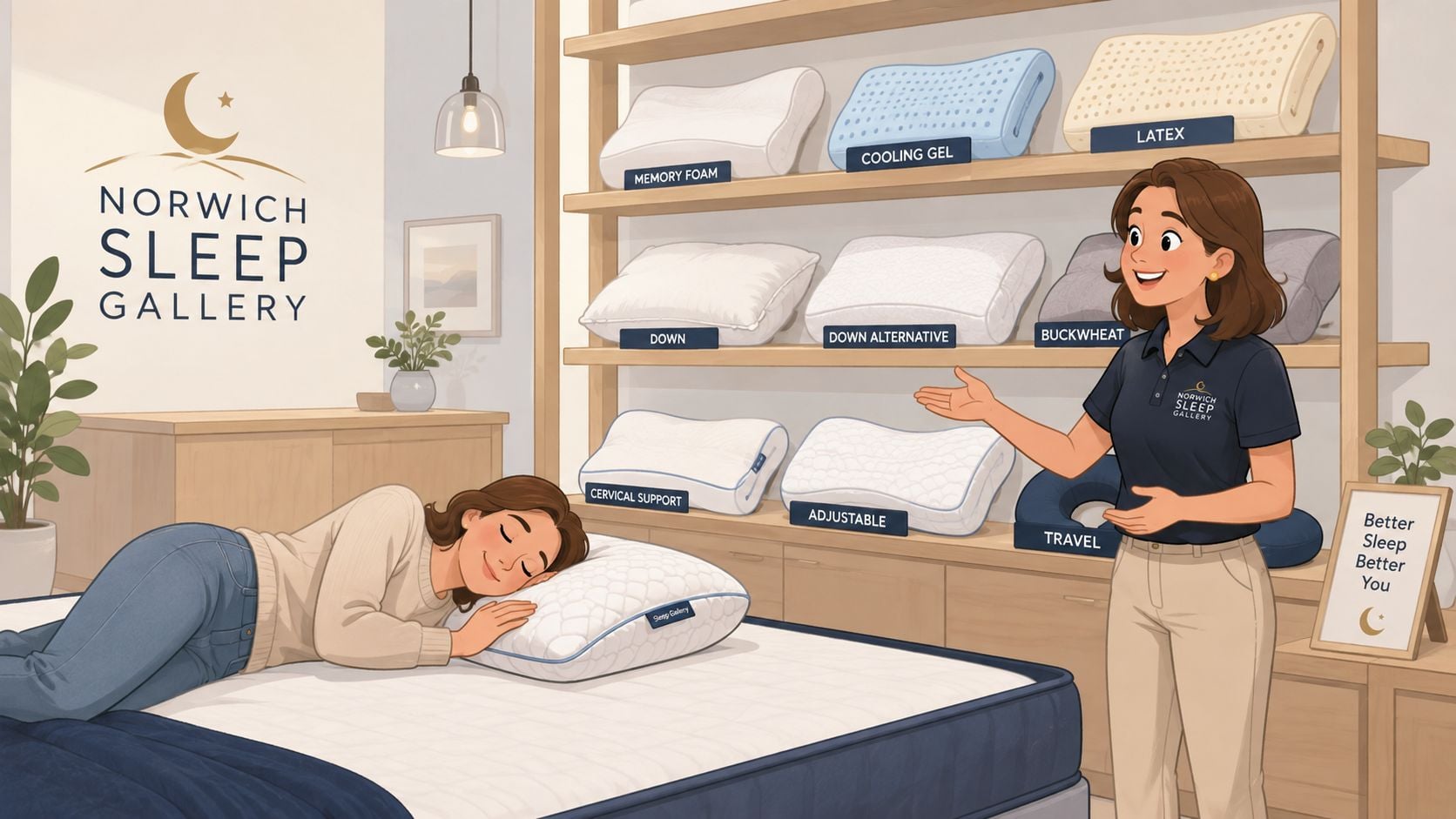
Shoppers in Norwich can test sleep accessories alongside Tempur-Pedic, Serta, and Beautyrest, which makes it easier to choose by comfort by feel instead of by guesswork. Gorins Furniture & Mattress has served the area since 1936, and that local, family-operated model still suits this kind of purchase because pillow fit is personal, not generic. For larger purchases, promotional financing with equal monthly payments can make it easier to pair a new pillow with a mattress or adjustable base at the same time.
Visit the Norwich showroom, take the online Style Quiz, or browse the Clearance section for value-driven finds. Gorins Furniture & Mattress gives Norwich and Eastern CT families a place to test comfort in person, ask direct questions, and leave with a pillow that fits the way they sleep.
Since 1936, Gorins Furniture & Mattress has helped Norwich and Eastern CT families make smarter choices for the bedroom and beyond. If a new pillow, mattress, or sleep setup is on the list, visit Gorins Furniture & Mattress and test real options in the Norwich showroom before buying.