Small Apartment Design Ideas on a Budget: 8 Tips

A small apartment can feel tight before the first chair even arrives. The boxy layout, the narrow entry, the odd corner by the radiator, they all ask the same question, how do you make it feel like a real home without spending more than the space deserves? That's where small apartment design ideas on a budget become useful. The smartest moves aren't about buying more. They're about choosing pieces that earn their place, hold up through moves, and make daily life easier for Norwich renters and homeowners who need value that lasts.
As Norwich's local home experts since 1936, Gorins Furniture & Mattress has seen how quickly a compact room can change when the right foundation pieces go in first. Since the studio apartment became a mainstream urban housing type in the 20th century, designers have leaned on multifunctional furniture, compact layouts, and visual tricks like curtains, mirrors, and vertical storage, and that still works today Framehouse's small apartment decorating ideas. For budget-sensitive spaces, the biggest wins usually come from multi-purpose furniture, vertical storage, and layered lighting Lowe's small apartment decor guide. Keep that in mind, because the list below gets practical fast.
1. Multi-Functional Furniture with Hidden Storage
A small apartment can't carry dead weight. A storage ottoman that also serves as a coffee table, a platform bed with drawers, or a console table with shelves does more than fill a gap. It removes the need for a second or third piece, which is why multifunctional furniture stays near the top of any serious list of small apartment design ideas on a budget.
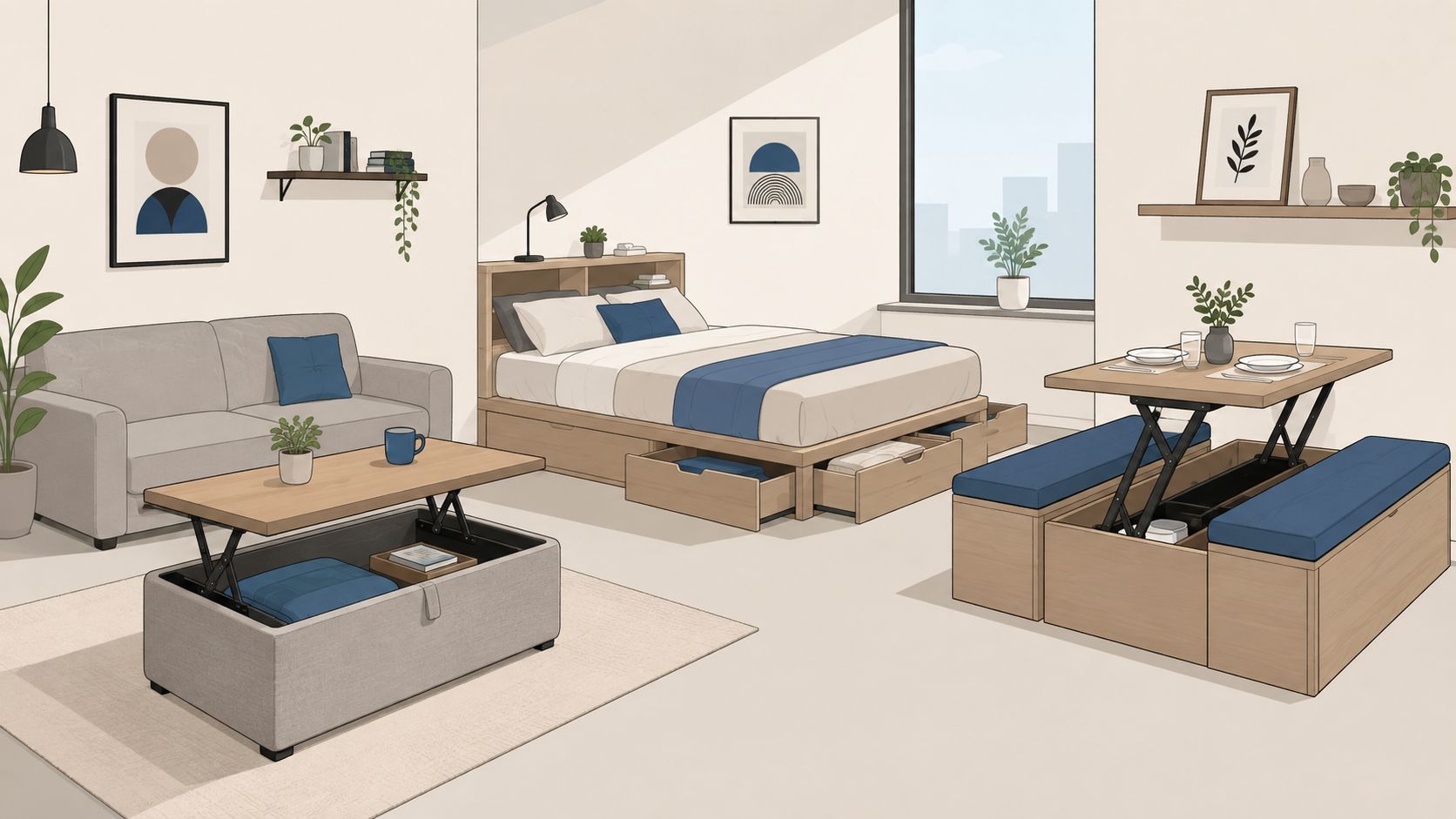
Buy for the way the room works. A bench with lift-top storage near the dining area can hold placemats and extra linens, while a bed with integrated drawers keeps clothing out of sight without adding another dresser. That same practical approach shows up in multifunctional living room furniture options, where one well-chosen piece can solve more than one layout problem and still fit the room you live in. It also lines up with storage ideas for cozy urban homes, where the goal is to keep daily clutter under control without filling every corner with furniture.
What to check before buying
Practical rule: measure the room, the doorway, and the route in before anything else. A storage piece that looks compact in a showroom can still fail at the stairwell, the turn into the hall, or the tight angle around a radiator.
- Choose pieces with smooth hardware. Drawers should glide easily, and hinges should feel sturdy, because cheap mechanisms fail fast when used every day.
- Store the items you reach for most. Put blankets, remotes, or charging cords in the easiest drawers so the furniture solves a real problem.
- Mix profiles carefully. A low storage ottoman, a slim bench, and a console with open shelving can look cohesive without crowding the room.
For Norwich households that want a piece sized to a tricky layout, a showroom visit can help narrow the options quickly. Gorins Furniture & Mattress also offers custom ordering, which can help match size and finish to an apartment that doesn't follow standard dimensions.
2. Vertical Space Utilization with Wall-Mounted Shelving
Walls are valuable real estate in a compact apartment. Once floor space starts disappearing, the smartest move is to go up, not out. Wall-mounted shelving, floating bookcases, and tall narrow cabinets give books, plants, and everyday objects a place to live without blocking circulation.
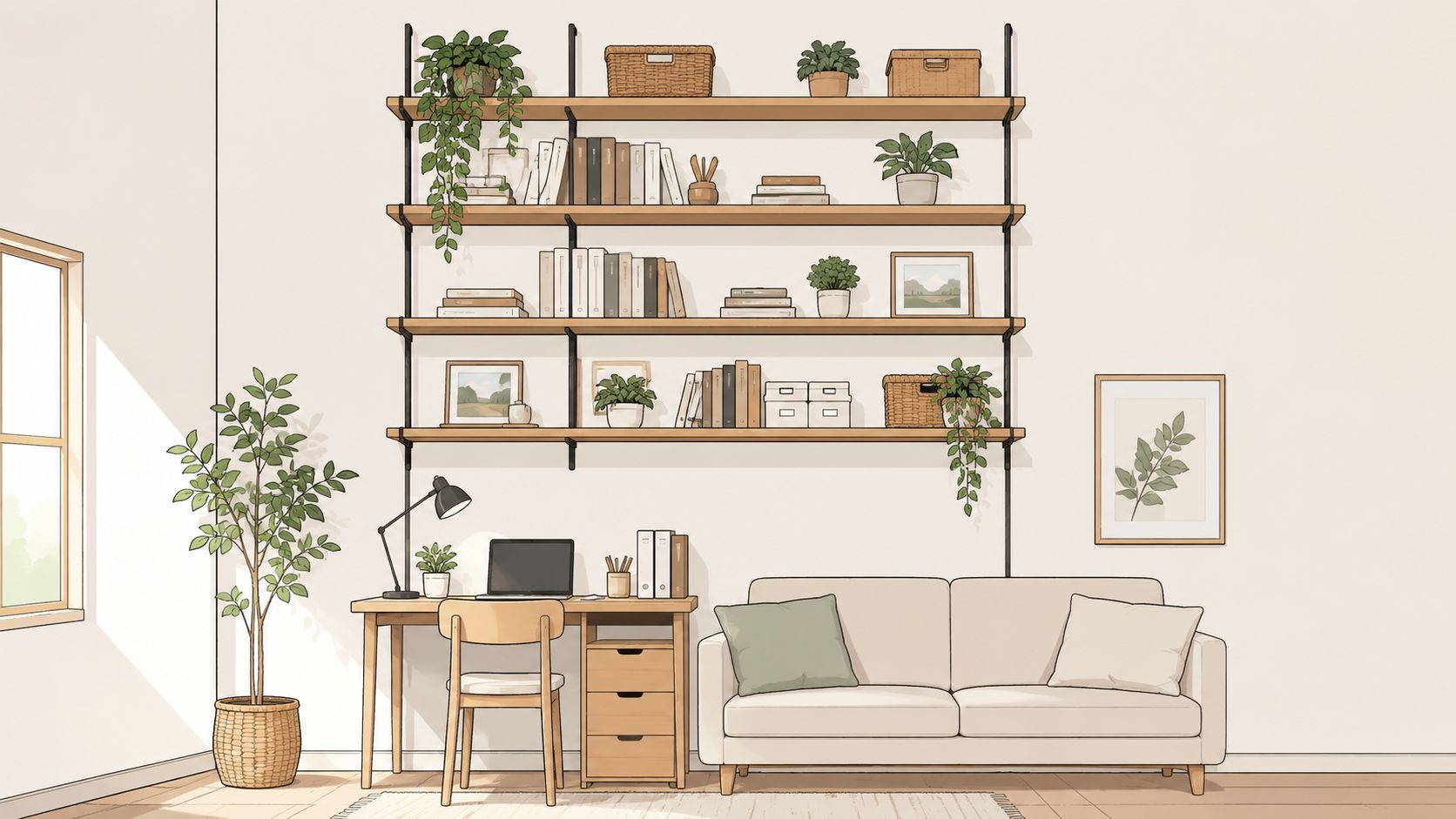
This approach does two jobs at once. It gives storage, and it pulls the eye upward, which makes the room feel taller and more composed. A tall narrow bookcase beside a window can frame the room without enclosing it, while shelves above a desk can hold work supplies without taking over the desk itself. The same logic applies in kitchens and entryways, where open shelving or wall shelves keep items visible and easy to grab.
How to keep wall storage from looking busy
The best small-wall setups look edited, not stuffed. Matching baskets help hide loose items, and alternating books with a plant or framed print keeps the shelf from looking heavy. Heavy objects belong on lower shelves for safety, while lighter decorative pieces can sit higher up.
Gorins has a helpful approach to shelf styling in its guide on how to decorate shelves in any room, and that advice translates well to small apartments. Keep the arrangement simple enough that each shelf has a purpose. A wall full of random decor still takes up visual energy, even if it doesn't take up much floor space.
For renters in Eastern CT, wall-mounted storage is especially useful when a room needs to serve multiple roles. A single wall can hold work supplies, a few books, and a basket for chargers, which keeps the rest of the apartment calmer and easier to live in.
3. Light Colors, Strategic Lighting, and Reflective Surfaces to Expand Visual Space
A small apartment can feel tighter than it really is when the walls are dark and the lighting is uneven. Light paint, pale upholstery, and a few reflective surfaces help open up the room, while layered lighting keeps the space useful after sunset. That makes this one of the most dependable small apartment design ideas on a budget for renters who want a better-looking home without overbuying.
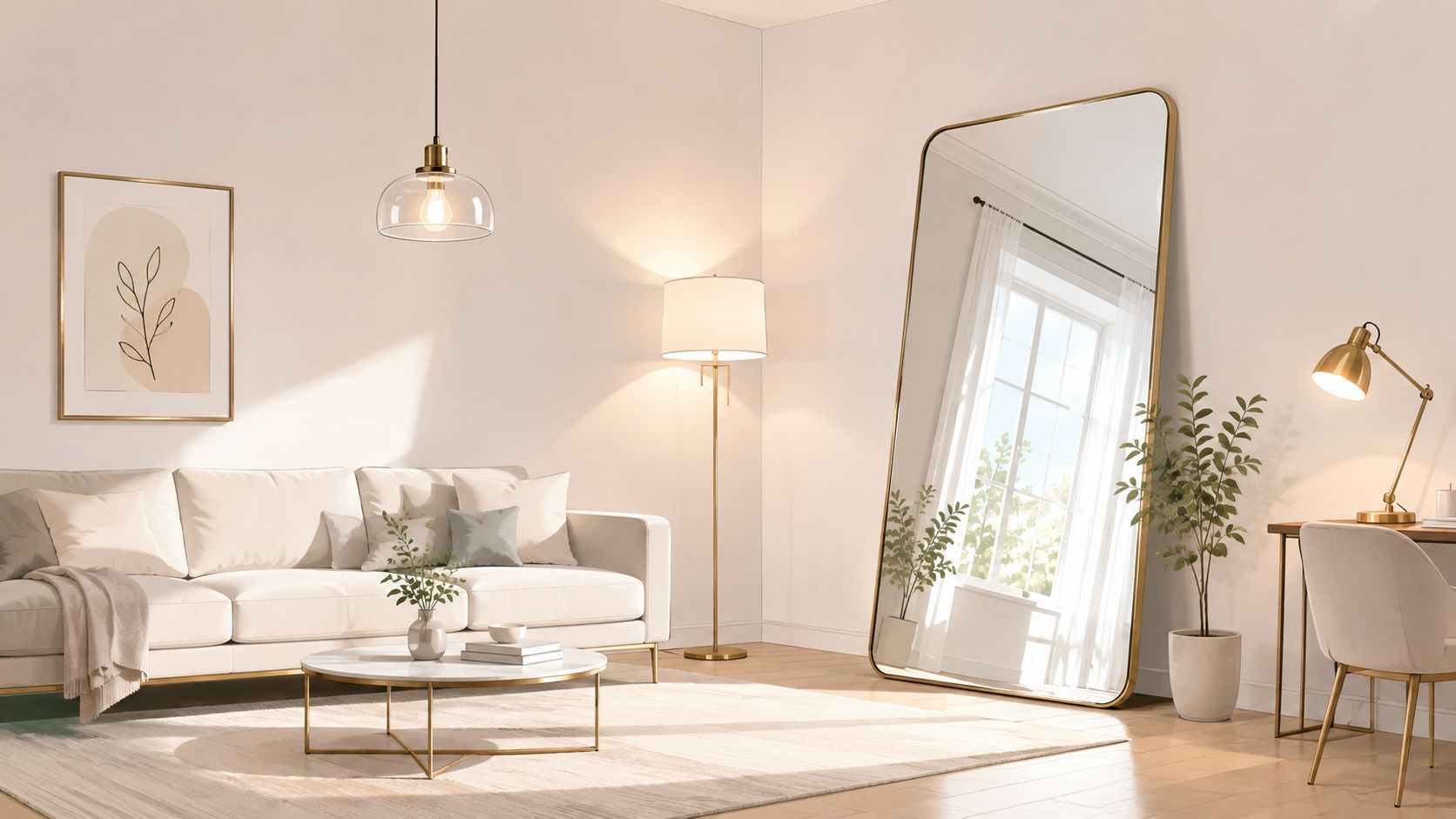
A light wall color does more than brighten a room. It softens hard edges and makes the apartment feel less boxed in. Mirrors can push daylight deeper into the space, especially when they sit across from a window or near another bright source. Warm white bulbs, along with a mix of ambient, mid-level, and task lighting, help the room work from morning to night, as shown in this guide to putting your living room in the best light.
What usually works best
A mirror placed across from a window often does more for a room than a decorative object tucked into the corner.
- Use one strong overhead source. It handles general visibility and keeps the room from feeling patchy.
- Add a floor lamp or wall light. Mid-level light softens shadows and makes seating areas feel deliberate.
- Bring in task lighting. A reading lamp beside the sofa or a desk light near the work area makes the apartment feel more usable.
- Choose furniture with legs. Open bases let more visual space show through, so the room feels lighter and less crowded.
These choices matter because lighting changes how furniture and finishes read in a real room, especially in a smaller East Connecticut apartment where one space often has to do several jobs. A bright palette, a well-placed mirror, and a few clean light sources can make budget pieces look more considered, which matters if you want value that lasts. Gorins also points shoppers toward practical room-lighting advice in its guide to putting your living room in the best light, and that same approach works well when you are choosing finishes that need to feel good now and still hold up later.
Keep the palette light, keep the mirrors purposeful, and avoid crowding the walls with dark, heavy objects. That gives a small apartment more breathing room and helps the pieces you do buy feel like part of a planned home, not a quick fix.
4. Modular and Flexible Furniture Arrangements
Fixed layouts can be expensive mistakes in a small apartment. Modular furniture lets the room change with the day, a sectional can become a reading corner, storage cubes can shift from side table to extra seating, and nesting tables can disappear when they're not needed. Flexibility is a major reason small apartment design ideas on a budget are more successful when they start with pieces that can move.
A custom modular sofa is especially useful in Eastern CT homes where apartments may have odd corners or narrow passages. Gorins' F9 Custom Sofa series lets shoppers choose among thousands of combinations of arms, backs, and details, which makes it easier to fit the furniture to the room instead of forcing the room to fit the furniture. That kind of adaptability matters when a layout changes after a move or when a living room suddenly needs to become a guest space.
Smart ways to use modular pieces
Start with the smallest useful configuration and build from there. A two-seat setup can work now and still expand later if the budget allows. Neutral fabrics make future additions easier, and stable connectors matter more than fancy extras because a loose modular frame becomes annoying fast.
Gorins' three uncommon furniture arrangements that work wonders lines up with the same principle, arrangement matters as much as the furniture itself. A sectional that's pushed into the wrong corner can waste space, while a movable grouping can open a walkway or create a better conversation area.
For Norwich apartments, modularity also protects against the realities of renting. Narrow stairwells, changing floor plans, and future reconfiguration all become easier to handle when the furniture can be separated, moved, and reassembled without drama. That's budget value that keeps paying off.
5. Neutral Base with Accent Pops for Personality and Flexibility
A neutral base gives a small apartment staying power. When the sofa, walls, and larger storage pieces stay in calm, timeless tones, the room can change personality through affordable accents instead of expensive replacements. That balance is one of the best ways to approach small apartment design ideas on a budget with long-term value in mind.
Think of the main furniture as the investment, then let pillows, throws, artwork, and rugs carry the seasonal energy. A quality neutral sofa from Flexsteel or Best Home Furnishings can anchor the room, while colorful pillows or patterned accessories bring in personality without locking the space into one look. That approach is especially helpful in smaller rooms, where a bold sofa fabric can quickly dominate the entire apartment.
Why this approach saves money later
A neutral foundation is easier to live with if the apartment is rearranged, expanded, or repurposed into another layout. It also makes secondhand finds easier to mix in, because the baseline is already quiet and coordinated. Gorins' guide to adding color without paint is useful here, since it shows how much can change with accessories alone.
- Keep the major surfaces calm. Walls, sofa, and large storage pieces should do the long-term work.
- Change accents seasonally. Throws, pillows, and tabletop decor can shift without stressing the budget.
- Build slowly. A few well-chosen objects usually look better than a rushed collection.
- Mix warmth into neutrals. Wood tones, woven textures, and natural fabrics keep the room from feeling sterile.
In a small Norwich flat or studio, the neutral-first strategy also makes cleaning and maintenance easier. Less visual noise means the room feels collected, even when it's full of daily life.
6. Vertical Furniture and Tall Pieces to Draw Eyes Upward
Tall furniture can change the whole sense of a room. A floor-to-ceiling bookcase, a narrow cabinet, or a high-backed chair draws attention upward, which makes the ceiling feel higher and the apartment feel less compressed. This is one of those small apartment design ideas on a budget that works because it changes perception, not just storage.
A tall, narrow piece belongs against a wall, not in the middle of the room. That keeps the floor open for movement and lets the eye travel vertically instead of horizontally. In a bedroom, a slim cabinet can hold folded items without taking the place of a dresser. In an entryway, a vertical unit gives coats, shoes, and bags a proper landing spot.
Keep tall pieces from feeling heavy
Light finishes and open designs help, especially in rooms that already lack natural light. A bookcase with a bit of breathing room around it feels better than a bulky cabinet that nearly touches everything around it. Tall artwork can do the same job if storage needs are already covered elsewhere.
The best result comes from balance. Pair one tall piece with lower, lighter-weight furniture so the room doesn't feel top-heavy. A narrow cabinet beside a low sofa can look intentional, while two or three oversized vertical pieces in one tiny room can make the space feel crowded.
For a local showroom shopper, guidance matters. A well-chosen tall piece should solve a layout problem, not create a new one. If a room needs height and storage, a vertical cabinet may be more useful than another small side table that never really earns its spot.
7. Flexible Zoning with Area Rugs and Furniture Groupings
Small apartments work better when every inch has a job. Rugs and furniture placement can define a living area, sleep zone, dining spot, or work corner without adding walls or permanent partitions. That makes zoning one of the most practical small apartment design ideas on a budget for studios and open-plan rentals.
A rug under the front legs of a sofa group anchors the living area. A smaller rug beside the bed makes a sleeping zone feel deliberate. A dining area can be defined by a rug under a compact table, including a custom dining piece from Canadel Furniture Connecticut when the space calls for a finish and size that fit the room exactly. The point is simple, separate the functions visually so the apartment stops feeling like one undifferentiated box.
What good zoning actually looks like
The pathways between zones need to stay clear. A room feels smaller when the furniture blocks movement, even if the furnishings are attractive. Keep groupings tight, but don't push them so close together that daily use becomes awkward.
Practical rule: a zone should feel like a room within the room, not a pile of furniture with a rug under it.
Rugs also soften sound, which helps in apartments where hard floors can make every step feel louder. That's especially useful in a studio where the bed, desk, and sofa all share the same open air. Use plants or a tall storage piece if a visual divider is needed, but keep the overall plan open.
A compact dining setup can be surprisingly effective here. Gorins' Canadel Custom Dining partnership offers thousands of combinations, which is useful when a small apartment needs a table that fits an awkward corner without overpowering the room. A properly sized table can make everyday life easier than a large one ever could.
8. Smart Decorating with Plants, Artwork, and Affordable Accessories
Plants, artwork, and accessories are the finishing layer that turns a furnished apartment into a home. They cost less than major furniture, but they shape the mood just as much. In a small unit, this layer has to be edited, because too many small objects make the room look busy instead of personal.
Trailing plants on shelves can draw the eye upward, while a few framed prints can turn a blank wall into a focal point. Accessories also let renters express style without making permanent changes. That matters in homes where the walls can't be repainted or the layout can't be altered.
Keep the accents intentional
Start with a small number of high-impact items. A couple of healthy indoor plants, a stack of books, and one or two baskets can already make the room feel warmer. Odd-number groupings often look more natural, and seasonal swaps keep the apartment fresh without starting over.
- Choose resilient plants. Pothos and snake plants are practical indoor options for spots that need low-effort greenery.
- Use artwork that feels personal. Thrifted pieces, framed prints, or local finds can carry more character than generic decor.
- Mix soft and hard textures. Pillows, blankets, woven bins, and ceramic pieces add depth without clutter.
- Rotate accents through the year. One pillow swap can make a room feel updated without touching the furniture.
For shoppers who like a hands-on approach, small decor pieces can also be a good place to save while keeping the larger purchases strong. A room built on a solid sofa, a well-sized rug, and good lighting can handle more affordable accessories easily. Gorins' clearance section can be a practical place to look for value-driven savings when the main pieces are already set.
8-Point Small-Apartment Budget Design Comparison
| Item | Implementation complexity | Resource requirements | Expected outcomes | Ideal use cases | Key advantages |
|---|---|---|---|---|---|
| Multi-Functional Furniture with Hidden Storage | Low–Moderate: measure, purchase, assemble | Moderate: higher upfront cost; possible custom work | More storage, fewer pieces, better organization | Small apartments, studios, limited floor space | Saves floor space, concealed storage, multifunctional use |
| Vertical Space Utilization with Wall-Mounted Shelving | Low: simple install with stud/anchor checks | Low–Moderate: shelves, hardware, tools | Increased storage without floor footprint; added visual height | Narrow rooms, above desks/kitchens, small living areas | Maximizes wall real estate; affordable and decorative |
| Light Colors, Strategic Lighting, and Reflective Surfaces | Low–Moderate: painting and lighting placement | Low–Moderate: paint, fixtures, mirrors, bulbs | Perceived larger, brighter spaces; improved ambiance | Dark or compact apartments lacking natural light | Visually expands space; energy-efficient lighting options |
| Modular and Flexible Furniture Arrangements | Moderate–High: planning, assembly, configuration | Moderate–High: modular pieces and durable connectors | Reconfigurable layouts that adapt over time | Frequent movers, evolving households, multipurpose rooms | Scalable, adaptable, long-term investment |
| Neutral Base with Accent Pops | Low: choose neutral core pieces and add accents | Low–Moderate: quality core furniture plus accessories | Timeless foundation with easy seasonal updates | Renters and style-conscious owners wanting flexibility | Versatile, easy to refresh, maintains resale value |
| Vertical Furniture and Tall Pieces to Draw Eyes Upward | Moderate: precise measurement and balance | Moderate: tall units, possible installation help | Perceived higher ceilings; added vertical storage | Spaces where drawing attention upward improves scale | Creates visual height; maximizes vertical storage |
| Flexible Zoning with Area Rugs and Furniture Groupings | Low–Moderate: layout planning and correct rug sizing | Low–Moderate: rugs, furniture placement, occasional new pieces | Defined functional zones and improved flow/acoustics | Studios and open-plan apartments needing separation | Non-permanent separation; adds warmth and definition |
| Smart Decorating with Plants, Artwork, and Affordable Accessories | Low: styling and curation | Low: plants, prints, accessories; ongoing plant care | Personalized, warm spaces with low cost | Budget-conscious renters and decorators | Affordable personalization; easy to change; adds greenery |
Create Your Dream Apartment Today
Designing a small apartment on a budget is about making smart, value-driven choices. The best rooms usually start with pieces that do more than one job, then build outward with lighting, storage, and accents that support daily life. That approach works whether the apartment is a Norwich studio, a compact flat in New London, or a small living room that needs to feel calmer without a full renovation.
The strongest results come from investing where the room works hardest. A durable sofa, a properly scaled dining set, a sturdy storage piece, and layered lighting will do more for a small apartment than a pile of cheap extras. That's the same reason local families keep coming back to Gorins Furniture & Mattress, a family-owned Norwich showroom that has served the community since 1936 with quality, value, and helpful service. For rooms that need to stay flexible, the custom order programs can help size furniture to the space, and the store's financing options can lower the barrier to entry on bigger purchases.
Small spaces also reward patience. It's better to buy a few pieces that fit the layout, hold up to moves, and look good together than to fill the room quickly and regret it later. Gorins' mix of custom dining, custom living room options, and name-brand selections gives Eastern CT shoppers a practical way to balance budget with long-term value.
Visit the Norwich showroom, take the Style Quiz, or explore clearance pieces when the room needs a smart update without a big spend. A better apartment doesn't need to be bigger, it needs to be chosen well.
Gorins Furniture & Mattress helps Norwich and Eastern CT households make small spaces work harder with custom sizing, value-focused furniture, and helpful guidance from a local team. For apartment-friendly seating, dining, and sleep solutions, visit Gorins Furniture & Mattress and see how the right pieces can fit your layout, your budget, and your life.