Furniture for Rental Properties: Expert Selection Guide

A newly furnished rental can look ready for tenants on paper, but the actual challenge emerges when the first move-in day hits. Boxes stack up, the sofa has to fit through the hall, and every purchase starts to feel larger than the photo on the screen. For Norwich landlords, that pressure is familiar, because furniture choices affect cash outlay, maintenance, and how quickly a unit feels worth the asking rent.
The furniture for rental properties conversation usually starts with style, but the smarter starting point is risk. A rental unit needs pieces that hold up, look consistent in photos, and don't create a long trail of replacements. That's why the best furnishing decisions come from a simple mix of durability, layout discipline, and selective spending, not from buying every room at once.
Introduction to Furnishing Rental Properties
A landlord can spend weeks getting a unit painted, cleaned, and marketed, then lose momentum on furnishings because the quote sheet lands higher than expected. That's not unusual. In a 2025 benchmark report covering 3,487 rental projects, average furnishing cost per property was USD 18,370, with studios at USD 11,200 and four-bedroom homes at USD 35,400 (IBISWorld reference). Those figures explain why furnishing is rarely treated as a casual add-on in a rental project.
For many owners, the primary issue isn't whether to furnish, but how to do it without tying up too much capital in pieces that age badly or don't fit the unit's turnover pattern. The market is also moving toward turnkey solutions because operators want faster move-in cycles, less upfront furniture spend, and setups that make sense for short stays or relocation-driven leases. That shift shows up in the broader rental market, where curated packages, better logistics, and customizable plans have become part of the competitive environment.
A practical furnishing plan starts by deciding what must be durable, what must photograph well, and what can stay basic. That lens helps a landlord avoid the common mistake of overspending on decorative items while underinvesting in the furniture that tenants use every day. In furnished rentals, the goal is not a magazine spread. It's a unit that feels cohesive, survives real use, and still looks sharp when the listing goes live.
Understanding Durability and Materials
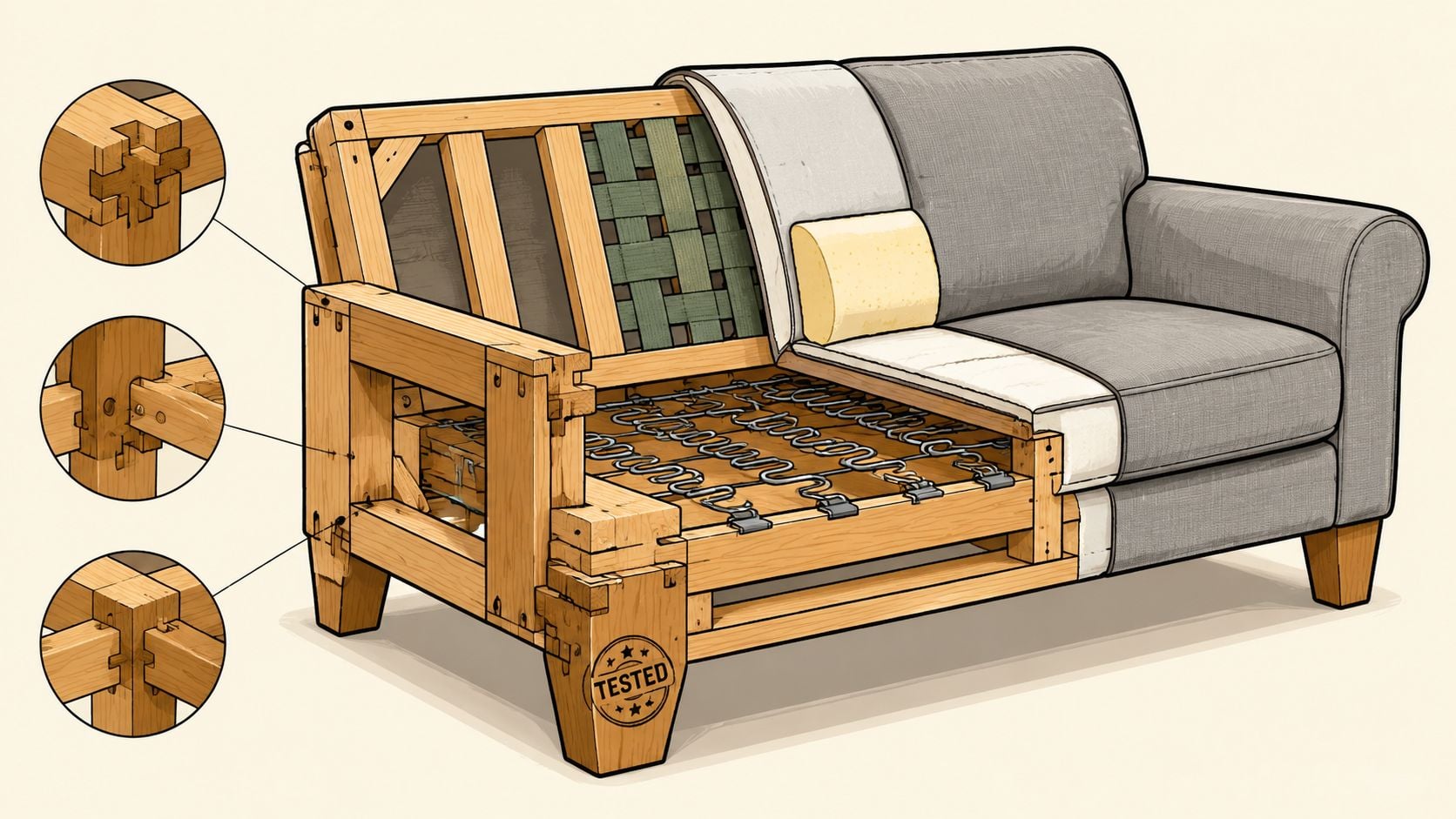
A rental sofa or bed doesn't fail in one dramatic moment. It wears down through repeated sitting, cleaning, shifting, and load cycling. That's why frame material and joinery matter more than surface styling. Expert guidance favors solid wood or metal frames with dovetail or mortise-and-tenon joints, and for beds, multiple slats or a central support beam for queen and king sizes, because those details reduce loosening and deflection over time (Checkmate Rentals guidance).
What actually holds up
Particleboard and MDF can work in low-stress settings, but rental furniture lives a harder life. Joints get bumped during cleaning, drawers get yanked, and bed frames carry weight night after night. Once the weak points start to move, the piece gets noisy, unstable, or unpleasant to use.
For upholstered items, the fabric matters almost as much as the frame. A useful benchmark for rental properties is abrasion resistance, because repeated friction is what exposes wear fastest. Industry guidance commonly treats 15,000 Wyzenbeek double rubs as a residential minimum, while 30,000+ double rubs is preferred for high-traffic or commercial-like turnover, and Martindale ratings of 20,000 to 30,000 cycles are generally suitable for heavy domestic use (Bee Setups guidance). That matters because every guest turn adds friction from sitting, sleeping, cleaning, and shifting pillows or cushions.
Practical rule: if a surface will be touched, sat on, or cleaned often, choose performance materials first and decorative flair second.
For landlords trying to separate normal aging from preventable damage, a useful framing is to read up on distinguishing wear from damage. That distinction helps with both maintenance planning and deposit conversations, especially when furniture is part of the lease setup.
A simple selection filter
Before buying, ask three questions. Can the frame tolerate repeated use? Does the fabric have documented abrasion performance? Can the piece be repaired without replacing the whole unit? If the answer is no to any of those, the item usually belongs in a higher-turnover home office, not a furnished rental. For a deeper material breakdown, the upholstery material guide is worth reviewing before committing to fabric choices.
Choosing Essential Pieces for Each Room
The best furnished rental packages are lean. Not every room needs a full catalog setup, and not every item deserves premium spend. Landlords do better when they treat each room as a function first and a styling exercise second.
| Room | Essential Pieces | Investment Priority |
|---|---|---|
| Living room | Sofa, accent chair or two, coffee table, media storage | High |
| Dining area | Table, chairs, durable surface finish | High |
| Bedroom | Bed frame, mattress, bedside surface, lighting | High |
| Entry or hallway | Small console, hook or catchall storage | Medium |
| Outdoor area | Weather-aware seating, compact table, easy-care accent pieces | Medium |
The living room usually earns the most attention because it carries the visual weight of the listing. A stable sofa, a sensible coffee table, and one or two flexible seating pieces make the space feel intentional without clutter. Bedrooms deserve a similar discipline. A sturdy bed and a practical bedside surface tend to matter more than filling every corner.
Dining areas should be sized to the unit, not to an imagined ideal. A dining setup that fits the circulation path is more valuable than a large table that blocks movement. That's why many owners get better results by focusing on a clean table surface, wipeable chairs, and enough room for people to sit and stand comfortably.
For guest spaces, the same rule applies. If a room is meant to sleep people, support work, or host a short stay, it needs a real bed and usable storage before it needs decorative extras. The local guest-room resource at this furniture planning guide can help landlords think through what belongs in a room that has to serve multiple purposes.
A good furnishing list usually leaves some items out on purpose. That isn't underfurnishing. It's disciplined buying, and it protects both the budget and the layout.
Balancing Budget Quality and Staging Strategies

Some rental furniture should be built for years of use. Some only needs to support the listing long enough to make the first impression count. That distinction matters because, in short-term rental marketing, one industry source reports that guests make 80% of booking decisions based on the first five photos (video reference). In other words, the sofa, bed, and visible entry or living area can influence revenue far more than the decorative pieces tucked into the background.
Budget where the camera won't care
A landlord can usually save on items that don't dominate the listing photos or carry heavy daily use. Hallway tables, small storage accents, and some side pieces can be functional without becoming expensive focal points. The point is not to buy flimsy furniture. It's to reserve stronger spending for the pieces guests touch immediately or see first.
That also means staging and full furnishing are not the same job. Staging is about making the unit photograph well and feel move-in ready. Full furnishing is about long-term occupancy and repeat use. The two overlap, but they don't demand identical spending. A selective approach often works better, especially when the unit is meant for short or mid-term occupancy and the setup needs to support both booking appeal and practical living.
For owners who want a broader framing on layout and presentation, Global's insights for vacation rental owners reinforce the value of choosing furniture that supports guest expectations without overcomplicating the space.
Where premium pieces pay off
Premium spending tends to make the most sense on the bed, main sofa, and dining surface. Those are the items that carry the listing, influence comfort, and take the most abuse. A budget accent chair can be fine. A weak sofa that sags early is not. That's why many landlords use a split approach, one or two investment pieces, then simpler supporting furniture around them.
The cleanest result usually comes from choosing a few durable visual anchors and letting the rest stay quiet. A room doesn't need everything to be special. It needs the right pieces to feel solid, usable, and worth the rate.
Planning Layout Measurement and Maintenance
Furniture that looks right online can fail in a doorway, block a vent, or make a small room feel cramped. The fix is measured planning before anything is ordered. Start with the room's usable dimensions, then check door widths, hallway turns, stairwells, and ceiling height where tall pieces will stand. A sofa or bed that fits the floor plan but can't make the turn into the unit is a waste of time and money.
Measure first, then buy
A tape measure is still the most reliable first step. Measure the space where each piece will sit, then mark the clearance needed for walking paths, drawer pulls, and chair movement. Digital mockups help, but only after accurate measurements are in hand. That prevents the common mistake of scaling furniture to the room size in a vague way instead of fitting it to the actual traffic pattern.
For a practical step-by-step refresher, the how-to-measure guide is a useful planning companion before orders go in.
A simple maintenance rhythm matters just as much as the initial layout. Tighten joints after move-ins and after deep cleans. Rotate cushions so wear doesn't concentrate on one side. Check bed slats, drawer slides, and chair legs before small issues become tenant complaints. That kind of upkeep extends the life of the unit's visual core.
Furniture lasts longer when small fixes happen early. A loose screw or wobbling leg is a warning, not a minor inconvenience.
For broader upkeep timing, hostAI's maintenance guide is a helpful way to think about recurring property checks without letting furniture care get lost in the general turnover list.
Build replacement triggers
Replacement planning should start before something breaks. When a sofa loses shape, a bed frame starts to creak, or a chair wobbles after tightening, it's time to assess whether repair still makes sense. A clear rule is better than waiting for visible failure in a guest stay. That approach protects reviews, reduces emergency spending, and keeps the furnishing plan under control.
How Gorins Furniture and Mattress Can Help
Rental-property owners in Norwich usually need three things at once, durable furniture, a sane budget path, and local help that understands the realities of real homes. A family-owned showroom with deep roots can make that process easier because the conversation stays practical. Since 1936, Gorins has been part of the Norwich area's furniture market, and that local continuity matters when a landlord needs advice that fits actual unit sizes, timelines, and furnishing goals.
The customization angle is especially useful for rental properties that need to look finished without feeling generic. Gorins's Craftmaster F9 sofa system offers made-to-order customization with multiple arm styles, back types, and cushion options to fit many rental aesthetics. That kind of flexibility is valuable when a living room has to photograph well and still survive routine use. For landlords who want a dining solution suited to their space, the Canadel program also supports a wide range of combinations, which helps align furniture with the unit instead of forcing the unit around the furniture.
Promotional financing can also matter when a property needs multiple rooms furnished at once. Equal monthly payments reduce the pressure of a large upfront spend, which makes it easier to prioritize the pieces that drive occupancy and reduce turnover friction. Add delivery and setup support, and the whole process becomes more manageable for owners juggling deadlines, tenants, and maintenance.
The practical next step is simple. Visit the Norwich showroom, take the online style quiz through the interior design consultation page, or browse the clearance section for value-driven savings. For landlords across Norwich, New London, Plainfield, Waterford, and nearby Eastern CT communities, that gives a straightforward way to furnish rental homes with less guesswork and more confidence.
A CTA for Gorins Furniture & Mattress. Visit the Norwich showroom, take the online Style Quiz, or browse the Clearance section to find value-driven pieces that fit your rental property and your budget.