Custom Dining Chairs: How to Choose, Design, and Order Yours


The dining table looks right, but the chairs keep causing trouble. Knees hit the apron, arms collide when guests sit down, and at least one chair never slides fully underneath the tabletop. After a long meal, everyone notices the problem. Custom dining chairs solve that kind of everyday frustration by starting with fit, then adding the style, finish, and upholstery that suit the home.
For homeowners in Norwich, New London, Plainfield, Waterford, and nearby Eastern Connecticut and Rhode Island communities, the smartest custom order isn't the one with the most decorative choices. It's the one that fits the table, supports the people using it, and still looks appropriate after years of daily meals, homework, holidays, and conversation.
Why Custom Dining Chairs Solve Real Comfort Problems
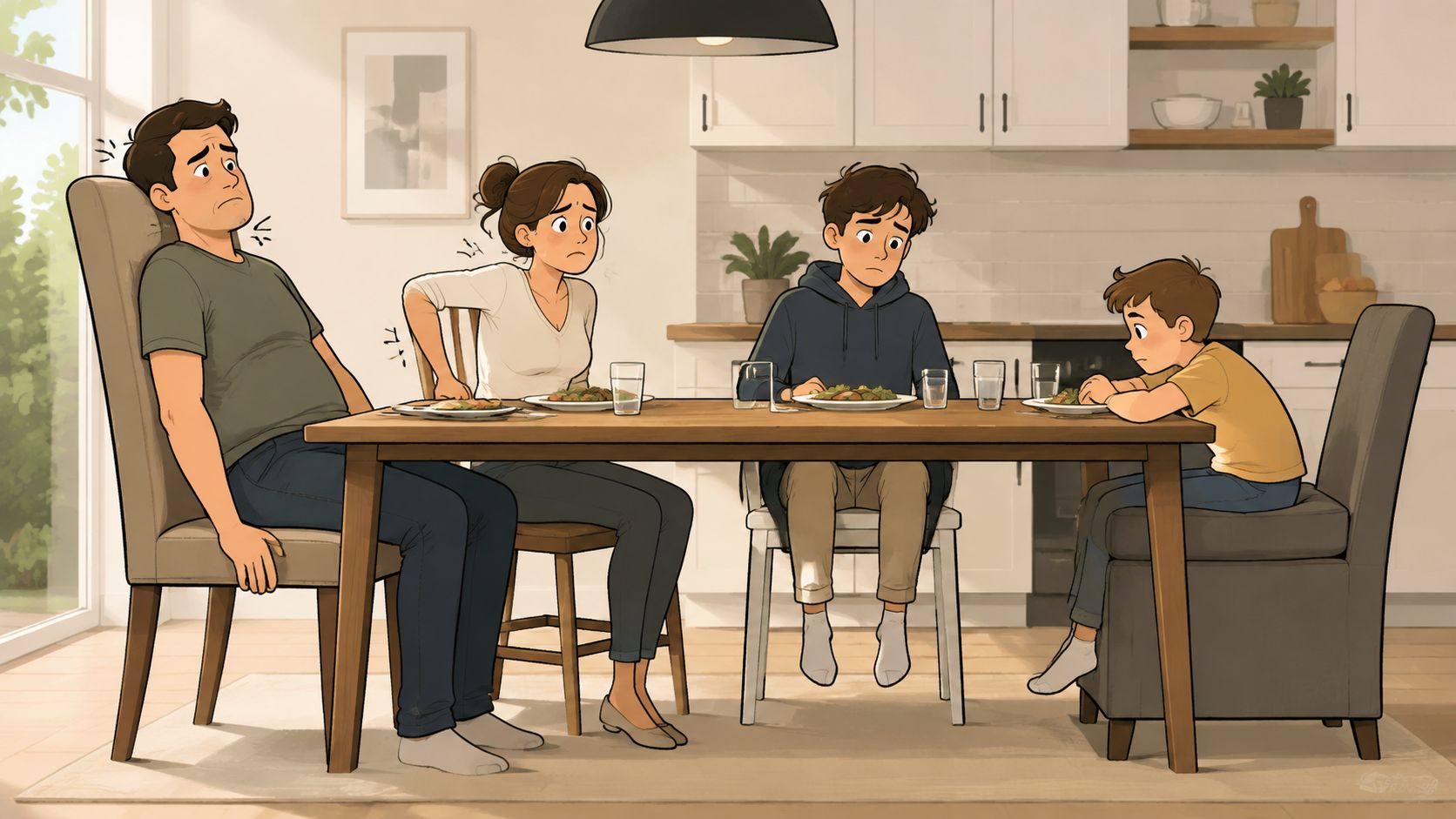
A family can live with mismatched or undersized dining chairs for a surprisingly long time. One person sits sideways to avoid the table apron. Another keeps a hand on the tabletop to stand because the seat is too low. A child uses a cushion, while an adult complains that the front edge presses into the legs. The room may look acceptable, but the furniture isn't working.
Fit matters more than decoration
Retail chairs are built for broad compatibility. That makes them convenient, but a chair can be attractive and still fail against a particular table. Thick tabletops, deep aprons, low stretchers, unusual leg placement, and tight room circulation all change what “fits” means.
Custom work lets the household solve the geometry first:
- Knee clearance: The seat and tabletop need enough vertical space for relaxed legs, not just enough room for the chair to slide under.
- Seat depth: A deep seat may suit a lounge chair but can leave shorter users without proper back support at the dining table.
- Arm height: Arms should clear the table apron and allow the chair to tuck away when the room needs open circulation.
- Seat width: A generous chair can feel comfortable in isolation but reduce the number of usable seats around the table.
- Back angle: The back should support ordinary dining posture without turning the chair into a formal, rigid perch.
A dining room that doubles as a workspace needs even more thought. If people eat, work, and help with homework at the same table, the seating should support repeated use without taking over the room. A resource on flexible seating for workspaces can help households compare individual chairs with more integrated seating approaches.
The table should lead the order
The table is the fixed point, especially when it's an heirloom, a stone-top design, or a piece the household already loves. Measuring that table before choosing a chair prevents the common mistake of selecting fabric and silhouette first, then discovering that the finished chair can't tuck in or leaves too little room for knees.
A useful local showroom conversation should include the table's height, apron depth, tabletop thickness, and the number of seats required. Gorins Furniture & Mattress also offers guidance on what to look for in a new sofa or chair, and the same practical principle applies here: comfort is a construction and measurement decision, not merely a cushion decision.
Custom dining chairs can also create visual continuity without forcing an identical matched set. A wood frame can relate to the table through tone or finish, while upholstery introduces contrast. The priority remains straightforward: make the chair comfortable, make it clear the table, and make sure the footprint works in the room before approving the final appearance.
Measuring for the Perfect Fit
A reliable custom-chair order starts with a tape measure and the actual table. The workflow should move from table height to chair height, then to width, depth, arms, and circulation. That order matters because seat height controls the most important relationship in the room, the distance between the sitter and the tabletop.
Start with the table
Measure from the floor to the top surface of the table. Then measure the tabletop thickness and the distance from the floor to the underside of the apron. If the table has a stretcher, pedestal, unusually wide legs, or a support rail, record those dimensions too. A chair may have the correct seat height and still fail because its arms or knees meet the table structure.
For standard 28 to 30 inch dining tables, a commonly recommended seat-height range is 17 to 20 inches, with 18 to 19 inches serving as a sensible starting point for fit testing. The practical target is roughly 10 to 13 inches of clearance between the seat and tabletop, as outlined in dining-chair sizing guidance. Because cushions compress, the measurement should be taken with the finished cushion or a comparable sample under normal seated weight.
Practical rule: Test the chair against the real table. A showroom floor model can reveal posture and knee clearance, but only the actual table confirms apron, arm, and tuck-under compatibility.
Record the complete chair envelope
Seat height is only the beginning. Adult dining guidance generally places seat width around 16 to 20 inches and seat depth around 15 to 18 inches, while overall chair height commonly falls near 32 to 34 inches. These are working benchmarks, not a substitute for testing with the people who'll use the chairs.
| Dimension | Typical Range | Notes |
|---|---|---|
| Seat height | 17 to 20 inches | Common range for standard 28 to 30 inch tables |
| Seat width | 16 to 20 inches | Wider seats need more perimeter space |
| Seat depth | 15 to 18 inches | Depth affects back support and leg comfort |
| Overall height | 32 to 34 inches | Confirm sightlines and room scale |
| Seat-to-table clearance | 10 to 13 inches | Check tabletop thickness and apron height |
Armchairs require extra caution. One sizing guide places arm-chair widths at about 24 inches, compared with about 19 inches for side chairs, so a table that comfortably holds side chairs may feel crowded once arms are added. A separate benchmark recommends at least 6 inches of spacing between chairs, a useful starting point for avoiding shoulder and elbow collisions. These figures and the broader dimension guidance are summarized in standard dining chair dimensions.
Before approving production, place a chair at each intended position and ask users to sit, cross their legs naturally, pull in close, and stand. Check whether the chair tucks beneath the table without forcing the back into a wall. For a broader room-planning reference, homeowners can also review how to measure a room, especially when the dining area shares space with a kitchen walkway or living room.
Choosing a Style That Matches Your Lifestyle
A dining chair should match the household's habits before it matches a decorating trend. A formal room used occasionally can handle a more sculptural frame or delicate upholstery. A kitchen table used for breakfast, remote work, crafts, and family meals needs a chair that tolerates constant contact and remains comfortable through long sitting periods.
Compare the main chair formats
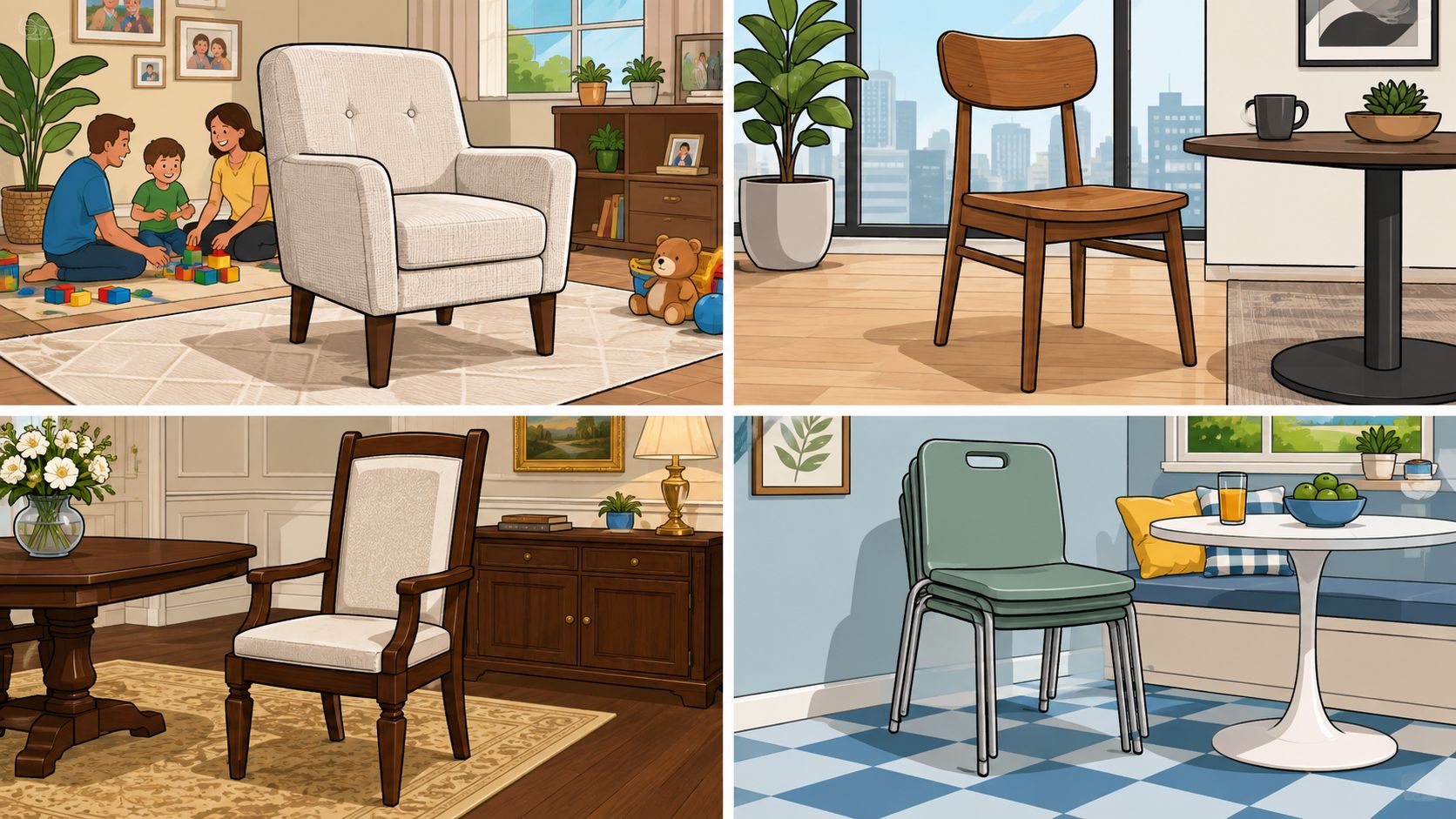
Upholstered seats provide softness and can introduce color or texture without covering the entire frame. They're a strong choice for families who want comfort but prefer a chair that remains visually light. The trade-off is maintenance, particularly when the upholstery is fixed.
Fully upholstered chairs offer more cushioning and a softer visual profile. They suit long dinners and homes where the dining table functions as a gathering point, but their larger visual and physical footprint needs careful checking around the table.
Wood chairs are easy to understand, durable, and often simpler to maintain. They can work especially well in active kitchens, though a hard seat may benefit from a shaped profile or a removable cushion if people regularly sit for extended periods.
Side chairs use space efficiently and typically make it easier to preserve the intended seat count. Armchairs offer welcome support at the head of the table, but they demand more lateral room and require an apron-clearance test before ordering.
Let the room decide
A mixed arrangement can be more functional than a matching set. Side chairs along the long sides preserve circulation, while armchairs at the ends create a comfortable place for hosts or frequent users. A bench can add flexibility, but it shouldn't replace individual support when several adults use the table for extended periods.
Style decisions still matter. Wood tone, leg shape, back profile, and upholstery can either complement the table or create intentional contrast. A useful collection of dining-room styles for different homes can help narrow the visual direction before the showroom appointment.
Digital visualization can also help compare silhouettes and color relationships, especially when a household is considering several combinations. AI furniture design tools may assist with early concept exploration, but they can't replace sitting in the chair or measuring it against the table. A rendering shows appearance. The showroom test reveals pressure points, posture, and whether the arms clear the apron.
For Canadel Custom Dining, the appeal is the breadth of the design process. Gorins presents the program as offering thousands of combinations across sizes, shapes, finishes, and fabrics. That flexibility is valuable only after the household has settled the practical requirements. The right sequence is fit, use, frame, upholstery, then visual details.
Selecting Fabrics and Finishes That Last
The most expensive-looking upholstery isn't automatically the best investment. In a busy household, the correct fabric is the one that handles the expected mess, cleaning routine, sunlight, pet contact, and frequency of use without making every meal feel risky.
Choose upholstery by maintenance burden
Velvet brings depth and a soft hand, and it can make a dining chair feel more like a designed accent than a basic seat. It also tends to show pressure marks and requires attentive care. It makes sense for lower-spill dining rooms or households prepared to maintain it carefully.
Boucle offers texture and visual warmth, but its loops can catch on clothing, claws, or rough edges. It should be considered selectively rather than treated as a universal family-table solution. Trend-led texture works best when the household understands how it will age.
Performance chenille is often a more practical middle ground. It offers a soft appearance while being selected for the demands of regular use. Still, “performance” doesn't mean stain-proof, so the care label, fiber content, cleaning method, and warranty terms deserve review before the order is finalized.
Washable or removable covers are especially useful when chairs serve a household with children, pets, or frequent entertaining. They may require more upfront planning and can alter the chair's look as they're removed and replaced, but serviceability can matter more than a pristine showroom appearance.
Consider the frame as a long-term system
Wood finishes should relate to the table without requiring an exact match. A complementary tone often looks more intentional than a near-match that misses the table's undertone. Sample boards should be viewed in the home's actual lighting because natural and artificial light can change how a finish reads.
Metal frames can provide a lighter, more contemporary appearance and may simplify the visual weight around a large table. They still need careful inspection for edge comfort, finish durability, and compatibility with the rest of the room. The frame should feel stable when users pull the chair out and sit down, not merely look slender from across the room.
A simple decision matrix helps:
- Busy family table: Performance textile, removable cover, durable frame finish.
- Pet-friendly home: Tightly woven upholstery or a finish that tolerates regular cleaning.
- Formal dining room: Velvet or textured upholstery can work when use is controlled.
- Daily work and dining: Moderate cushioning, supportive seat depth, and a surface that doesn't punish frequent contact.
For households considering light upholstery or leather, practical cleaning tips for white leather dining offer useful maintenance context. Gorins also provides a more detailed guide to upholstery materials. The central recommendation is simple: select the material based on the hardest ordinary day in the home, not the calmest day in the showroom.
Ordering Your Custom Dining Chairs
A successful custom order is a confirmation process, not an impulse purchase. The buyer should leave the showroom with dimensions, samples, construction details, pricing, financing terms, and delivery expectations written down. Verbal confidence isn't enough when a chair is being made to fit a particular table.
Follow a disciplined order process
Bring the table information. Photos, measurements, and notes about the apron, legs, stretchers, and desired seat count give the designer something concrete to work from.
Test the seat height. Sit at a comparable table and check knee clearance, foot placement, back support, and how easily the sitter can stand.
Choose the chair format. Decide whether the room needs side chairs, armchairs, a mixed arrangement, or another seating approach. Confirm that the footprint preserves circulation.
Review samples in person. Fabric, wood, paint, and metal samples should be viewed together. The goal is to catch undertone or texture problems before production begins.
Confirm every specification. The order should identify dimensions, seat style, cushion construction, upholstery coverage, frame finish, quantity, and any arm details.
Review the financial plan. Promotional Financing with equal monthly payments, subject to approval and plan terms, can lower the immediate barrier for an investment-grade purchase. The payment structure should be understood fully before signing.
Custom production requires patience. The supplied ordering guidance calls for an 8 to 12 week production period, so the household should plan around meals, holidays, renovation schedules, and any temporary seating needs. The delivery team also needs clear access information, including doorways, stairs, tight turns, and the final room location.
Gorin's Furniture has been a fixture in Norwich since 1936, first operating as Colonial Upholstery and Bedding Company on Franklin Street before moving to 49 New London Turnpike in 1972, as documented by the Norwich Bulletin's business history. The store's custom-order guidance gives shoppers a useful framework for discussing made-to-order furniture, including what must be confirmed before production.
At a local showroom, the value isn't just viewing a chair. It's getting help with the fit conversation, comparing samples under real lighting, and resolving details before the order becomes difficult to change. Gorins also provides 5-Star Delivery service, which connects the purchase to the final placement in the home.
Your Next Steps to Custom Dining Success
The best custom dining chairs begin with a table measurement, not a fabric swatch. Seat height and table clearance come first, followed by seat depth, width, arm clearance, and the space required to pull each chair out comfortably. Once those dimensions work, style and upholstery choices become much easier.
The material should reflect the household's actual routine. Performance textiles, washable covers, and durable finishes can deliver better long-term value than a delicate trend fabric in a busy kitchen. A formal dining room may justify a more decorative choice, while a table used for work, homework, and everyday meals needs resilient comfort.
Gorin's has served families in southeastern Connecticut and southern Rhode Island since 1936 and is family owned and operated, according to the store's local business profile. Its custom dining offering includes Canadel Custom Dining, where thousands of combinations can be considered across sizes, shapes, finishes, and fabrics. The wider showroom also includes living room and bedroom furniture, and its Sleep Gallery features brands such as Tempur-Pedic, Serta, and Beautyrest, with guidance centered on comfort by feel and healthier sleep.
For shoppers who want custom living-room pieces as well, the F9 Custom Sofa series allows choices across details such as arm styles, back types, welt details, and cushion firmness. Promotional Financing with equal monthly payments can help qualified buyers plan for larger purchases, while Clearance offers a value-focused path when a made-to-order chair isn't necessary.
A good custom order feels obvious in daily use. It clears the table, supports the sitter, survives the household, and still looks right after the novelty wears off.
Before ordering, homeowners can visit the Norwich showroom, take the online Style Quiz, or browse the Clearance section for value-driven savings. The right next step is the one that turns an attractive idea into seating that fits the table and the people around it.
Since 1936, Gorins Furniture & Mattress has helped Norwich and Eastern CT families create homes they love, from custom-designed Canadel dining sets to the latest in Tempur-Pedic sleep technology. Visit Gorins Furniture & Mattress to compare custom dining options in person, discuss dimensions and finishes with a local family-owned team, and arrange 5-Star Delivery service.