How to Arrange Bedroom Furniture: A Pro Layout Guide

You're usually not starting with a blank, beautiful room. You're starting with a bed that feels too big, a dresser that has to stay, one awkward window, and a doorway that makes everything harder than it should be.
That's normal. Most bedroom layout problems aren't style problems. They're spacing problems, traffic-flow problems, and scale problems. Once those are solved, the room starts to feel calmer almost immediately.
A good bedroom should let you move easily, get dressed without bumping into corners, open drawers all the way, and settle into bed without the room feeling crowded. The layout does most of that work. The furniture only works if the placement works.
Before You Move a Thing Plan Your Space
Saturday goes a lot better when the mattress stays upright, the dresser stays put, and the planning happens first. In real homes around Eastern CT, that usually matters more than people expect. Older colonials, capes, and ranches often have narrow door swings, baseboard heat, off-center windows, or closet openings that limit where furniture can go.
A measured plan saves strain, protects your walls, and keeps you from arranging the same room three times.
What to measure before you touch the furniture
Start with the room itself, then measure every piece you plan to keep. That second step gets skipped all the time, and it causes half the problems I see in bedroom layouts. A room may be 12 by 14, but that does not tell you what happens when a deep dresser, two nightstands, and a queen bed all need working clearance at once.
Write down these measurements:
- Room dimensions: Full length and width, wall to wall.
- Ceiling changes: Slopes, soffits, knee walls, or low spots.
- Door swing: Where the door opens and the arc it needs.
- Windows: Width, sill height, trim depth, and how low the glass starts.
- Obstacles: Floor vents, radiators, outlets, baseboard heaters, and return vents.
- Closet clearance: How far bifold or swing doors need to open.
- Furniture footprint: Width, depth, height, and drawer or door clearance for each piece.
If you want a clear way to check room dimensions against actual furniture sizes, Gorins has a helpful guide on how to measure furniture.
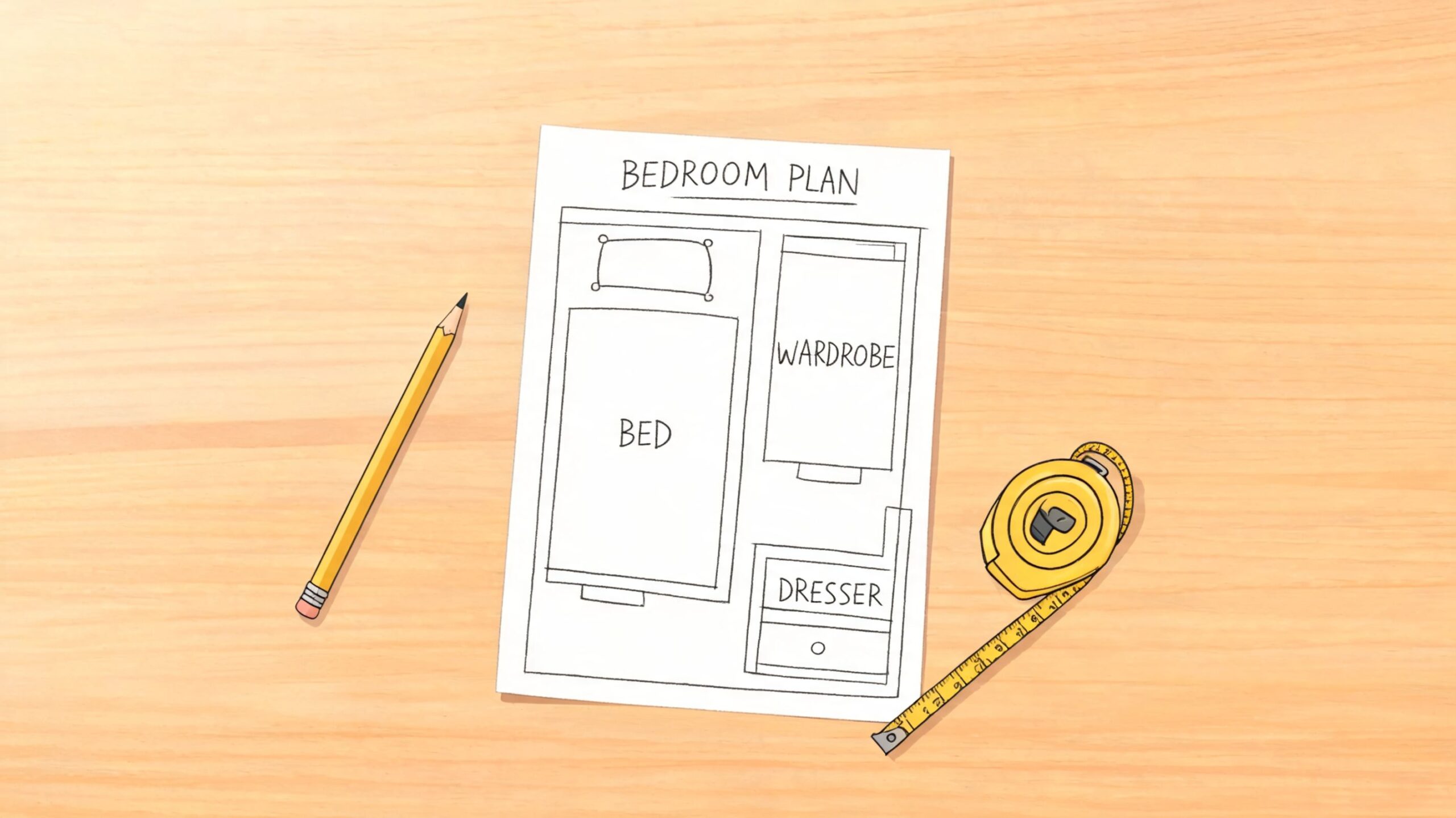
Make a sketch that answers practical questions
Graph paper works well, but plain paper works too. Draw the shape of the room, mark the fixed elements, and block in your furniture at a rough scale. The goal is not a pretty drawing. The goal is to catch problems before anything gets dragged across hardwood or pinned into a corner.
A simple sketch should answer a few practical questions right away:
- Can drawers open fully without hitting the bed or blocking the doorway?
- Is there enough walking space on the sides that people use?
- Will a nightstand sit under the window trim or crowd the curtain line?
- Do outlets land where lamps, chargers, or an adjustable base need power?
That last one matters more now than it used to. Bedrooms today often need space for charging, reading lights, blackout panels, under-bed storage, or a small work spot. Good planning balances timeless layout rules with how the room gets used every day.
Plan around real life, not an ideal floor plan
A balanced bedroom usually starts with one strong wall and clear walking paths, but real rooms ask for trade-offs. Sometimes the best wall has a window. Sometimes the dresser that still has years left is a little too deep. Sometimes an in-stock piece solves the storage problem quickly, and sometimes a custom-order size is the smarter choice because it gives back a few inches where the room needs them.
That is where local guidance helps. In our area, I often see shoppers trying to make a standard bedroom set fit a room that was never built for standard proportions. Planning first helps you decide what stays, what gets replaced, and whether a different scale, finish, or configuration will make the room feel settled instead of squeezed.
A good plan gives you options before you spend money or lift a thing.
Placing the Bed Your Room's Anchor
You open the bedroom door after a long day, and the first thing you feel is whether the room is settled or slightly off. In a good layout, the bed gives the room its center right away. In a poor one, it feels shoved into whatever space was left.
The bed is usually the largest piece in the room, so its position sets the tone for everything around it. It also affects daily comfort more than people expect. A bed that looks fine on paper can still feel awkward if the headboard sits under a drafty window, one side is hard to reach, or the door points straight at your feet.
What the commanding position actually means
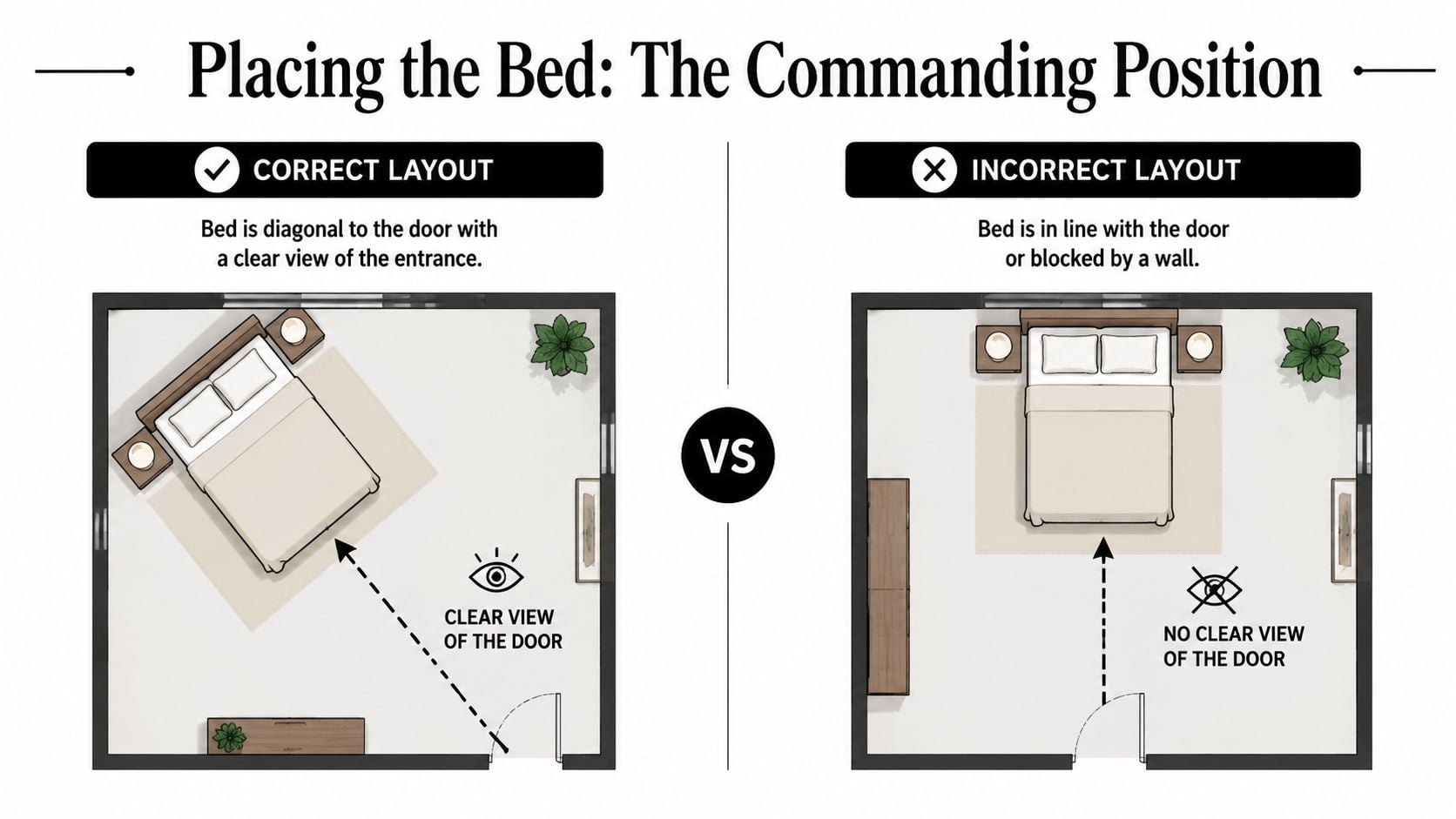
Designers often call the best bed placement the commanding position. The idea is simple. From bed, you should be able to see the door without lining the bed up directly with it. The room feels calmer that way. The Sleep Foundation's bedroom feng shui tips describe this same principle in practical terms, and it holds up well even if feng shui is not your main concern.
In real homes around Eastern CT, the strongest wall is not always the most obvious one. Older houses can have off-center windows, baseboard heat, low sills, or closet doors that interrupt the wall you wanted to use. In those rooms, the goal is not perfection. The goal is a bed placement that feels secure, balanced, and easy to live with.
A few setups tend to cause trouble:
- Directly in line with the doorway: The bed feels exposed the moment you walk in.
- Pressed to one side wall without a clear reason: One person loses easy access, and making the bed becomes a chore.
- Under a window when a better wall is available: Light, drafts, and window trim compete with the headboard.
- Floating away from the wall in a tight room: It uses up walking space that the room cannot spare.
If mirrors are part of the layout, placement matters here too. This feng shui mirror guide for homeowners is a useful reference if a dresser mirror or wall mirror reflects the bed in a way that makes the room feel too active.
Match the bed size to the room you actually have
A king bed can be comfortable and still be the wrong call for the room. I see that often. Shoppers fall in love with the idea of more sleeping space, then realize the bigger frame leaves no breathing room for nightstands, lamps, or a clear route to the closet.
That is why dimensions matter as much as style. Before you commit, compare the frame and mattress footprint with a bed sizes chart for full, queen, and king dimensions. In many bedrooms, a queen gives the best balance between comfort and usable floor space. In others, a custom-order bed with a slimmer headboard or lower-profile frame is the smarter choice because it gives back a few inches where they count.
In-stock options can solve the problem quickly if the proportions are right. Custom sizing or alternate configurations make more sense when the room has quirks and you want the furniture to fit the house instead of forcing the house to fit the furniture.
Decide what the bed should face
The bed should face the part of the room you want to notice first. Sometimes that is a solid wall with art. Sometimes it is a window with a pleasant view and enough wall space below the sill to keep the bed grounded. Sometimes it is the position that looks balanced from the doorway and leaves the best clearance on both sides.
Here is how the most common placements usually shake out:
| Bed position | Usually works well when | Watch out for |
|---|---|---|
| Centered on main wall | Room is fairly square and the wall is uninterrupted | Nightstands or a wide headboard crowding the sides |
| Opposite the entry | You want the bed to read as the clear focal point | A straight door-to-bed sightline that feels too exposed |
| Along the longest uninterrupted wall | Other walls are broken up by windows, closets, or trim | The bed overpowering a narrow room |
The best bed placement is the one that makes the room feel settled every day, not just styled for a photo. Start with balance, respect the room's limits, and choose a bed that fits how you live now. That is how a bedroom starts to feel like a real retreat.
Arranging Your Other Bedroom Essentials
Once the bed is set, the room needs pathways. That's the part people feel immediately, even if they can't explain it. If you have to angle your shoulders to get to the closet or shuffle sideways past a dresser, the layout isn't finished.
Time-tested design guidance recommends 36 inches for primary walkways and 24 to 30 inches for secondary paths around furniture, according to Miller Waldrop's guide to arranging bedroom furniture. In practical terms, that means the route from the door to the bed deserves the most breathing room, and the side zones around dressers and nightstands can be a little tighter.
Place storage where it works hardest
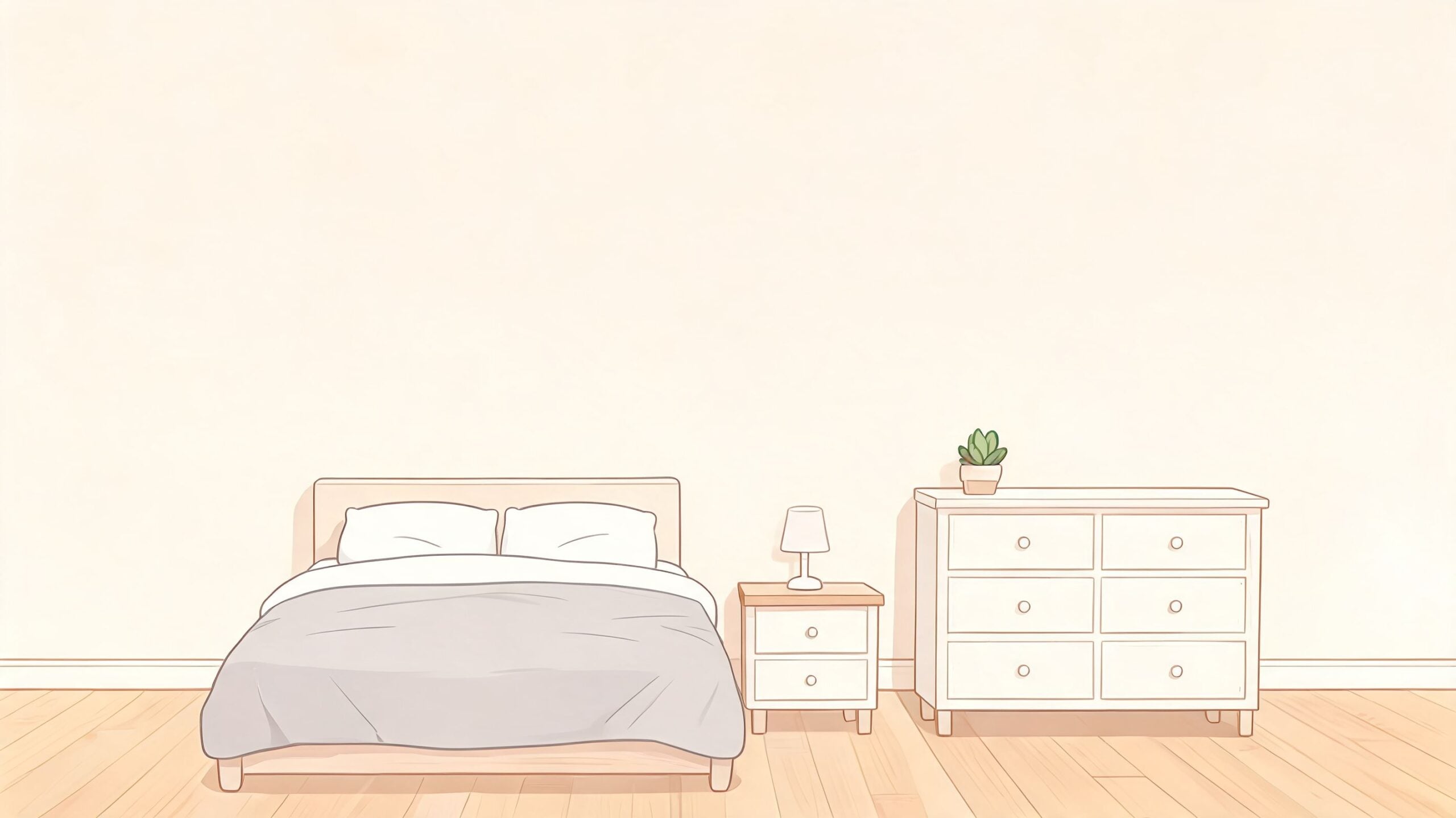
Dressers belong where drawers can open without colliding with the bed. Often that's opposite the bed or on a side wall with enough depth to stand comfortably while you use it.
Nightstands should feel reachable, not ornamental. If they're too small, they look lost beside a substantial bed. If they're too deep, they eat into the walkway.
A balanced setup often looks like this:
- Nightstands beside the bed: Keep everyday items easy to reach.
- Dresser across from the bed: Good for visual balance and practical drawer use.
- Accent chair in an open corner: Only if it doesn't interrupt circulation.
- Chest or cabinet near the closet zone: Useful if dressing happens in that part of the room.
If you're shopping for new storage, it helps to review what to look for when buying chests, dressers, and cabinets before choosing a piece by looks alone. Drawer depth, height, and footprint matter just as much as finish.
Scale matters more than matching sets
A room can be beautiful without every piece matching. What it can't be is badly scaled.
A tall, weighty bed with tiny nightstands usually feels accidental. A long low dresser can calm a room with a large upholstered headboard. A narrower chest can solve a tight corner where a wide dresser would clog the path.
Well-made case goods and customizable options earn their keep in these scenarios. A Vaughan-Bassett dresser with the right width, or a chair from Best Home Furnishings with a trim profile, can solve problems that generic oversized pieces create.
A bedroom works better when each piece has a job. If a bench collects laundry, a chair holds clothes, and a cabinet stores nothing useful, the room is asking for editing.
Use mirrors and lighting with intention
Mirrors can help light travel through a room, but placement matters. If you're considering one near the bed or across from a window, this feng shui mirror guide for homeowners offers a thoughtful way to think through reflection, glare, and sightlines.
Lighting should also support the layout. Bedside lamps need outlets close enough to avoid cord clutter. A dresser mirror should have enough surrounding clearance that the area doesn't feel cramped. Good arrangement is never just furniture placement. It's how furniture, light, and movement work together.
Layout Solutions for Every Room Shape
Not every bedroom is a clean rectangle. Around Eastern Connecticut, plenty of homes have sloped ceilings, off-center windows, narrow footprints, or doors in inconvenient places. Older capes, colonials, and mixed-era additions all come with character. They also come with layout puzzles.
The mistake I see most in small rooms is simple. People push every piece hard against the wall, hoping the center of the room will feel bigger. In many cases, that backfires. For small-to-medium rooms between 100 and 200 square feet, Dreams notes that 73% of amateurs push all furniture against the walls, which can shrink perceived space by 35%. The same source notes that vertical storage can reclaim 20% of the floor in rooms under 150 square feet.
The small bedroom that feels boxed in
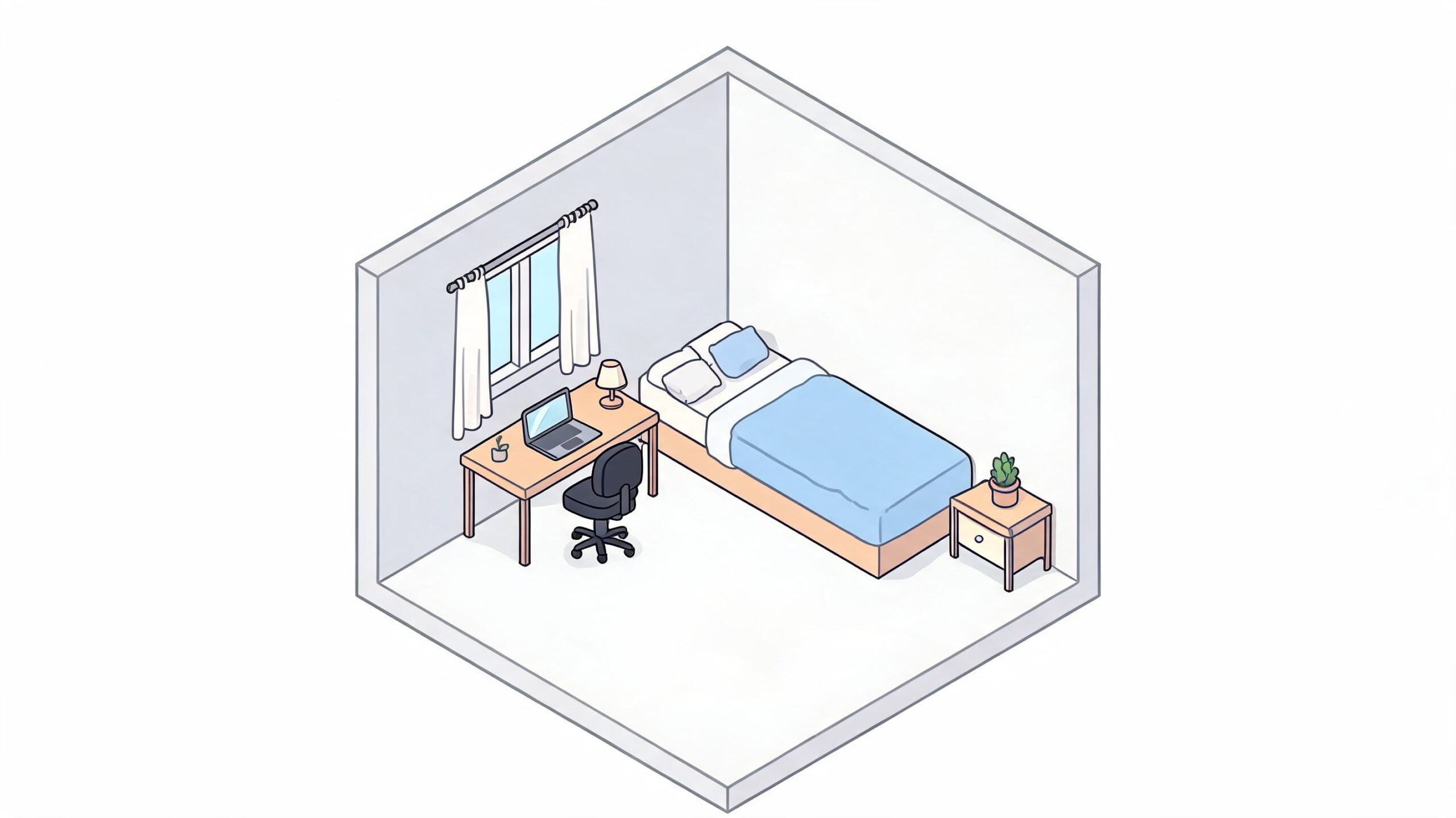
This is the classic problem room. The bed fits, but once the dresser comes in, everything feels jammed.
A better approach is to use height before width:
- Choose a tall chest instead of a wide dresser: It stores more without spreading into the path.
- Use slimmer nightstands: You need surface space, not bulky mass.
- Leave a little breathing room around major pieces: Even a small gap can keep the room from feeling wedged together.
- Skip duplicate furniture: If one chest handles storage, you may not need two extra cabinets.
For more ideas specific to tighter spaces, this guide to stylish solutions for small bedrooms is a practical reference.
The long, narrow room
A long room benefits from zones. The bed can anchor one end, while a dresser, desk, or compact chair creates a second function at the other.
What usually works:
| Room shape | Better move | Usually fails |
|---|---|---|
| Long and narrow | Keep major pieces aligned to support a clear lane | Placing bulky pieces on both long walls |
| Off-center window | Let the bed center on the strongest wall, not necessarily the window | Forcing full symmetry when the architecture won't support it |
| Awkward corner or alcove | Use a chest, chair, or narrow cabinet to activate the nook | Jamming the main bed wall to compensate |
The room that has to do more than one job
Guest rooms often double as home offices. Primary bedrooms sometimes need space for a chair, vanity, or extra storage. Cohesive furnishing matters in these multi-functional spaces. If you're solving the whole room at once, Promotional Financing with equal monthly payments can make it easier to choose the right pieces together rather than settling for mismatched stopgaps one at a time.
A room with an unusual footprint often improves when you stop forcing a standard furniture set into it. That's where in-stock slim pieces or custom-order options can be more useful than buying by package alone.
The Finishing Touches and Troubleshooting
You can get the big furniture placement right and still walk into the room feeling like something is off. Usually the problem is in the last ten percent. Light is harsh, the rug is undersized, the nightstands collect clutter, or the bed looks finished from one angle and unfinished from another.
Those details matter because they affect how the room feels at the end of a long day. In Eastern CT homes, I often see a mix of older room proportions, newer routines, and furniture that was bought years apart. A good finishing layer pulls those pieces together so the room feels settled instead of patched together.
If the bed area still looks incomplete after the layout is set, this guide on how to accessorize the bed of your dreams is a useful next step.
The details that help a room feel complete
A few finishing choices solve a lot of common bedroom problems.
- Use a rug that connects to the bed, not one that drifts beside it: The rug should support the sleep zone and feel intentional when you step out of bed.
- Layer bedside lighting: One light rarely handles everything well. Reading, relaxing, and getting dressed call for different levels of light.
- Edit the visible surfaces: A nightstand should hold what you use daily, not become overflow storage.
- Place mirrors with purpose: A mirror can bounce light and add depth, but the wrong placement can double the visual clutter.
If you want to test a few looks before committing, it can help to discover Roomstage AI staging tips and compare options side by side.
Sometimes the room improves more from removing one item than adding three accessories.
Common problems and practical fixes
Some issues show up in bedroom after bedroom. The fix is usually straightforward once you identify what is causing the friction.
Problem the room feels cluttered
Remove one piece that does not serve the room well. An extra chair that catches laundry, a bench that blocks circulation, or a small cabinet with no real job can make the whole space feel tight.
Then look at the horizontal surfaces. If every top is full, the room will still read as crowded even after the layout is better.
Problem the bed wall doesn't feel balanced
Symmetry helps, but it is not the only way to create balance. Two matching nightstands work well when the wall and windows allow it. If they do not, use pieces with similar visual weight instead. A nightstand on one side and a narrow chest on the other can feel far better than squeezing in two tables that are too wide.
Wall-mounted sconces can help here too. They free up top surface area and keep the bed wall from looking bulky.
Problem there isn't enough storage
Choose taller, harder-working pieces before choosing wider ones. A well-scaled chest, a storage bed, or a cabinet that uses vertical space often solves the problem without making the room feel heavier.
This is one of those moments when seeing furniture in person helps. A local store such as Gorins Furniture & Mattress can be a practical resource for comparing in-stock options with custom-order pieces, especially when standard sizes are close but not quite right. That matters in older Eastern CT homes, where a few inches can decide whether a room feels easy or cramped.
Problem the room needs to support mobility or aging in place
Safety changes the priorities fast. Clear walking space matters more than filling every wall, and sharp corners in narrow paths become a daily nuisance.
In these rooms, focus on the cleanest route from the door to the bed and from the bed to the closet or bath. Use fewer pieces, choose supportive furniture with stable proportions, and avoid crowding the circulation path with benches, baskets, or extra accent pieces. If supportive seating such as an UltraComfort lift chair is part of the plan, it needs to fit the room without tightening movement around the bed.
I always tell clients to be honest here. If a dresser makes transfers harder or forces a tight turn, it is the wrong dresser for that room.
Problem the room still feels unsettled
Check what you see first when you walk in. The room should have a clear focal point, easy access to storage, and lighting that supports how you use the space in the morning and at night.
Most unsettled bedrooms come back to one of three issues. The bed is fighting the architecture, the storage pieces are too bulky, or the finishing layer is scattered. Once those are corrected, the room usually starts to feel calm, personal, and complete.