
Types of Upholstery Fabric: A Practical Guide for Every Room


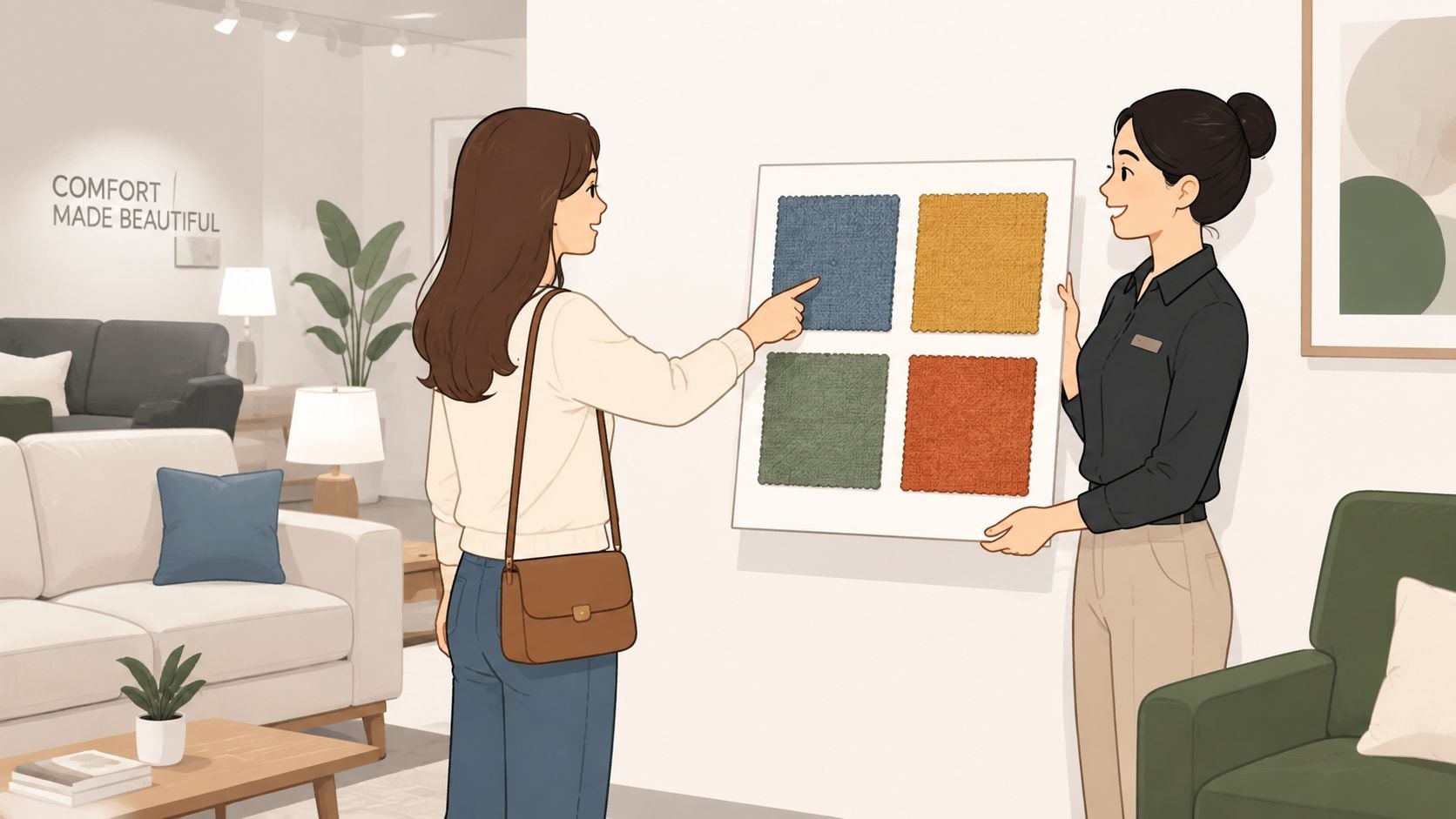
A customer in a furniture showroom points to a wall of upholstery swatches and asks the question almost everyone eventually asks: Which fabric is best for a sofa? The honest answer depends less on a universal “best” material and more on what the furniture must survive. A quiet sitting room, a family sectional, a dining chair, and a pet-friendly rental all place different demands on upholstery.
The right choice balances feel, appearance, abrasion resistance, stain behavior, cleaning needs, and household habits. A fabric can feel wonderful but show every mark. Another can withstand heavy use but feel too formal or synthetic for the room. The guide below helps shoppers understand the main types of upholstery fabric before they fall in love with a color or pattern.
The Four Families of Upholstery Fabric
A showroom swatch board makes upholstery look like a color decision, but the fiber and construction matter just as much. The main map includes natural fibers, synthetic and performance fabrics, leather, and specialty weaves. Each family has a different relationship with softness, structure, maintenance, and everyday wear.
Start with the fiber
Natural fibers include cotton, linen, wool, and silk. They're valued for their breathable feel, visual depth, and familiar hand. Cotton and linen can create a relaxed, lived-in look, while wool offers resilience and silk delivers a refined sheen. Their cleanability varies, and untreated versions may need more careful placement in busy rooms.
Synthetic fabrics include polyester, nylon, olefin, and acrylic. Manufacturers can engineer these fibers for softness, color stability, abrasion resistance, and easier maintenance. Microfiber, for example, is a tightly constructed synthetic surface that often feels soft while handling regular household use.
Leather stands apart because it's a hide-based material rather than a woven textile. It doesn't have a fabric rub-test system in the same way woven upholstery does, and its appearance changes through use. Buyers should evaluate leather by its grain, finish, flexibility, and expected aging.
Specialty weaves add another layer
Velvet and chenille describe surface construction or visual character more than one single fiber. Velvet can be made from cotton, silk, polyester, or blends, while chenille can also combine different fibers. That means “velvet” alone doesn't tell a shopper whether a sofa is delicate or engineered for demanding use.
Practical rule: Treat the fiber as the material and the weave as the behavior. Both belong on the showroom checklist.
Historically, upholstery developed from early materials such as linen, wool, and animal hides used in ancient Egypt and Mesopotamia around 2000 BCE. The material mix changed sharply as manufactured fibers expanded. Cotton accounted for 75% of the U.S. fiber market in the late 1940s, while manufactured fiber reached 40% by 1965, according to this documented upholstery fabric history. Today's choices reflect that long shift from natural comfort toward engineered performance.
Natural Fibers and What They Actually Feel Like
Natural upholstery fibers are easiest to understand through touch. Cotton feels soft and familiar, linen feels crisp and slightly irregular, wool feels springy and warm, and silk feels smooth with a noticeable sheen. Those differences affect not only comfort but also how a sofa looks after repeated sitting.
A side-by-side look
| Fiber | Feel | Durability | Care |
|---|---|---|---|
| Cotton | Soft, breathable, familiar | Moderate, depending on weave and blend | Can soil easily and needs careful moisture management |
| Linen | Crisp, cool, textured, with possible slubs | Can wrinkle and lose shape more readily | Often suited to slipcovers and careful cleaning |
| Wool | Resilient, warm, springy | Strong resilience and good recovery | Needs protection from moths and careful care |
| Silk | Smooth, luminous, luxurious | Best reserved for light-use settings | Sensitive to sunlight, water spotting, and abrasion |
Cotton takes dye beautifully, which makes it useful for relaxed upholstery and removable slipcovers. Its softness is appealing in a reading room or occasional chair, but untreated cotton can absorb soils quickly and may weaken when wet. Cotton twill offers a denser, more structured surface than a loose plain weave, making it a practical visual bridge between casual natural upholstery and harder-wearing blends.
Linen brings the airy, crisp look many shoppers want for a coastal, traditional, or softly modern room. Its slubs and wrinkles are part of the character, not necessarily defects. A linen slipcovered sofa can look inviting and relaxed, although a tightly constructed family-room piece may show creasing sooner than a blend with synthetic reinforcement.
Resilience changes the decision
Wool has a natural spring that helps it recover from compression. That makes it attractive for seating that needs to remain composed, although its warmth and maintenance requirements may not suit every room. Silk belongs in a formal sitting room or decorative chair where light, moisture, and heavy daily contact are controlled.
Natural upholstery also frequently appears in blended form. A cotton-linen or cotton-polyester blend may preserve a soft hand while improving dimensional stability and cleanability. Cotton-blend velvet is another example. It offers the depth and directional sheen associated with velvet, but its behavior depends on the full fiber recipe and backing, not just the word “cotton” on the label.
Synthetic and Performance Fabrics Built for Daily Life
Synthetic upholstery earns its place in busy homes because manufacturers can design the fiber and finish around specific pressures. A household with children, pets, frequent visitors, or strong sunlight often needs more than softness. It needs a surface that tolerates rubbing, spills, cleaning, and repeated use without demanding constant caution.
Know the main synthetic fibers
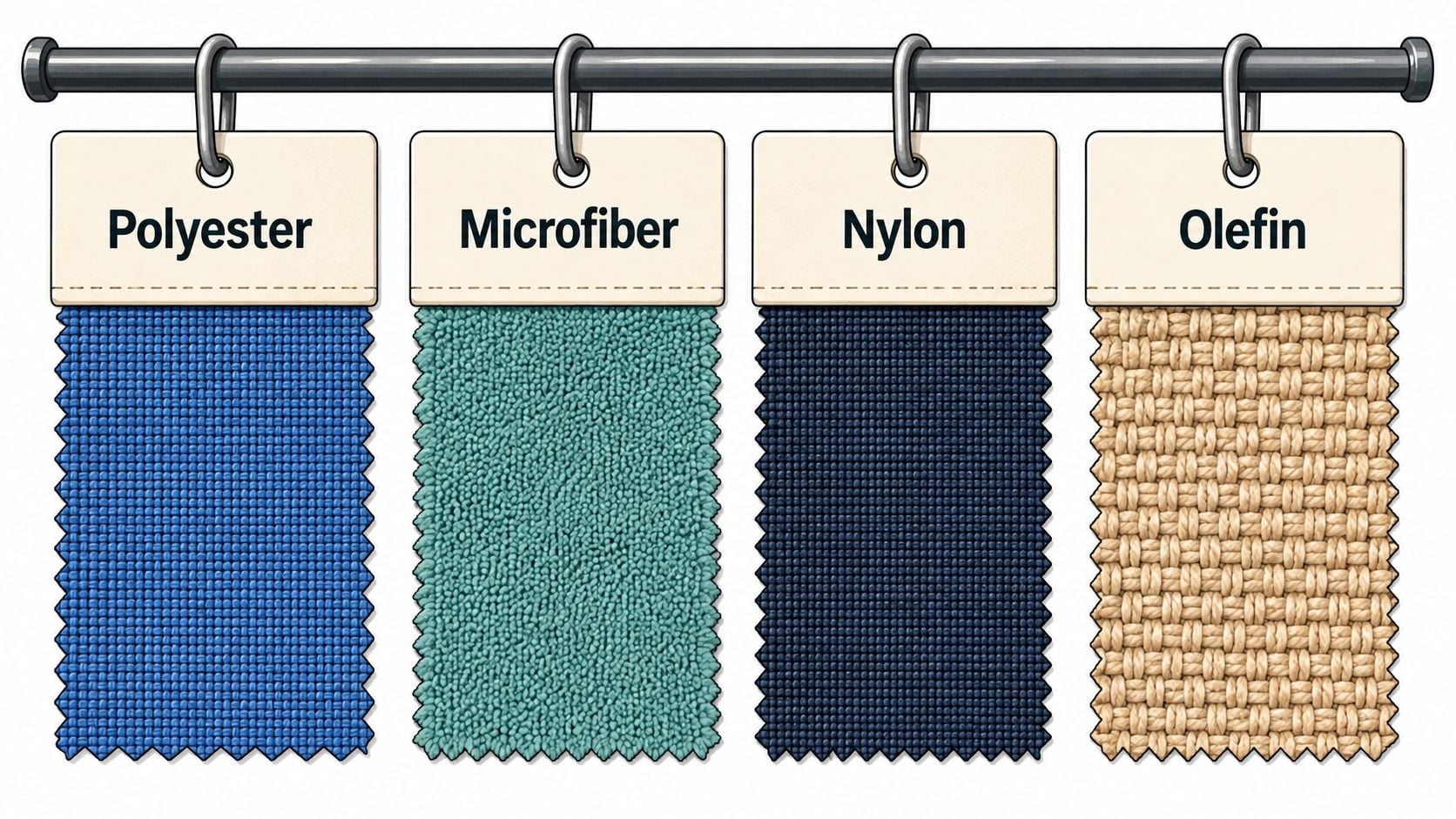
Polyester is the workhorse. It can feel soft, resist abrasion, accept color well, and provide accessible value. Microfiber is often made from very fine synthetic fibers that create a smooth, dense surface. Polyester can still attract oil-based soils and may pill depending on construction, friction, and fiber quality.
Nylon contributes exceptional abrasion resistance and is commonly blended with other fibers. A nylon blend may give a softer base fabric additional strength without making the surface feel like commercial seating.
Olefin, also called polypropylene, is valued for solution-dyed construction. It's often considered for sunrooms, family rooms, and spaces where fading and staining are major concerns. Acrylic can mimic the hand and color range of wool, although it typically needs support from other fibers or a suitable construction to perform well over time.
For a practical look at performance materials in spill-prone spaces, readers can review this guide to performance fabrics for summer furniture use.
Why solution-dyed fibers matter
A solution-dyed fiber receives its pigment during extrusion, before the fiber becomes yarn. The color is embedded throughout the material rather than applied only to its outer surface. That construction can reduce visible color loss and help the upholstery tolerate frequent cleaning, although it doesn't make a sofa immune to every spill or mark.
The label “performance fabric” still requires inspection. Some fabrics rely on fiber engineering, some use a topical finish, and many combine both. A tight woven polyester blend may handle pet hair better than a loose textured weave, while a soft microfiber may show oily handprints more readily than a matte olefin construction.
Blends are common for a reason
Blended weaves let manufacturers balance comfort, texture, color, and practical performance. Polyester may add stability to linen, nylon may strengthen a softer base, and acrylic may contribute a wool-like appearance. Shoppers should ask for the full fiber content, cleaning code, abrasion method, and finish information rather than choosing by a marketing label alone.
How to Read Durability Ratings Without Getting Misled
A family sofa may face nightly use, children's spills, pet claws, and visitors in the same week. An abrasion rating helps describe repeated rubbing, but it cannot predict every part of that experience. A fabric may perform well in a rub test yet show oil, snag on a claw, pill under friction, or develop seam slippage when its construction or upholstery is poorly matched to the furniture.
The two tests use different units
Wyzenbeek, associated with ASTM D4157, reports double rubs. Martindale, associated with EN 14465, reports cycles. Their methods are different, so raw numbers should not be read as one shared scale. This abrasion-testing explanation explains the distinction.
A commonly used comparison places approximately 40,000 Martindale cycles near 15,000 to 20,000 Wyzenbeek double rubs, as described in this durability-rating comparison. Treat that relationship as a rough shopping reference, not a laboratory conversion that makes fabrics identical.
| Rating Range (Wyzenbeek) | Equivalent Martindale | Best Suited For |
|---|---|---|
| Around 15,000 double rubs | Approximately 40,000 cycles | Low-to-medium residential use |
| 25,000 to 30,000 double rubs | Not directly interchangeable, use the tested method | Heavy-duty residential seating |
| 30,000+ double rubs | Not directly interchangeable, use the tested method | Commercial or very high-traffic seating |
These thresholds are practical guides rather than guarantees. Industry guidance places roughly 15,000 Wyzenbeek double rubs in a low-to-medium residential range, 25,000 to 30,000 in heavy-duty residential use, and 30,000 or more in commercial or very high-traffic positioning, according to this fabric rub-test guide.
Ratings don't answer every household question
A guest chair with limited contact may suit a moderate rating. A sectional used every night by children, pets, and visitors needs a wider review. Examine the surface as well. Tight weaves leave fewer openings for claws and loose threads. Raised textures may disguise soil, yet they can collect debris or snag more readily.
Contract grade doesn't mean pet-proof. Ask about seam slippage, tensile strength, pilling resistance, cleaning instructions, cushion design, and whether the color or finish fits the room's demands.
Martindale guidance commonly places 10,000 to 15,000 cycles in light domestic use, 15,000 to 30,000 in everyday residential upholstery, and 30,000 to 50,000 or more in heavy-duty or commercial applications, according to fabric performance indicators from Kvadrat. In the UK and Europe, the test uses a figure-eight rubbing motion against progressively smaller, rougher patches, as explained in this Martindale upholstery testing guide.
Leather and Velvet as Their Own Categories
Leather and velvet deserve separate attention because neither is fully explained by the ordinary natural-versus-synthetic split. Leather is a finished hide with a grain and surface treatment. Velvet is a pile fabric whose appearance changes with direction, pressure, light, and fiber content.
Leather grades change the ownership experience
Full-grain leather preserves the hide's natural surface and tends to develop visible patina. Top-grain leather has a more refined surface while retaining a substantial hide character. Corrected-grain leather receives more surface adjustment for a consistent appearance, and bonded leather contains reconstituted leather material combined with other components.
The price on a leather swatch doesn't tell the complete story. A lower-priced bonded material may not age like a well-made top-grain hide, while a more expensive option can still be unsuitable if the finish or construction doesn't match the household. Shoppers should ask what parts of the sofa are leather, what parts use matching material, how the finish responds to cleaning, and whether natural variation is expected.
Leather can be wiped more easily than many woven textiles, but it still needs protection from direct sun, excessive heat, sharp objects, and unsuitable cleaners. Conditioning schedules should follow the manufacturer's instructions rather than a universal calendar.
Velvet depends on pile and fiber
Traditional cotton and silk velvets offer a luminous, formal appearance. They can show crushing, shading, and pressure marks, which may be desirable in a decorative room but stressful on a heavily used sectional. Polyester velvet and solution-dyed performance velvet can offer a more practical route to the same rich visual effect. One upholstery guide notes that solution-dyed polyester velvet can reach 100,000 or more double rubs, demonstrating that velvet isn't automatically fragile when engineered for abrasion resistance. See this performance-rating explanation for upholstery velvet.
Pet owners should distinguish pile from fiber. A short-pile polyester velvet may hide claw marks better than plush cotton velvet, but it can still collect hair and show directional shading. Velvet also needs care during cutting and installation because the nap must run consistently. These sewing velvet fabric tips explain why nap direction affects both appearance and handling.
For a smaller accent application, an upholstered velvet bench can introduce texture without committing an entire seating group to a high-visibility pile surface.
Matching Fabric to Room, Lifestyle, and Household
Fabric selection becomes easier when the room gets evaluated before the swatch. The same linen blend that looks graceful in a formal sitting room may become frustrating on a family sectional. A material that works beautifully on a bedroom chair may not withstand the repeated friction of a dining seat.
Start with the room's job
Formal living rooms can accommodate linen-cotton blends, cotton velvet, or top-grain leather when the room receives controlled daily use. These materials support a composed, polished look without forcing every room to become a performance test.
Family rooms need a tighter connection between fiber, weave, finish, and rating. Solution-dyed polyester, microfiber, and treated performance weaves are practical candidates for kids and pets. For heavy household use, guides often position fabrics rated above 50,000 Wyzenbeek double rubs as suitable for demanding seating, but the test method and full construction still need confirmation. That threshold is a screening tool, not a promise that spills will disappear.
Dining chairs benefit from tight, stain-resistant surfaces. Olefin, treated polyester, and coated linen can be easier to wipe and less likely to trap crumbs than a loose, highly textured weave. The chair's location near food and repeated movement makes cleanability as important as appearance.
Bedrooms generally permit softer naturals because traffic is lower. A linen accent chair, wool bench, or cotton blend can deliver comfort without the same maintenance pressure found in a central family sofa. Rentals and short-term stays usually benefit from mid-grade performance blends that tolerate turnover without looking overly commercial.
Rank household pressures before color
A quick checklist helps prevent a beautiful but impractical selection:
- Pets: Check for claw snagging, hair retention, and the tightness of the weave.
- Kids: Prioritize cleanability, cushion access, and a surface that tolerates repeated contact.
- Allergies: Ask how easily the fabric can be vacuumed and whether it holds dust or hair.
- Sun exposure: Look for color stability and solution-dyed construction where appropriate.
- Room use: Separate occasional seating from furniture used for nightly lounging.
- Cleaning comfort: Choose a fabric the household will realistically maintain.
Readers furnishing for animals can also review this guide to furniture choices for pet owners. The useful question isn't “Which fabric is strongest?” It's “Which problems need to be easiest to manage in this particular room?”
Ordering Custom Upholstery the Smart Way
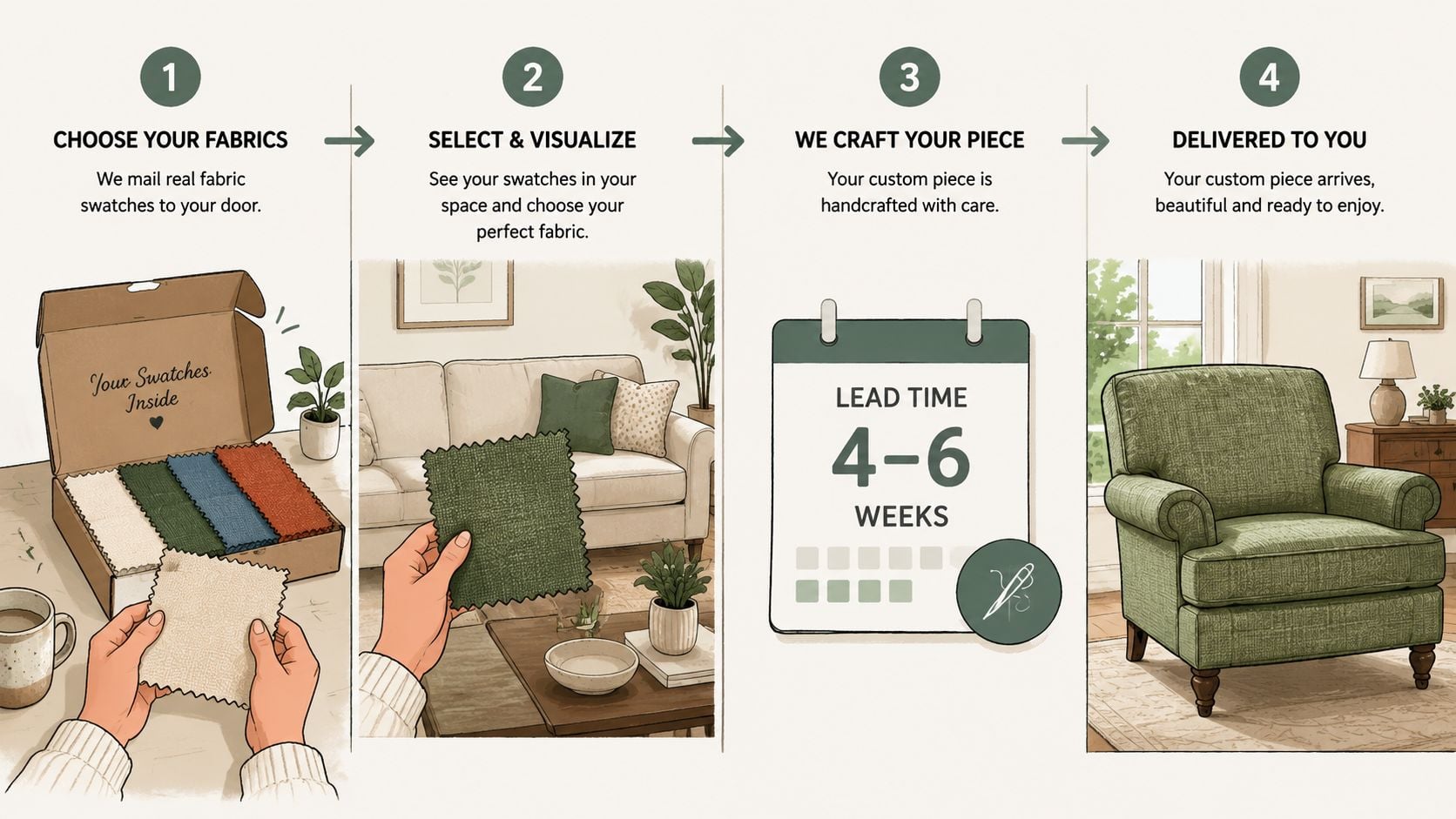
Custom upholstery rewards careful decisions before the order is placed. A fabric that looks perfect on a small screen may appear warmer, cooler, lighter, or more textured across a full sofa. Physical samples let shoppers view the material near flooring, paint, wood finishes, and natural light.
Build the order from the room outward
Bring room photographs, paint chips, floor samples, and accurate measurements to the showroom. The design team can then assess the fabric beside the frame, arm profile, leg finish, cushion shape, and scale instead of evaluating each detail in isolation.
Custom programs such as Canadel Custom Dining and the F9 Custom Sofa series make thousands of combinations possible. That flexibility matters because the right fabric can change how a frame reads. A broad arm in a nubby weave feels more casual, while an arm in a fine woven textile can look more formal.
Confirm the technical details
Custom programs may require a lead time of 8 to 14 weeks, depending on the frame and fabric origin. That timing should be treated as a planning window, not an assumed delivery promise. A household moving or coordinating a renovation needs to confirm the current estimate before placing the order.
Customer's Own Material, or COM, brings another layer of responsibility. The manufacturer may specify required yardage, pattern direction, repeat allowances, and suitability standards. A large pattern repeat can require additional material, and the cutting plan affects whether motifs line up across cushions, backs, and arms.
The order conversation should also cover:
- Pattern placement: Confirm where repeats and strong visual lines will land.
- Seam details: Decide whether the pattern should align across cushions and panels.
- Welting or flange: Choose between a crisp welted edge and a softer flange finish.
- Cushion fill: Compare standard foam with foam-and-down or spring-down constructions.
- Frame construction: Ask how kiln-dried hardwood and joinery options affect the build.
- Finish samples: Review legs, nailheads, wood tones, and other visible details together.
- Delivery logistics: Confirm access measurements, shipping arrangements, and room readiness.
A physical sample remains the final reality check. The custom sofa design program gives shoppers a starting point for discussing those choices, but the final specification should be written clearly on the order.
Care, Trade-Offs, and Your Next Step
The phrase “performance fabric” can hide an important trade-off. Some performance upholstery relies on solution-dyed fibers, while other products depend on topical stain treatments. Recent research and industry reporting have raised questions about PFAS finishes, including whether stain repellency survives abrasion and how treated upholstered furniture may contribute to PFAS in indoor dust. A 2025 report describes a broader movement toward PFAS-free upholstery finishes and discusses these sustainability and chemical-safety concerns in its textile product developments coverage.
That doesn't make every performance fabric a poor choice, and it doesn't make every untreated natural fabric automatically healthier. It means shoppers should ask what creates the claimed performance, whether the finish is fluorinated, and how the upholstery should be cleaned after repeated use. Abrasion resistance and stain resistance are separate questions.
Use a routine the fabric can tolerate
- Vacuum regularly: Use an upholstery attachment to remove grit, hair, and surface soil before friction pushes it deeper.
- Rotate cushions: Change positions when the design permits so one seat doesn't carry every hour of use.
- Blot spills quickly: Press with a clean cloth instead of rubbing the liquid across the fibers.
- Follow the cleaning code: Water-based and solvent-based products aren't interchangeable, and the wrong cleaner can damage the material or affect warranty coverage.
- Protect leather and velvet: Keep leather away from direct sun and unsuitable cleaners, and brush velvet with the nap rather than against it.
- Call for specialized care: Delicate textiles and substantial soiling often need a professional assessment. This overview of why professional carpet cleaning can help upholstery gives useful context for deciding when home spot treatment isn't enough.
Certifications such as OEKO-TEX and Greenguard can help shoppers ask more precise questions about material and indoor-air considerations, but certification names should be checked against the exact fabric or finished furniture, not assumed from a brand category. The household still needs to balance maintenance habits, comfort, appearance, durability, environmental values, and budget.
Since 1936, Gorins Furniture & Mattress has helped Norwich and Eastern CT families create homes they love. From custom-designed Canadel dining sets to the latest in Tempur-Pedic sleep technology, they combine a massive selection with the personalized care only a local, family-owned business can provide. Visit them to compare upholstery samples, sit on frames, and review care requirements before committing. The showroom serves Norwich, New London, Plainfield, Waterford, and surrounding Eastern Connecticut and Rhode Island communities, with Promotional Financing options featuring equal monthly payments subject to approval. Furniture care guidance is also available through the furniture care and maintenance resource.
Visit the Norwich showroom to compare natural fibers, performance weaves, leather, and velvet side by side with a local design team. Explore custom Canadel Custom Dining and F9 Custom Sofa options, take the online Style Quiz, or browse the Clearance section for value-driven savings at Gorins Furniture & Mattress.