How to Store Memory Foam Mattress Topper in 6 Steps


The spare room is turning into a home office, or the shore house is closing until spring, and the memory foam mattress topper has to come off the bed today. In Norwich, New London, Waterford, Plainfield, and the rest of southeastern Connecticut, that job is trickier than a quick roll and a closet shelf. A topper can feel dry on the surface and still hold moisture inside the foam. A roll that seemed fine in October can come back in May with a ridge that never leaves.
Knowing how to store a memory foam mattress topper well means matching the method to how long it will sit and how damp the house gets. A weekend guest-room swap and a six-month layoff are not the same job. Breathable fabric beats sealed plastic once leftover moisture is the main risk, and stiffness on a cold morning is not the same thing as foam that has taken a permanent set.
The Quick Answer and Ideal Storage Conditions
Clean the topper, let it dry completely, roll it loosely or lay it flat, cover it in breathable fabric, and keep it somewhere cool, dry, and dark indoors. That is the whole job. The rest is refusing the shortcuts that ruin foam.
Store Space storage guidance says to clean a memory foam mattress topper by its care label and let it air for at least 24 hours, or until it is completely dry, because moisture trapped in the foam or cover can feed odor and mildew. The same guidance calls for a cool, dry, climate-controlled room at roughly 55-80°F, with relative humidity around 30-50% and never above 60%. A basement, garage, attic, vehicle, or shed is a poor choice, since those spaces swing harder in temperature and humidity.
| Factor | Safe range | Why it matters |
|---|---|---|
| Temperature | 55-80°F | Heat softens polyurethane foam and speeds aging |
| Relative humidity | 30-50%, never above 60% | Trapped moisture breeds mildew and odor |
| Light | Dark, away from windows | Sunlight degrades foam over time |
| Airflow | Breathable cover, ventilated space | Sealed plastic traps residual moisture |
| Position | Loose roll or flat, nothing stacked on top | Sustained compression can set permanent creases |
Memory foam is polyurethane. Warm air softens it, so a hot attic does more than make it feel plush for an afternoon. The open cells also hold water far below the surface, and they dry from the outside in. A cover that passes a hand test can still be wet at the core, which is why the full drying window matters more than how the topper feels at hour six.
That leftover moisture decides the cover choice. A breathable fabric bag or cotton sheet lets the last traces escape over the season. Sealed plastic locks them against the foam, and foam that sits damp for months can stop rebounding where weight rested on it.
Southeastern Connecticut summers often push indoor humidity past that ceiling, especially in a shore-house basement. A closet on an air-conditioned floor is the better room. The same habits that keep a bed fresh in August apply before the topper ever goes into storage, and these mattress care tips for staying cool and clean cover the airflow and moisture side of it.
I would rather store a topper flat in a spare room than rolled in a garage that runs a few degrees cooler. Temperature annoys foam. Moisture and compression are what ruin it.
If the room feels damp to you, it is too damp for memory foam.
When Rolling Is Safe and When to Store It Flat
The right geometry follows three things: the care label, the thickness of the foam, and how long the topper stays packed. A loose roll that survives two weeks between moves is a different bet from the same roll left for a full season.
| Method | When it is safe | Main risk |
|---|---|---|
| Flat | Any topper; best for thick, gel-infused or zoned foam | Needs floor or under-bed space |
| Loose roll | Only when the care label permits rolling | A tight roll can slow recovery |
| Folding | Avoid for memory foam | Sharp creases can become permanent |
| Vacuum-sealing | Only if the manufacturer designed it for compression | Long compression may prevent full rebound |
Two checks that settle the shape
Read the label first. Storage geometry comes from the manufacturer's instructions, not from the fact that the topper once arrived compressed. Shipping compression is a one-time pack-out. It is not a license to crush the same foam every season.
Then look at the foam itself. Flat storage is the safest default for any topper, and it is the only sensible choice when the piece is thick, zoned, gel-infused, or already showing a set. A spare mattress, the floor under a bed, or a wide shelf all work if the surface is clean and fully supported.
A loose end-to-end roll is acceptable when the label permits it, and it holds up better for a short stint than for months on end. Roll without sharp creases, use the original carton or a breathable cover rather than sealed plastic, and store the roll horizontally with nothing heavy on top. Do not force that roll into a small bin or cinch it with straps.
Folding is where lasting damage starts. A sharp crease can become a ridge that remains after the foam expands. The same goes for leaving a topper bent over a narrow shelf. Vacuum-sealing carries its own caution: factory packaging that the maker designed for compression is not the same as a consumer vacuum bag left on for six months. A compressed topper can take a full day or longer to regain its height, so a slow rise on day one is not automatically a failure. Cold foam also feels stiff before it is damaged. A topper that still sits low and hard after it warms to room temperature is showing a permanent set, and no amount of waiting will pull that height back.
Photograph the topper and note length, width, and thickness at several points before it goes away. Those notes are what make a later measurement meaningful. If the material itself is still a mystery, this plain explanation of what memory foam is helps separate a slow rebound from foam that has failed.
Six Steps to Store Your Topper Safely
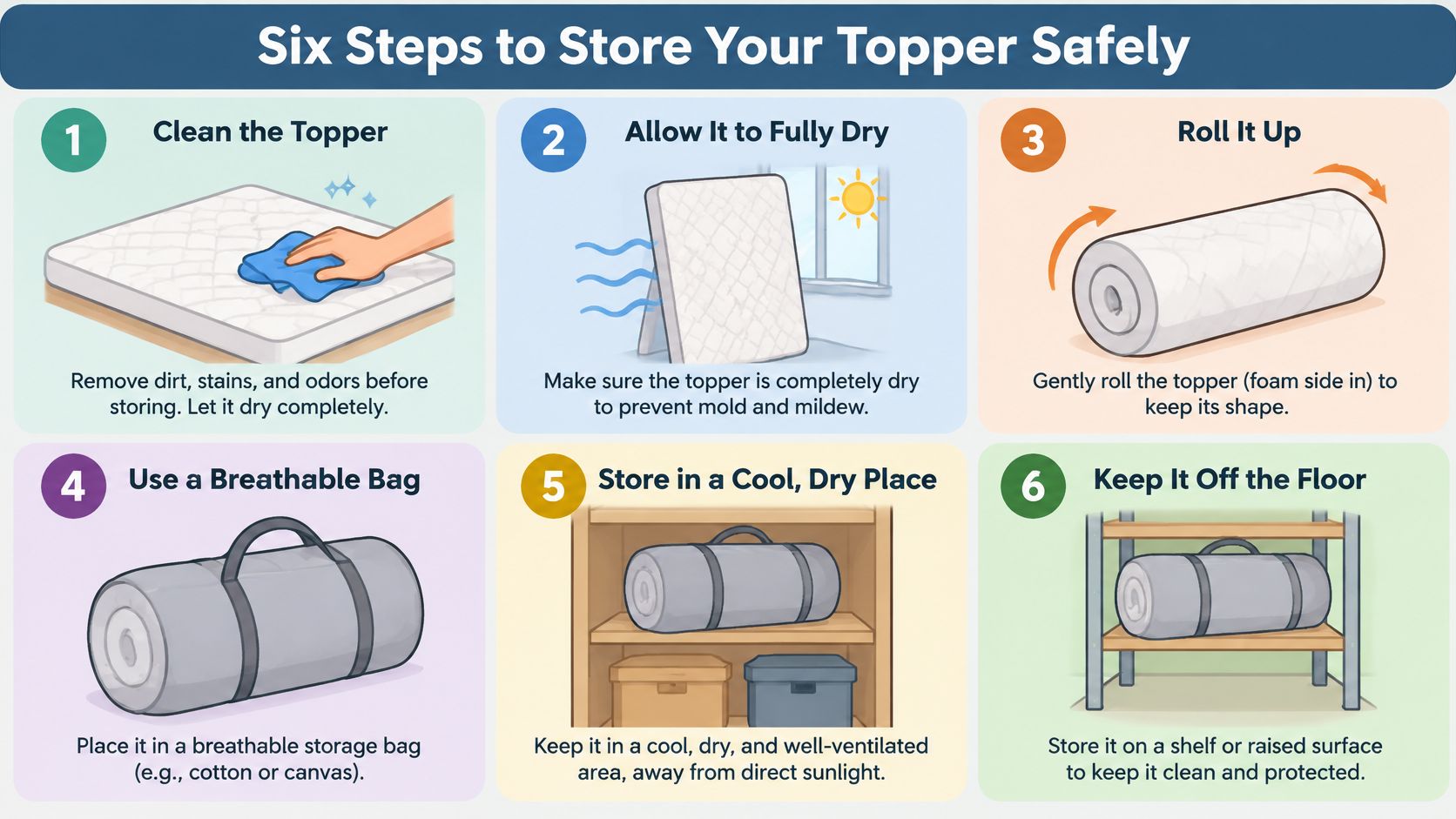
Work in this order. Each step blocks a specific mistake, and the two that matter most, drying and the cover, matter more the longer the topper stays packed away.
Photograph and note the starting condition. In even light, capture the whole surface plus any existing stains, tears, or low spots, and record how thick the foam measures. Without that record, a dent found months later is impossible to judge.
Strip and clean. Remove the washable cover and launder it only as the sewn-in label allows. Spot-clean the foam solely when the label permits, with as little water as possible. Never soak memory foam, and never run the slab through a machine. These mattress maintenance and cleaning tips cover the everyday upkeep side.
Dry completely. Air the foam until pressing a flat palm into it finds no cool or clammy spot anywhere, including the middle of the slab. A surface that reads dry to a quick touch can still hold water deeper in the cells, and that hidden moisture is what becomes mildew and odor inside a closed cover. When in doubt, give it another day of airflow.
Choose the geometry. Roll loosely from end to end only when the care label allows it, and do not jam the roll into a tight container. Otherwise lay the topper flat on a clean, fully supported surface. Folding is the mistake this step exists to prevent.
Cover with breathable protection. Use a cotton storage bag, a clean cotton sheet, or the original manufacturer cover. Skip airtight plastic and trash bags, which trap whatever humidity is left in the foam and hold it against the slab for the whole storage term. Orange Box Self Storage's notes on covers for mattresses in storage are a useful cross-check on why a breathable wrap beats a sealed sack.
Label and place. Write the storage date on the cover so the length of the stay is never a guess, then set the package off the floor where you can and clear of boxes or anything that could crush it.
Moisture is the variable that decides whether all six steps hold up. Trapped dampness creates odor, mildew risk, and material deterioration even when the outside of the package looks dry, which is why step 3 deserves the most patience and step 5 rules out sealed plastic. The longer the topper stays stored, the less forgiving small mistakes become: a slightly cool core that survives a weekend in a closet can mildew over a full season. Keep the room comfortably dry rather than at the damp end of indoor conditions.
What success looks like
Uncover the topper later and it should smell neutral. Press the surface and it should spring back instead of staying dented. Foam that has spent months in a cool room will feel stiff at first, so let it warm and breathe before judging any dip. If it smells sour or feels wet, it was packed too soon.
Choosing a Location and Controlling Humidity
A weekend in a hall closet and half a year in a damp house are different problems. Rank the room before you worry about the bag. The cover protects against dust. The room decides whether the foam stays dry.
| Location | Suitability | Why |
|---|---|---|
| Climate-controlled interior closet or spare room | Best | Steady temperature and humidity with little swing; matches the ideal ranges set earlier |
| Under-bed space on a clean floor | Good | Stable indoors, but check humidity with a hygrometer |
| Climate-controlled storage unit | Good for moves or renovations | Controlled conditions, but confirm the unit is actually climate-controlled |
| Basement, garage or shed | Avoid | Humidity swings and poor ventilation |
| Attic or parked car | Avoid | Heat accelerates foam aging and humidity swings |
Controlling humidity in the room
Step 3 covered why a cover that feels dry can still hide water in the cells, so the room itself has to finish the job. Put an inexpensive hygrometer where the topper sits and run air conditioning or a dehumidifier until the reading holds inside the preferred band. Treat the upper mold-risk line as a hard ceiling, not a target. Along the Connecticut coast, a basement that feels fine in April can sit damp through August.
Tom's Guide coverage of topper storage draws a useful line between a short guest-room swap and storage lasting six months or more. On my schedule, a topper stored longer than roughly three months comes out, gets unrolled, gets inspected, and airs before it goes back. Check for damp spots, discoloration, and pests, then give the foam a few hours of open air.
Basements, attics, and garages fail for more than heat. Humidity swings and weak ventilation do the damage. If a plastic sheet is the only dust shield on hand, keep it loose and leave the sides open. Do not use it as compression.
For a move or a renovation, TLC Moving & Storage's guide to storing furniture in climate controlled units is worth reading before you assume a unit is conditioned. Confirm the controls. A standard unit with a fan is not the same room.
Pests, fumes, and time
- Keep it off the floor. Elevation and a gap from stored boxes reduce pest contact and crushed edges.
- Skip mothballs and solvents nearby. Foam can absorb those odors, and they do not air out on a polite schedule.
- Choose a tightly woven cover. It blocks dust without sealing the slab the way a trash bag does.
The longer the topper sits, the more breathable that cover should be. Musty foam is also a poor neighbor for anyone already managing bedroom allergens, which is why airing and a clean storage room matter as much as the mattress choices that help with allergies.
Revive, Check and Decide Keep or Replace
Bring the topper back in a set order. Rushing the warmup is how a stiff edge tears.
- Warm it first. If it came from a cold closet, give it a few hours at normal indoor temperature before you unroll it. Cold foam is stiffer and easier to split.
- Unroll gently. Spread it flat in a ventilated room. Do not yank a tight curve straight.
- Wait for height. Give the foam a full day or two. Do not speed it with heaters, steam, a hair dryer, or weights.
- Air the smell. Open a window and let any storage odor clear. A few hours is usually enough when the foam was dry.
- Measure and feel. Compare thickness at several points with the photo from before storage. Run a hand across the surface for ridges.
- Decide from the signs, not from hope. Stiffness that fades within that window is temporary. A low spot that stays is permanent set.
Bed Guide's storage notes point out that some TEMPUR toppers may be stored rolled or flat, and that a cold topper should reach room temperature before unrolling because cold foam may tear more easily. Folding can leave permanent creases or cracks, and tight, prolonged compression can stop the foam from regaining its shape. Factory compression the maker approved is different from a vacuum bag improvised for a long layoff. A slow rise and some stiffness at first are expected; a low spot, uneven thickness, or a crease still visible after two days counts as permanent set.
| Sign | Meaning | Action |
|---|---|---|
| Full height within 24-48 hours | Normal temporary stiffness | Keep and return to the bed |
| Storage smell gone after airing | Moisture cleared | Keep |
| Lingering sour or musty odor | Moisture or contamination | Replace or contact the manufacturer |
| Lasting low spot or uneven thickness | Permanent set | Replace |
| Cracks, tears or discoloration | Structural damage | Replace |
If the topper passes, it goes back on the bed. If it fails, stop sleeping on it. A failed layer will not fix a tired mattress underneath, and the warning signs overlap with these seven signs it is time to replace a mattress.
When replacement is the call, the Norwich showroom at Gorins Furniture & Mattress is the practical next stop. Two dedicated mattress showroom areas hold over 60 mattresses across five comfort levels, from Plush to Extra Firm, so models can be tried in person and compared side by side. Trained sleep specialists match mattresses to comfort preferences, sleep position, support needs, and budget across Tempur-Pedic, Serta, Beautyrest, and Wolf Mattress, and the same visit can cover pillows, mattress protectors, and power-adjustable bases. Promotional financing with equal monthly payments is available on a larger replacement purchase.
Family-owned since 1936, Gorins serves Norwich, Plainfield, New London, and the surrounding Connecticut and Rhode Island communities. The simplest paths from here: visit the showroom, take the Your Sleep Style quiz, or browse mattresses by comfort level at Gorins Furniture & Mattress.