Sofa to Coffee Table Ratio a Local Designer’s Guide


A lot of living rooms look right on paper and still feel awkward in person. The sofa fits the wall. The rug is down. The coffee table looked perfect in the showroom. Then everyday life starts, and the table is either too far away to reach comfortably or close enough to bump a knee every time someone stands up.
That frustration usually isn't about taste. It's about proportion. The sofa to coffee table ratio is one of those quiet design rules that changes how a room works, not just how it looks. Once that relationship is off, the whole seating area can feel clumsy.
Neighbors across Eastern CT run into this all the time. A narrow apartment living room in Norwich needs very different decisions than a larger family room in New London, but both still benefit from the same basic logic. Even other small-home decorating advice, like ways to transform small UK homes with vinyl, comes back to the same principle: when space is tight, every surface has to earn its place.
Since 1936, Gorins has helped local families sort through these practical details. A room starts to feel settled when the furniture supports real life. For readers who want a little more inspiration before grabbing a tape measure, these living room layout ideas offer a helpful starting point.
Table of Contents
- That Something Is Off Feeling in Your Living Room
- The Three Golden Rules of Living Room Layout
- How to Measure Your Living Room for a Perfect Fit
- Sofa and Table Pairings for Every Eastern CT Home
- Solving for Real Life Layouts and Lifestyles
- Find Your Perfect Match at Gorins
That Something Is Off Feeling in Your Living Room
A common local scenario goes like this. A household picks a handsome new sofa, places an existing coffee table in front of it, and expects the room to click into place. Instead, the seating area feels disconnected. Drinks sit too far away during movie night, or the table blocks the easiest path through the room.
That kind of mismatch shows up in all sorts of homes. In a smaller Norwich apartment, the table can feel oversized even when the piece itself isn't especially large. In a wider New London family room, the opposite often happens. The coffee table is so small that it looks stranded in the middle of the seating area.
The key point is simple. Furniture arrangement has a few measurements behind it, and those measurements explain why a room feels calm or frustrating.
A living room usually feels “off” when scale, reach, and movement stop working together.
Many readers assume the answer is a different style. More often, the answer is a better fit. Once the proportions line up, the room tends to feel more natural without changing everything else.
The Three Golden Rules of Living Room Layout
The sofa to coffee table ratio can sound technical, but the core ideas are easy to remember. Length controls visual balance. Height affects comfort. Clearance decides whether the room is pleasant to move through.
Rule one length has to feel balanced
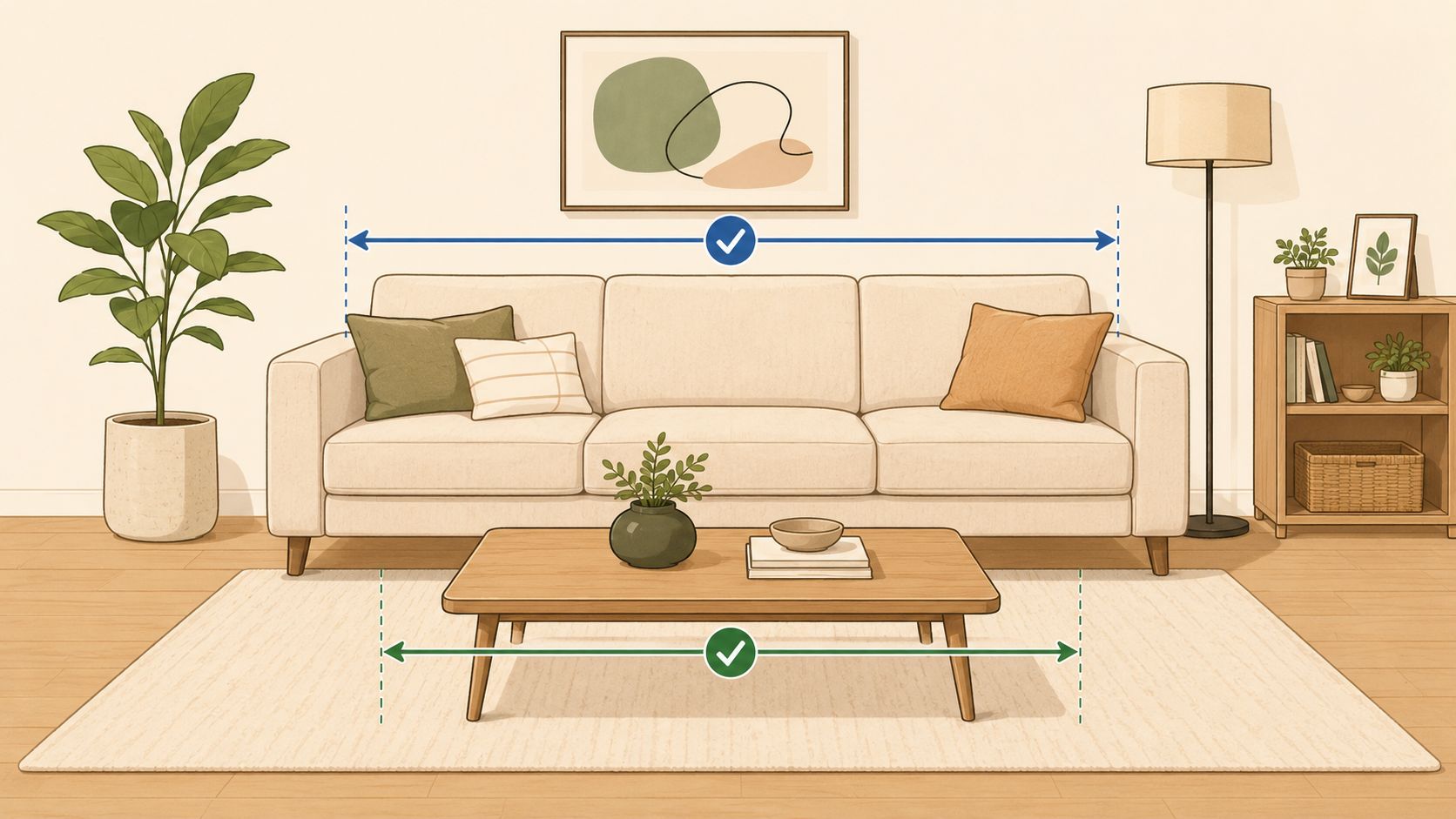
A foundational guideline is the 2/3 sofa-length ratio, which means the coffee table is commonly sized to about two-thirds the length of the sofa. The same guidance also notes that the table height typically sits within about 1 to 2 inches of the sofa seat cushion, and an 84-inch sofa often pairs well with a coffee table around 56 inches long, according to this interior design sizing guide.
That ratio works because the table looks connected to the sofa without swallowing the seating area. If the table is much shorter, it can look accidental and leave some seats without useful surface space. If it gets too long, it starts to dominate the room.
A helpful way to think about it is a dinner table centerpiece. Too tiny, and it disappears. Too large, and it blocks the people around it.
Rule two height affects comfort more than most people expect
Height tends to get overlooked because it's harder to judge by eye. A table that sits a little lower than the sofa seat usually feels easier to use. Reaching for a mug, a book, or a remote feels more natural when the surface isn't fighting the seated posture.
That's why many designers don't start with style. They start with how someone sits. A deep, cushy sofa changes the experience of the table in front of it. A firmer seat changes it again.
Practical rule: If a coffee table makes seated people hunch upward or bend too far down, the room won't feel comfortable for long.
Rule three clearance decides whether a room feels easy or annoying
The space between the sofa and the coffee table often determines whether a room feels gracious or cramped. Too little space creates a knee-knocking obstacle. Too much turns the table into an island that nobody uses.
Many households make an understandable mistake. They center the coffee table visually in the room instead of functionally near the seating.
For readers planning around a television wall, this guide to calculating sofa and television placement can help connect the coffee table decision to the rest of the room.
A good furniture arrangement should let people sit, stand, reach, and pass through without thinking about the furniture at all. When the ratio works, the room serves this function without conscious notice.
How to Measure Your Living Room for a Perfect Fit
Measuring is the part that gives people confidence. It turns a vague guess into a decision that makes sense on the floor, not just in a product photo.
Start with the sofa not the table
The first measurement should be the sofa's usable length. That means looking at the main seating span, not just whatever seems visually largest from across the room. Once that dimension is known, the coffee table size becomes much easier to judge.
Readers who want a more complete prep list can use this furniture measuring guide before shopping.
A simple measuring process looks like this:
- Measure the sofa length: Record the length of the sofa or the main seating run.
- Note the seat height: Measure from the floor to the top of the seat cushion.
- Mark nearby obstacles: Include radiators, hearths, recliner footpaths, and walking routes.
Use tape on the floor before buying anything
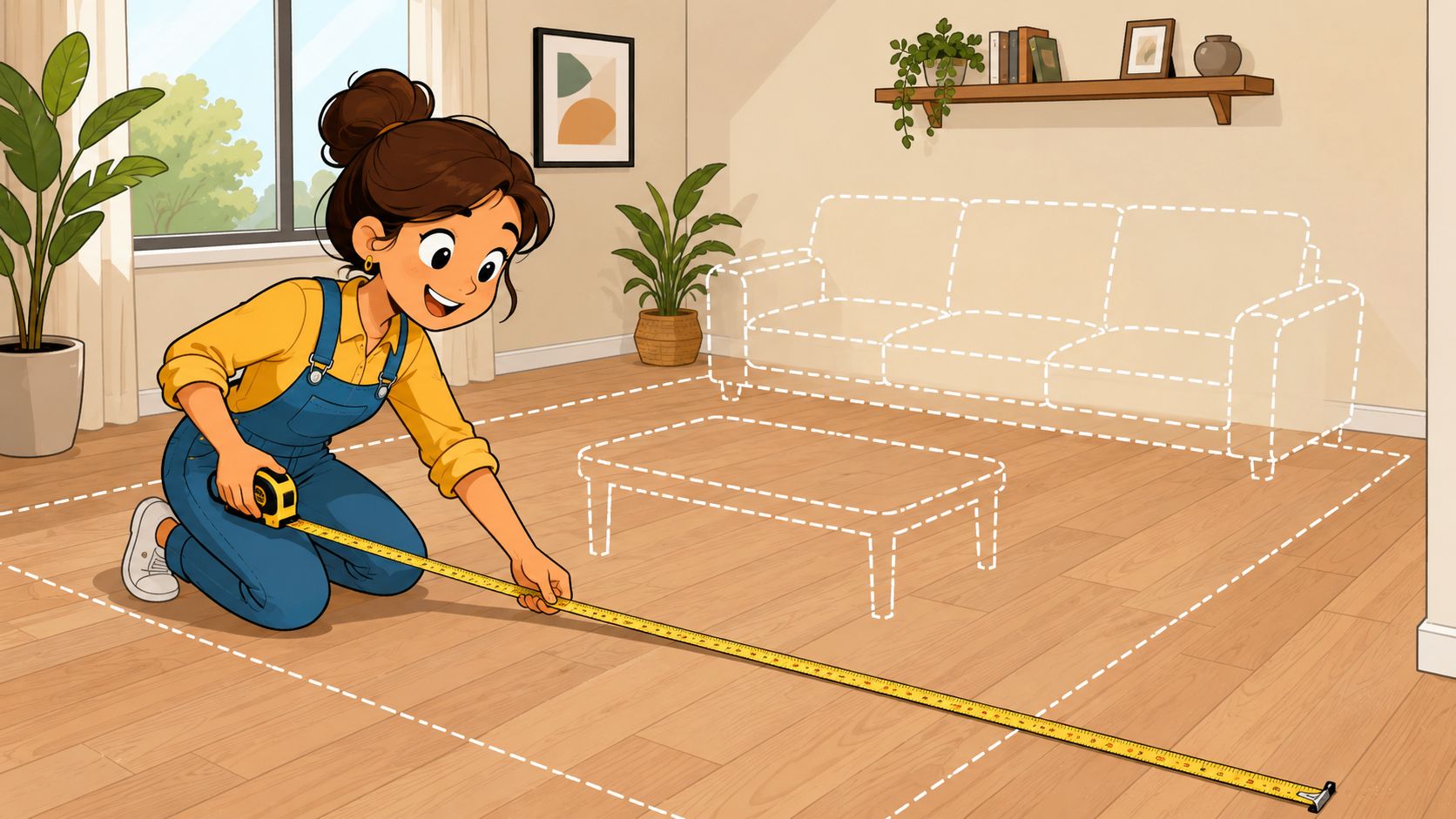
Painter's tape is one of the easiest design tools in the house. Mark the rough outline of a possible coffee table directly on the floor. Then walk around it. Sit down. Stand up. Reach forward from the sofa.
This quick test usually reveals problems immediately.
- If the taped shape feels tiny: The future table may look disconnected from the sofa.
- If the taped shape crowds the legs: The piece may be too deep or too long for the room.
- If the walkway pinches: The room may need a narrower table, a round shape, or a pair of smaller surfaces instead of one large rectangle.
Check the numbers that affect comfort
The most important measuring benchmarks are straightforward. The gap between the sofa and coffee table should be 14 to 18 inches, or about 35 to 45 centimeters, and the table should sit 1 to 2 inches below the sofa seat cushion. Guidance also notes that gaps under 12 inches are considered cramped and can impede movement, based on this coffee table spacing guide.
That's the difference between a room that merely looks furnished and a room that feels usable.
A quick reference table helps:
| What to measure | Target |
|---|---|
| Gap from sofa to table | 14 to 18 inches |
| Too tight | Under 12 inches |
| Height difference | 1 to 2 inches below seat cushion |
Tape on the floor answers questions faster than product photos ever will.
For households making a bigger room update, promotional financing with equal monthly payments can make it easier to choose a piece that fits the room instead of settling for one that only seems close enough.
Sofa and Table Pairings for Every Eastern CT Home
The easiest way to understand the sofa to coffee table ratio is to see how it plays out in real rooms. Eastern CT homes vary a lot. A compact apartment, a traditional family room, and an open-plan sectional setup don't ask for the same solution.
A compact setup for smaller rooms
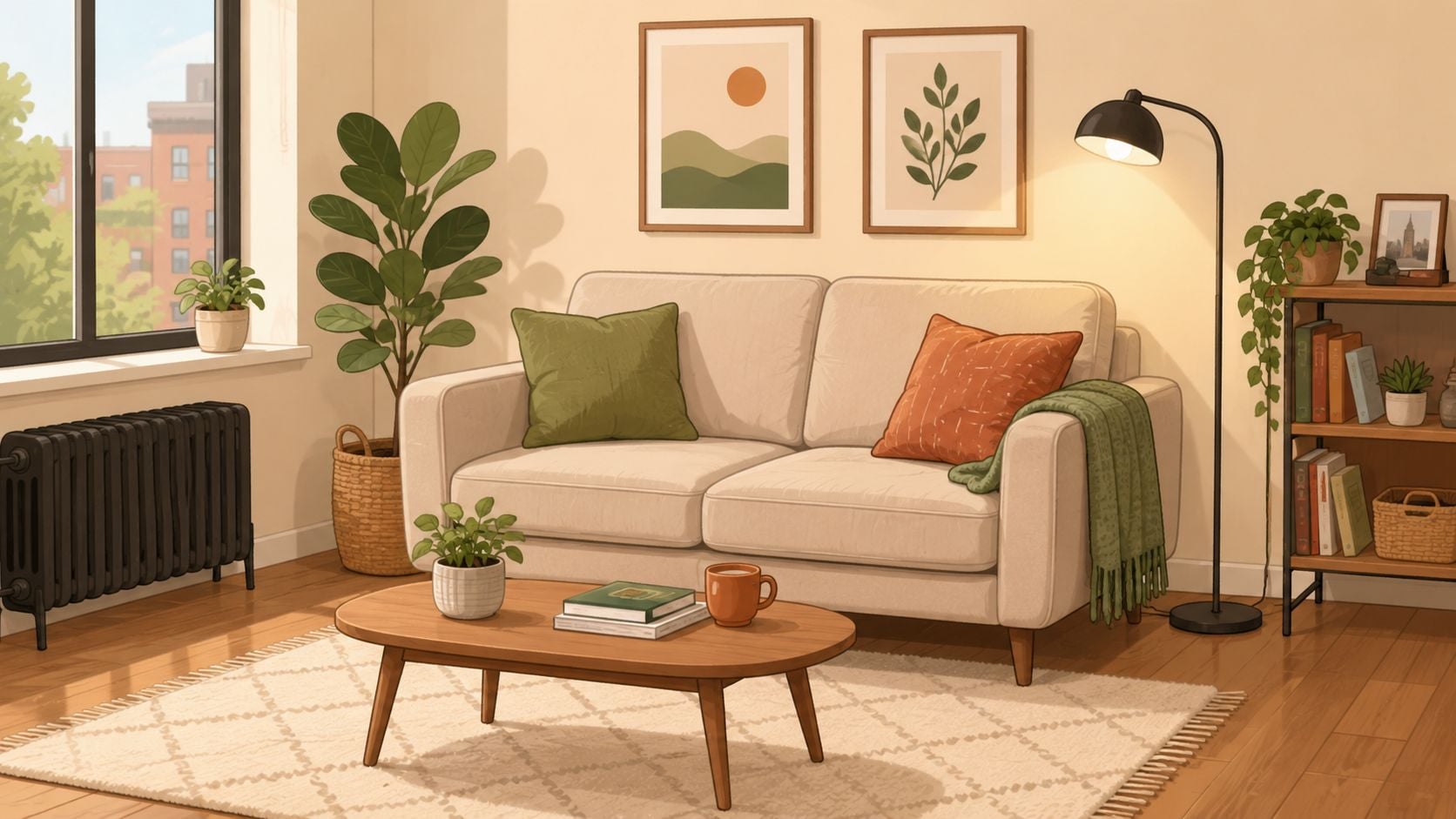
In a smaller Plainfield-style apartment, a loveseat or apartment sofa often shares space with a TV stand, a lamp, and a main walkway to another room. In that layout, the coffee table can't just match the sofa. It has to protect circulation too.
That's where round tables, slimmer rectangles, or nesting pieces often make sense. The softer outline of a round table can make movement easier, and a lighter-looking base can keep the center of the room from feeling heavy.
For readers comparing shapes and proportions, this coffee table size guide can help sort through options.
A classic family room pairing
A standard family room often gives the clearest example of the ratio at work. An 84-inch sofa commonly pairs with a coffee table around 56 inches long. That pairing tends to feel balanced because the table reaches enough of the seating area without taking over the room.
This is also where material and edge profile matter. A wood table can warm up a room with upholstery and a rug. A piece with open space below can feel less bulky in a tighter footprint. A shelf can add practical storage without changing the table's position.
Readers shopping in this category often compare styles from Flexsteel or Craftmaster, then narrow the field based on shape, finish, and how much visual weight the room can handle.
A sectional setup that still feels open
A larger Waterford-style living room might have a sectional, extra seating, and a more open footprint. In that kind of room, one undersized table can look lost fast. A larger square table, a substantial rectangle, or a group of nesting tables usually feels more grounded.
The challenge isn't just filling the space. It's making sure every seat still has practical access to the table. In modular rooms, a coffee table should support the conversation zone, not just occupy the middle.
The right table should look connected to the people using it, not just centered on the rug.
This is also where customization becomes useful. The F9 Custom Sofa series allows size and style choices that can help a seating plan fit the room more precisely, especially when a stock sofa length leaves the coffee table relationship feeling a little off. That same made-to-order mindset shows up in other parts of the showroom too, including Canadel Custom Dining, where thousands of combinations help households fit real floorplans instead of forcing a standard setup.
Solving for Real Life Layouts and Lifestyles
Most living rooms don't behave like neat showroom rectangles. They have chaises, toy baskets, pet paths, fireplaces, and odd corners. The rules still help, but they need interpretation.
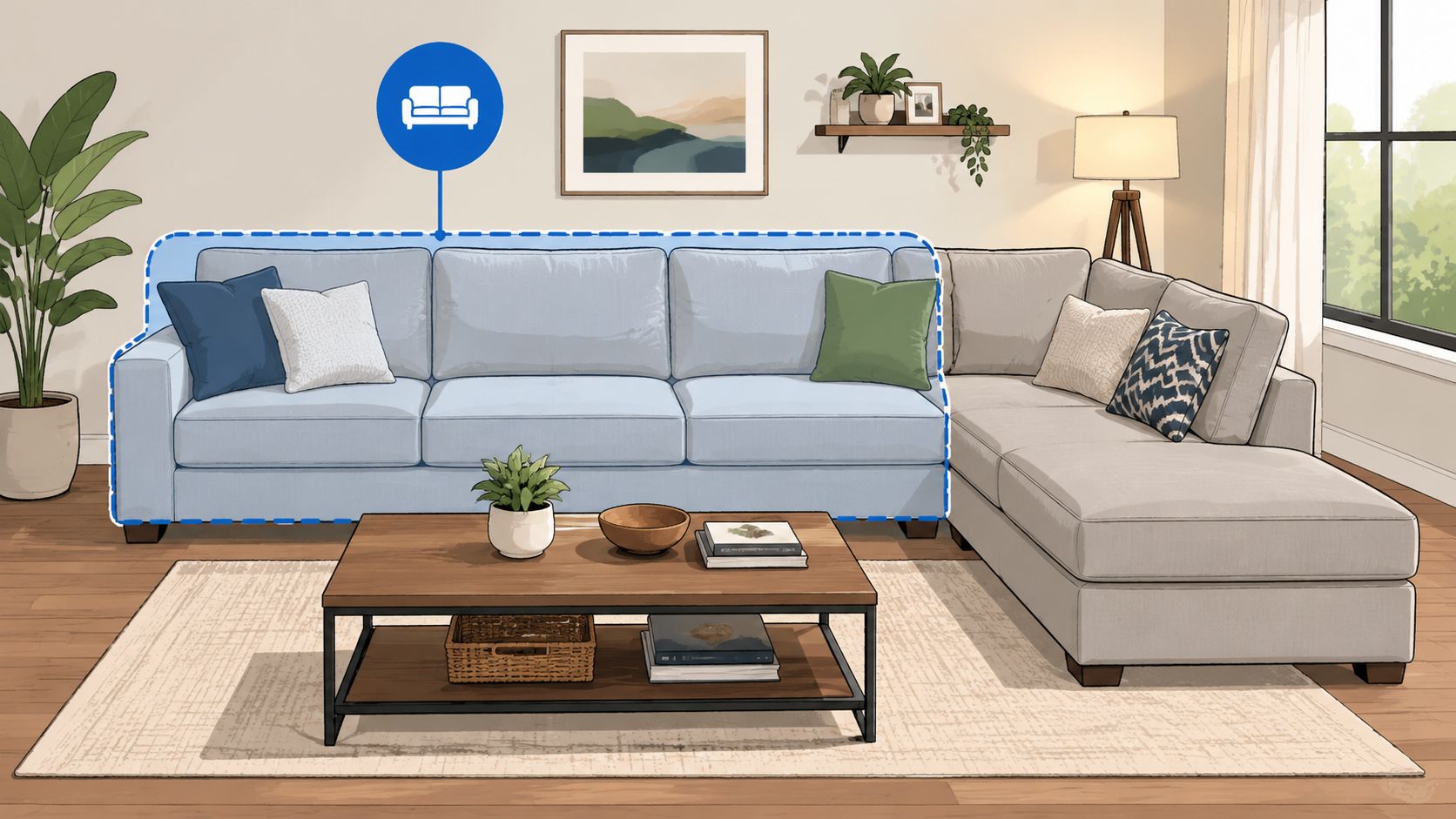
Sectionals need a different measuring mindset
With sectionals, the biggest mistake is measuring the entire outside footprint and treating that as the sofa length. Guidance for these layouts suggests using the main seating run, not the full L-shape, when adapting the 2/3 rule.
That shift matters because the open side of a sectional often functions more like circulation space than seating space. Measuring the whole piece can lead to a table that's oversized for the people using it.
Readers looking for less typical room plans may find useful ideas in these uncommon furniture arrangements.
When the room is too tight for every rule
Some rooms can't satisfy every ideal measurement at once. Guidance also notes the conflict that happens when a room is too small for both the preferred 14 to 18 inch sofa-to-table clearance and a 24 to 30 inch walkway around the arrangement. In those cases, households have to choose between easier reach and easier traffic flow, as noted in the earlier guidance on sectional and spacing tradeoffs.
That's the actual design decision. Not “What's perfect?” but “What matters most in this room?”
A useful priority order often looks like this:
- Protect daily movement: If the room is a main pathway, keep circulation workable first.
- Preserve table access: If the seating area is used for drinks, reading, or games, don't push the table so far away that nobody uses it.
- Change the table type if needed: A smaller footprint, nesting set, or C-table can solve problems that a standard rectangle can't.
Family friendly choices matter too
Households with children, pets, or frequent guests usually need a forgiving table. Rounded corners can reduce bumps. Durable finishes hide everyday wear better. Upholstered ottomans or storage pieces can soften the room while still serving as a central surface.
The same is true for multifunctional spaces. A room that hosts homework in the afternoon and movies at night may need mobility more than visual symmetry. In that setting, a lighter table that shifts easily can outperform a heavier statement piece.
A good layout doesn't force a household to live around the furniture.
That's especially relevant in Eastern CT homes where one room often has to do several jobs at once.
Find Your Perfect Match at Gorins
Once the sofa to coffee table ratio makes sense, furniture shopping gets easier. Readers can stop guessing and start checking three practical things: proportion, comfort, and movement. If those three work together, the room usually does too.
That knowledge matters in real homes. A narrow apartment may need a smaller or rounder table to keep the path clear. A traditional sofa often looks better with a table that feels visually connected rather than undersized. A sectional needs a table scaled to the seating area people use. Those aren't decorating tricks. They're measurement decisions.
Since 1936, Gorins Furniture & Mattress has helped Norwich and Eastern CT families make those decisions with less stress and more clarity. As a locally owned, family-operated business, the store's role has always been practical guidance first. Readers bringing in room measurements, photos, or painter's-tape notes can compare options with more confidence. That includes custom possibilities through the F9 Custom Sofa series, as well as flexible buying options such as promotional financing with equal monthly payments.
A well-fitted living room doesn't happen by accident. It comes from choosing pieces that match the home, the habits, and the people using the space every day.
Since 1936, Gorins Furniture & Mattress has helped Norwich and Eastern CT families create homes they love. Visit the Norwich showroom to test living room furniture in person, take the online Style Quiz for guidance suited to your lifestyle, or browse the Clearance section for value-driven savings backed by personalized local service and 5-Star Delivery.