8 Dining Table Leg Styles for Every Home

Two dining tables can share the same wood top and still create completely different rooms. One may feel airy and relaxed, while the other looks grounded, formal, or distinctly modern. The difference often comes from the base.
The best dining table leg styles depend on more than appearance. Norwich homeowners and renters also need to consider floor space, seating flexibility, chair placement, cleaning access, tabletop shape, and the amount of visual weight a room can carry. This guide compares tapered, pedestal, block, turned, splayed, saber, hairpin, and Queen Anne or cabriole legs, with practical notes on comfort, proportion, stability, and décor.
Gorins Furniture & Mattress is a locally owned, family-operated Norwich business founded in 1936. Through its Canadel Custom Dining partnership, the showroom offers thousands of combinations of sizes, shapes, finishes, and fabrics, allowing a dining table to suit a household instead of forcing the room to suit a fixed design.
A table base should be tailored to the household's lifestyle, not chosen as decoration alone.
Each style below includes a real-world use case, chair-pairing advice, and notes on how the silhouette behaves in a Norwich-area home.
1. Tapered Legs
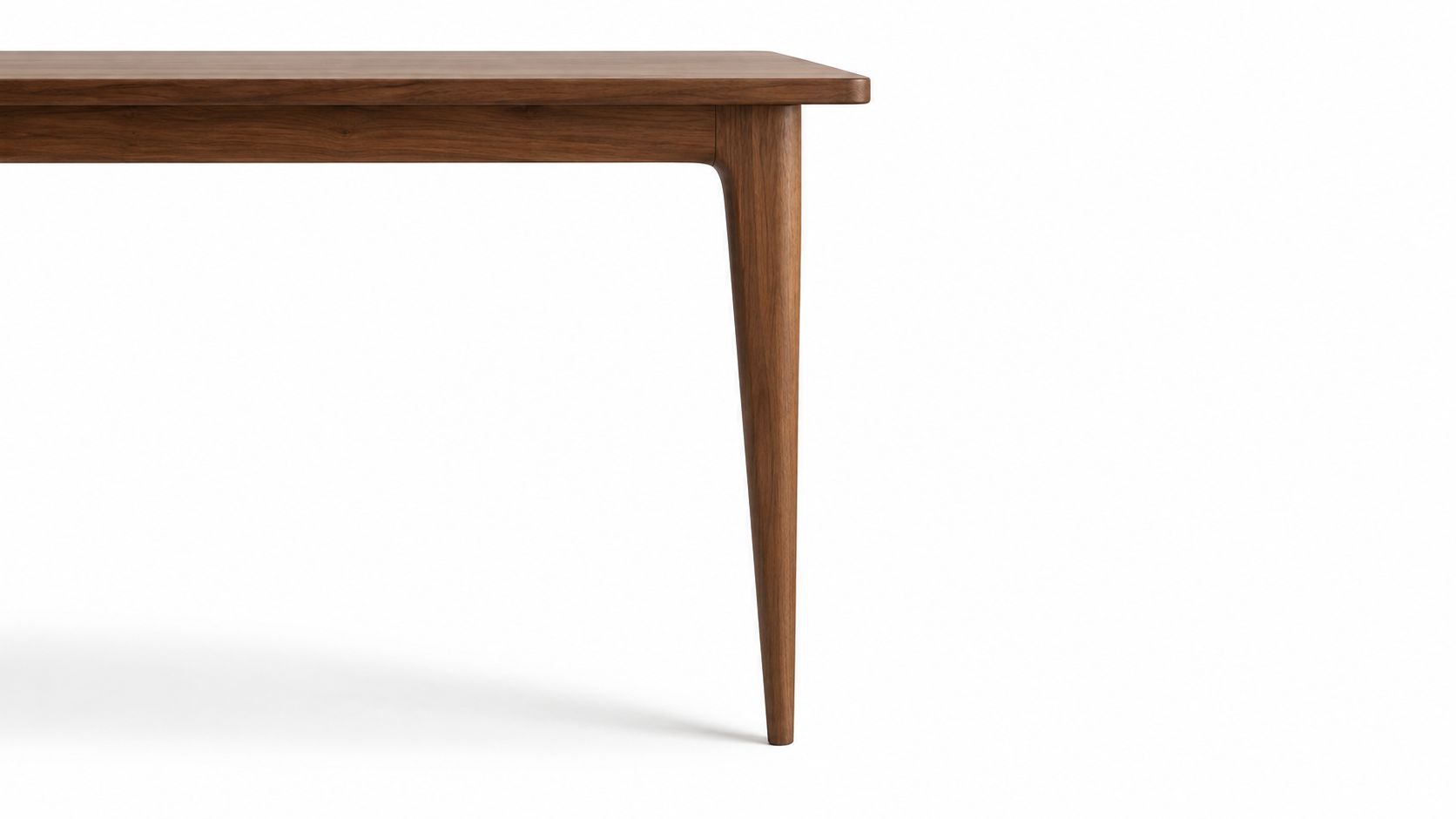
A Norwich dining room with limited floor space can feel crowded when the table base is too heavy. Tapered legs solve that problem by narrowing gradually toward the floor. They may stay straight on every side or angle outward slightly, giving the table a lighter profile than a square support of similar size. That balance makes them one of the most adaptable dining table leg styles.
A rectangular table with straight tapered legs suits a formal dining room, transitional kitchen, or classic home with wood flooring. Cherry or Oak with a rich stain creates traditional character without ornate detailing. A whitewashed farmhouse top feels more relaxed, while splayed tapered legs introduce a mid-century direction. The restrained silhouette also pairs easily with upholstered chairs, contemporary finishes, or simple wooden seating.
The taper affects everyday use as well as appearance. Legs set close to the corners usually leave more open space beneath the tabletop for chairs and knees, while legs set farther inward can make end seating feel cramped. Sufficient floor contact supports stability, and parallel legs help distribute the tabletop's load evenly. A practical explanation of this relationship appears in this guide to dining-table leg geometry and stability.
Tabletop proportion matters too. Straight tapers suit rectangular tops with clear, orderly lines. Splayed versions can soften a broad top, but excessive outward angles may reduce walking clearance in a narrow room.
Best pairings and practical notes
- For formal rooms: Straight tapers pair with upholstered side chairs and a darker custom stain.
- For mid-century rooms: Splayed tapers work with clean-lined chairs, walnut tones, and simple lighting.
- For farmhouse rooms: A whitewashed or lightly distressed finish keeps the base approachable.
- For everyday use: The open area between the legs makes sweeping and chair movement easier.
Before choosing a base, households can review Gorins' guide to picking the right dining room table to compare size, shape, and seating needs. Canadel Custom Dining at Gorins allows the leg shape, wood tone, tabletop, and upholstery to be coordinated for a Norwich-area home, with many combinations available.
2. Pedestal Base
A pedestal base brings the support toward the table's center, leaving the perimeter clear for knees, ankles, and chair feet. In a breakfast area or compact dining room, that difference can make daily seating feel less restricted. It also helps when guests need to sit at positions that would be blocked by corner legs.
Start with the room's scale. A round pedestal table suits a smaller space because each seat faces inward and no diner has to straddle a corner. An oval or rectangular version offers more tabletop length, though its base may need a wider or elongated footprint to keep the surface visually and physically stable. A broad spreading foot can also reduce walking clearance once chairs are pulled back.
For flexible seating: Diners can use more of the table's edge without meeting corner supports. That works well with separate side chairs, occasional extra seating, or a bench, provided the base leaves enough clearance for people to slide into place.
Tabletop shape guides chair pairing and proportion. A round top looks naturally balanced over a central column, while an oval top often benefits from a base that echoes its longer profile. Rectangular tops can work well with a substantial pedestal, especially when the support is centered carefully. If the table uses leaves, choose a base with enough footprint and strength for the expanded surface.
For smaller rooms: The open perimeter makes chair placement and floor cleaning easier.
For entertaining: Round and oval tops encourage a sociable arrangement around the central support.
For traditional décor: Turned columns and splayed feet add heritage character.
For contemporary décor: A sculptural pedestal can act as the room's focal point without competing with clean-lined chairs.
Canadel Custom Dining at Gorins can coordinate the pedestal shape, wood tone, tabletop, and upholstery for a Norwich-area home. Norwich shoppers can review the Canadel Rebecca pedestal table to see how a central base changes the relationship between seating and surface.
Practical rule: Measure the full spread of the pedestal feet, not just the tabletop. Chairs need room to pull out without catching on the base.
3. Block Legs or Cube Feet
If a dining room needs visual weight, block legs or cube feet give the table a firm, grounded presence. Their squared profiles suit farmhouse, rustic, cottage, and transitional interiors, especially where a slender base would look undersized. A thick wood top paired with broad supports feels sturdy and substantial. Smaller cube feet create the same geometric character with less visual mass.
Room scale should guide the proportions. Oversized blocks beneath a wide, thick tabletop can crowd a modest Norwich dining area, while a lighter top keeps the composition more open. Chamfered edges and gently softened corners also reduce the severity of a fully square silhouette. Rectangular tops usually pair naturally with this base, and a bench can reinforce the long, practical look. Check the support placement carefully, though. Diners need clear legroom when they pull their chairs in, and nobody should bump a knee against the block.
The base also changes how chairs read beside the table. Upholstered chairs add softness and comfort, much like a cushion balancing the firm shape of a wooden chest. Ladder-back chairs continue the straightforward farmhouse character, while metal chairs make the geometry feel more industrial. Keep the chair scale in proportion to the tabletop so the heavy base does not make the seating appear slight.
Styling and everyday use
Natural wood with a visible oak grain makes the table feel warm and substantial. White or muted painted bases point toward cottage or farmhouse décor, while hand-scraped or weathered surfaces support a rustic room. In a transitional setting, a natural or medium stain and refined chamfered edges can keep the design measured rather than overly rugged.
For a kitchen that serves as a dining area, homework station, and gathering place, this style offers a steady foundation and works well with durable wood surfaces. Its visual strength can also help anchor an open room, provided the footprint leaves enough space to move around chairs and clean the floor.
Canadel Custom Dining at Gorins can tailor the block-style supports, tabletop stain, edge treatment, and surrounding finishes for a Norwich-area home. Gorins describes the process as affordable luxury, emphasizing furniture selected for lasting value rather than disposable décor. The right result depends on matching the base's width and height to the room, chairs, and tabletop.
4. Turned Legs or Spindle Legs
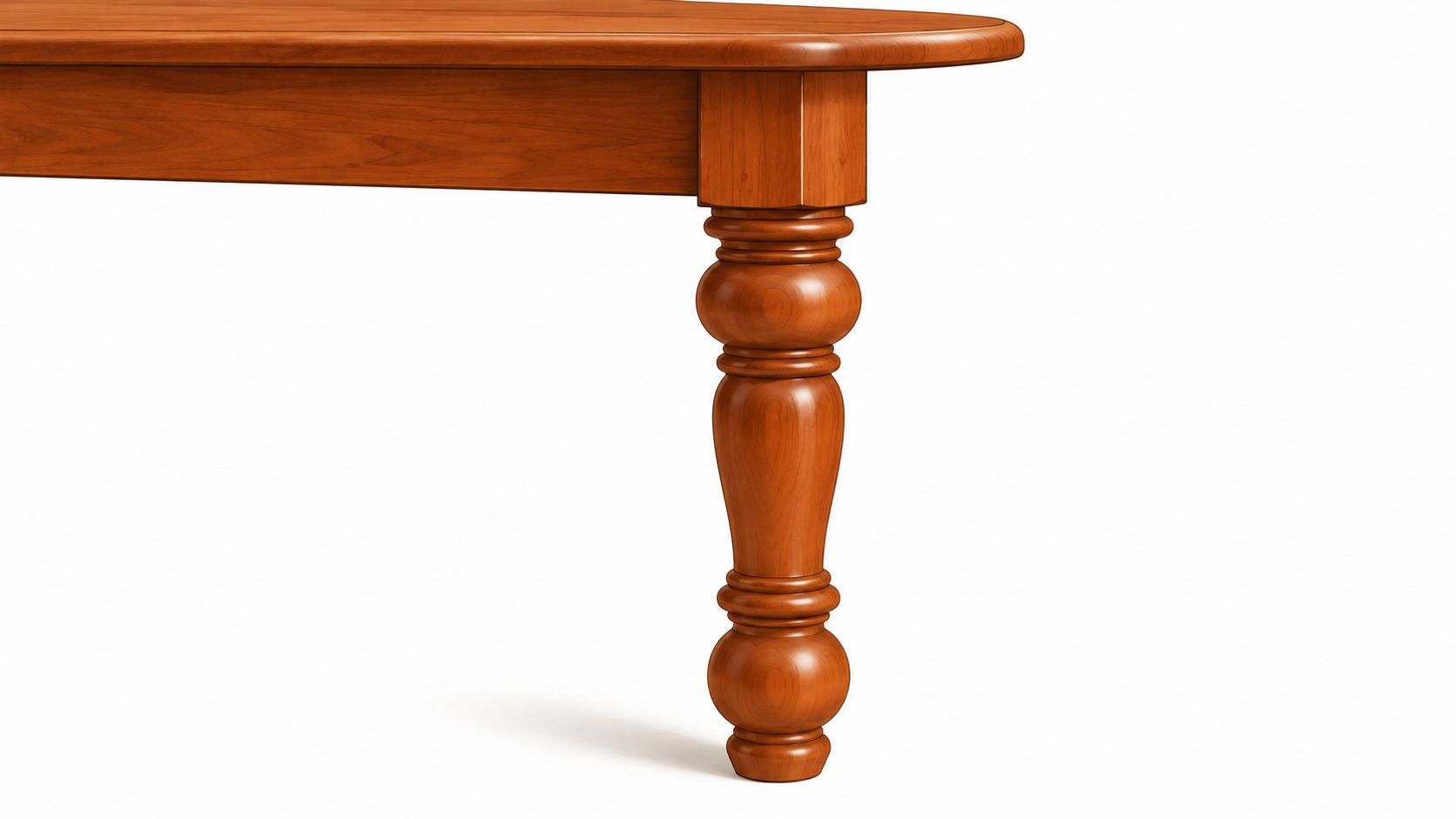
Turned legs bring a crafted, furniture-making feel to the dining room. A lathe shapes the wood into rounded sections, rings, grooves, bulbs, and tapered transitions, so the profile remains interesting from every angle. Turned wood supports appeared in early dining construction, including Jacobean tables with turned legs and stretchers, before classical design moved toward more restrained lines. This historical overview of dining-table leg development provides additional context for that progression.
The silhouette can be quiet or decorative. A few narrow rings suit a transitional room, while bulbous sections and carved feet create a stronger traditional statement. Detailed legs work best when the rest of the room has visual breathing space. They pair naturally with colonial interiors, traditional cherry rooms, country dining areas, and edited farmhouse settings.
Turned legs also affect everyday comfort. Their narrower upper sections can leave useful legroom between the supports, but the lower profile and foot placement still need checking against chair width. Test the intended chairs under the table, especially with armchairs or wide upholstered seats. A rectangular or oval tabletop usually gives the turning enough room to read clearly. A heavily shaped top may compete with it.
Wood tone changes the character. Cherry, walnut, and mahogany finishes emphasize the shadows in grooves and rounded sections. Pale natural wood feels more relaxed, while a deep stain gives the table greater formality. Patterned upholstery can reinforce the traditional mood. Plain linen or simple fabric keeps the setting calmer.
A useful coordination method
Repeat one existing shape from the room. Rounded chair backs, reeded cabinet doors, traditional molding, or curved lighting can connect the table to its surroundings. With simple angular chairs, a detailed turned leg can serve as the room's main decorative feature.
Canadel Custom Dining at Gorins can tailor the turned profile, wood choice, tabletop, and finish for a Norwich-area home, including older Eastern CT houses where architectural character matters.
5. Splayed Legs
A splayed-leg table changes character as soon as chairs move around it. The supports angle outward from the apron to the floor, creating a stance that feels active and sculptural while keeping the tabletop visually light. Splayed tapered legs are closely associated with mid-century furniture, yet their clean geometry also suits Scandinavian-inspired, contemporary, and transitional rooms.
Start with the tabletop. A simple rectangular, oval, or softly rounded top gives the angled base room to stand out. Walnut, light oak, and painted finishes each shift the mood, from warm and retro to airy or refined. A heavily patterned top paired with expressive legs can make an open dining area feel busy, especially when the table is visible from several directions.
The outward angle spreads the table's footprint, much like a tripod with a wider stance. That can make the table feel planted, but it changes circulation around the chairs. A seat may clear the upper supports yet strike the lower leg when pulled in or shifted sideways. Check the actual chair under the table, including arm width and upholstery depth, before choosing the base.
Splayed legs suit several settings:
- In a mid-century room, pair warm wood with molded or upholstered chairs.
- In a contemporary kitchen, use a pale finish and simple seating for a crisp outline.
- In an eclectic room, let the angled silhouette contrast with vintage chairs or a traditional rug.
- In a compact open-plan area, choose a modest tabletop so the broad stance does not restrict walking paths.
Chair scale matters as much as style. Slim chairs preserve the airy effect, while bulky armchairs can make the base look crowded. Keep nearby cabinets, door swings, and walkway width in view.
Canadel Custom Dining at Gorins can tailor the splayed profile, tabletop shape, wood finish, and chair fabric for a Norwich-area home. Those choices help the table feel considered, whether the room is a small kitchen or a larger Eastern CT dining space.
6. Saber Legs or Curved Legs
A saber-leg table suits a dining room that needs movement without heavy ornament. Each leg sweeps gently outward or inward, resembling the curved blade of a saber. That flowing profile draws the eye along the table's edge, giving a rectangular top more visual softness than straight tapered supports.
The curve also affects daily use. A well-placed saber leg leaves open space near the center of each seat, while its lower sweep can reach into the area where feet move or chairs slide. Test the actual chair with the table before deciding, especially if you use wide seats, arms, or deep upholstery. Stability depends on how the legs connect to the apron and top, so inspect the joinery and consider how often the table will handle active family meals.
Saber legs work especially well with oval, rounded-rectangle, and softly shaped tabletops. A clean rectangular top creates a clear contrast, while a curved edge repeats the base's rhythm. Keep the top visually calm so the legs remain the main detail. In a smaller Norwich dining area, a lighter finish and modest silhouette can preserve walking space. In a larger room, darker wood or a more pronounced sweep can hold its own beside traditional trim, paneled walls, or crown molding.
Chair pairing sets the tone. Upholstered seats and curved backs continue the graceful line and add comfort for longer meals. Simple wood chairs make the table feel more transitional, while an industrial chair can provide contrast when warm wood, brass hardware, or a rounded light fixture connects the two styles.
Canadel Custom Dining at Gorins can tailor the leg curve, wood finish, tabletop shape, and upholstery for a Norwich-area home. Those choices help match the base to available legroom, room scale, and the chairs you already use.
7. Hairpin Legs
A slim black base can make a compact dining room feel more open, especially beneath a live-edge, reclaimed-wood, or glass tabletop. Hairpin legs use bent metal rods in narrow, angular supports, so the floor and rug remain visible instead of being blocked by a solid apron or cabinet-like base.
Their visual character depends on the finish and the top. Matte or powder-coated black steel gives warm wood a workshop-inspired edge, while polished metal makes the table feel more contemporary. Leather, upholstered, or metal chairs can all work, but the seat should balance the base. A padded chair softens the rods, while a simple frame keeps the setting lighter and more industrial.
Legroom is usually generous near the center of each seat, though the angled rods can occupy space where feet or chair legs move. Check the position of the rods against your chair width, armrests, and the table's overhang. A very thin base can also look undersized beneath a thick stone-look surface or a long communal top. For those applications, rectangular or trapezoidal steel frames create a more substantial foundation, while A-frame supports spread weight along longer tables.
Stability deserves a hands-on check. Triple-rod constructions limit side-to-side movement better than single-rod versions, according to this table-leg design guide. Inspect how the legs attach to the tabletop, and account for an uneven older floor or active family meals before choosing a light frame.
Matching hairpin legs to the room
Use matte black rods with irregular wood edges, or choose a restrained finish beneath glass so the base supports the top without competing with it. In a small Norwich dining area, the open silhouette can preserve sightlines and walking space. In a larger room, a thicker top or wider frame gives the table enough visual weight.
Canadel Custom Dining at Gorins can tailor the metal finish, tabletop size, edge, and seating details for a Norwich-area home. Guidance on dining furniture for small spaces can also help compare the airy appearance with the room's practical needs.
8. Queen Anne or Cabriole Legs
Queen Anne, or cabriole, legs bring an S-shaped profile to the dining table. The upper section curves outward at the knee, then sweeps inward toward the ankle before ending in a plain or ornamental foot. The cabriole form rose to prominence in the early 1700s, when dining furniture moved away from heavy, boxy supports toward lighter, more elegant silhouettes, as described in this history of table-leg styles.
The curved outline creates formal character without requiring a heavily carved tabletop. A traditional cherry table with carved legs and ball-and-claw feet makes a strong heritage statement. A transitional table with a simpler pad foot keeps the graceful shape while suiting a more relaxed room. Chippendale-inspired carving and scrollwork add ornament, while Queen Anne styling depends more on the flowing silhouette.
Foot design changes both personality and visual weight. Ball-and-claw feet appear decorative, pad feet feel quieter, and scrolled feet add movement near the floor. Because these details draw attention downward, cabriole tables need breathing room around the legs. In a compact Norwich dining area, simpler feet can make cleaning easier and keep the base from feeling crowded.
The curved knees may also reduce usable legroom compared with straight tapered supports, especially for wide chairs or guests who shift position often. Check the apron height, chair width, and tabletop overhang together. Cabriole legs generally suit solid wood or traditionally proportioned tops; an especially thick, oversized surface can make their refined shape look undersized.
Building a cohesive formal setting
Pair the base with upholstered side chairs, traditional architectural details, or a restrained patterned rug. Cherry, mahogany, and walnut reinforce the style's heritage, while a contemporary finish can make the silhouette more approachable. A Gorins design associate can help coordinate the table with a traditional design style for the rest of the dining room.
Canadel Custom Dining at Gorins can tailor the wood, curve, finish, foot, tabletop proportions, and seating details for a Norwich-area home. That customization helps balance formal character with room scale, chair clearance, and everyday use.
8-Way Comparison of Dining Table Leg Styles
| Leg Style | Implementation complexity | Resource requirements | Expected outcomes | Ideal use cases | Key advantages |
|---|---|---|---|---|---|
| Tapered Legs | Moderate, precision woodworking | Solid wood, precise cutting/staining | Timeless, visually light, structurally sound | Traditional to contemporary dining; custom tables | Versatile, easy to clean, pairs with many chairs |
| Pedestal Base | High, engineering for central support | Substantial column, spreading feet, complex joinery | Open floorplan, maximum seating, sculptural look | Small spaces, entertaining, round/oval tables | Maximizes legroom, elegant and flexible seating |
| Block Legs (Cube Feet) | Low, simple geometric construction | Solid wood blocks; lower labor cost | Grounded, substantial, durable appearance | Farmhouse, rustic, value-conscious buyers | Robust, affordable, complements reclaimed finishes |
| Turned Legs (Spindle) | High, skilled lathe work and detailing | Expert woodturning, premium hardwoods | Ornamental, crafted, traditional elegance | Formal/traditional rooms; heirloom-quality pieces | Rich character, timeless craftsmanship, high perceived value |
| Splayed Legs | Moderate–High, angled joinery and balance | Precision cuts, possible angled stretchers | Dynamic mid-century silhouette with good stability | Mid-century modern, contemporary, design-forward homes | Visually dynamic, stable, generous legroom |
| Saber Legs (Curved) | High, careful shaping and joinery | Skilled bending/carving, quality hardwoods, optional hardware | Graceful, refined, subtly formal appearance | Transitional and formal dining settings | Elegant curve, timeless refinement, balances modern/traditional |
| Hairpin Legs | Low, metal fabrication and mounting | Metal rods, welding or bent steel, powder-coating | Minimalist, airy, industrial-modern look | Industrial, modern, live-edge or mixed-material tops | Affordable, visually light, easy to maintain |
| Queen Anne / Cabriole Legs | Very high, complex carving and joinery | Master craftsmanship, premium hardwoods, time-intensive | Aristocratic, highly formal, heirloom-quality | Formal dining rooms, traditional architecture, collectors | Luxurious, timeless elegance, high resale and sentimental value |
Choose the Base That Fits Your Lifestyle
The right dining table leg style should make daily life easier while giving the room a clear visual direction. Tapered legs suit households that want visual lightness and broad décor flexibility. Splayed legs add mid-century movement and a sculptural footprint. Both styles work well when the room needs an open appearance without giving up the familiar support of four legs.
A pedestal base is often the practical choice for flexible seating, especially around a round or oval tabletop. It removes corner obstructions and can make entertaining more comfortable, although the spreading feet still need to fit the floor plan. Block legs suit farmhouse and transitional rooms that benefit from a grounded, substantial character. They work particularly well with warm wood, painted bases, and upholstered chairs that soften the geometry.
Turned legs bring heritage detail and visible craftsmanship. They suit colonial, traditional, and country interiors, especially when the finish highlights the rounded profile. Saber legs provide a more restrained curve for a transitional or formal room. Their shape offers elegance without the heavier ornamentation of a highly carved base.
Hairpin legs create industrial openness and preserve sightlines beneath the tabletop. They're attractive in smaller modern spaces, but the construction needs to match the tabletop weight and the household's expectations for stability. Metal interest has remained prominent in recent dining-table trend coverage, while broader, more substantial bases are also being favored for long-term usefulness. A recent buying guide on dining-table base stability and durability highlights the practical tradeoffs between independent legs, trestles, and pedestals on real-world floors.
Queen Anne or cabriole legs remain the choice for formal elegance, traditional architecture, and heirloom character. Their curves deserve room to breathe, and their decorative feet should connect with the chairs and surrounding furnishings.
Before deciding, shoppers should assess:
- Tabletop shape: Round and oval tops often complement pedestals, while rectangular tops can suit nearly every style.
- Chair clearance: Dining guidance commonly recommends about 10 to 12 inches of knee and thigh clearance beneath the table. Accessibility-oriented tables may require 27 inches of knee clearance, while a 30-inch table with 18-inch chairs is commonly treated as a workable pairing. These measurements and the effect of apron height are discussed in this dining-table size guide.
- Room scale: A chunky base can anchor a large room but overwhelm a compact one.
- Cleaning access: Open, simple supports are easier to sweep around than ornate feet and deep decorative turnings.
- Entertaining habits: Frequent hosts may value unobstructed seating more than a traditional four-leg outline.
- Floor conditions: Uneven older floors may favor a base with thoughtful leveling and a broad, stable footprint.
At Gorins Furniture & Mattress, the Norwich showroom has helped Eastern CT families make investment-minded furnishing decisions since 1936. The locally owned, family-operated business offers Canadel Custom Dining with thousands of combinations of sizes, shapes, finishes, and fabrics, along with design guidance for households in Norwich, New London, Plainfield, Waterford, and surrounding Connecticut and Rhode Island communities.
The same practical approach extends beyond dining. Gorins' F9 Custom Sofa series offers thousands of combinations for living rooms, while the Sleep Gallery features Tempur-Pedic, Serta, and Beautyrest with a focus on comfort by feel and healthier sleep. Promotional financing can use fixed equal monthly payments over a defined promotional term, with certain offers requiring the balance to be paid in full by the deadline. Synchrony explains that, for some promotions of 18 months or more, the payment is calculated by dividing the purchase amount, plus any applicable promotional fee, by the number of months in the promotional period. Approval and offer terms apply, as described in this overview of promotional financing.
The next step is simple. Shoppers can visit the Norwich showroom to sit in different chairs, inspect legroom, compare finishes, and see how each base feels beside a real tabletop. A household can also take the online Style Quiz or browse the Clearance section for value-driven savings before making a final decision.
Since 1936, Gorins Furniture & Mattress has helped Norwich and Eastern CT families create homes they love. From custom-designed Canadel dining sets to the latest in Tempur-Pedic sleep technology, we combine a massive selection with the personalized care only a local, family-owned business can provide. Visit us today to experience quality, value, and our 5-Star Delivery service.
Gorins Furniture & Mattress offers custom dining guidance, Canadel table options, and leg-base configurations that help households match seating comfort with the character of a Norwich-area home. Visit Gorins Furniture & Mattress to explore dining tables, take the Style Quiz, or browse the Clearance section for value-driven savings.