
How Long Is a 3 Seater Sofa


A standard 3 seater sofa is usually about 84 inches, or roughly 7 feet, long. That single measurement can shift by a full foot depending on the sofa's style, arm design, seat depth, and overall construction.
A Norwich homeowner may start with a tape measure in one hand and a phone calculator in the other, checking the living-room wall before a new sofa arrives. The wall is only part of the answer. The sofa also has to pass through the front door, turn through a hallway, clear a stairway landing, and leave enough space for everyday movement.
Why the Length of a 3 Seater Sofa Matters Before You Buy
The 84-inch benchmark gives shoppers a useful starting point, but it shouldn't become the final decision. A sofa that looks modest on a showroom floor can feel much larger once it sits beside a radiator, projects into a walkway, or approaches a doorway at an awkward angle.
Three decisions depend on the length
Wall fit comes first. An 84-inch sofa needs a wall that can accommodate its full width without pressing against curtains, outlets, windows, or artwork. The outer-arm measurement matters more than the length of the cushions, because the arms and frame determine the actual footprint.
Doorway clearance creates the second test. A sofa can fit comfortably against a living-room wall and still fail at the front entrance. The delivery route may include a narrow door, a short hall, or a corner that allows less turning space than the room itself.
Stairway turns often cause the final problem. Norwich homes with upstairs living spaces, older layouts, or tight landings require more than a straight-line measurement. The sofa may need to tilt, stand on end, or turn diagonally while movers protect walls and banisters.
Practical rule: Measure the home before shopping for the sofa, not after choosing the upholstery.
Guessing on a major furniture purchase can lead to blocked radiators, scuffed walls, difficult returns, and a room that no longer feels easy to use. A careful measurement gives the 84-inch figure a purpose. It becomes a planning reference rather than a promise that every three-seat sofa will fit.
Standard Length and the Numbers Behind the 84 Inch Benchmark
A three-seat sofa often measures about 84 inches, or roughly 7 feet, from the outside edge of one arm to the outside edge of the other. Across common sizing guidance, three-seaters usually fall between 71 and 90 inches, making 84 inches a useful planning reference for a wall, a room layout, and the route into a Norwich home.
The 84-inch figure comes from a familiar arrangement: three seating spaces across the frame, plus two arms. It describes the sofa's outside width, not the space each person receives. Broad arms, thick frames, deep cushions, and generous padding can reduce usable seating while the overall measurement stays similar.
A range, not a fixed rule
Many three-seaters also sit within a broader 78 to 96-inch range. A shorter model may suit a flat or a compact sitting room. A longer one can provide roomier seating, but it also needs more wall space and may leave less room for people moving between the sofa, hallway, and other furniture.
| Measurement Type | Length Range | Typical Use |
|---|---|---|
| Compact three-seater | 71 to 78 inches | Apartments and smaller living areas |
| Common standard | About 84 inches | General family-room planning |
| Generous three-seater | 90 to 96 inches | Larger rooms and relaxed seating |
| Broad three-seat range | 72 to 96 inches | Overall shopping reference |
Use the table as a starting map, not a guarantee. A sofa's fabric, frame construction, cushion shape, and arm design can add or remove an inch or two from a familiar nominal size. Check the manufacturer's overall width, measured from the outermost points, before deciding whether it will fit the intended wall.
The same check matters at the front door. A sofa may suit a seven-foot wall yet prove awkward in a narrow entrance or hallway, particularly if it must turn before reaching the sitting room. For readers comparing a standard sofa with a sleep function, complete dimensions for sleeper sofas can clarify how the mechanism may affect its footprint. The seat count describes capacity. The specification sheet confirms the physical size.
Other Dimensions That Change How a 3 Seater Actually Feels
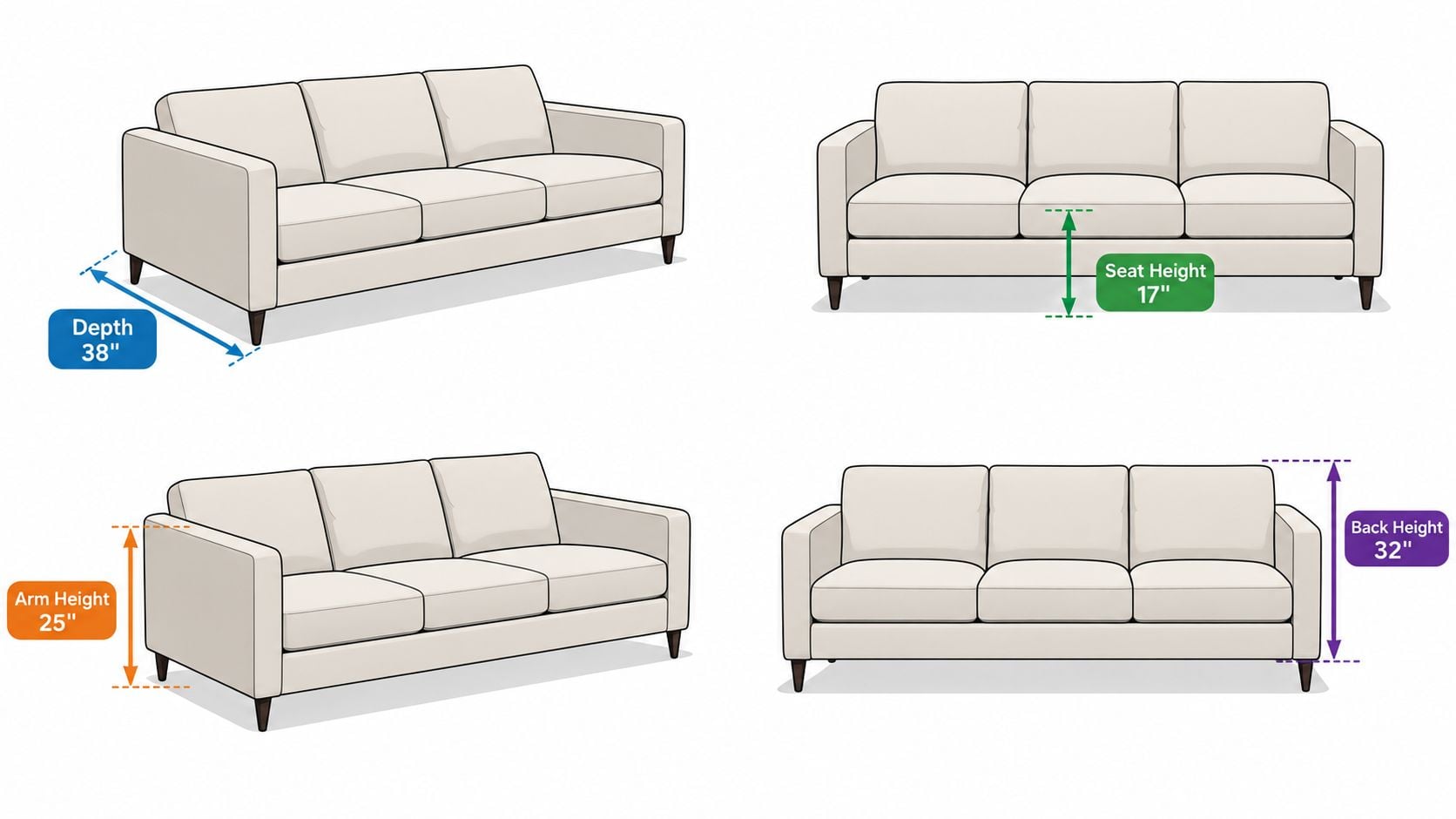
You find a sofa that should fit the wall, then discover its depth blocks the route to the kitchen. Two sofas can both be close to 84 inches long yet feel very different once they sit in a Norwich living room. Depth, seat height, seat depth, and arm thickness affect comfort, usable seating, and the space left for daily movement.
The measurements behind daily comfort
Overall depth commonly falls around 35 to 40 inches. Measure from the front edge to the back, not just along the wall. A deeper frame projects farther into the room, narrowing the passage between the sofa and coffee table and possibly preventing the back from sitting close to the wall.
Seat height is commonly around 17 to 19 inches from the floor. It affects how easily someone can stand, particularly in a busy family room, and helps determine whether the sofa works comfortably with a coffee table, footstool, or nearby chair.
Seat depth commonly sits around 20 to 24 inches, while seat height may be around 16 to 18 inches depending on the design. A shorter seat depth supports a more upright posture. A deeper cushion gives taller adults or relaxed loungers more room, but can leave shorter users sitting with their feet unsupported. Overall width alone cannot describe the sitting experience.
Arm thickness changes both usable seating and visual scale. A slim track arm around 3 inches leaves more cushion space. An English roll arm around 10 inches takes substantially more width from the same outer frame, much like thick door frames reduce the opening you can walk through.
| Measurement Type | Length Range | Typical Use |
|---|---|---|
| Overall depth | 35 to 40 inches | Determines room projection and traffic impact |
| Seat height | 17 to 19 inches | Affects standing comfort and table pairing |
| Seat depth | 20 to 24 inches | Shapes upright sitting or relaxed lounging |
| Arm thickness | 3 to 10 inches | Changes usable width and visual bulk |
For a Norwich home, compare the sofa's outer measurements with the wall and the route around it. Slim arms can provide more practical seating than broad rolled arms, even when both sofas have similar overall lengths. Leave enough visual and walking space around the coffee table, using this guide to sofa-to-coffee-table ratio when checking the arrangement.
How Length Varies by Sofa Style and Configuration
The label “three-seater” covers several distinct designs. A compact apartment sofa may measure 71 to 78 inches, while a standard version often centres around 84 inches. A deep English roll arm model may reach 90 to 95 inches, and a modular or sectional arrangement with three seats can extend from 88 to 110 inches, depending on arm style and chaise placement.
A style comparison
| Sofa Style | Typical Length | Key Detail |
|---|---|---|
| Apartment three-seater | 71 to 78 inches | Uses a shorter frame for tighter rooms |
| Standard sofa | About 84 inches | Common all-purpose planning size |
| English roll arm sofa | 90 to 95 inches | Broad arms and deep cushions increase footprint |
| Modular or sectional configuration | 88 to 110 inches | Arrangement changes with arms and chaise placement |
A compact sofa can still accommodate three people because the seating label depends on the internal layout, not just the visual impression. However, thicker arms reduce the usable cushion width, so a shorter design may feel tighter for three adults than its product name suggests.
Skirted bases can make a sofa appear heavier without changing its outer width. Track arms usually create a cleaner, more efficient outline, while rolled arms add width at both ends. These details matter in a Norwich flat, a narrow terrace, or an open-plan room where every inch affects movement.
Translating style into wall space
A buyer with limited wall length may prefer an apartment-scale frame, particularly when the sofa also has to share space with a bookcase or television unit. Someone furnishing a larger family room may accept a longer English roll arm design because the added depth and arm volume support a softer, more relaxed look.
The choice between a sofa and a sectional also depends on how the room needs to work. A useful comparison of sofa versus sectional layouts can help clarify whether a three-seat sofa should remain a straight piece or become part of a larger configuration.
Measuring Your Room, Doorways, and Stairways the Easy Way
Delivery day often reveals the difference between a sofa that fits on paper and one that fits in the home. A family may measure the living-room wall carefully, order an attractive three-seater, and then discover that the frame cannot turn past the entrance hall.
Three checks before ordering
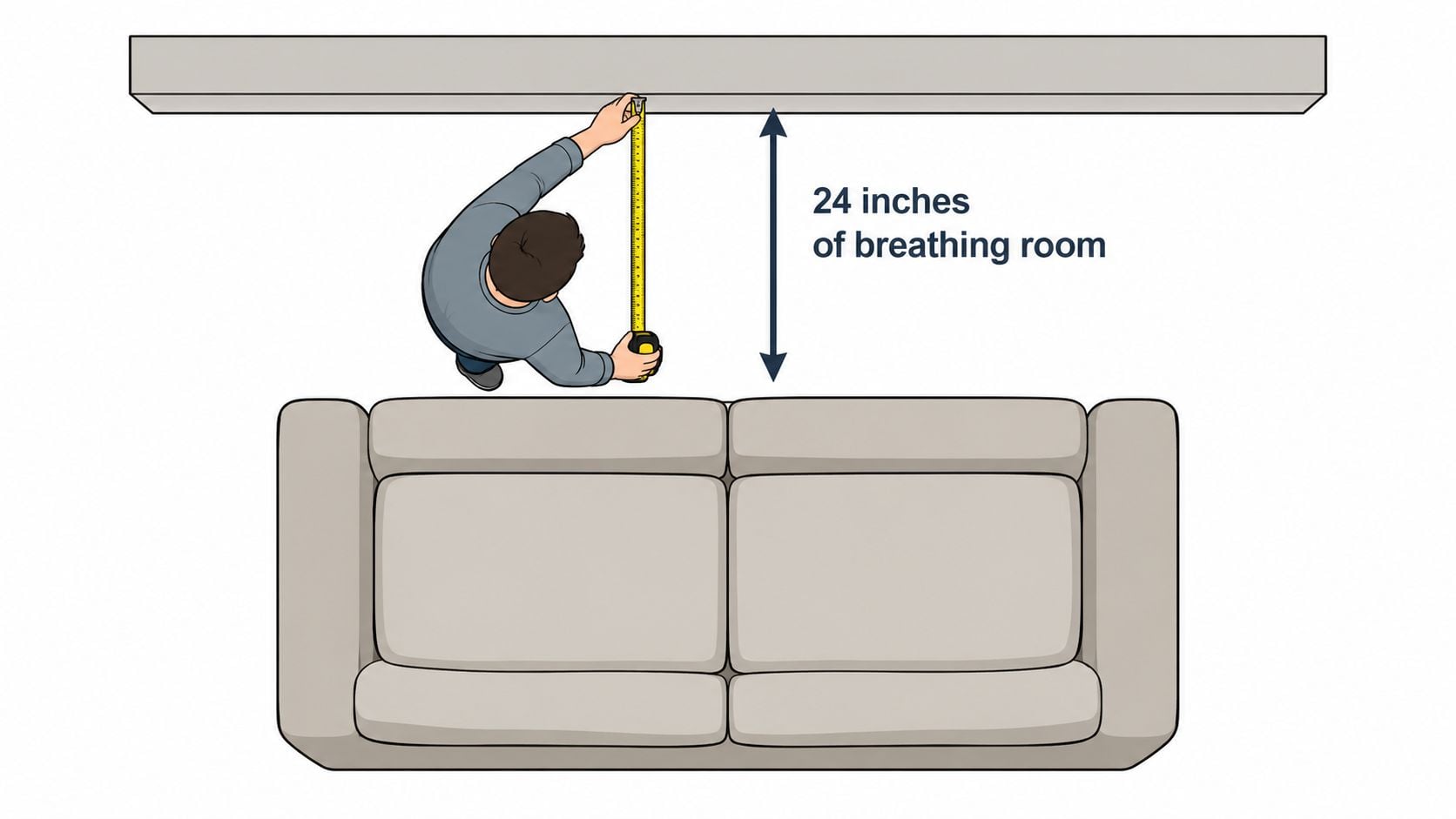
Measure the destination wall. Record the full wall length, then allow 24 inches of breathing room so the sofa doesn't press against curtains, outlets, artwork, or adjacent furniture.
Draw the traffic lane. Keep a clear route of 30 to 36 inches in front of the sofa where household members normally walk. The measurement should reflect real movement, such as carrying laundry, walking toward the kitchen, or passing between the sofa and a doorway.
Record the delivery route. Measure every exterior door, interior doorway, hallway, corner, landing, and stairway turn. Note the tightest width and the diagonal clearance, not just the straight width of each opening.
The diagonal matters because movers rarely carry a sofa perfectly flat through a turn. A frame may need to tilt on its end, rotate around a landing, or pass through an opening at an angle. Door swing direction, banisters, ceiling height, and door trim can reduce usable clearance even when the tape measure suggests a comfortable opening.
The cardboard rehearsal
A cardboard template gives the household a low-risk test. Cut or mark the sofa's overall length and depth on the floor, then reproduce the route from the entrance to the destination room. The outline can show whether a corner, radiator, table, or open door interrupts the planned path.
Gorins' guide to measuring furniture before delivery offers another practical reference for checking walls, doorways, hallways, and stair turns. A measurement rehearsal doesn't need to be elaborate. It needs to copy the route accurately enough to expose the tightest point before delivery day.
Delivery Day Tips That Prevent a Sofa Getting Stuck
A three-seater isn't automatically a bulky choice. In a smaller Norwich home, a compact model can outperform a larger standard frame because it preserves the walking route and reduces the number of difficult turns.
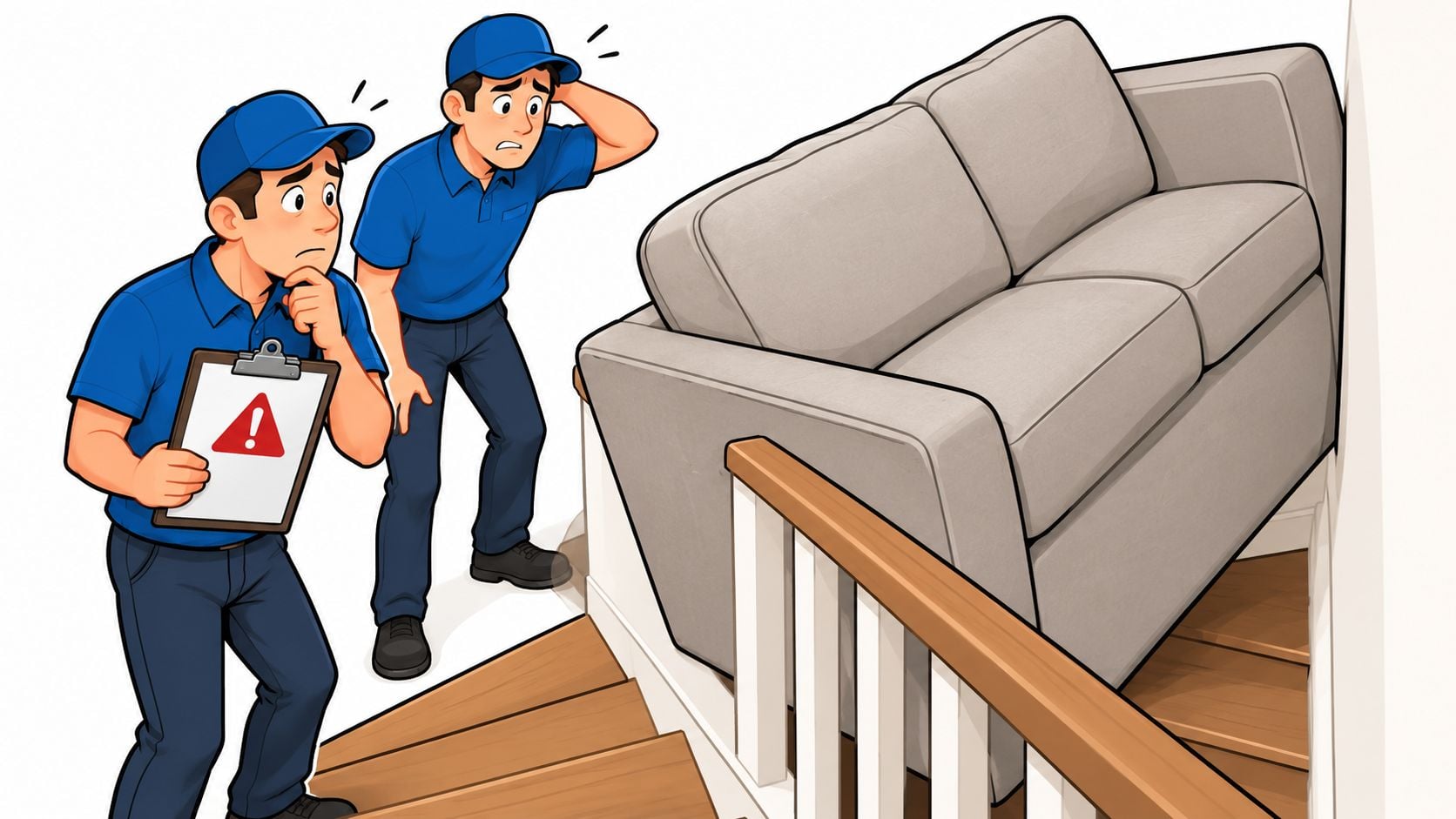
A delivery morning can go wrong when a sofa clears the front door but stops at the stairway. Tight corners under 36 inches, low ceilings near landings, and exterior doors that swing inward can limit the angle available to the delivery team. These details deserve attention before the sofa leaves the showroom.
Prepare the route
- Clear the approach: Move rugs, side tables, plants, seasonal decorations, and loose footwear from the route.
- Protect vulnerable surfaces: Blankets around door frames and banisters can reduce the risk of marks during a careful turn.
- Check removable parts: Legs may come off on some models, reducing the height or width during entry.
- Use the correct orientation: Tipping the sofa on end can create a better turning angle than forcing it through flat.
- Confirm the plan: A pre-delivery walkthrough gives the team a chance to identify the tightest point before the sofa arrives.
The buyer should also confirm the sofa's packaged or assembled dimensions, since the delivery condition can differ from the showroom footprint. A sofa delivered with removable legs may behave differently from one delivered fully assembled.
A local delivery service can explain the intended handling process and identify access concerns ahead of time. Gorins provides information about its white-glove delivery service, which can be useful for shoppers planning a larger upholstered piece.
The night before delivery, a short rehearsal with a tape measure or cardboard outline can save hours of frustration. If a route looks doubtful while the room is empty, it won't become easier once the sofa, packaging, and delivery team occupy the same space.
Choosing the Right 3 Seater for Your Norwich Home
The largest available three-seater isn't automatically the right choice. The better question is how the room behaves on an ordinary day, including where people walk, where children drop school bags, where a dog passes through, and whether anyone needs to stretch out in front of the television.
A 72 to 78-inch sofa may suit an open-plan flat near Riverside because the shorter frame can preserve the walking lane between the living and kitchen areas. In a terraced house on Earlham Road, a 76-inch frame may be easier to guide around a narrow stair turn than a deeper, longer design. A family room in Costessey may justify a standard-depth sofa because adults may use it for reading, resting, or napping.
Match the frame to the routine
Apartment scale works when circulation matters more than sprawling cushions. Standard scale suits households that need three regular seats and have enough wall and delivery space. English roll arm designs bring a softer, traditional appearance, but their broad arms and deep cushions require more room.
Furniture planning can also include practical ideas such as built in storage solutions for homes, especially when a smaller room needs to keep toys, blankets, or household items away from the sofa's traffic path. Storage doesn't replace accurate sofa measurements, but it can help the room function without adding extra floor furniture.
Gorins' guide to choosing the best sofa can support the decision between compact, standard, and more generous configurations. Its F9 Custom Sofa series allows shoppers to consider different arm styles, back types, welt details, and cushion firmness, with thousands of combinations available for a sofa customized to the household.
Since 1936, Gorins Furniture & Mattress has helped Norwich and Eastern CT families create homes they love. From custom-designed Canadel dining sets to the latest in Tempur-Pedic sleep technology, we combine a massive selection with the personalized care only a local, family-owned business can provide. Visit us today to experience quality, value, and our 5-Star Delivery service.
A showroom visit can also put the sofa's scale into physical context. Customers can compare comfort by feel in the Sleep Gallery with Tempur-Pedic, Serta, and Beautyrest, review Promotional Financing with equal monthly payments subject to approval, and explore value through the Clearance section when a ready-to-take-home option suits the budget.
Visit Gorins Furniture & Mattress in Norwich with the wall, doorway, and stairway measurements in hand, and the design team can help match the sofa's length to the room's real traffic flow. Shoppers can also take the online Style Quiz or browse the Clearance section for value-driven savings while exploring custom F9 sofa options and local delivery planning.