Bed Frame with Rhinestones: A Buyer’s Guide


A shopper can fall for a bed frame with rhinestones in seconds. The sparkle catches showroom lighting, the tufting looks luxurious, and the entire bedroom suddenly seems more dramatic. Then the practical questions arrive: Will the frame support the mattress properly? Will the crystals stay attached? Can the headboard fit through the stairs, and will the style still feel right after the novelty fades?
The right approach is simple. Treat the rhinestones as a finish, not as evidence of quality. The load-bearing frame, slats, upholstery, attachment points, and delivery plan determine whether the purchase becomes affordable luxury or an expensive decorative headache.
What You're Really Choosing When You Buy One
A bed frame with rhinestones changes how a bedroom looks. It does not automatically improve support, mattress performance, sleep comfort, or how long the frame lasts. Those qualities come from the structure underneath the shine.
That distinction matters because the wider bed frame market is large for a reason. One market estimate puts the category at about $14.2 billion in 2025, with a projection of $18.9 billion by 2034 at a 5.3% CAGR. Another values it at $13.66 billion in 2026 and projects $21.55 billion by 2035 at a 5.2% CAGR. Those figures cover the broader category, not rhinestone designs specifically, but they explain why a decorative finish gets attached to such a basic household purchase. (market context for bed frames)
The practical questions that matter
A smart buyer starts with the frame, then evaluates the sparkle.
- What carries the weight? Check whether the internal structure uses metal, solid wood, or wood-composite construction.
- How does the mattress rest? Look at the slat system, center support, and the manufacturer's mattress compatibility guidance.
- Where are the rhinestones attached? Stones may sit in the headboard upholstery, along the rails, on the footboard, or inside metal trim.
- What happens during daily use? A heavily tufted headboard takes repeated contact from pillows, hair, hands, and cleaning tools.
- Can the room handle the scale? A tall, padded headboard can overpower a modest bedroom even when the mattress size fits.
A decorative frame earns its place only when the structure works first. If the frame feels flimsy, the slats flex, or the headboard attachment seems loose, the crystal finish is just covering a poor purchase.
The market also shows how wide the pricing spread can be. Marketplace listings show rhinestone bed frames from about $139 for a new-in-box black full or queen frame to $3,425 for a tall tufted velvet model with rhinestone buttons. That range reflects construction, upholstery, customization, size, and finish quality, not just the number of stones. (rhinestone bed frame marketplace listings)
Main Construction Types and Where the Sparkle Sits
Three construction styles show up most often. The sparkle changes the look, not the frame's job. Weight support, slat quality, and joint strength still decide whether the bed feels solid or flimsy.
Upholstered platform frames
This is the most common glamour format. Rhinestones are usually set into a padded headboard, worked into tufting, or added along the border. Some designs carry the detail onto the footboard and side rails.
The appeal is comfort. A padded headboard is easier on the back during reading or lounging, and upholstery gives the stones a richer backdrop. The trade-off is bulk and upkeep. Fabric collects dust around the stones, and foam can compress where people lean over and over. The platform and slat system still need close inspection, because a decorative headboard can make a weak support structure look better than it is.
Wood-framed beds
Wood frames usually place crystals on a headboard panel, trim strip, or upholstered insert. The stones may be fixed with adhesive, upholstery tacks, or a channel secured to the panel.
Wood gives the frame a more grounded look and works well with warm walnut or painted finishes. Solid hardwood matters because bed frame material and support guidance places its lifespan at roughly 15 to 25 years, with support around 800 to 1,500 pounds, depending on design and construction.
The catch is simple. A wood frame still needs a proper center support system. A strong headboard cannot make up for weak rails or badly spaced slats.
Metal-framed beds
Metal versions tend to use rhinestones in channeling, decorative trim, nailhead-style borders, or metal bezels. The result often looks lighter, even when the headboard is tall and annoying to move.
Steel tubing can support a bed well, but thickness, joints, welds, and the center rail matter far more than the shine. Steel-tubing frames usually have a shorter lifespan than hardwood, so verify the capacity rating and construction details with the manufacturer. A metal bed frame guide is useful for checking the basics of tubing, support, and frame layout.
| Construction Type | Where Rhinestones Sit | Typical Weight | Best For |
|---|---|---|---|
| Upholstered platform | Padded headboard, tufting, footboard, or rails | Heavier and bulkier | Soft glamour and a statement headboard |
| Wood frame | Headboard panel, trim, or upholstered insert | Moderate to heavy | Warm finishes and grounded bedroom styling |
| Metal frame | Channels, borders, bezels, or decorative trim | Often lighter, though headboards vary | Sleeker glamour and easier visual contrast |
The right choice depends on the room and the sleeper. Upholstered platforms suit buyers who want comfort against the headboard. Wood suits buyers who want a heavier furniture presence. Metal suits buyers who want sparkle without committing to soft, padded surfaces everywhere.
Materials, Build Quality, and What Actually Decides Durability
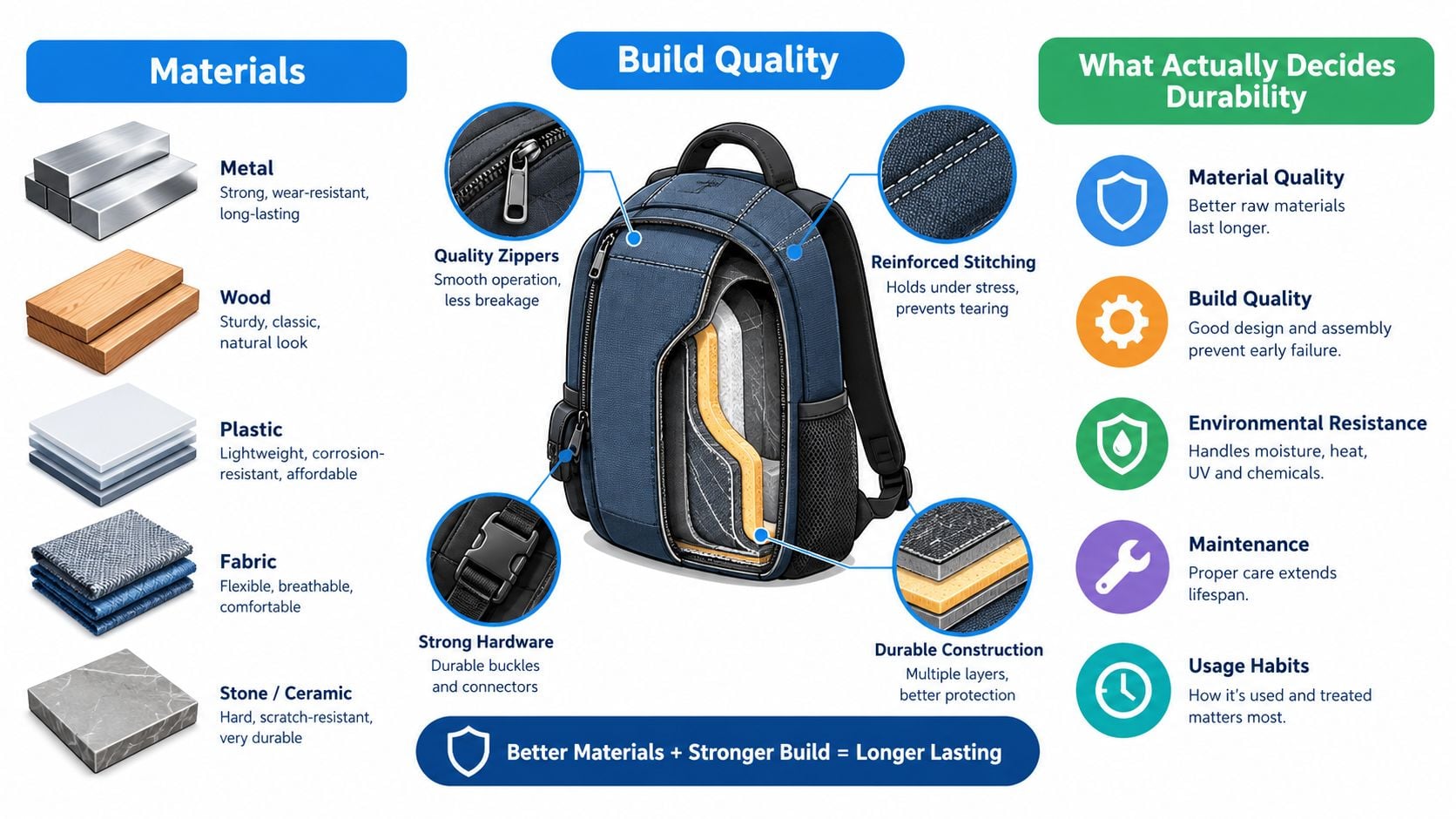
A rhinestone bed frame is a layered product. The crystals sit at the top of the stack, but they're the least important structural layer.
Inspect the frame before the finish
The load-bearing skeleton comes first. Metal, solid wood, or wood-composite components carry the mattress and sleepers. Next comes the slat system, which distributes weight and keeps the mattress from sagging. Then come the upholstery substrate, foam, fabric or faux leather, and finally the decorative stones.
A buyer should inspect:
- Frame joints: Connections should feel firm, with no rocking or visible gaps.
- Center support: A larger mattress needs a properly engineered center structure.
- Slats: Slats should sit securely and maintain even spacing.
- Headboard attachment: Brackets and bolts should connect to the main frame, not merely to a thin decorative panel.
- Upholstery tension: Loose fabric can wrinkle, pull, or expose weak attachment points.
- Crystal placement: Stones should sit evenly, without obvious gaps, lifting edges, or excess adhesive.
Crystal, glass, and acrylic rhinestones can all create sparkle, but the cut doesn't decide whether the bed lasts. The adhesive, stitching, trim channel, and surface preparation matter more. A beautifully cut stone attached poorly will loosen sooner than a simpler stone secured to a stable backing.
Rank the likely failure points
The usual problems appear in a predictable order. Slats can sag or shift, foam can compress, upholstery can abrade, and stones can loosen at high-contact edges. That's why the frame and support system deserve more attention than crystal density.
Furniture upholstery guidance uses 30,000 Martindale cycles for domestic use, 50,000 for heavier non-domestic use, and up to 90,000 for extra-hard use. Those benchmarks don't guarantee a particular bed's performance, but they give shoppers a useful way to ask about fabric wear resistance, especially on a headboard that receives regular contact. (furniture upholstery abrasion criteria)
For a closer look at fabric choices, this upholstery materials guide can help shoppers compare surfaces before selecting a heavily decorated headboard. Decorative crystal work also appears in other luxury accessories, such as this palm tree design cashmere wrap with crystals, where attachment and handling are equally important to the finished effect.
Practical rule: The sparkle sells the first impression. The frame, slats, and upholstery determine whether the impression lasts.
Sizing and Fit for a Real Bedroom
A queen rhinestone bed frame can fit the mattress and still fail in the room. In a narrow bedroom, padded rails consume walking space, a tall headboard changes the visual scale, and a footboard can interfere with drawers or doors. The rhinestones change the appearance, not the mattress size, structural footprint, or usable clearance. Measure the furniture, not the sparkle.
Standard mattress dimensions provide the starting point:
| Mattress Size | Mattress Dimensions, W x L | Typical Planning Footprint | Frame Overhang Allowance |
|---|---|---|---|
| Twin | 38" x 75" | About 42" x 81" | About 2" per side, 3" at the ends |
| Full | 54" x 75" | About 58" x 81" | About 2" per side, 3" at the ends |
| Queen | 60" x 80" | About 68" x 86" | About 4" per side, 3" at the ends |
| King | 76" x 80" | About 84" x 86" | About 4" per side, 3" at the ends |
| California king | 72" x 84" | About 80" x 90" | About 4" per side, 3" at the ends |
These are planning figures, not a substitute for the manufacturer's specification. The bed sizes chart helps confirm mattress categories, while the actual frame dimensions control the purchase.
Measure the room before the style
Start with the mattress area, then measure the complete frame. Include rails, feet, footboard, trim, and any side panels that project beyond the mattress. A queen upholstered frame with 4" rails and a 60"-wide headboard needs roughly 68" of wall width before nightstands. Add the nightstands afterward, rather than assuming the mattress width is the room's limit.
Check height separately. Record the headboard's full measurement and compare it with the ceiling, windows, moldings, outlets, and nearby furniture. A tall tufted headboard may make low nightstands look undersized even when the floor plan works.
Delivery can decide the purchase. Measure doorways, hallways, stair turns, and elevator openings, especially for a large upholstered headboard. Then mark the complete footprint with painter's tape. Open drawers, swing doors, and walk around the taped outline. If the route beside each rail is too narrow for changing bedding, the frame will become a daily irritation.
Leave enough space for the bed to look intentional. A decorative frame packed against every wall loses its presence and makes routine access harder. Final measurements should come from the exact product, because rhinestones affect finish and visual impact, not the frame's dimensions or fit.
Styling a Rhinestone Bed Frame Without Overdoing the Room
A queen rhinestone bed frame entering a compact guest room becomes the focal point immediately. The safest styling decision is to let it remain the focal point.
A restrained room works harder
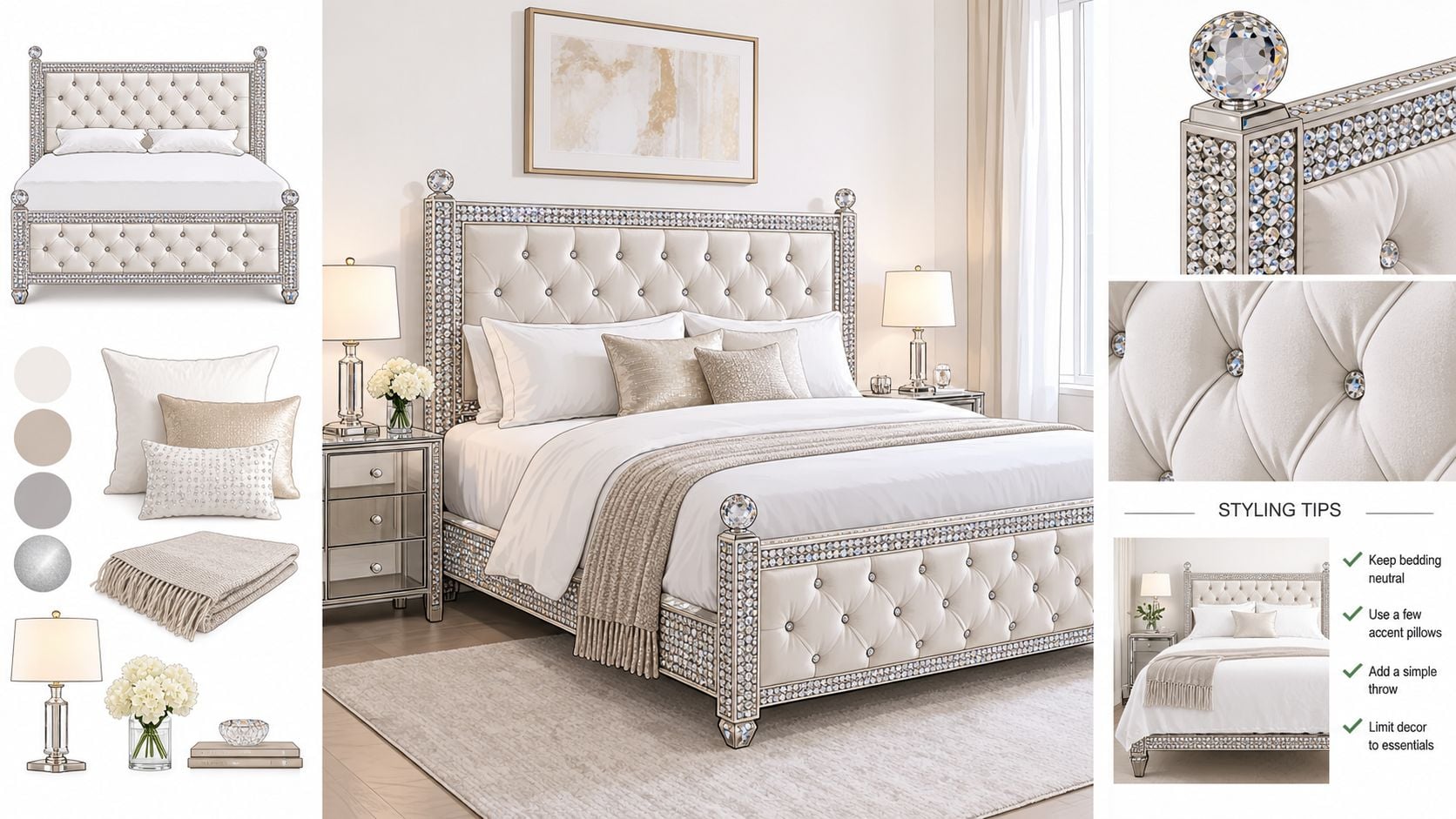
Neutral bedding gives the crystals room to reflect light. Washed linen, matte cotton, and a single velvet throw can create texture without competing with the headboard. Multiple shiny pillows, sequined blankets, and reflective accessories turn the room into a collection of competing surfaces.
Nightstands should absorb some of the visual energy. Brushed nickel, matte black, and warm walnut generally sit more comfortably beside crystal detailing than high-gloss mirrored furniture. A mirrored nightstand can work, but pairing it with a mirrored dresser, glossy lamps, and reflective artwork usually creates too much visual noise.
Lighting deserves careful attention. Low-output sconces placed near eye level can make the stones glimmer softly. Direct overhead spots often create glare on individual crystals and make the finish look harsher than it does in the showroom.
Keep the walls quiet
Soft greige, warm white, and pale grey let a bling bed frame stand apart. Saturated paint, busy wallpaper, and large patterned bedding compete with the faceted surface and weaken the intended effect.
Wall art should support the mood rather than repeat the bed's decoration. Buyers looking for a controlled finishing layer can browse bedroom canvas art for pieces that add shape or color without covering every surface in shine.
The bedroom should feel edited. One strong bed, calm bedding, restrained lighting, and a small number of supporting accessories create affordable luxury. The bedroom accessorizing guide offers additional direction for building that balance.
A rhinestone bed looks expensive when the room gives it space. It looks busy when every object asks for attention.
Assembly, Delivery, and What to Expect on Setup Day
A large decorative bed frame is a logistics project as much as a furniture purchase. Packages commonly separate the headboard, rails, footboard, slats, hardware, and legs. The headboard is often the most awkward component because its height and upholstery make it difficult to grip.
Two adults should handle headboard attachment. One person steadies the piece while the other aligns brackets and starts the bolts by hand. Rushing this step can cross-thread hardware or force the frame out of square.
Protect the decorative surfaces
Rhinestone trim is most vulnerable when the headboard is laid flat, dragged, or rotated against a hard floor. Original foam wrapping should stay in place until the headboard stands vertically. Blankets can protect the surrounding upholstery, but they shouldn't replace careful lifting.
Before delivery, the household should clear:
- The entry path: Remove small tables, rugs, and decorative objects.
- Stair turns: Check whether the headboard can pivot without striking walls or railings.
- The bedroom floor: Make space for cartons and hardware.
- The assembly area: Keep pets and children away while parts are being aligned.
- The inspection process: Photograph visible damage before packaging leaves the home.
Tool-assisted assembly can be straightforward when the parts are labeled and the instructions are clear. It becomes frustrating when buyers discover missing hardware, tight corners, or a headboard that requires more lifting than expected.
Households arranging a larger move can review information about relocation services, particularly when the bed purchase is part of a broader room or home transition. For ordinary in-home setup, professional furniture assembly service can remove the risk of misaligned rails and damaged trim.
The delivery team should also confirm that the mattress platform sits level before the final bedding goes on. A frame that rocks or twists needs correction immediately, not after several nights of use.
Price, Financing, and Ongoing Care Over the Frame's Life
A rhinestone finish changes the room's appearance, not the frame's support system or expected lifespan. Price the structure first, then decide whether the decorative treatment earns its premium. A lightly embellished frame with strong rails, reliable slats, and sound joinery is a smarter purchase than a heavily decorated model built with thin backing or weak connections.
Marketplace pricing spans from about $139 for a new-in-box frame to $3,425 for a tall tufted velvet design with rhinestone buttons. Size, upholstery, customization, structural materials, and finishing detail account for much of that spread. Review rhinestone bed frame pricing examples, then compare construction details rather than treating the highest price as proof of better quality.
Set a firm budget that includes delivery, assembly, bedding changes, and future repairs. A frame that stretches the household budget for its appearance becomes poor value if its stones loosen or its upholstery demands specialist attention.
What ownership actually costs
Care is manageable, but the decorative surface creates extra work:
- Cleaning: Dust settles around faceted surfaces and tufting. Use gentle vacuuming with a suitable upholstery attachment, and avoid aggressive brushing that can catch stones or trim.
- Attachment checks: Address loose stones with the manufacturer's recommended repair method. Random household glue can stain fabric and make later repairs harder.
- Fabric care: Follow the cleaning instructions for the upholstery material and finish. Test any approved cleaner on an inconspicuous area first.
- Replacement parts: Ask before buying whether slats, brackets, trim, and individual decorative components can be ordered later.
- Style longevity: A highly specific design can restrict future bedroom changes even when the frame remains structurally sound.
Furniture frames commonly last 7 to 10 years, while a well-built hardwood structure can last longer. The finish may need attention before the frame does, especially along headboard edges and touch points used during bedding changes. Inspect those areas during routine cleaning, not only after a stone falls out.
Financing can make a costly purchase easier to manage, but read the complete terms before signing. Promotional plans may offer equal monthly payments or no-interest-if-paid-in-full terms, subject to credit approval through partner programs. Review the promotional financing information and calculate the total repayment, not only the monthly amount. A long payment period is a poor match for a style the household may replace before the structure wears out.
Choose upholstered headboards with rhinestone detail when the decorative effect matters more than dense coverage. Choose a full platform frame with trim when you want the sparkle integrated throughout the room's main focal point. Reserve crystal-dense or custom designs for budgets that can absorb specialized repairs.
The strongest value combines firm support, durable upholstery, repairable trim, and a finish that remains attractive after regular cleaning. Judge sparkle as a style feature, never as evidence of structural quality.
Common Questions Shoppers Ask Before They Commit
Can the headboard be purchased separately?
Often, yes. A decorative headboard can pair with an existing metal or wood frame, but compatibility depends on bracket spacing, attachment height, and mattress support. King-size conversions need extra care because the new headboard may not align with the current frame. Measure the existing brackets and request the headboard's mounting specifications before ordering.
Will any mattress work?
The support system matters more than the rhinestones. Innerspring, latex, and memory foam mattresses can work when the platform and slats meet the mattress manufacturer's requirements. Confirm slat spacing, center support, and weight capacity. A glamorous finish says nothing about mattress compatibility.
How long will a crystal bed frame last?
Lifespan depends on the internal structure, upholstery, attachment quality, and daily use. A well-built frame can serve for years, while a frequently handled headboard may show wear sooner in a primary bedroom than in a guest room. As noted in the lifespan ranges discussed earlier, typical bed-frame life runs around 7 to 10 years, with construction quality creating meaningful variation. Rhinestones change the appearance, not the frame's underlying support or expected lifespan.
Is a tall tufted headboard suitable for a small room?
Only if the room can accommodate its height and depth without blocking useful space. Tape the full footprint on the floor, compare the headboard with the ceiling and windows, and check that both sides remain accessible for changing bedding. If the room already feels tight before nightstands and lamps arrive, the finished arrangement will feel crowded.
A showroom visit can settle questions photographs cannot. Inspect crystal density, touch the upholstery, test the headboard height, and judge the frame's weight and stability before committing.
Gorins Furniture & Mattress offers local, family-operated guidance rooted in its 1936 founding. Visit Gorins Furniture & Mattress in Norwich to compare bedroom styles, use the online Style Quiz, or browse clearance options. Ask directly about construction, support, delivery, and financing terms before treating decorative sparkle as value.