A Buyer’s Guide to the Full Wood Loft Bed


A lot of families reach the same point with a bedroom. The room works on paper, but not in daily life. A desk crowds the dresser, storage bins drift into corners, and the bed takes the biggest share of the floor.
That's where a full wood loft bed starts to make sense. It doesn't just add sleeping space. It changes how one room works, especially in apartments, smaller homes, guest rooms, and shared spaces across Norwich and the surrounding Eastern CT communities.
Since 1936, local families have looked for furniture that lasts longer than a single stage of life. A loft bed made from wood fits that mindset well. It can serve a child now, a teen later, and sometimes even an adult, if the frame, ladder, mattress fit, and room measurements are handled carefully. The smart choice isn't just about style. It's about long-term ownership, safe daily use, easier maintenance, and whether the piece still makes sense years from now.
Table of Contents
- Why Solid Wood Is an Investment in Quality
- Understanding Load Capacity Safety and Dimensions
- Designing the Space Beneath Your Loft Bed
- Selecting Your Ideal Finish and Style
- Full Wood Loft Beds vs Metal Alternatives
- Your Purchase Journey at Gorins Furniture
Why Solid Wood Is an Investment in Quality
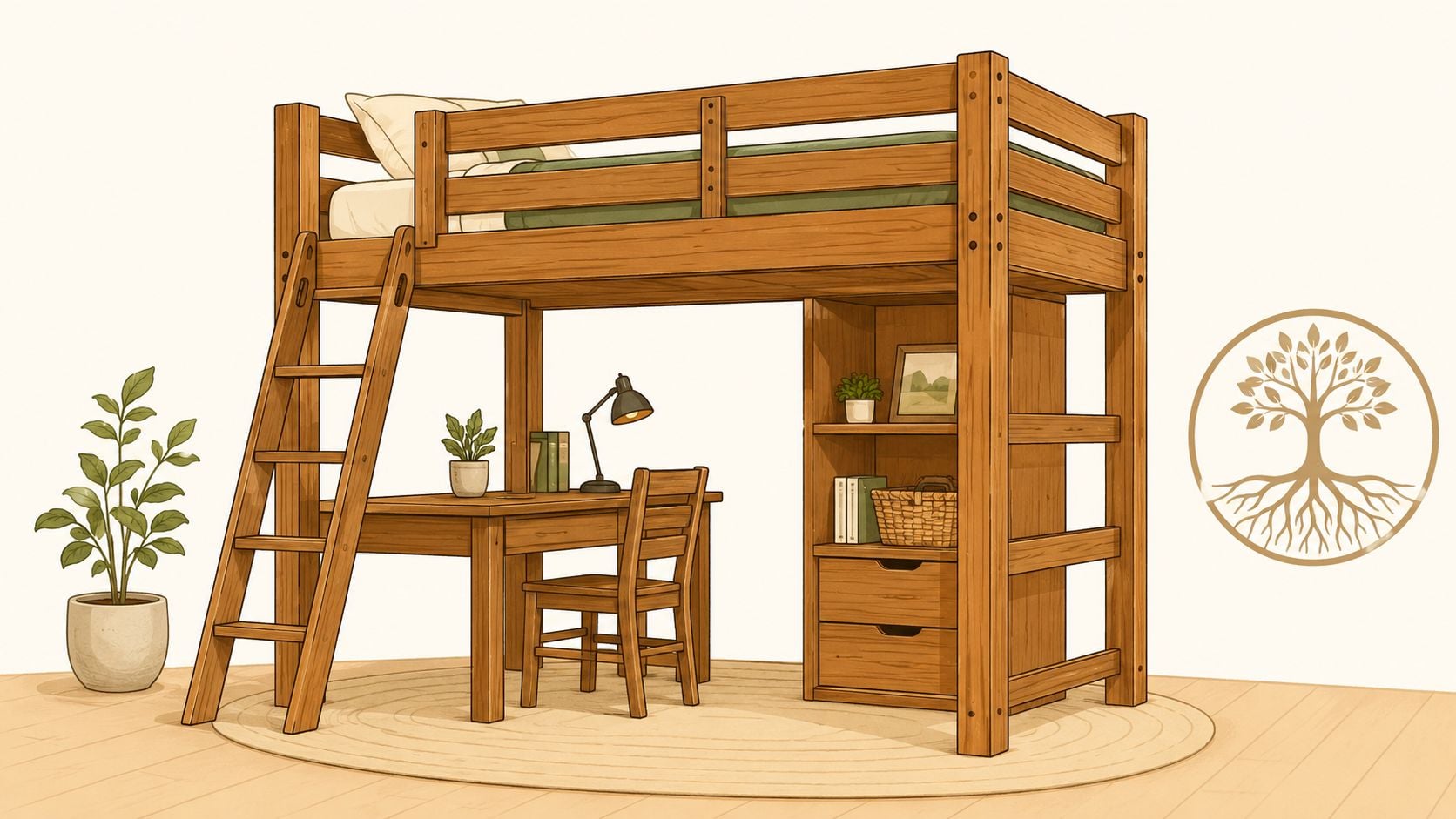
A full wood loft bed makes sense because wood has never been a short-term bed material. According to this history of beds, the oldest known bed dates to 77,000 years ago, and ancient Egyptian beds used wooden frames with woven mats or straw-filled mattresses. That long history matters because it shows something simple. Wood has stayed relevant through centuries of changing homes, sleeping habits, and furniture design.
Loft beds are a newer answer to an old problem. People still need a place to sleep, but they also need space to work, study, and store daily essentials. A raised bed creates usable floor area below, which is why it suits smaller homes and multifunctional rooms so well.
Wood has a long track record
Solid wood tends to appeal to buyers who want furniture with staying power. It looks grounded in a room. It often feels warmer than metal, and it usually blends more naturally with existing case goods, nightstands, or dressers.
That matters in real homes, not just staged photos. A loft bed often becomes the visual center of the room because of its height. When the frame is wood, it reads more like furniture. When the frame looks temporary, the whole room can feel temporary.
Practical rule: The larger the bed frame looks in the room, the more important the material becomes.
Parents also tend to notice that wood communicates differently. It feels familiar, tactile, and less industrial. Some families who already prefer natural materials in playrooms and bedrooms also appreciate broader reading on wooden toys for child development, because the same preference often carries into furniture choices.
Why solid wood feels different in a home
A loft bed takes daily wear in very specific places. Hands grip the ladder. Feet land on rungs. Knees brush side rails. Bags get hung over corners. A good wood frame usually handles that kind of contact with a more substantial feel than lighter alternatives.
There's also the long-view issue. Families rarely keep a room arranged the same way forever. They repaint, swap desks, move storage around, and update bedding as a child gets older. A wood bed adapts well because it doesn't depend on a narrow trend to look right.
For buyers trying to understand species, grain, and durability, this guide to choosing the right hardwood for longevity and style is useful because it explains why some woods feel cleaner and more contemporary while others feel richer and more traditional.
A full wood loft bed should be thought of as investment-grade quality, not a stopgap. That doesn't mean every room needs the heaviest or most formal-looking frame. It means the bed should hold up structurally, fit visually with the rest of the home, and still feel like a smart purchase after the novelty wears off.
Understanding Load Capacity Safety and Dimensions
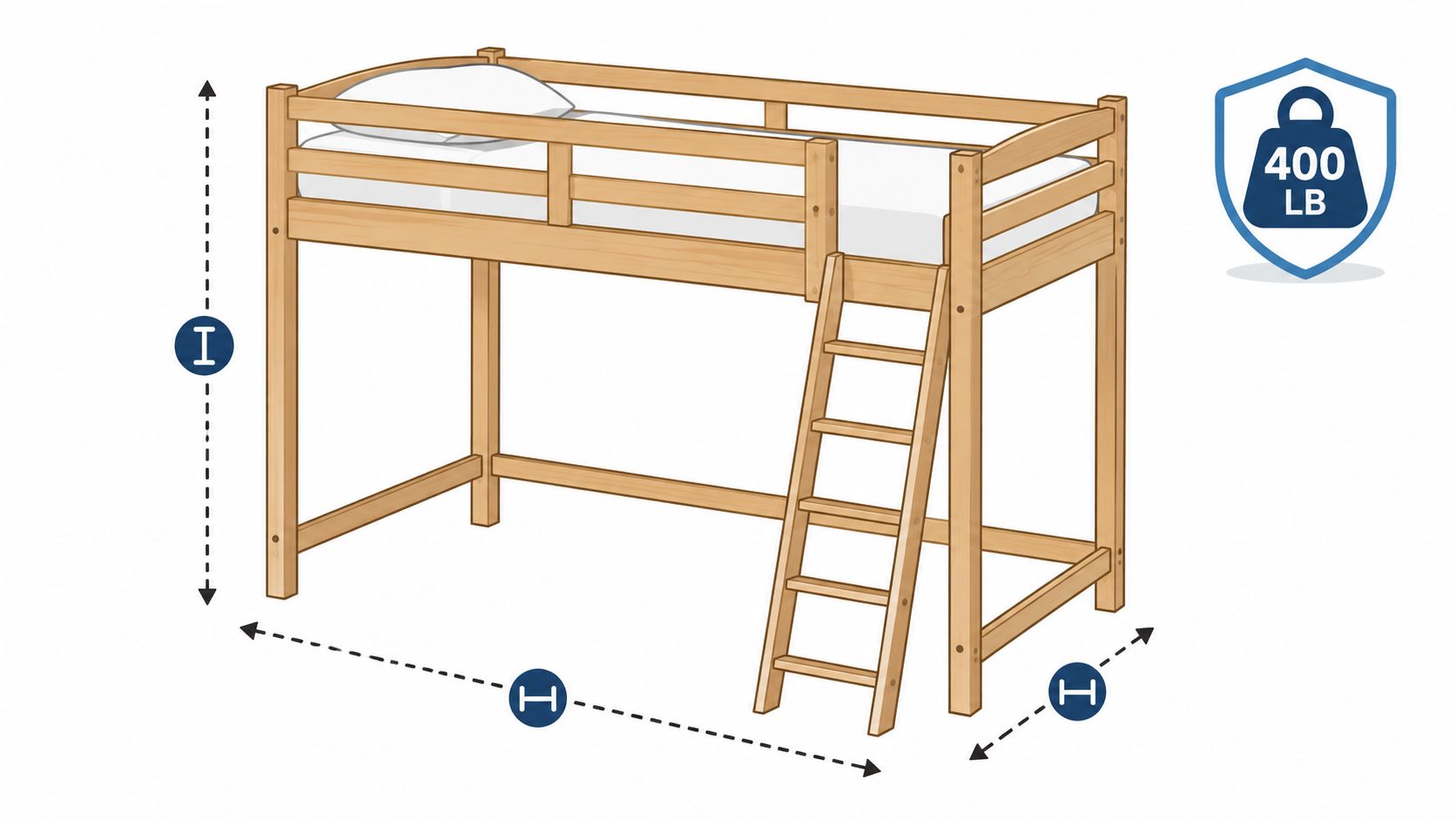
A loft bed can look solid on a showroom floor and still be the wrong fit once it is carrying real daily use in a Norwich home. We see that issue most often after delivery, when a family realizes the mattress sits too high, the ladder feels tighter than expected, or the room has less headroom than the tape measure suggested. Safety and comfort come from getting three pieces to work together. The frame, the mattress, and the room all have to agree.
What load capacity means in real use
Load capacity is about the whole sleeping setup, not only the person using the bed. A loft bed carries the sleeper, the mattress, pillows, bedding, and the shifting force created by climbing, sitting, and turning during the night.
For heavy-duty solid-wood loft-bed frames, 1,000 pounds of evenly distributed load is a common benchmark in the market, according to these product specifications for solid-wood loft beds. The phrase evenly distributed load is the part to pay attention to. Weight spread across slats, rails, and posts is very different from force concentrated in one spot, such as dropping onto the edge or hanging heavily from one side.
A simple way to read that rating is to break it into parts:
- Sleeper weight: only one part of the total load
- Mattress weight: constant pressure on the frame every day
- Movement: climbing in and out adds changing force
- Bedding and stored items: these add up more than many buyers expect
A high number on a product page is only useful if the joinery, hardware, and assembly are up to the same standard.
That is one reason we encourage families to ask practical ownership questions before they buy. How does the ladder attach. What kind of slat support is used. Is the bed designed for a child, a teen, or an adult. Those answers matter more over ten years than one headline figure.
Mattress fit affects safety as much as frame strength
A full wood loft bed has to fit the actual mattress size, not just the word "full" on the label. In everyday furniture work, this is a bit like fitting a drawer into a cabinet opening. Close is not good enough. A small difference in width or thickness can change how the bed feels and how safely the guardrail works.
Standard full mattresses are generally around 54 inches wide and 75 inches long. Gorins explains the usual measurements clearly in this full-size mattress dimensions guide. The bed manufacturer's guidance for maximum mattress thickness matters just as much, because a mattress that sits too high reduces the amount of guardrail above the sleep surface.
That catches families by surprise more often than you might think. They buy a plush mattress for comfort, then find the top bunk feels less secure or more cramped near the ladder opening.
Three checks prevent most sizing mistakes:
Measure the mattress yourself
Use a tape measure on the actual mattress, including thickness after it has fully expanded.Check guardrail clearance
Make sure enough rail remains above the top of the mattress to help keep the sleeper contained.Look at the ladder entry point
A thicker mattress can crowd the opening and make getting in and out less comfortable.
Room dimensions matter after the bed is assembled, not just before
On paper, many loft beds fit. In practice, the user still needs room to sit up, turn, climb down safely, and move around the furniture below. Older Norwich-area homes often have sloped ceilings, radiators under windows, deep skirting boards, or tighter wall spacing, and each of those details changes how a loft bed lives in the room.
Use this quick room check before ordering:
| Check | Why it matters |
|---|---|
| Ceiling height | The sleeper needs comfortable headroom above the mattress |
| Ladder landing zone | There should be a clear, steady place to step down |
| Door swing and drawer paths | Existing furniture still needs to open fully |
| Window placement | The bed should not block light, access, or function |
| Under-bed clearance | Seating, storage, or a desk need usable working space |
Custom sizing or height adjustments can sometimes help where room proportions are awkward, as noted in the earlier specifications source.
The safest full wood loft bed is the one that fits the sleeper, the mattress, and the room as a single system. That is the long-term view that saves trouble on delivery day and makes the bed easier to live with for years.
Designing the Space Beneath Your Loft Bed
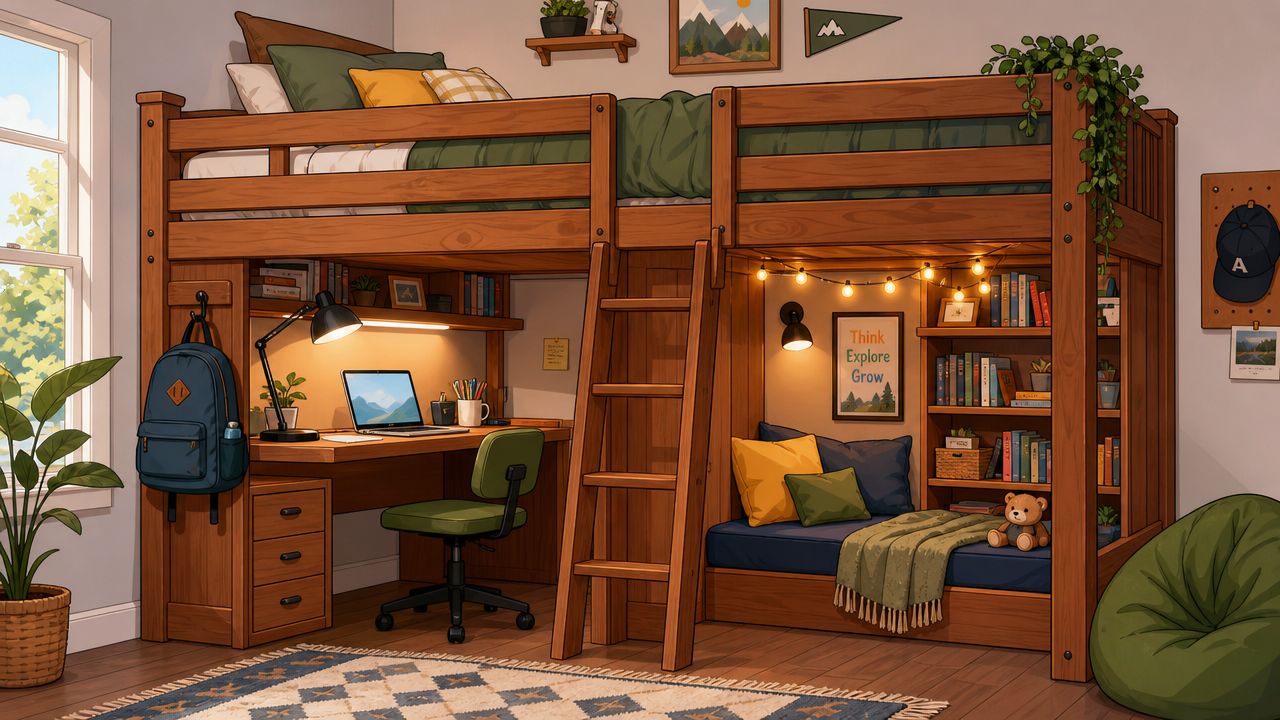
A family brings home a full wood loft bed, gets it assembled, and then stares at the open space underneath wondering what belongs there. That moment matters more than many buyers expect. The area below the bed is part of the reason to own a loft in the first place, so it needs a clear purpose that suits daily life in the room.
We often tell Norwich-area shoppers to treat that lower space like a small room within the room. If the bed above is the roof, the area below still needs a job, enough light, and furniture that fits the scale. That mindset helps you avoid the common mistake of sliding random pieces underneath and hoping they work.
Three layouts that hold up well over time
A desk setup is often the most practical choice. It gives a student, remote worker, or hobbyist one defined place for focused tasks. A modest desk, a chair that tucks in neatly, and a narrow drawer unit usually serve better than a bulky workstation, especially in older homes where every inch counts.
A comfort setup suits families who already have a desk elsewhere. A compact chair, a small side table, and low shelving can turn the lower area into a reading corner or a quiet place to game, sketch, or scroll before bed. Seating or office pieces from well-scaled furniture lines often fit naturally into this kind of plan because the goal is everyday comfort, not oversized furniture that crowds the opening.
A storage setup earns its keep in houses where bedroom closets are shallow or shared. Under-bed dressers, baskets, and shelf units can take pressure off the wardrobe and keep the floor clearer. In many Norwich homes, that makes the room feel calmer and easier to clean.
- Work-focused layout: useful for schoolwork, crafts, and home office use
- Comfort-focused layout: good for reading, quiet downtime, or casual gaming
- Storage-focused layout: helpful where closet space is limited
The best choice usually comes down to what creates friction in the room now. If paperwork spreads across the dining table, a desk below the loft solves a real problem. If clothing has no proper home, storage will serve you better than a pretty chair.
Ladder choice affects what fits below
Families often focus on the bed frame and forget that the ladder changes the whole floor plan. According to this overview of angled and straight ladder options, angled ladders tend to feel easier to climb, but they reach farther into the room. Straight ladders keep more floor area open, though some sleepers find them less comfortable, especially during a nighttime climb down.
That difference matters during ownership, not just on shopping day.
A straight ladder usually works better when you want a desk or storage unit tucked close to the frame. An angled ladder asks for more open floor in front, which can improve daily use but limits where a chair, chest, or shelf can go. During delivery and assembly, that extra projection can matter too, particularly in tighter Norwich bedrooms with radiator covers, narrow walkways, or awkward corners.
For compact layouts, these bed ideas for small rooms can help you sort out circulation before you start buying the pieces that go underneath.
It also helps to plan for maintenance. Leave enough access to vacuum under the bed, wipe skirting boards, and reach electrical outlets without dragging half the room around. A lower area that looks smart on day one but is hard to clean often turns into a holding spot for laundry and loose cords.
Buyers who want visual ideas from outside the local market may also enjoy seeing how New Zealand Bed Company's wooden frames are styled in compact bedrooms.
A good under-loft design should still make sense six months after assembly. If the space supports work, rest, or storage without becoming cluttered, the loft bed is doing its job.
Selecting Your Ideal Finish and Style
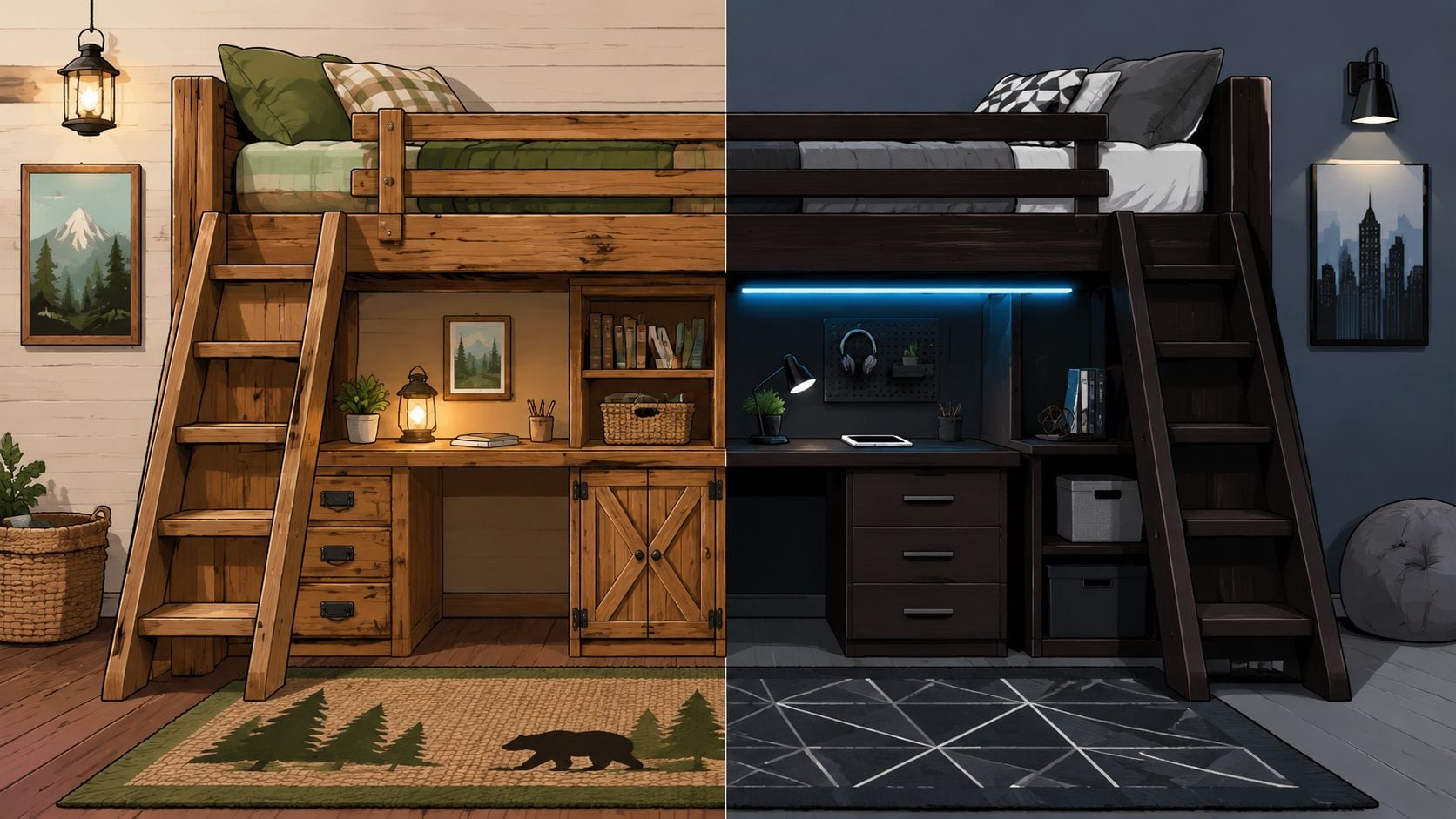
The finish on a full wood loft bed does more than change color. It changes visual weight. In a small room, that matters a lot.
Start with the room not the stain sample
A light natural finish usually helps a loft bed feel less imposing. It keeps the room brighter and can make the frame blend into casual, coastal, Scandinavian, or relaxed transitional spaces. A medium brown often feels warmer and more traditional. A dark finish can look handsome and grounded, but it may make the bed feel larger and more dominant.
Historic bedmaking also shows that wood style has always evolved with taste. As noted in this history of bunk beds and wooden bed use, hardwoods such as mahogany and satinwood appeared prominently in the 17th century, while modern luxury beds may use woods like chestnut, ash, and cherry. The takeaway isn't that one species is always right. It's that wood furniture has long adapted to changing design preferences without losing relevance.
Buyers looking for broader visual inspiration may enjoy seeing how New Zealand Bed Company's wooden frames are presented across different room styles. It's a useful reminder that the same core material can read rustic, clean-lined, classic, or contemporary depending on finish and shape.
Style choices that age well
The safest long-term choice is usually the one that matches the rest of the home, not the newest trend. A loft bed has enough presence that it should connect with nearby furniture.
A few practical pairings help:
- Natural or light finish: Works well with white walls, soft textiles, and simple hardware
- Warm medium wood: Suits traditional, farmhouse, or transitional rooms
- Deep brown or espresso look: Often fits moodier, more refined spaces with stronger contrast
Neighborly advice: If the room may change from child to teen use, simpler lines usually age better than highly themed detailing.
A strong customization philosophy is essential. In categories like Canadel Custom Dining and the F9 Custom Sofa series, shoppers can explore thousands of combinations, and that same mindset applies here even when a loft bed itself offers fewer made-to-order variations. The goal is still the same. The room should feel personalized to the household's lifestyle, not borrowed from a catalog for one short season.
Readers who want help narrowing the room's overall look may find this bedroom style guide for different personalities useful as a starting point.
Full Wood Loft Beds vs Metal Alternatives
Both materials can work. The better choice depends on who will use the bed, how long it needs to last, and how much confidence the buyer has in the specifications.
Where wood usually pulls ahead
Wood often wins on feel. It tends to look more settled in a home, and many people prefer its warmer appearance in a bedroom. It also pairs more easily with dressers, desks, and other case goods, which helps the room feel cohesive rather than pieced together.
Metal often appeals to buyers who want a simpler, more utilitarian look. In some cases, that can be enough. But long-term ownership raises different questions. Does the frame stay quiet over time. Does it still feel solid after repeated climbing. Are the safety details easy to verify.
A persistent problem in online shopping is that adult safety and load expectations for a full wood loft bed are often unclear across listings. This category review of wooden loft beds highlights how product pages can vary widely in capacity claims, leaving buyers unsure whether a model is really suitable for adults. In contrast, quality wood furniture from reputable dealers tends to come with clearer and more reliable specifications.
That last point matters most. A loft bed isn't a decorative accent. It's a structure people trust with daily use. When the specs are vague, the risk isn't just inconvenience. It's uncertainty where there shouldn't be any.
Your Purchase Journey at Gorins Furniture
A full wood loft bed often feels simple right up to delivery day. Then real-life questions show up fast. Will the boxes make it up a Norwich staircase. Does the ceiling height leave enough sitting room on top. Will the space below work for a desk, storage, or a reading chair once the frame is in place.
That is the part shoppers tend to miss online. A good purchase process should help you sort out the whole ownership picture, not just pick a finish from a product photo.
At Gorins Furniture & Mattress, we have watched that process play out for local families since 1936. The homes around Norwich are not all built the same way. Some have tighter bedrooms in older houses. Some have low ceilings upstairs. Some need a bed that can handle daily use by a teen now and still make sense later in a guest room or apartment. A loft bed has to fit the room, the user, and the routine.
What good guidance should cover
Start with the room itself. Measure the wall where the bed will sit, the ceiling height, the window placement, and the path into the room. A loft bed works a bit like a large cabinet delivered in pieces. The footprint matters, but so does the turning space for assembly and the clearance around ladders, dressers, and doors.
Then look at the sleeping setup. Earlier in the article, we covered why mattress dimensions and thickness matter for loft-bed safety. Here, the practical point is simple. The mattress needs to fit the frame correctly and still leave proper guardrail protection. If you are also planning a desk or lounge space below, the under-bed height needs to make sense with the mattress profile above it.
For shoppers who want a clear step-by-step checklist, this guide to the furniture buying journey is a useful place to start.
Why local showroom buying reduces expensive mistakes
Photos flatten scale. In person, scale becomes obvious.
Seeing a loft bed in a showroom helps you judge ladder angle, rail height, finish tone, and the amount of usable space underneath. Those details are hard to read on a screen, and they matter more over five years of use than they do in the first five minutes of shopping. Families often come in focused on style and leave with better questions about access, comfort, and daily upkeep.
At Gorins Furniture & Mattress, that conversation can also include mattress fit and feel in the Sleep Gallery, where shoppers can compare options from a variety of top brands while keeping loft-bed size requirements in mind. That helps when you want comfort that suits the sleeper without choosing a mattress profile that works against the frame design.
The ownership experience matters after the sale too. Delivery support can spare you the strain of wrestling heavy cartons through narrow halls, and professional setup guidance reduces the chances of small assembly errors that lead to squeaks, loosened hardware, or a bed that never feels quite right. Solid wood furniture rewards careful setup in the same way a good front door rewards proper hanging. If it starts square and secure, it tends to stay that way.
Promotional Financing with equal monthly payments can also help families plan a larger bedroom purchase in a more manageable way, especially when the loft bed is only one part of a room update.
Since 1936, Norwich-area families have come to Gorins for that kind of practical help. The goal is not merely to sell a bed. It is to help you choose one that fits your home, goes together properly, and still feels like the right decision after the room has been lived in for years.